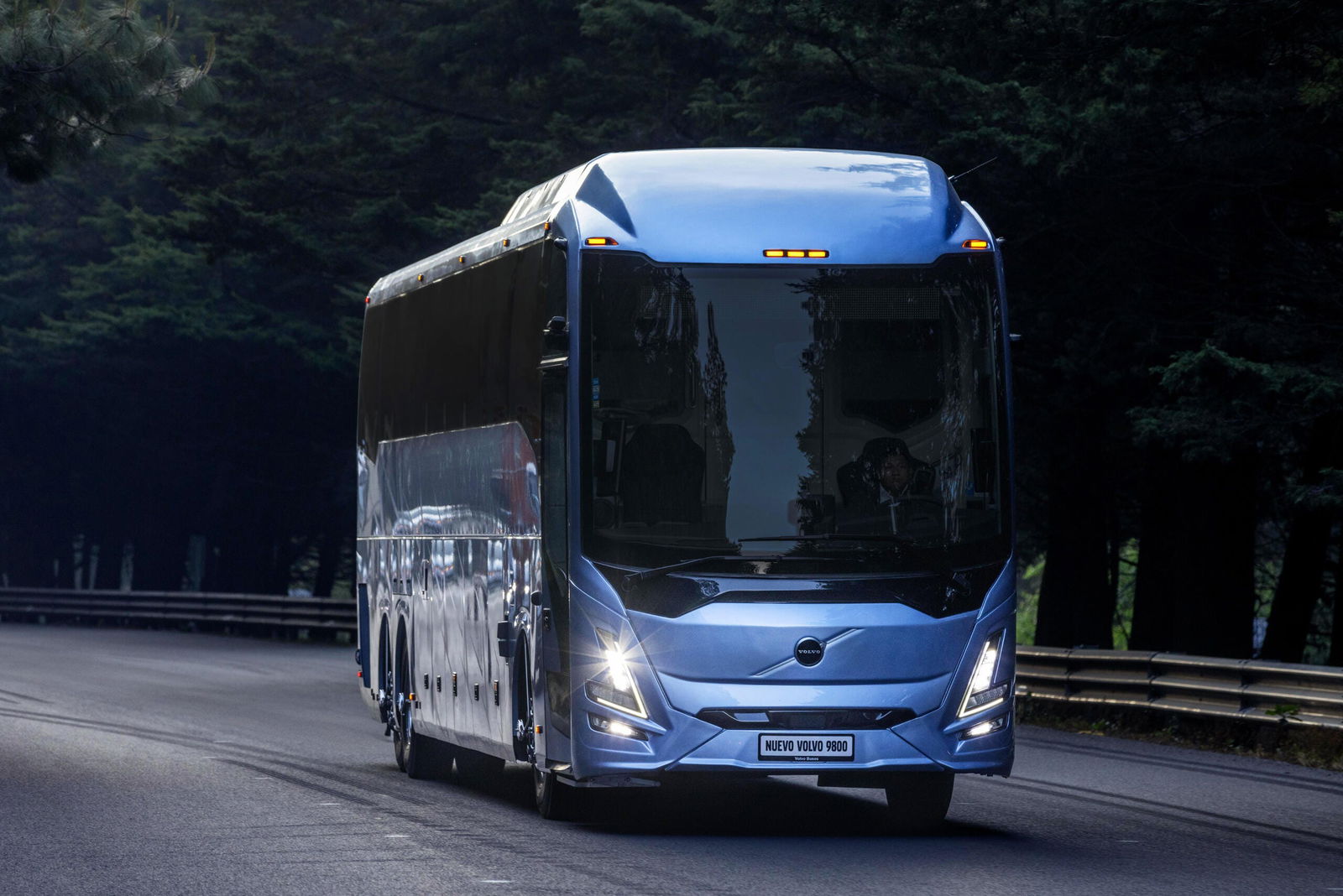
Profitability has been restored; Volvo Buses now aims to regain market share
Over five years, Volvo Buses’ adjusted operating margin rose from close to zero to more than nine per cent, while the Swedish manufacturer fundamentally reorganised its European operations. However, the financial turnaround came at a market cost: during the closure of its own European complete-bus production and the establishment of a new partner model, Volvo temporarily lost ground in numerous markets. According to Anna Westerberg, President of Volvo Buses, the next task is therefore no longer primarily to restore profitability, but to regain the market share lost during the years of transformation.
When Anna Westerberg took over the management of Volvo Buses in 2021, the company’s bus business was going through one of the most difficult periods of the coronavirus pandemic. As a result of the collapse in demand for coaches and lower new-vehicle volumes, Volvo Buses recorded an adjusted operating margin of minus 3.1 per cent in 2020. Although the result returned to positive territory a year later, adjusted operating income of SEK 59 million on revenue of SEK 13.65 billion represented a margin of just 0.4 per cent.
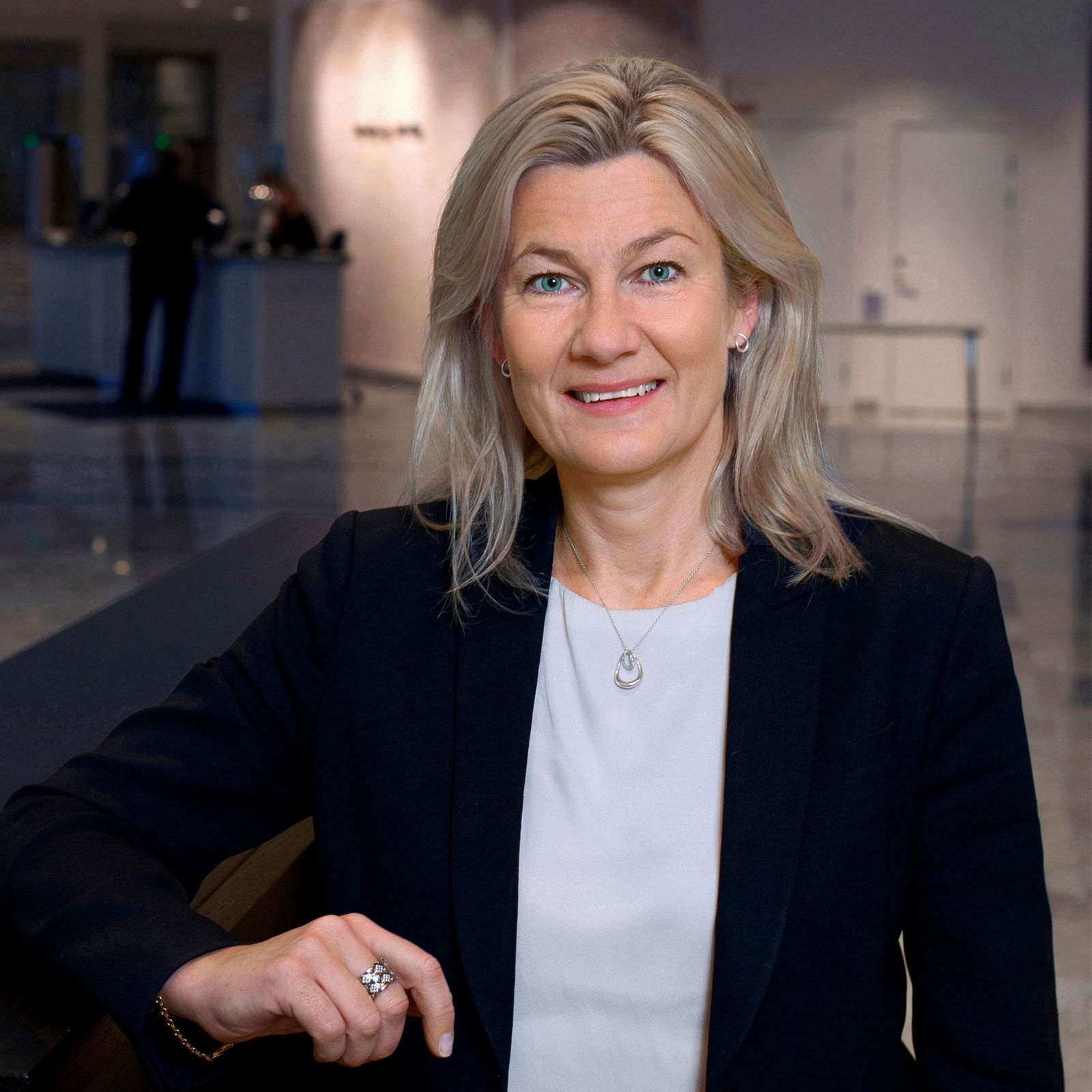
The impact of the pandemic was still far from over at that point. According to Volvo’s 2021 annual report, the coach market and the associated service business suffered particularly badly, while total bus deliveries fell by 17 per cent to 4,552 units. At the same time, the company was already placing strong emphasis on aligning costs with market conditions.
As demand gradually returned in the following years, Volvo Buses’ performance also began to improve. Its adjusted operating margin rose to 1.9 per cent in 2022 and then to 4.7 per cent in 2023. The real turnaround followed thereafter: the figure jumped to 9.1 per cent in 2024 and remained at that level in 2025. Last year, the bus business achieved adjusted operating income of SEK 2.272 billion on revenue of SEK 25.07 billion, the highest such result in Volvo Buses’ history. On a quarterly basis, it also managed to exceed the ten-per-cent threshold: the bus business recorded adjusted operating margins of 10.4 per cent in the final quarter of 2024 and 12.6 per cent in the third quarter of 2025.
The scale of the improvement is clearly illustrated by the fact that the adjusted operating margin increased from 0.4 to 9.1 per cent between 2021 and 2025. Moreover, the process was not simply the result of the post-pandemic recovery in the bus market: Volvo also carried out one of the most significant structural transformations of its European operations during this period.
European operations had been loss-making for years
Volvo itself clearly stated the need for change in March 2023, when it announced the closure of its own European complete-bus production. Westerberg said at the time, that the company’s European bus business had been loss-making for years, and that it therefore needed to move to an operating model that would improve profitability and ensure competitiveness in the long term.
The most visible element of this was the closure of the bodywork plant in Wrocław, Poland. Following the decision, which affected around 1,600 jobs, Volvo’s own European production of complete city and intercity buses ended in early 2024. Volvo made a restructuring provision of SEK 1.3 billion for the transformation.
In essence, the company separated activities that it had previously carried out within its own organisation. Volvo retained the development and production of chassis and drivetrains, while outsourcing the bodying of complete vehicles to external partners. This was not an entirely new model: Volvo had already operated under such an arrangement in several markets outside Europe.
The decision was about more than simply closing a loss-making plant. With the new structure, Volvo sought to create a more flexible operation with lower fixed costs, in which production capacity could be more easily matched to demand in individual markets. When making the announcement in 2023, the company stressed that customer relations, sales and service support in Europe would remain in Volvo’s hands, while complete vehicles would be offered jointly with selected bodywork partners.
Volvo had already anticipated that this would come at a cost. The company forecast that introducing the new model would temporarily reduce its European revenue in 2024 and 2025. In other words, the subsequent market decline was not an entirely unexpected consequence of the transformation, but partly an anticipated side effect.
The financial results are already visible
Based on the 2024 results, the financial objective of the restructuring began to be achieved. Volvo Group’s annual report specifically cited the transformation of the European business model among the factors supporting improved performance, alongside pricing, rising service revenue, a favourable product mix and good cost control. The adjusted operating margin rose from 4.7 to 9.1 per cent in a single year.
The positive trend continued in 2025. Although the number of buses delivered fell by four per cent to 6,005 units, Volvo Buses’ revenue increased by ten per cent at constant currency, while adjusted operating income reached a record level. According to the company, higher realised prices and a favourable product mix offset rising production and tariff costs.
This is an important distinction: the improvement in Volvo Buses’ performance did not come from increasing volumes at any cost. The company was able to maintain its 9.1 per cent adjusted operating margin despite lower deliveries. Profitability also remained at a high level at the start of 2026, with the bus business recording an adjusted operating margin of 8.8 per cent in the first quarter.
Volvo also lost market share over two years
The other side of the financial turnaround is reflected in Volvo’s European market presence. After production ended in Wrocław, time was needed to build up the new partner system, and during this period Volvo had a substantially smaller presence with complete buses in several European markets. Anna Westerberg has previously acknowledged this herself: according to the President of Volvo Buses, the company’s objective is gradually to regain at least the market share it lost during the roughly two years of transforming its business model.
However, the means of doing so is no longer the rebuilding of the former European production structure. In recent years, Volvo has developed a partner network spanning several continents, in which it continues to develop and manufacture the chassis, drivetrains and key technical systems of its vehicles itself, while body production is increasingly carried out by external partners.
One key player in the new system is Egypt’s MCV. The cooperation between the two companies dates back around a decade and a half and has already proved itself particularly in the UK market, but MCV’s role has become substantially greater with the transformation of the European business model. The company now also manufactures bodies for Volvo’s electric city and intercity buses.
In 2025, MCV commissioned a dedicated production hall of around 10,000 square metres and a new production line for Volvo. This is where the Volvo 7900 Electric city buses and electric Volvo 8900 models based on the BZR Electric platform are produced, enabling the Swedish manufacturer gradually to rebuild its offering in those European segments where its presence had temporarily narrowed after production ceased in Wrocław.
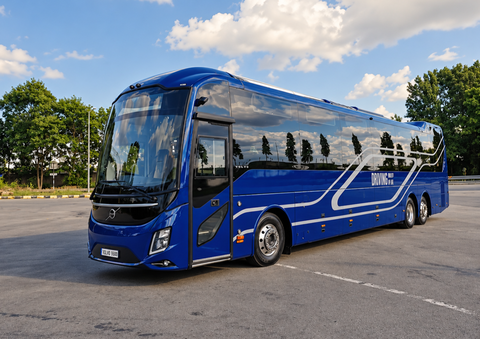
However, the partner model now extends far beyond MCV. Volvo also relies on several production bases and bodywork partners for its coaches. In Mexico, meanwhile, it is expanding its own production capacity: series production of the third-generation Volvo 9700 has already begun at its plant in Tultitlán, with deliveries of the first examples intended for Europe expected before the end of 2026.
At the same time, production capacity for Volvo coaches is also expanding in Finland. To meet growing demand, Carrus Delta, which produces second-generation 9700 UpGrade models primarily for the Northern European markets, is increasing its production capacity with the involvement of Valmet Automotive. As part of this, series production of the 9700 UpGrade also began at Valmet’s Uusikaupunki plant in September 2026, supplementing Carrus’ own production. The ramp-up of the new capacity will continue from early 2027.
A further element of the strategy is the cooperation established with Marcopolo. The Brazilian manufacturer’s Paradiso G8 1200 coach, developed for the European market, is built on a Volvo B13R chassis, allowing Volvo to increase the presence of its chassis in the European long-distance and coach market through another body manufacturer, alongside the 9700 family offered under its own brand. Orders have already been placed under this arrangement in France, Italy and Portugal, with the first deliveries expected in early 2027.
The next phase is about rebuilding market presence
The developments of recent years therefore reveal Volvo Buses’ transformation in two increasingly clear stages. The first was about restoring its cost structure and profitability. Ending its own European body production reduced Volvo’s market presence in the short term, but from a financial perspective the business is now in a substantially stronger position than when Westerberg was appointed in 2021.
In the second stage, the focus is no longer on dismantling the production system, but on expanding the offering built on the new structure. Signs of this can be seen simultaneously in the city, intercity and coach segments: alongside the new electric models produced with MCV, the Volvo 9700 is returning, production of the 9700 UpGrade has ramped up in Finland, and Marcopolo is introducing another Volvo-chassis coach in Europe.
What these initiatives have in common is that Volvo is not returning to the former Wrocław model in any of them. Instead, building on its own technical foundations and drivetrains, and using the capacities of several bodywork and manufacturing partners, it is seeking once again to cover the European market with a broader product range. This also allows the company to have a larger presence as a chassis supplier alongside complete Volvo buses.
The strategy has therefore clearly moved beyond cost-cutting. Over the past two years, Volvo has established the manufacturing and partner network through which it can seek to rebuild its former market positions without having to return to its own European body production, with its higher fixed costs.
One of the most important questions in the coming years will therefore be whether the model, which has already proved more successful financially, can also fulfil expectations from a market perspective. The adjusted operating margin of 0.4 per cent recorded in 2021 rose to 9.1 per cent within four years, while 2025 saw a record adjusted operating income. Profitability has therefore largely been restored; it now remains to be seen whether Volvo can use the new structure to regain the volumes and market share lost during the years of transformation.