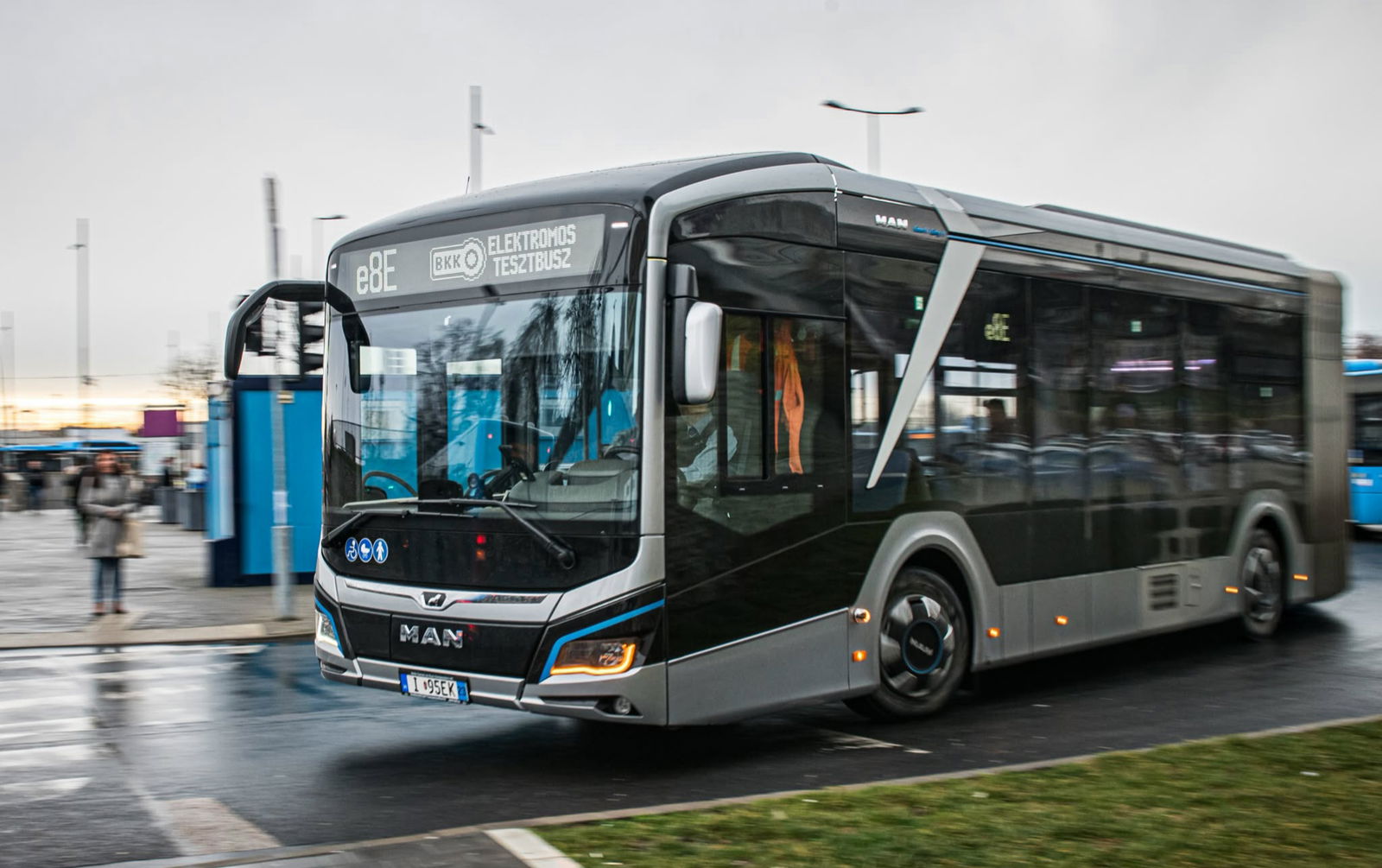
Manufacturers would amend the technical conditions of Budapest electric bus tender on several points
The preliminary market consultation prepared by the Centre for Budapest Transport (BKK), underpinning the procurement of up to 300 new electric buses and the associated charging infrastructure, has concluded. A total of 32 economic operators took part in the procedure, which ended on 15 October, with 21 of them initiating separate discussion threads. Vehicle manufacturers, their Hungarian representatives and importers, as well as charging infrastructure suppliers, would amend BKK’s preliminary technical requirements on numerous points. The comments primarily concern battery sizing and service life, vehicle design, delivery deadlines and the power supply of charging depots.
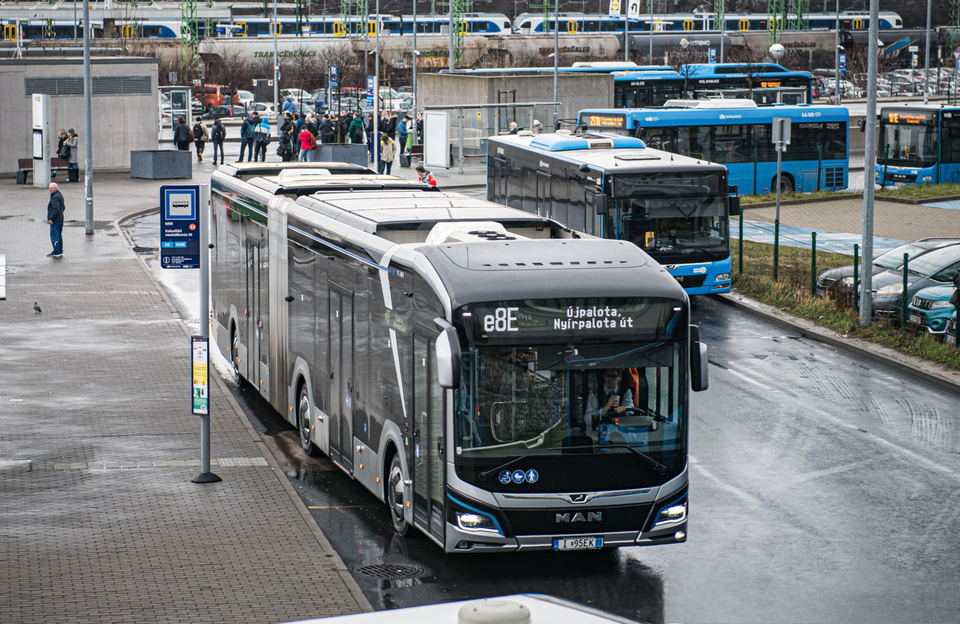
Under the investment being prepared jointly by BKK and BKV, Budapest could receive at least 250 and up to 300 all-electric urban buses, which could gradually replace part of BKV’s ageing diesel fleet. The procurement would cover midi, single-deck rigid and articulated buses; however, BKK is initially committing to order only 100 vehicles – 50 rigid and 50 articulated – while the remaining quantity is included as an option. The necessary charging infrastructure and intelligent energy management system would be implemented under a separate public procurement procedure. The investment is intended to be financed from European Union funds, although its implementation remains dependent on the fulfilment of the necessary financing and procurement conditions.
The purpose of the preliminary market consultation was to assess the extent to which the planned technical and contractual requirements match market offerings, and what solutions could ensure the reliable and economical operation of several hundred electric buses. Although the identities of the participants are not public, the comments received suggest that the consultation involved vehicle manufacturers of various sizes from Europe and beyond, and their representatives, as well as charging infrastructure suppliers.
Manufacturers differ in their assessment of delivery deadlines
One important issue in the consultation was whether the planned number of vehicles could be delivered. Taking into account an assumed contract award in the second quarter of 2028 and a completion deadline at the end of 2029, BKK asked market participants to set out their production and delivery capacities.
The responses show significant differences. Some manufacturers consider the handover of 20–25 buses per month realistic, while others believe larger quantities could be delivered with adequate preparation and production scheduling. One respondent considers the delivery of as many as 300 electric buses within 12 months feasible. Although the identity of the manufacturer is unknown, it may be a Chinese player, as the production capacities of major European bus manufacturers are generally committed well in advance, whereas Chinese manufacturers’ substantial production capacity and its as yet unused share may provide greater flexibility for the rapid fulfilment of orders of this scale. Another manufacturer indicated a production and delivery period of around 15 months for the same quantity, while one further participant considered an 18-month deadline justified.
Several manufacturers stressed, however, that the delivery period should not necessarily begin from the signing of the contract, but from approval of the vehicles’ final technical configuration. Production scheduling is also influenced by the procurement of batteries and other major components, the proportion of different vehicle categories, and the necessary type-approval and acceptance procedures.
The consultation also shows that not all interested parties have suitable products in all three vehicle categories sought by BKK. One manufacturer, for example, indicated that it does not currently offer an electric midibus, but could undertake to deliver up to ten rigid and articulated vehicles per month from 2028 without a significant inflationary effect on prices.
Dispute has also arisen over battery sizing
One of the most important groups of comments concerning the vehicles relates to battery requirements. BKK’s preliminary technical specification stipulates battery capacities of at least 200 kWh net and 285 kWh gross for midi buses, 400 kWh net and 600 kWh gross for rigid buses, and 500 kWh net and 930 kWh gross for articulated buses.
Several manufacturers believe that specifying gross battery capacity in such detail could unnecessarily restrict technical solutions. In their view, the procurement should primarily define the energy actually available for use, the required range and battery service life, while leaving the choice of the necessary gross capacity to manufacturers.
One manufacturer considers the minimum 930 kWh gross battery capacity specified for articulated buses expressly excessive and proposes reducing it to 700 kWh. According to its comment, the largest available battery capacity for the articulated model it offers is 796 kWh with NMC energy storage systems and 704 kWh with LFP batteries, while the minimum usable capacity of 500 kWh required by BKK can be met in both cases. In another comment, the manufacturer states a usable capacity of 633 kWh for the LFP version, meaning that the vehicle would have substantial energy reserves even without meeting the 930 kWh gross figure.
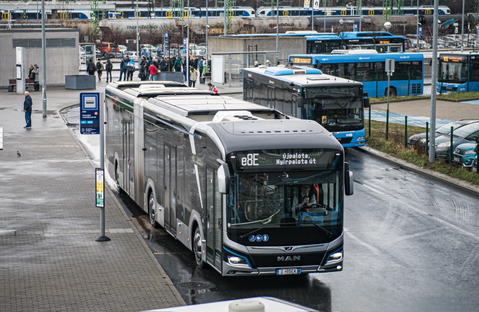
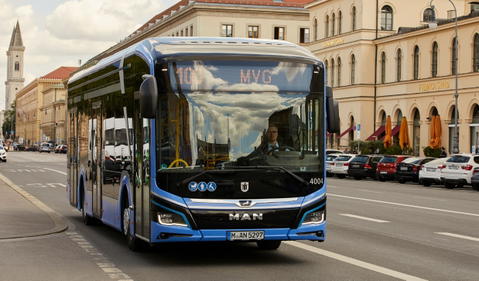
The scale of the requirement is well illustrated by the fact that, to the best of our knowledge, there is currently no series-produced conventionally designed articulated electric bus available on the market with a gross battery capacity of 930 kWh. Models offered with the largest energy storage systems include the Solaris Urbino 18 electric, whose battery capacity approaches, and in some configurations exceeds, 800 kWh. By comparison, the Mercedes-Benz eCitaro G is available with up to 777 kWh, while the MAN Lion’s City 18 E has a maximum gross battery capacity of 712 kWh. Based on the 796 kWh NMC and 704 kWh LFP battery capacities mentioned in the consultation, together with the 633 kWh usable energy content stated for the latter, it may reasonably be assumed that the comment calling for the reduction of the 930 kWh requirement originated from the Polish manufacturer.
The 930 kWh requirement can be considered exceptionally high even if it is assumed that BKK has taken into account the anticipated development of battery technology by the planned delivery date of the vehicles in 2028–2029. However, this interpretation raises the question of why the same approach is not applied to rigid and midi buses, given that the gross battery capacities of 600 kWh and 285 kWh specified for them can already be met using currently available technology. It is therefore difficult to justify why the technical requirements exceed the capabilities of today’s series-produced models to such a significant extent specifically in the case of articulated vehicles.
Another participant also raised concerns about oversized batteries. According to one manufacturer’s preliminary calculation, every additional 100 kWh of installed battery capacity could increase the vehicle’s unladen weight by around 600 kilograms. On this basis, a 930 kWh battery system alone could weigh close to 5.6 tonnes, while reducing capacity to 700 kWh could theoretically result in a saving of nearly 1.4 tonnes. The actual figure naturally depends on the battery technology used and the design of the system.
This additional weight may already pose a serious design challenge for an articulated urban bus. When positioning battery packs, consideration must be given not only to the available installation space, but also to body load-bearing capacity, weight distribution and permitted axle loads. Moreover, a higher unladen weight directly reduces the payload available for passengers, at the expense of passenger capacity. With current battery technology, the permitted passenger capacity of an articulated electric bus equipped with 600–800 kWh of energy storage in some configurations barely exceeds that of a conventional rigid diesel bus.
The problem may be further exacerbated in daily operation, as in practice neither the number nor the total weight of boarding passengers is continuously monitored. During busy periods, a nominally 100-passenger articulated electric bus may take on a further 20–30 passengers, representing an additional load of around 1.4–2 tonnes. As a result, the vehicle’s actual gross weight may significantly exceed the statutory maximum of 30 tonnes for electric articulated buses. Although the vehicle structure may withstand a certain degree of overloading, this represents not only a technical and road-safety risk, but may also contribute to increased wear on the road surface, particularly on Budapest’s road network, which is already in poor condition in many places. The 930 kWh requirement therefore raises serious questions not only from a design perspective, but also in terms of operation and infrastructure.
According to the manufacturers’ position, it would be more sensible to size batteries primarily according to actual operational needs and the required range. For rigid and articulated buses, BKK requires a range of at least 250 kilometres in the SORT2 operating cycle, with a high passenger load and air conditioning in operation. One participant in the consultation therefore proposes examining high-power charging options, including pantograph charging, instead of unnecessarily large onboard energy storage systems, as these could permit the use of smaller and lighter battery packs.
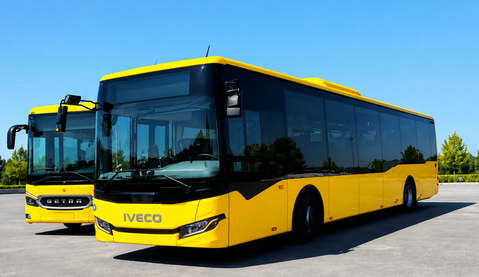
Some manufacturers also consider a review of the requirements concerning battery technology justified. Rather than exclusively requiring lithium iron phosphate (LFP) technology, they advocate accepting other battery chemistries, primarily nickel manganese cobalt (NMC)-based energy storage systems, provided that they meet the stipulated range, safety and service-life requirements. The objection is also of considerable market significance. Among leading European bus manufacturers, the battery systems of the Mercedes-Benz eCitaro, MAN Lion’s City E and Iveco E-WAY are based on NMC technology, while the Volvo 7900 Electric uses NCA batteries. Solaris, meanwhile, offers electric buses equipped with both NMC and LFP batteries. In contrast, a significant proportion of Chinese manufacturers, including BYD and Yutong, primarily use LFP technology. The exclusive LFP requirement could therefore place several major European manufacturers at a disadvantage and, in extreme cases, exclude them from the competition, while creating more favourable conditions for Chinese players relying on such batteries.
The manufacturers’ comments therefore draw attention to the fact that there may be significant differences between battery chemistries in terms of energy density, weight and service life, but the use of one technology alone does not necessarily justify excluding another. According to the participants, it would be more appropriate to define the technical and operational parameters that must actually be met, and to accept battery systems meeting these requirements irrespective of their technology.
The warranty conditions specified for batteries also drew objections. BKK’s original concept envisages an eight-year or 480,000-kilometre capacity warranty, with a minimum remaining capacity of 80% even after at least 4,000 full charging cycles. One manufacturer, however, indicated that the guaranteed cycle life of the battery systems it uses is between 1,500 and 3,600 cycles depending on type and configuration, and therefore proposed reducing the 4,000-cycle requirement to 1,500. The objection does not necessarily mean that the actual service life of the batteries would be shorter than this, but rather relates primarily to the durability parameters for which manufacturers are prepared to provide a contractual warranty.
The issue is important because battery ageing is not determined solely by the number of charging cycles: depth of discharge, operating temperature, charging power and intensity of use all influence the rate of capacity loss. Excessively stringent warranty conditions may therefore not only narrow the pool of potential suppliers, but also increase the purchase price of vehicles, as manufacturers must incorporate long-term warranty risks into their bids. At the same time, an adequate capacity warranty is also of paramount importance to the contracting authority in terms of future battery replacements and operating costs.
Separating vehicle categories could increase competition
The consultation also received comments concerning the structure of the procurement. One market participant proposed that BKK should allow the procurement of midi, rigid and articulated electric buses in separate procurement lots. The reasoning is that treating the three categories together could adversely affect manufacturers that do not have suitable products in all three size classes. Bidding by vehicle category could therefore result in broader manufacturer participation and stronger competition, while also reducing the risk that the entire procurement depends on a single supplier’s production capacity.
A particularly large number of objections concerned the technical requirements for midi buses. BKK requires vehicles no longer than 9 metres, fully low-floor throughout, capable of accommodating at least 39 passengers, with a minimum of 20 fixed seats, two double-leaf doors and a range of at least 230 kilometres. All this would have to be achieved with a maximum permitted gross weight of 12 tonnes, while gross battery capacity must reach 285 kWh. According to manufacturers, meeting these requirements jointly could cause serious design difficulties and significantly narrow the range of eligible models.
The problem is not merely theoretical. To the best of our knowledge, no European bus manufacturer currently offers a 9-metre electric midibus with a fully low-floor layout throughout its length. Several manufacturers are active on the market whose electric buses in this size category are available only in low-entry form, while fully low-floor models are generally longer. One participant in the consultation specifically stated that it does not have a fully low-floor 9-metre model. A further comment therefore proposed raising the upper limit on permitted vehicle length to 10.6 metres, thereby including the maxi-midi category. In this size class, Solaris, Yutong, BYD, Daimler Buses and MAN, among others, offer fully low-floor electric buses that cannot be considered under the current maximum length limit of 9 metres. Alternatively, the consultation also raised the possibility of accepting low-entry vehicles.
For smaller 8–9-metre electric buses, jointly meeting the requirements for battery installation, a fully low-floor passenger compartment, the stipulated number of seats and the 12-tonne gross weight limit may present a particularly serious technical challenge. According to one consultation participant, the minimum 285 kWh gross battery capacity required by BKK, the 39-passenger capacity and the maximum permitted gross weight of 12 tonnes cannot be met simultaneously. Several proposals were therefore submitted to ease the requirements, including raising the gross weight limit to 14.5 tonnes.
BKK, however, considers the restriction on the gross weight of midi buses one that must expressly be retained. In its response, it cited weight restrictions in force in the vehicles’ intended area of operation, stating that it cannot dispense with the 12-tonne upper limit. It will, however, consider the comments concerning length and floor layout when preparing the final procurement documentation.
Power supply for charging depots could be one of the biggest challenges of the investment
Alongside vehicle procurement, the development of charging infrastructure is of at least equal importance. According to BKK’s plans, the Cinkota and Óbuda bus depots would play a key role in operating the electric buses, with each needing to be capable of serving at least 125 vehicles.
One of the most important tasks for infrastructure suppliers in the consultation was to examine how the available electricity grid capacity could be reconciled with the simultaneous charging demand of a large number of electric buses.
One market participant prepared a detailed calculation based on the depot layout outlined by BKK, assuming 96 single-deck and 24 articulated buses. According to this, the combined rated charging power of the vehicles would be 20.4 MW, while 10 MVA of grid connection capacity would be available at the depot under review.
The supplier pointed out, however, that this in itself does not mean that the power supply issue is insoluble. Charging the combined 50.4 MWh net battery capacity of the 120 buses within eight hours would theoretically require an average output of 6.3 MW, disregarding charging losses. Moreover, after daily operation, the vehicles would not normally return to the depot with fully discharged batteries.
According to the market participant, the real problem is primarily caused by the requirement that assumes an exceptionally high proportion of buses being charged simultaneously. With appropriate smart charging control, however, the available power can be distributed so that the vehicles reach the required state of charge for entering service the following day.
The proposed system would also take account of the buses’ actual arrival times, their battery charge levels, their departure times the following day and their expected energy requirements. Vehicles departing earlier would be given priority, while buses remaining at the depot for longer would charge at lower power or at a later time.
Smart charging control could reduce investment requirements
Several participants in the consultation proposed the use of dynamic power sharing. Its essence is that all buses at the depot can be connected to the charging system, while it is not necessary to provide the maximum rated power continuously to every charging point.
Through central power-electronics units and intelligent control, the available energy can be distributed among charging points according to current requirements. This could reduce the required grid connection capacity, as well as the investment costs of transformers and other electrical equipment.
The proposals also include the use of depot-based battery energy storage systems. These can be charged during periods of lower grid demand, then provide supplementary power during peak periods. Several participants stressed, however, that energy storage systems must be sized according to actual daily energy demand and the charging schedule, as oversized systems could entail significant additional costs.
The technical observations also cover transformer capacity, the method of connecting energy storage systems and power sharing between charging equipment. According to several respondents, coordinated planning of the power supply network and charging management will be particularly important when designing the final system.
Charging requirements require further clarification
Questions also arose during the consultation regarding the interpretation of certain requirements in the technical documentation. These include the precise definition of charging simultaneity, the relationship between available grid capacity and installed charging power, and the operating conditions under which the requirements must be met.
In several cases, BKK indicated that it would take the points raised into account when drawing up the final procurement documentation and would clarify the technical specifications. However, no final decision was made during the consultation on all of the proposed amendments.
The charging configuration of the vehicles also raises open questions. Alongside conventional depot charging via CCS connectors, BKK also examined the possible future use of pantograph solutions. According to one manufacturer, preparing certain designs for the retrofitting of a pantograph could increase the price of the vehicle by as much as 10%, even without the installation of the current collector itself. Other respondents anticipate a smaller cost impact, clearly showing that the feasibility of the requirement depends heavily on the design of the particular vehicle.
The final conditions are not yet known
With the conclusion of the preliminary market consultation, BKK has reached the end of an important preparatory phase, but the actual procurement procedure has not yet begun. Based on the comments received, several technical and procurement conditions may require review, potentially materially affecting the range of prospective bidders, the costs of the investment and the subsequent operation of the vehicles. In particular, objections concerning battery capacity, warranty conditions and the design of midibuses indicate that some of the planned requirements are difficult to reconcile with the manufacturer offerings currently available.
For BKK, however, the task is not simply to ease the technical specifications, but to establish which requirements are indispensable under Budapest operating conditions and which can be amended without materially restricting competition.
The introduction into service of several hundred electric buses is, moreover, a task that goes beyond vehicle procurement. The electricity supply of the depots, the capacity of the charging equipment and the vehicles’ daily duty schedules must be coordinated during the planning phase. The key question in the coming period will therefore be which manufacturer feedback BKK incorporates into the final procurement documentation, and under what conditions it launches Budapest’s largest-ever electric bus procurement.
Cover photo: BKK