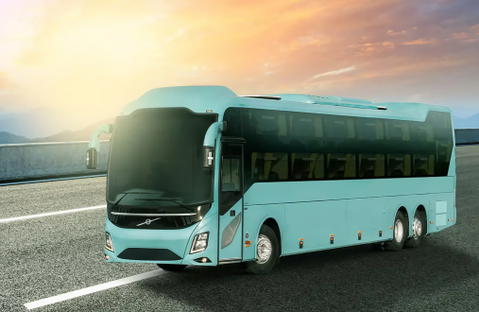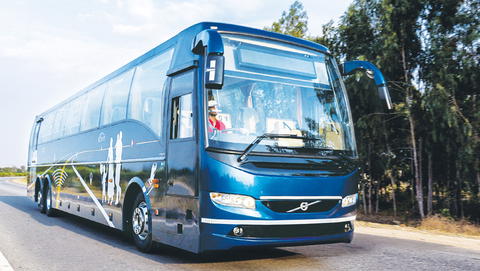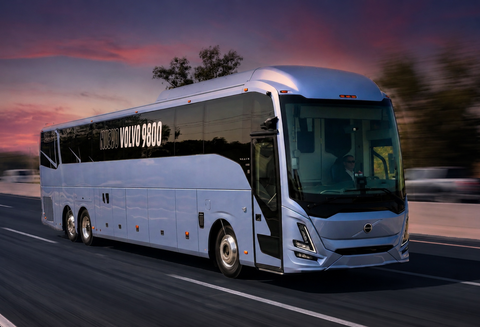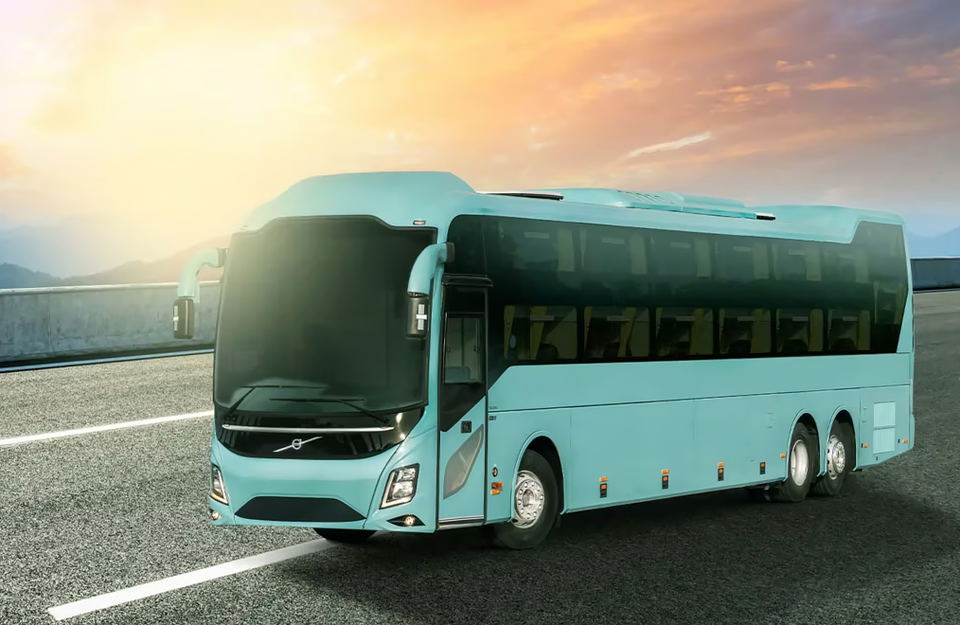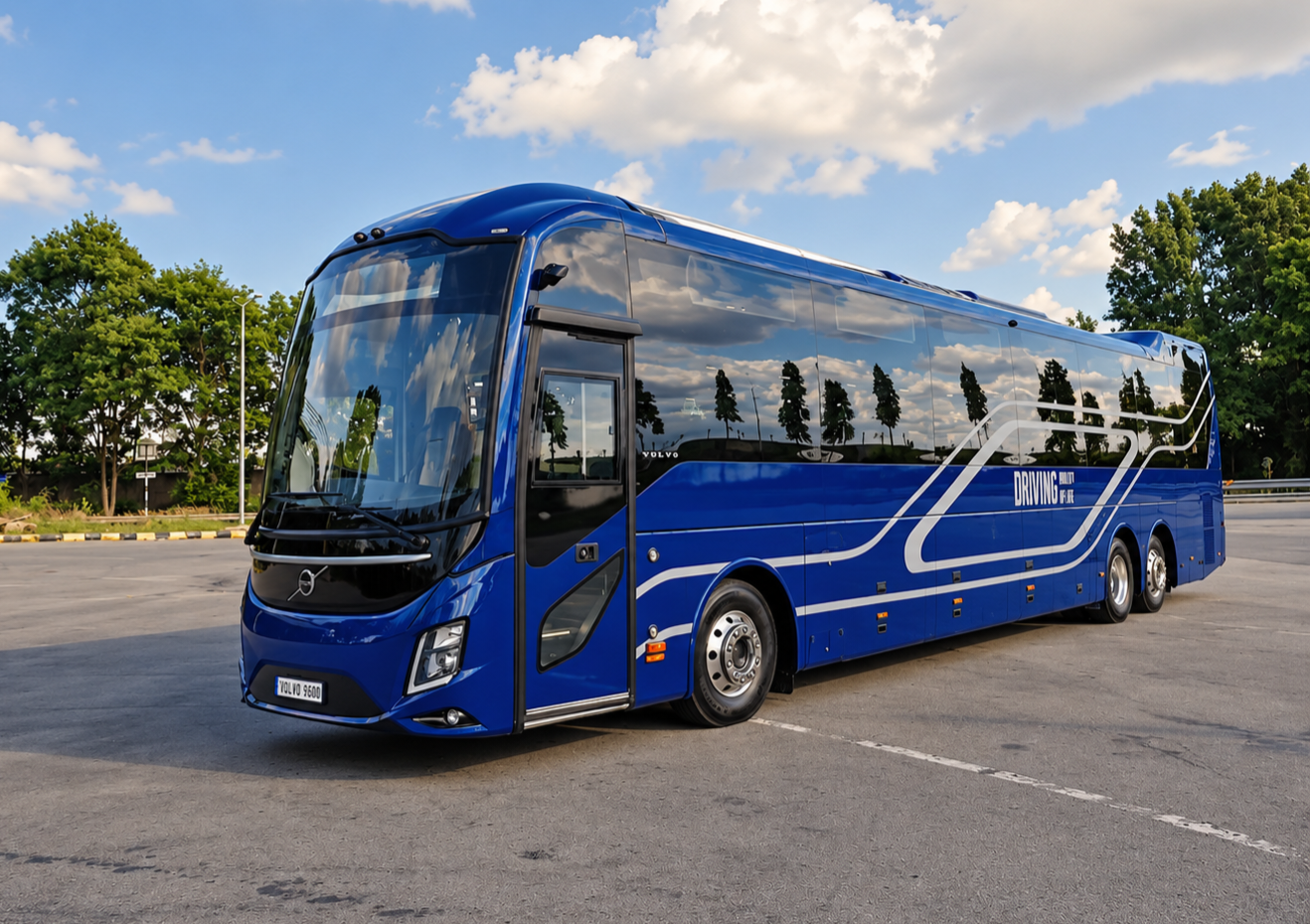
350 Volvo 9600 coaches ordered in India, most of them in sleeper configuration
Volvo Buses is strengthening its position in India’s premium long-distance coach market with significant orders. In the space of barely six weeks, the Swedish manufacturer’s Indian operation has announced two large-volume deals involving the delivery of a total of 350 Volvo 9600 coaches. The 150-vehicle order from a private operator, made public in early September, was followed in mid-October by a further public-sector procurement for 200 vehicles. Together, the two contracts signal a further strengthening of the Volvo 9600’s market presence in India, particularly in the field of long-distance passenger transport by coach offering a higher level of comfort.
The order for 200 vehicles, announced on 14 October, came from the Maharashtra State Road Transport Corporation (MSRTC), one of India’s major state-owned transport companies. According to Volvo Buses India, this is the manufacturer’s largest single coach order in India to date. The procurement includes 170 conventional seated Volvo 9600s and 30 sleeper versions. The former will be built with 51 passenger seats featuring footrests and premium seating, while the latter are intended primarily for overnight long-distance journeys. The new vehicles will operate on services within the state of Maharashtra and to other Indian states. The value of the contract and the precise delivery schedule have not yet been disclosed.
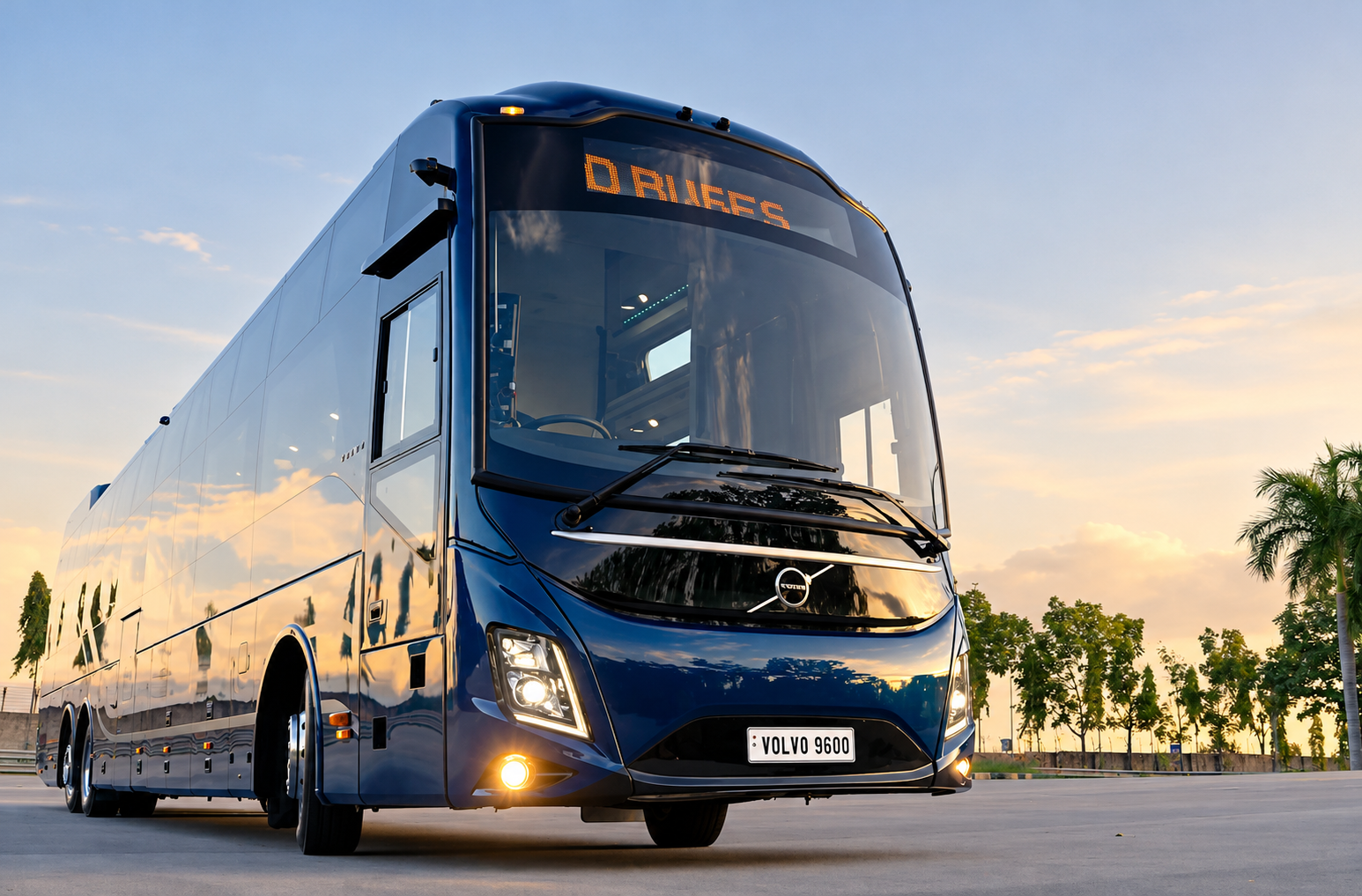
The other major deal was announced on 4 September: private operator Vijayanand Travels Private Limited (VTPL) ordered 150 Volvo 9600 sleeper coaches. By doing so, the company, which operates a long-distance route network in southern, western and central India, placed Volvo’s largest private-operator order in India. The two companies have a partnership spanning several decades, and the latest fleet expansion is also intended to extend operations into additional Indian states. VTPL already operates an extensive network, one of whose notable features is the connection between Bengaluru and Jodhpur, described as Asia’s longest bus route.
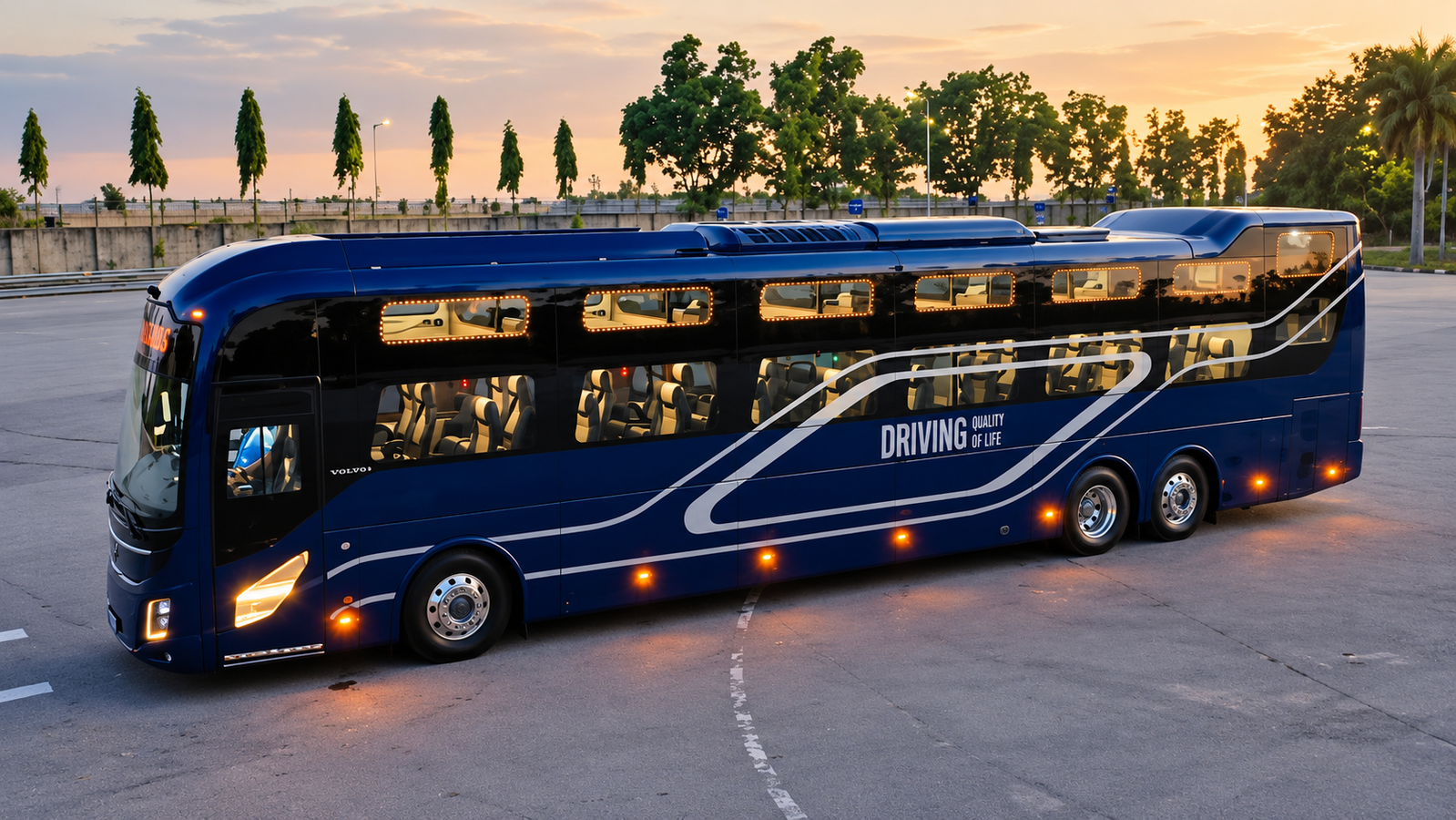
A special feature of the coaches being built for Vijayanand Travels is their passenger compartment with 40 berths, offering more comfortable accommodation for long-distance journeys that may last throughout the night. Around 70–80 of the vehicles ordered will also be equipped with onboard toilets, which are not yet standard equipment in Indian long-distance coach transport. The company intends to deploy these primarily on its longest routes, further reinforcing the distinction between conventional bus transport and premium services offering a higher standard of service.
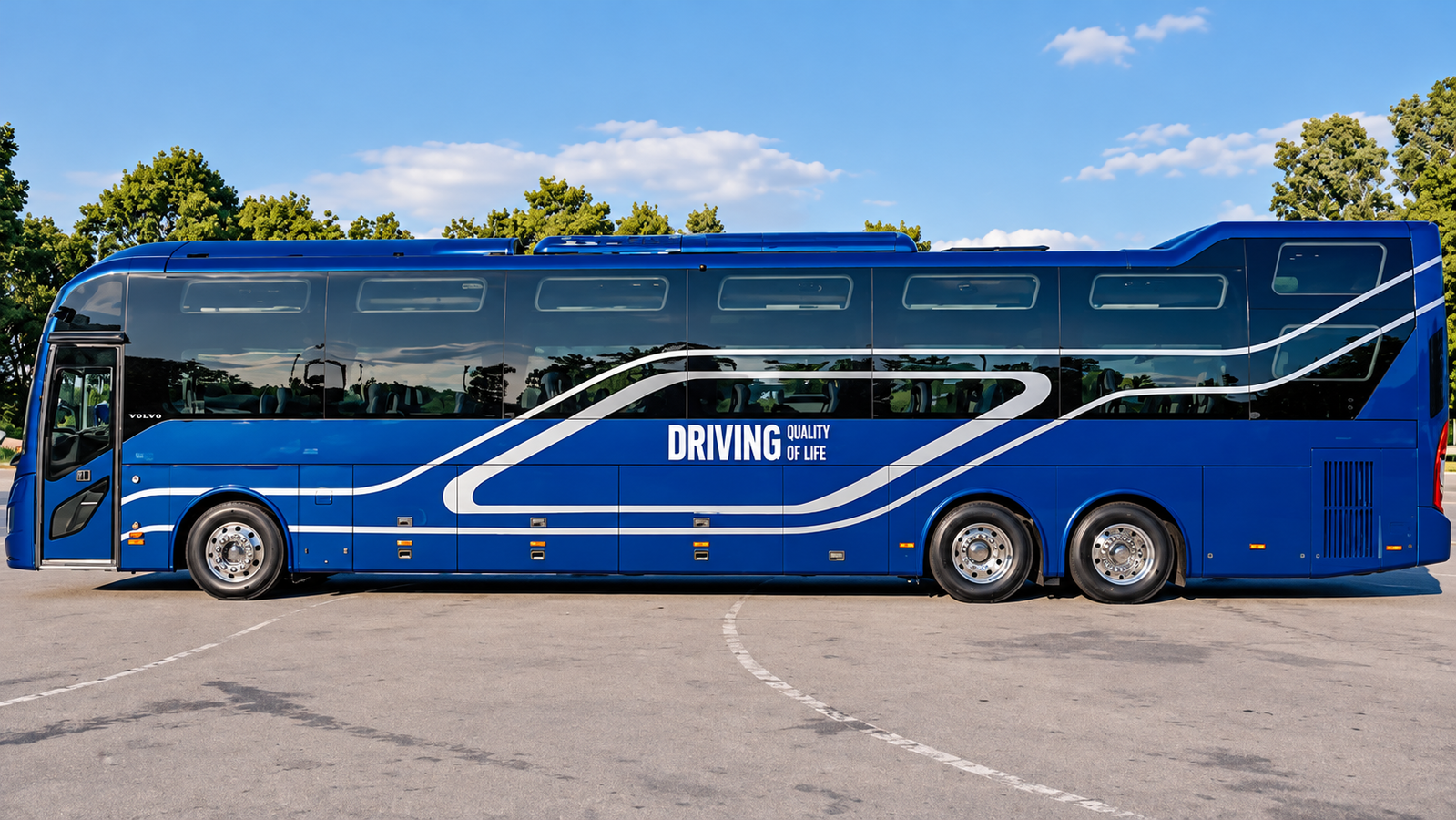
Through the two orders, a total of 180 sleeper and 170 seated Volvo 9600s could enter the Indian transport market. The vehicles are being manufactured at the Hoskote plant near Bengaluru of VE Commercial Vehicles (VECV), a joint venture between Volvo and Indian company Eicher. Trucks have been manufactured at the site since 1998, production of self-propelled bus chassis began in 2001, and complete buses have been built there since 2008. Local production enables Volvo to offer coaches tailored to Indian operating requirements while drawing on the brand’s international technical solutions.
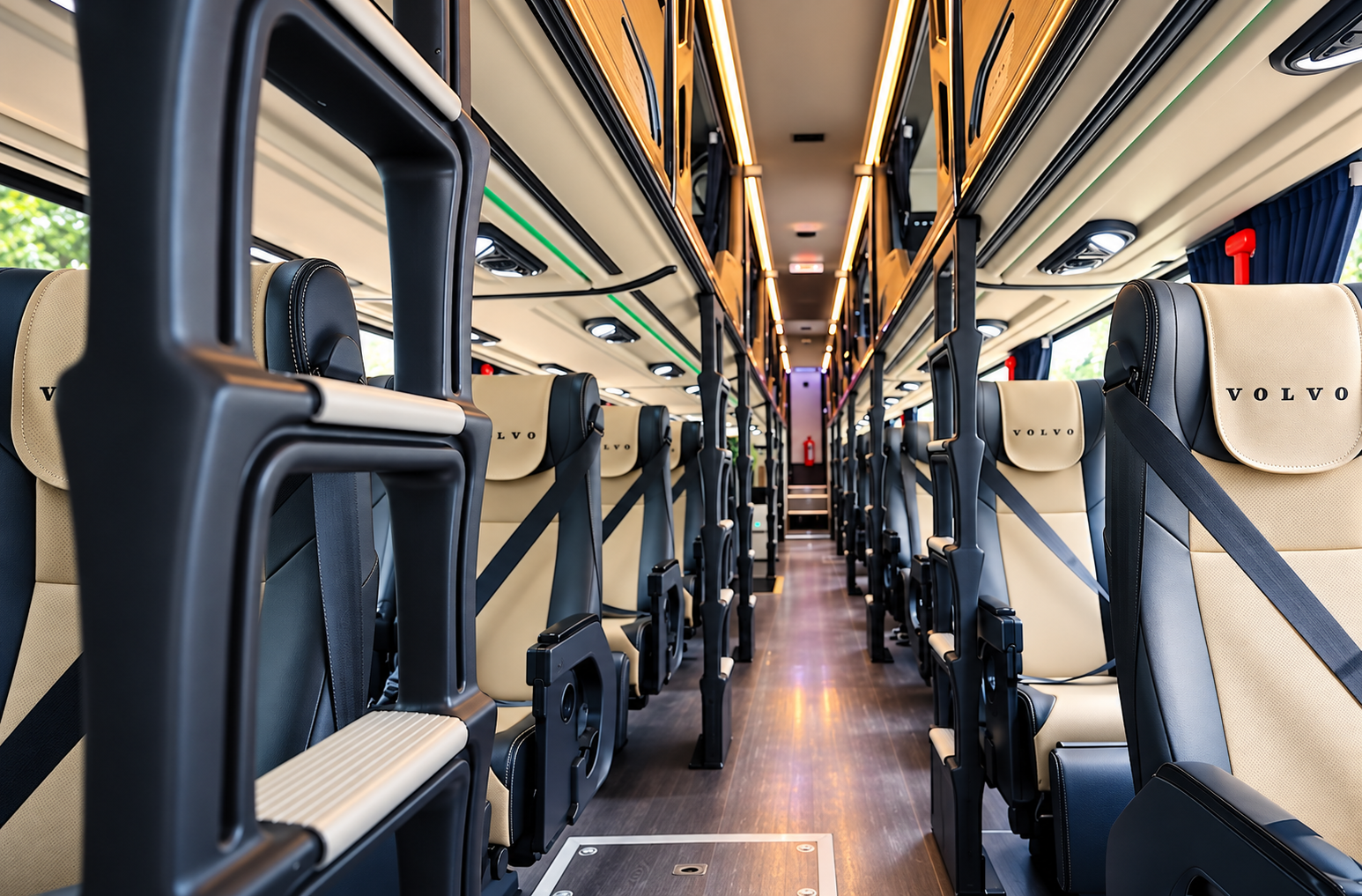
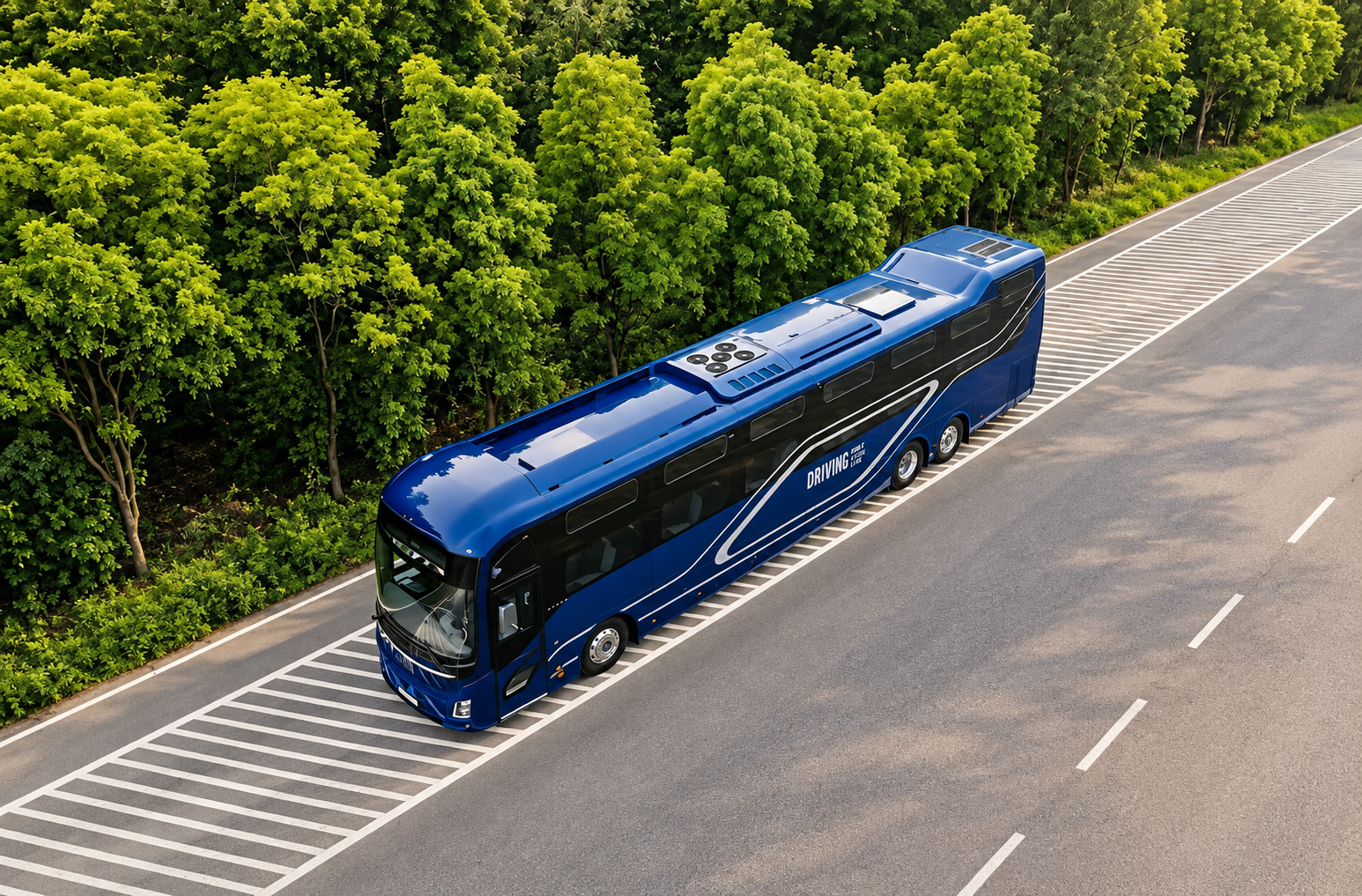
The Volvo 9600 range was unveiled in August 2022 as the flagship model of the Swedish manufacturer’s global coach family adapted for the Indian market. Its styling is related to that of the European Volvo 9700 and 9900 and the Mexican-built 9800 models, while several details have been specifically adapted to local requirements. Foremost among these is the sleeper version, whose raised roofline at the rear, above the engine compartment, provides space for the stacked berths. Accordingly, whereas the conventional seated version is 3.8 metres high, the sleeper version stands exactly 4 metres tall.
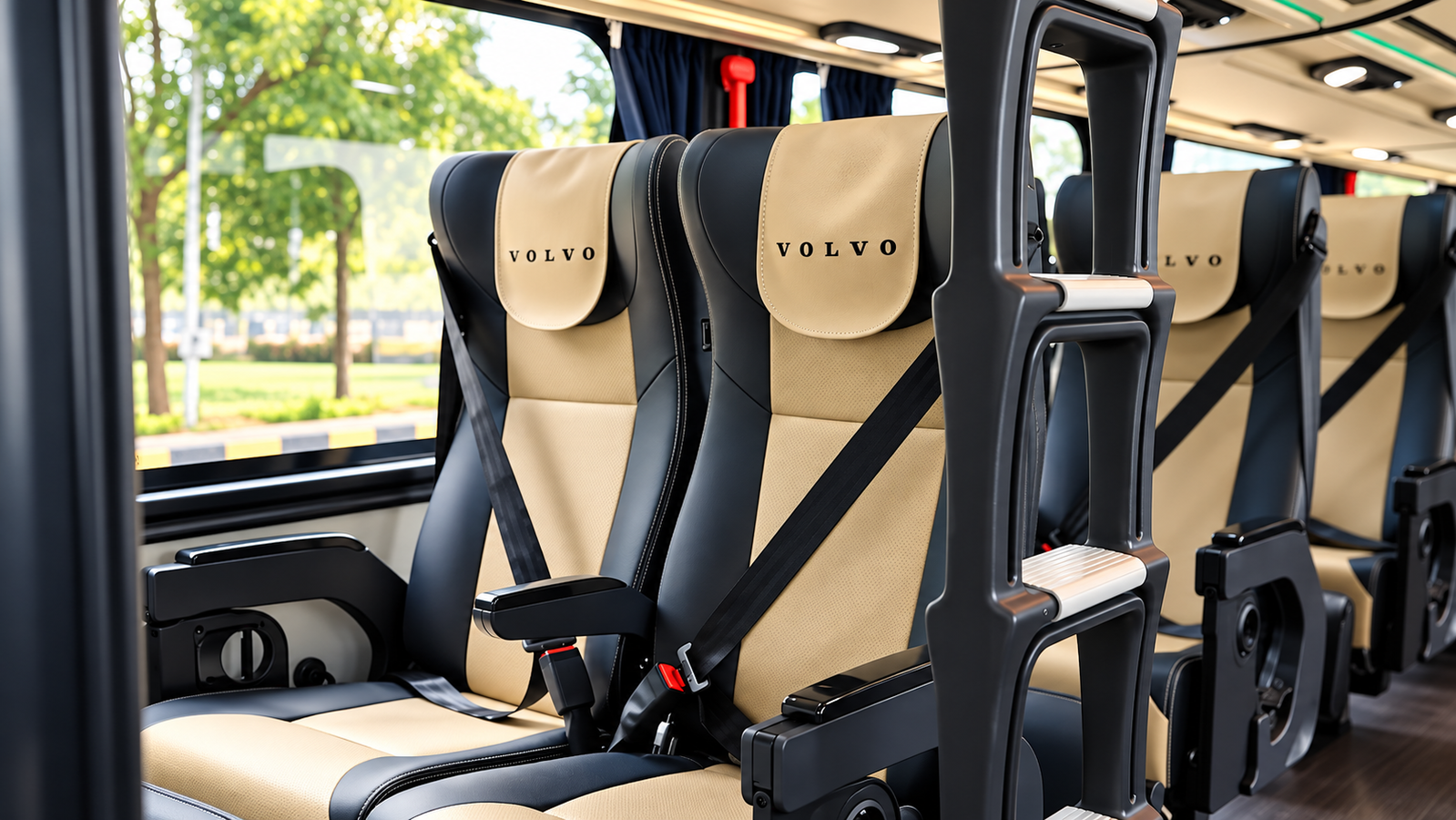
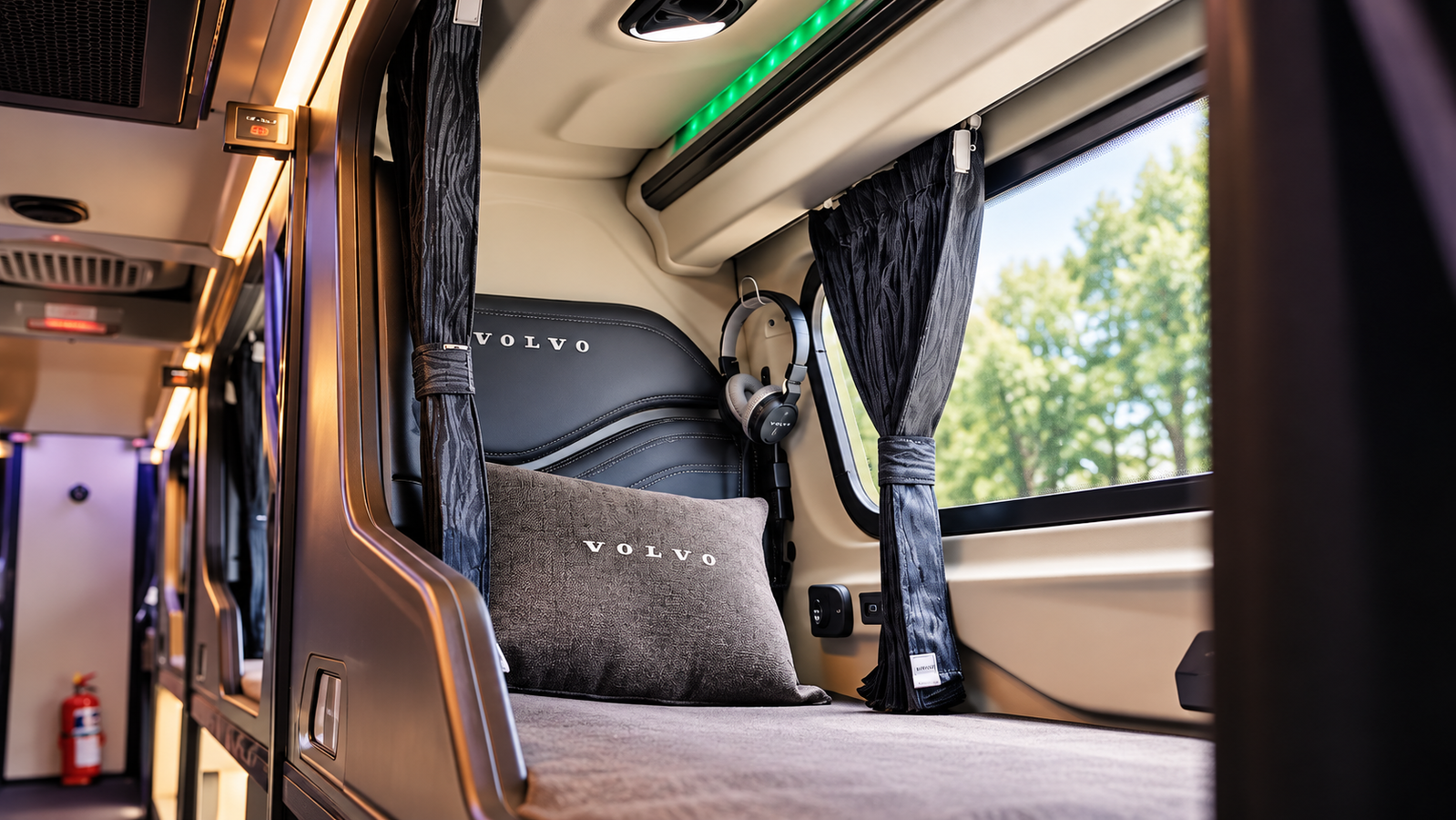
The model range was originally introduced in 13.5-metre two-axle and 15-metre three-axle versions, with both seated and sleeper passenger compartments available at each length. In its launch configuration, the longer version offered 55 seats and up to 15.1 cubic metres of luggage space, or 40 berths and 9.2 cubic metres of luggage space, while the shorter version could be ordered with 47 seats or 36 berths. The coaches intended for overnight operation feature curtained sleeping cabins equipped with panic buttons, while the seated versions have a rising, so-called theatre-floor passenger compartment for better visibility.
Despite its substantial bodywork, the Volvo 9600 is technically based on the B8R chassis, powered by the 7.7-litre six-cylinder D8K diesel engine. The model uses the 260 kW, or 350 hp, version of the power unit, with maximum torque of 1350 Nm. The drivetrain is paired with a Volvo I-Shift automated transmission offering 12 forward and four reverse gears, which can also be supplemented by a hydrodynamic retarder. The Volvo 9600 range’s safety equipment includes an electronic braking system (EBS), electronic stability programme (ESP), hill-start assist and fire-protection equipment. The vehicles feature a reinforced front-end frame structure with greater energy-absorption capability.
The model range’s equipment has been further expanded in recent years, and now includes a 360-degree camera system, camera-based mirrors, a tyre-pressure monitoring system, a system detecting driver fatigue and inattention, and an alcohol interlock. The developments also include a telematics system transmitting real-time vehicle data, as well as a redesigned passenger compartment, enhanced ambient lighting and comfort equipment supplemented by an onboard toilet and kitchenette.