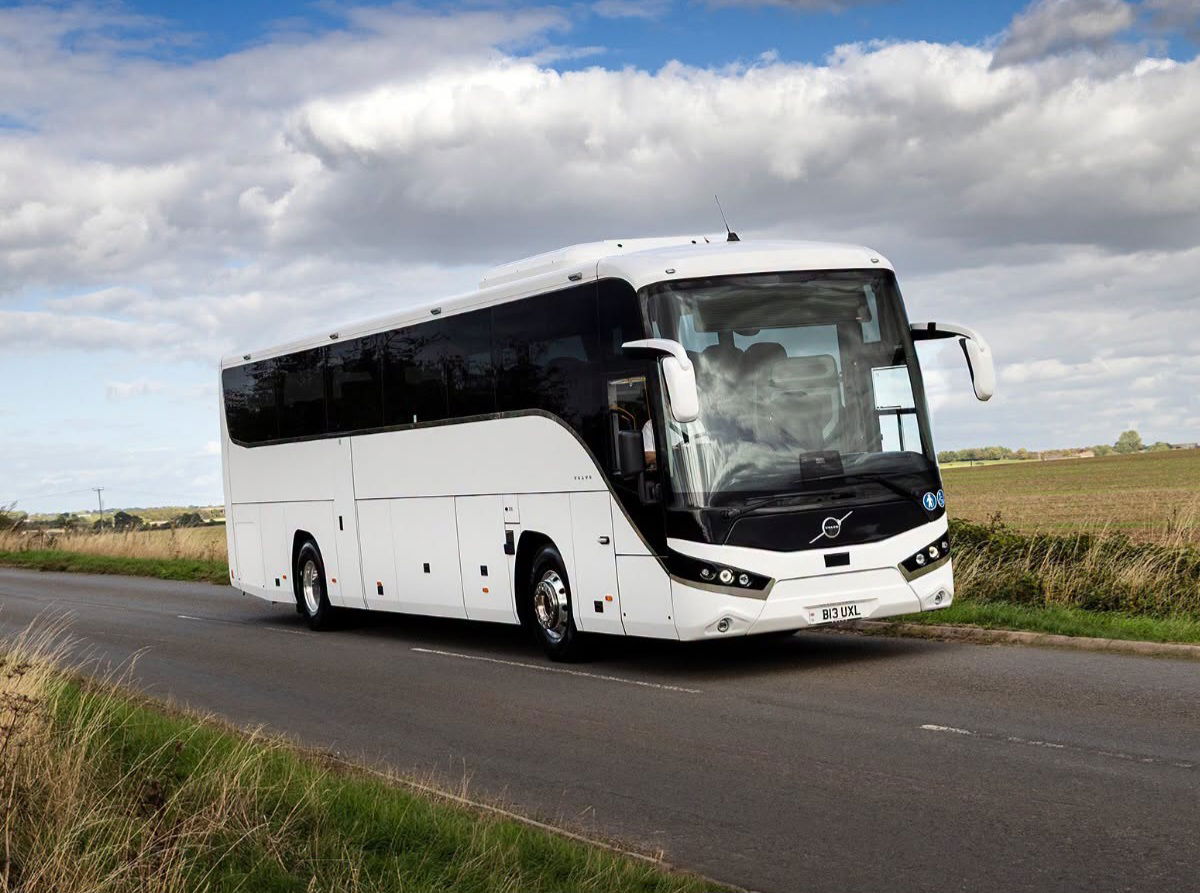
Another step in Volvo’s coach comeback: the B13R UNVI XL makes its debut
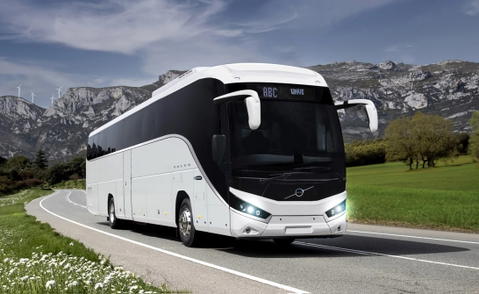
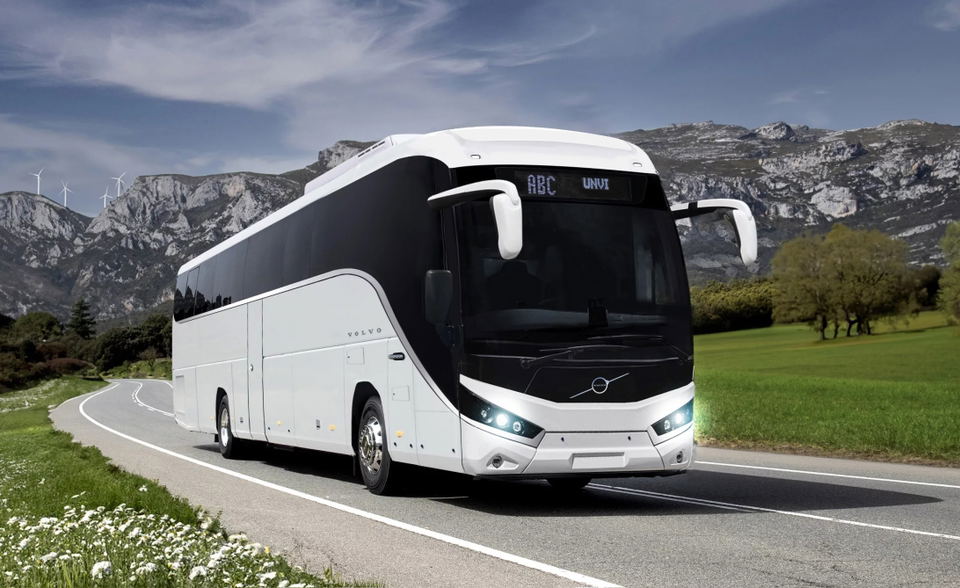
The new coach developed by Volvo Buses and UNVI specifically for the UK and Irish markets is also set to be presented to the general public: the Volvo B13R UNVI XL will make its exhibition debut at Euro Bus Expo in Birmingham between 3 and 5 November. Development of the 12.8-metre-long, two-axle model was announced in March last year, and it has since become an important part of Volvo’s coach range in the British Isles, partly filling the gap left by the loss of its former bodybuilder partner, Sunsundegui.
The vehicle displayed at Birmingham NEC will be shown in a 53-seat configuration. The passenger compartment will feature reclining seats equipped with three-point seat belts, footrests and folding tables, while USB-A and USB-C ports will provide charging for electronic devices. In developing the model, Volvo and UNVI also took account of the requirements of UK and Irish operators, with particular emphasis on interior configurability and high luggage capacity. However, the images now released show that the production-ready B13R UNVI XL differs in several details from the previously presented renderings of the model. The overall appearance of the near-production vehicle is somewhat more restrained than that of the version previously previewed.
The design is based on Volvo’s B13R rear-engined bus chassis. The vehicle arriving at the exhibition is powered by the 500 hp version of the 12.8-litre, six-cylinder D13K diesel engine, delivering a maximum torque of 2,500 Nm, while transmission is handled by a 12-speed Volvo I-Shift automated gearbox. According to Volvo, the new powertrain can enable fuel savings of up to 9 per cent compared with the previous B11R powertrain.
Together with the B13R platform, the UNVI XL also receives Volvo’s Active Safety Platform driver-assistance system. Its features include a lane-keeping assist system, a collision warning and emergency braking system, and adaptive cruise control.
Volvo Buses and UNVI announced in March 2025 the launch of the XL, which was developed exclusively for the UK and Ireland from the outset. Reception proved favourable even before production began: three months after the announcement, firm orders had been secured for more than a dozen vehicles, along with option agreements for a further ten buses.
The significance of the partnership was further increased by the loss of Volvo’s former Spanish bodybuilder partner, Sunsundegui. The Navarre-based company’s SC5 and SC7 models had long formed an important part of Volvo’s UK and Irish range, but due to financial difficulties it permanently ceased operations in 2025. The UNVI XL therefore arrived not simply as another model bodied by a partner, but also partly assumed Sunsundegui’s role in the market segment it had previously served.
The B13R UNVI XL also fits into the coach arm of Volvo Buses’ restructured European business model. While the chassis continues to be manufactured at Volvo’s plant in Sweden, the bodywork is carried out by UNVI in Portugal. Following the closure of the Wrocław body plant in 2024, the Swedish manufacturer is not replacing the former Polish capacity with a single new production base for coaches either, but is rebuilding its European range by relying on several production sites and external bodybuilder partners.
One central element of this is the return of the Volvo 9700. Series production in Europe of the model, previously manufactured in Poland, was originally to have been taken over by Sunsundegui under a licence-based arrangement, but the project fell through due to the Spanish bodybuilder’s financial difficulties. Volvo ultimately transferred production of the model to its own plant in Tultitlán, Mexico, with deliveries of the first examples intended for Europe expected before the end of 2026.
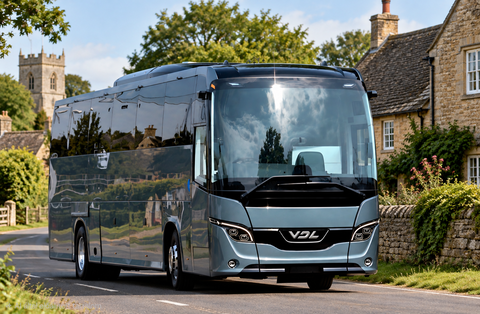
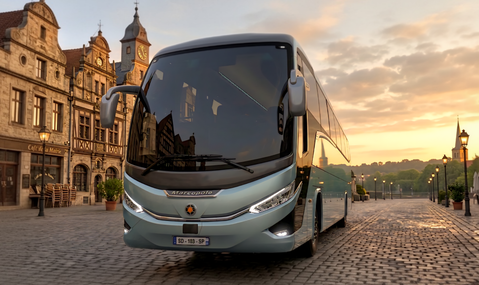
At the same time, the production base is also expanding in Northern Europe. Series production of the 9700 UpGrade began in September 2026 at Valmet Automotive’s Uusikaupunki plant in Finland, with the involvement of Carrus Delta, one of Volvo’s long-standing bodybuilder partners. UNVI has been given an important role in the UK and Irish markets with the B13R XL, while Volvo is also expanding its offering in continental Europe with a new alternative through its cooperation with Brazil’s Marcopolo. Deliveries of the first examples of the Marcopolo Paradiso G8 1200, also built on the Volvo B13R chassis and intended for the European market, are expected in early 2027, and orders for the model have already been received from France, Italy and Portugal.
From a financial perspective, the new business model has so far appeared to live up to expectations. As we have previously reported in detail, Volvo Buses’ profitability improved markedly alongside the restructuring: the division’s adjusted operating margin rose from 0.4 per cent in 2021 to 9.1 per cent by 2024, and remained at this level in 2025. The next task is therefore no longer primarily to restore profitability, but to regain the European market positions lost during the years of restructuring – and, in the coach sector, the range now being built around several production bases and bodybuilder partners is intended to serve that goal.