Expensive and complex technology – Hamburg’s Hochbahn increasingly sceptical of hydrogen buses
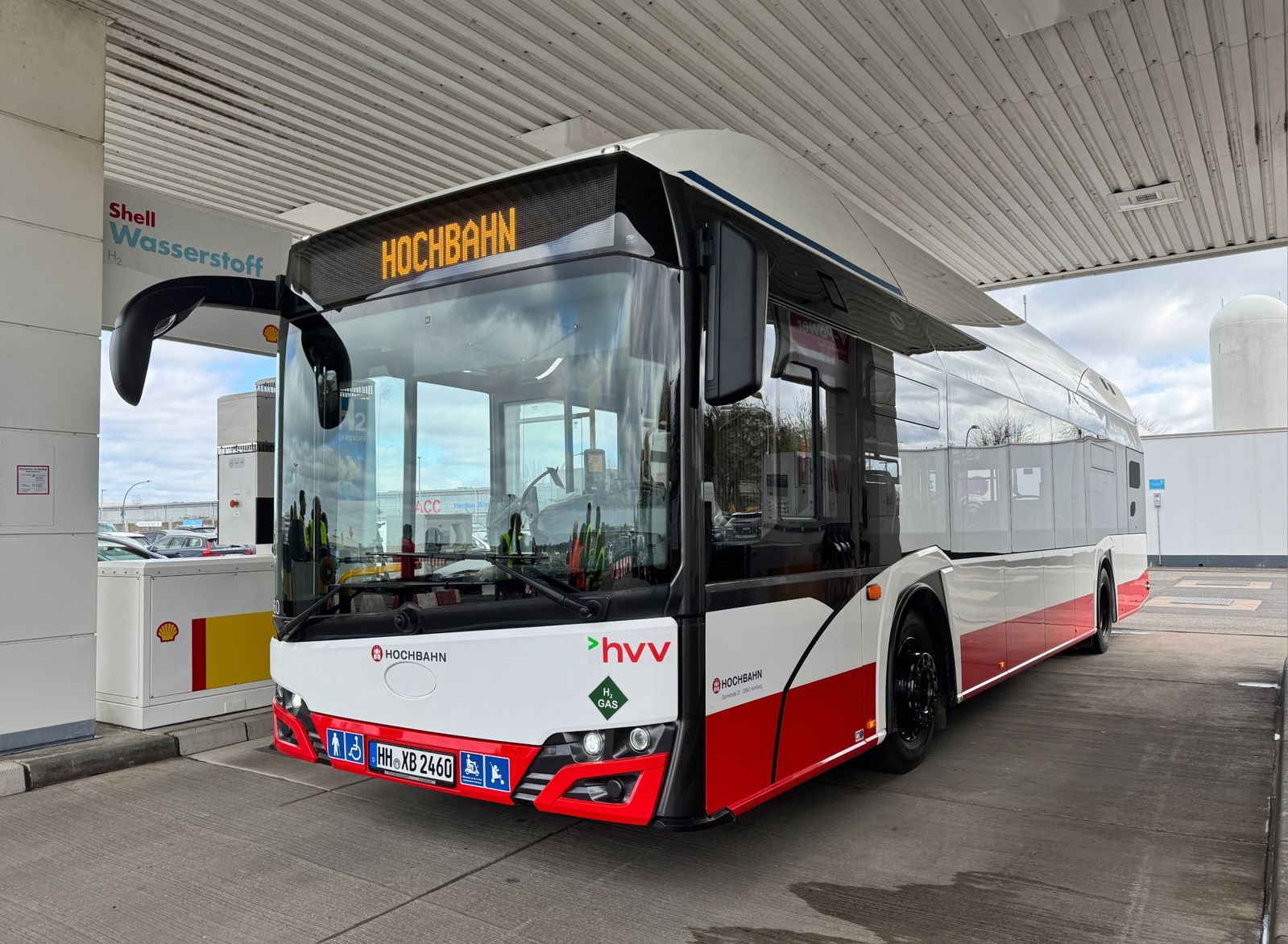
Serious doubts have arisen over the future of hydrogen-powered buses in Hamburg, where the local transport operator, Hamburger Hochbahn AG, increasingly considers fuel-cell technology to be uncompetitive on the basis of its experience to date. The introduction into service of the five Solaris Urbino 12 hydrogen buses ordered by the company has been subject to significant delays, vehicle availability has fallen short of expectations, while the cost of hydrogen supply also represents a considerable burden. The problems are particularly noteworthy given that the company had previously regarded hydrogen propulsion as a strategic alternative, but has now clearly committed itself to battery-electric buses.
In a statement to the German press agency Deutsche Presse-Agentur (dpa), Jens-Günter Lang, Hamburger Hochbahn’s technical director, painted a rather unfavourable picture of the operational experience with hydrogen buses to date. According to the expert, fuel-cell vehicles are considerably more complex technologically than battery-electric buses, while their procurement and operation also entail significant additional costs. The issue is not solely the technical reliability of the vehicles, but also the necessary hydrogen supply infrastructure and the high cost of the fuel. Based on Hochbahn’s experience, the availability of hydrogen buses currently falls short of that of both conventional diesel buses and battery-electric buses.
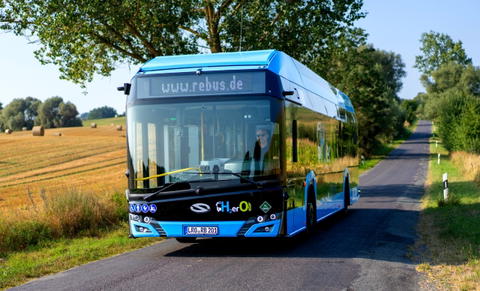
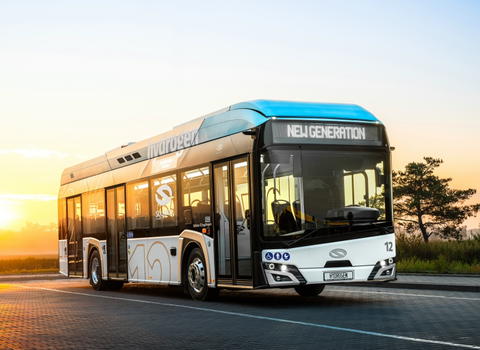
The company ordered five Solaris Urbino 12 hydrogen fuel-cell buses, with which it originally intended to examine the feasibility of hydrogen propulsion in everyday public transport service. However, the procurement encountered difficulties from the outset. Delivery of the vehicles was originally planned for June 2024, but owing to matters requiring clarification with the manufacturer, the first bus did not arrive in Hamburg until early 2025. The Hamburg Senate had already reported the delay in April 2025, in its official response to a written question from an opposition member.
Following the necessary preparations, the first vehicle had begun trial runs by spring 2025 and was by then also appearing on scheduled services. The company still expected delivery of the remaining four buses in spring 2025, subject to the successful testing of the first vehicle to enter service. The Senate’s response at the time stressed that the decision to procure the hydrogen buses had been made following a successfully completed public procurement procedure, and that the necessary hydrogen supply contract was already in place when the vehicles were ordered. However, the programme has still not reached its planned state. Jens-Günter Lang told dpa that the company has been operating the five hydrogen buses for almost a year, but their final acceptance has still not taken place because the vehicles do not meet the stipulated quality requirements.
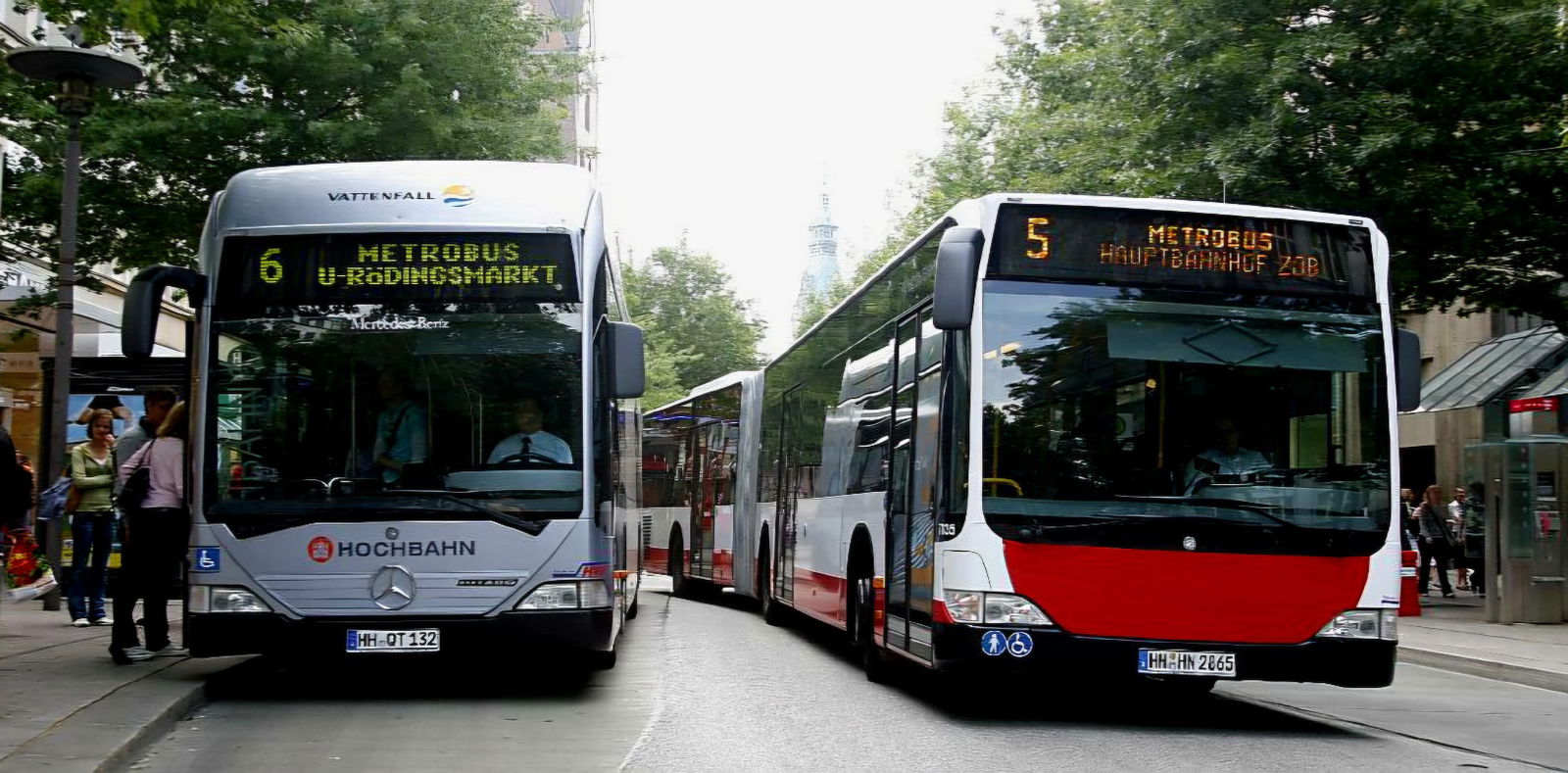
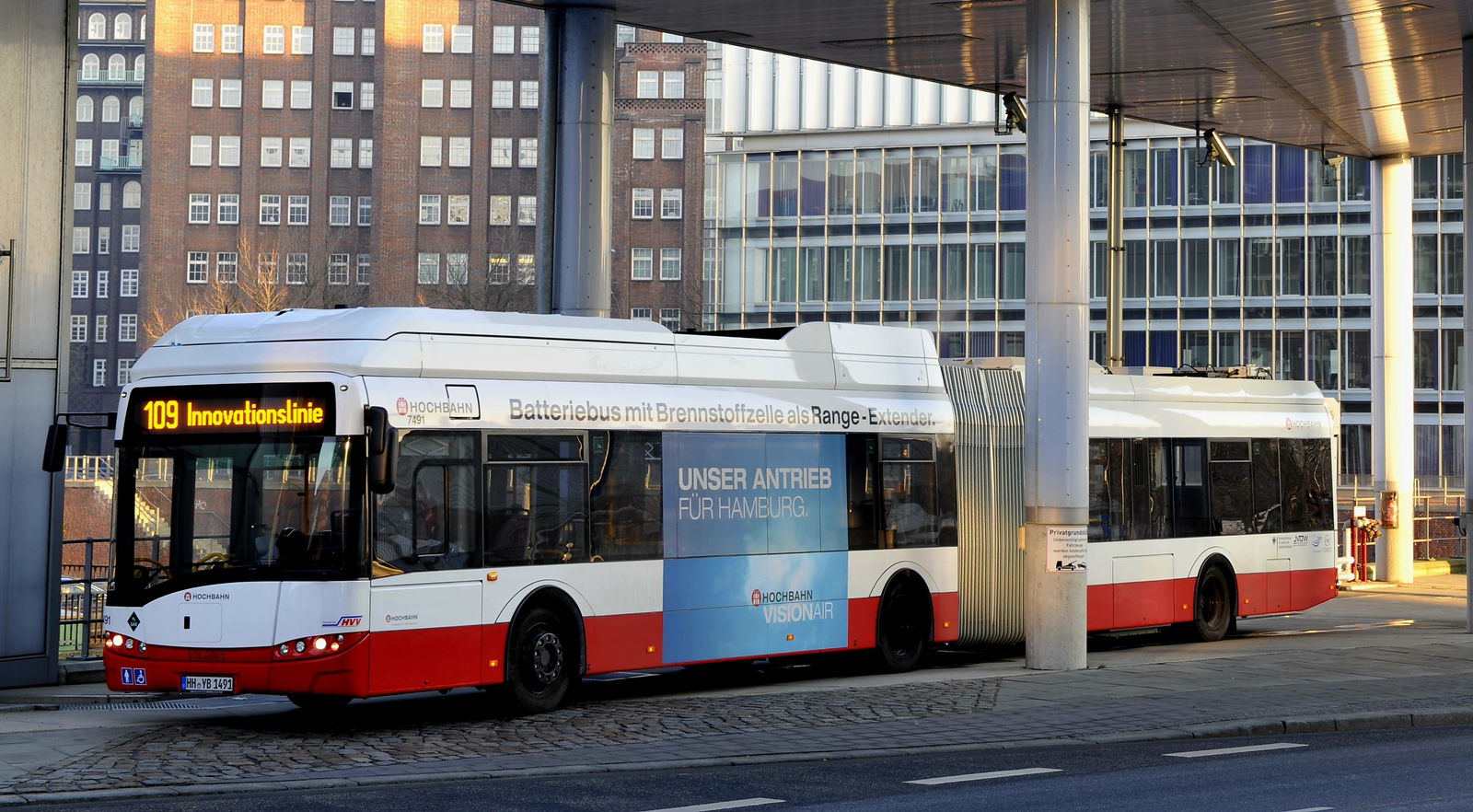
The current difficulties are particularly noteworthy because Hamburg is considered one of Europe’s longest-standing trial locations for hydrogen-powered buses. As early as September 2003, Hochbahn began public-service testing of fuel-cell technology with three Mercedes-Benz Citaro Fuel Cell buses, before continuing the programme from 2011 with further-developed fuel-cell hybrid buses. In December 2014, the company also introduced two Solaris Urbino 18,75 electric articulated buses, in which the primary energy source for propulsion was provided by a 120 kWh battery system, while a 101 kW Ballard fuel cell acted as a range extender. The vehicles were tested on innovation route 109, where different alternative propulsion technologies could be compared under identical operating conditions. Despite more than two decades of experience, hydrogen propulsion has still not become a defining technology in Hamburg’s bus transport.
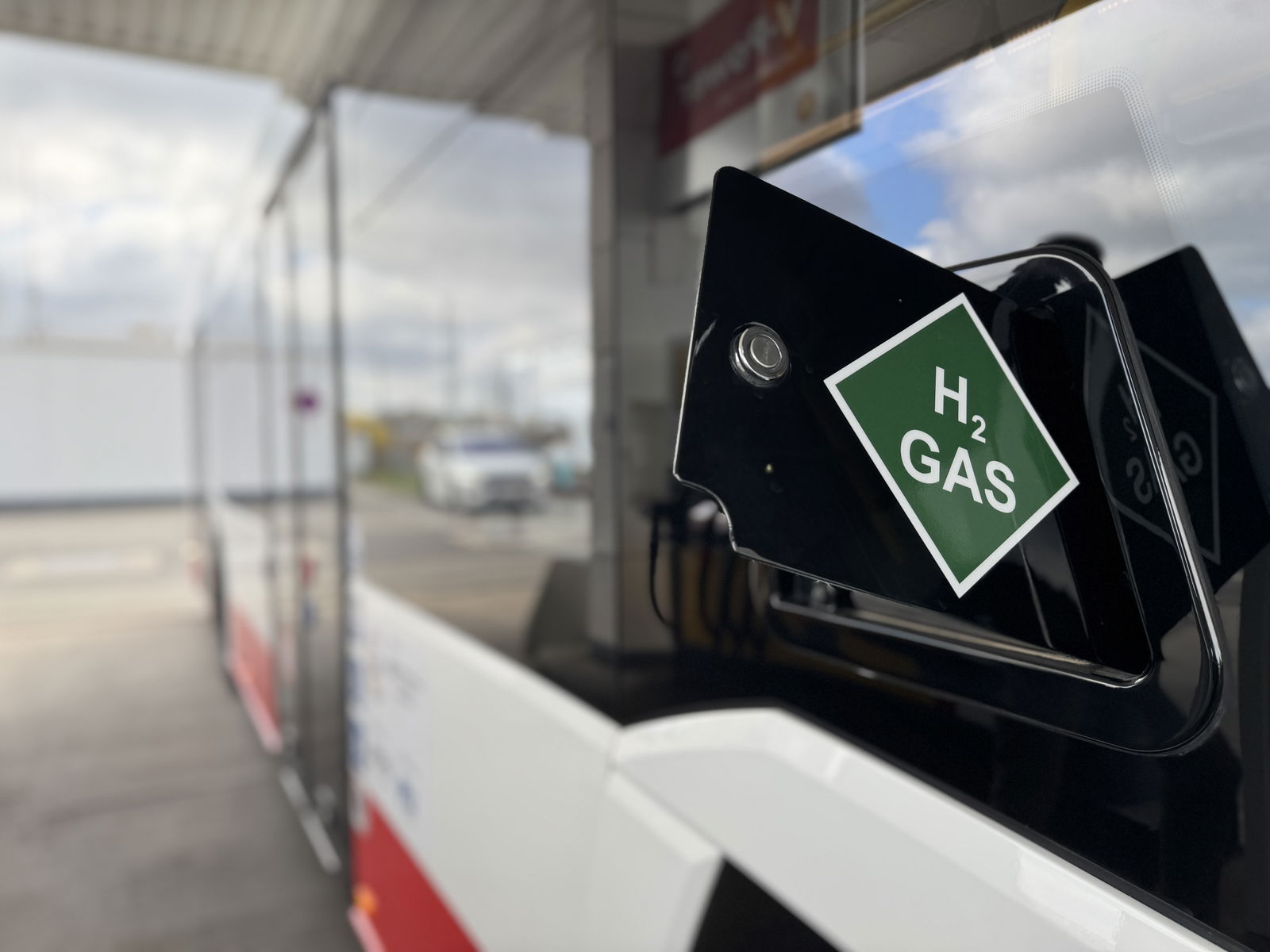
The procurement of the current Solaris fleet was preceded by a European public procurement procedure launched in summer 2020, aimed at acquiring series-produced fuel-cell buses suitable for regular operation. The Solaris Urbino 12 hydrogen buses procured are fitted with a 70 kW fuel cell and five roof-mounted hydrogen tanks. Propulsion is provided by two near-wheel electric motors, each rated at 125 kW. The hydrogen is stored at a pressure of 350 bar, with the manufacturer quoting a range of up to 350 kilometres on a single fill. The vehicles are refuelled at the hydrogen filling station on Weg beim Jäger, near Hamburg Airport, which is considered a suitable location from an operational perspective because of its proximity to the Hummelsbüttel bus depot. For economic reasons, Hochbahn had not planned to build its own hydrogen filling station at its depot for the time being.
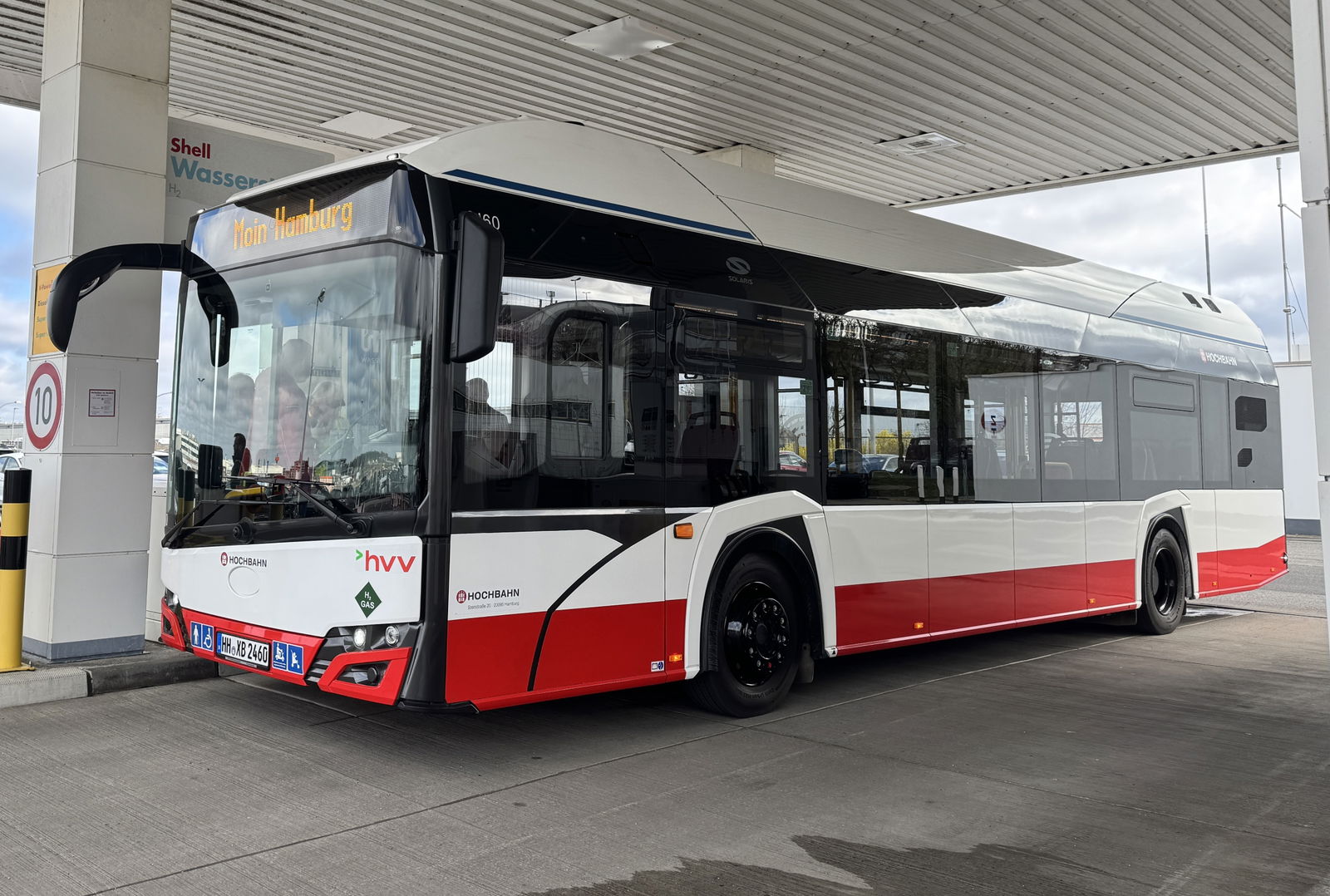
Hochbahn’s position has, however, changed significantly over the past year and a half. The company had previously assumed that advances in battery technology would, in the longer term, make it possible to meet the vast majority of transport requirements with all-electric buses, and had therefore already regarded the battery-electric bus as its core vehicle type. At the same time, it continued to treat hydrogen propulsion as a strategic option that could complement battery technology under certain operating conditions.
The principal advantages in favour of hydrogen buses were their greater range and shorter refuelling time. These characteristics can be particularly advantageous in cities or regions where buses travel longer distances away from urban centres and cannot recharge regularly en route. The company had therefore previously taken the view that selecting the optimum propulsion technology in every case depended on local transport requirements, infrastructure and operating conditions.
The latest statement signals a significant shift in emphasis by comparison. According to Jens-Günter Lang, the technological complexity, unfavourable availability and high operating costs of hydrogen buses together show that this is not the right direction for Hamburg. The executive described the price of green hydrogen as extremely high and made clear that, on the basis of experience to date, the company sees no justification for wider deployment of the technology.
However, this does not yet amount to an officially announced withdrawal from the fleet or the cancellation of contracts for vehicles already ordered. The information made public concerns the technical management’s highly critical assessment and the fact that final acceptance of the buses has not taken place. No detailed data have been released on the nature of the specific technical faults, the availability figures for individual vehicles or the exact amount of the additional costs incurred.
The Hamburg experience also fits into a broader trend in Germany. According to a survey published by Deutsche Umwelthilfe (DUH) on 6 October, fuel-cell vehicles still account for a relatively small proportion of the bus fleets of Germany’s 40 largest cities. The study found that pure fuel-cell buses make up just 1.5% of the existing fleet, while accounting for a 10.9% share of planned new procurements. By contrast, battery-electric buses account for 63.4% of planned procurements, clearly illustrating the market difference between the two technologies.
In the environmental organisation’s assessment, hydrogen buses currently do not offer an economically competitive alternative to battery-electric vehicles. Alongside higher vehicle costs, the production and availability of hydrogen also pose a problem; moreover, the total energy consumption of fuel-cell propulsion – from production to moving the vehicle – is considerably higher than that of battery propulsion powered directly by electricity. DUH therefore does not expect the costs of the two technologies to converge in the foreseeable future.
The survey also points out that the electrification of urban bus transport in Germany is far from complete. Nearly 80% of the vehicle fleets in the cities examined are still diesel-powered, and significant differences can be seen between individual municipalities. In Mannheim, Freiburg and Karlsruhe, more than half of buses are already battery-electric, while in Augsburg, Essen, Wuppertal, Krefeld and Magdeburg, not a single battery-electric bus was in operation at the survey’s end-2025 reference date. It is important to note, however, that the survey did not take fuel-cell vehicles into account, including Wuppertal’s fleet of 52 hydrogen buses.
In this respect, Hamburg is among the more advanced major cities. Hochbahn currently operates more than 1,100 buses, of which around 430 are already electric. The company aims to increase the share of battery-electric buses from the current nearly 40% to 60% by 2031. This strategy clearly indicates that battery technology remains the focus of the company’s fleet renewal.
The Hamburg case involving hydrogen buses cannot necessarily be generalised to all operating environments. Greater range and short refuelling times may still offer advantages for certain transport duties, especially on longer duties and where charging opportunities are limited. Hochbahn’s example clearly illustrates, however, that the technical suitability of the technology alone is not sufficient: economical operation also requires adequate vehicle reliability, competitive energy prices and sustainable infrastructure.