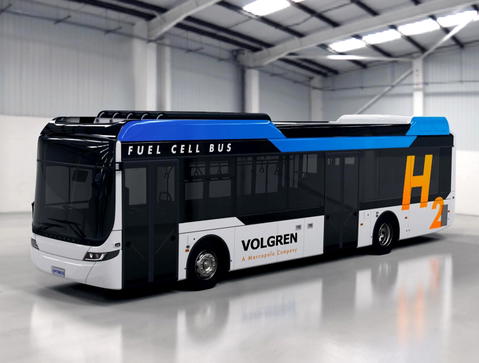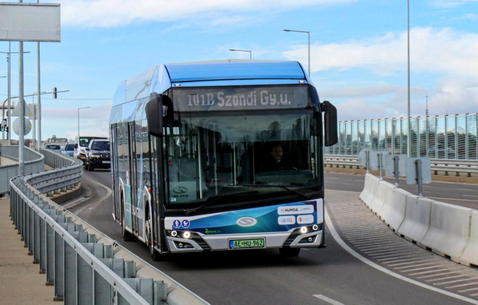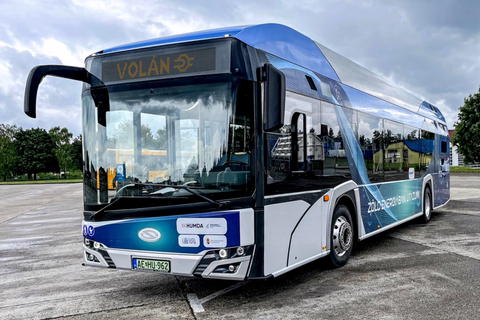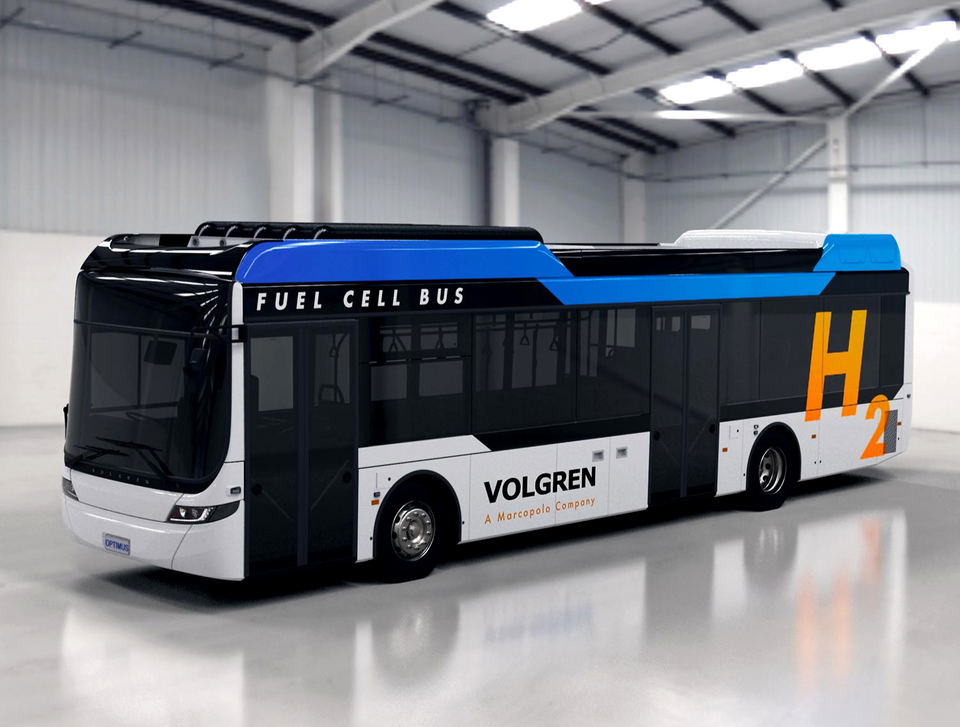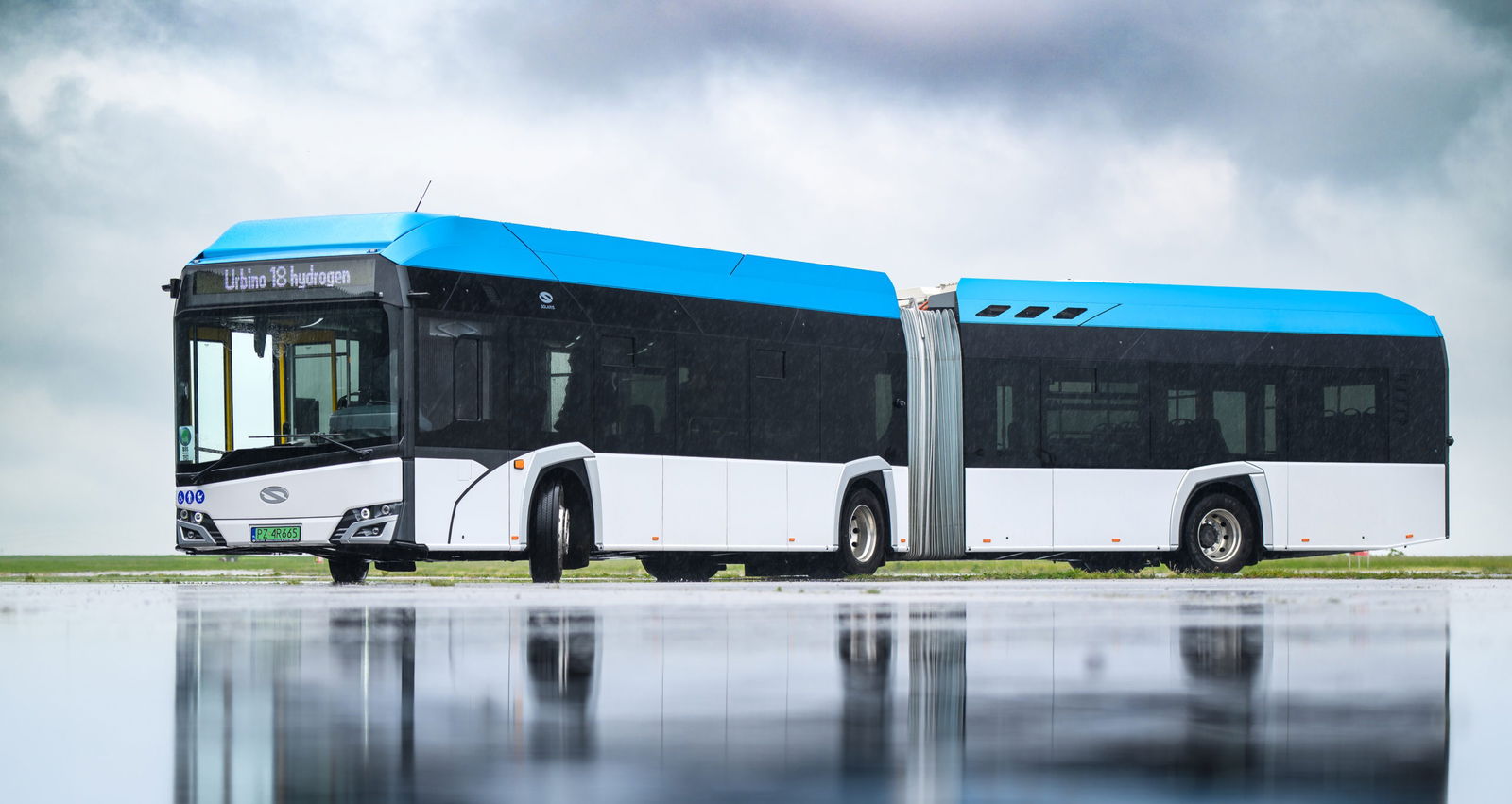
Fuel-cell buses may remain “niche products”
Despite the fact that political support is giving the market for fuel-cell commercial vehicles ever greater momentum year by year, it can still be seen that hydrogen propulsion, long regarded as a perpetual promise, continues to perform poorly among alternative powertrains, and this is expected to remain the case, at least according to international market research company IDTechEx’s report examining the market for hydrogen-powered vehicles.
According to the extensive report by the company, which specialises in analysis, research and market research relating to new technologies and examines the period between 2024 and 2044, hydrogen-powered vehicles will account for only 4% of all zero-emission vehicles in operation by 2044. Although the analysis notes that the powertrain has considerable potential in certain market segments, this does not really apply to the bus market.
The report focuses primarily on the truck and bus markets, given that these vehicles are characterised by high transport capacity, limited refuelling times and stringent emissions requirements. According to the analyst firm’s forecast, the powertrain could play a significant role mainly in long-distance road freight transport, while a breakthrough in the bus market is still some way off. In the urban bus segment, the penetration of hydrogen buses will remain modest over the next two decades; expansion of the segment can only be expected in countries investing substantial sums in the development of hydrogen infrastructure, zero-emission vehicles and the transition away from fossil fuels. While the market for fuel-cell vehicles remains limited, that for battery-electric vehicles is experiencing growth in numerous transport segments, although range and the lower passenger capacity resulting from the weight of batteries remain major limiting factors, particularly in long-distance transport. Fuel-cell technologies could therefore offer a solution for decarbonising this segment, in both the truck and interurban bus markets.
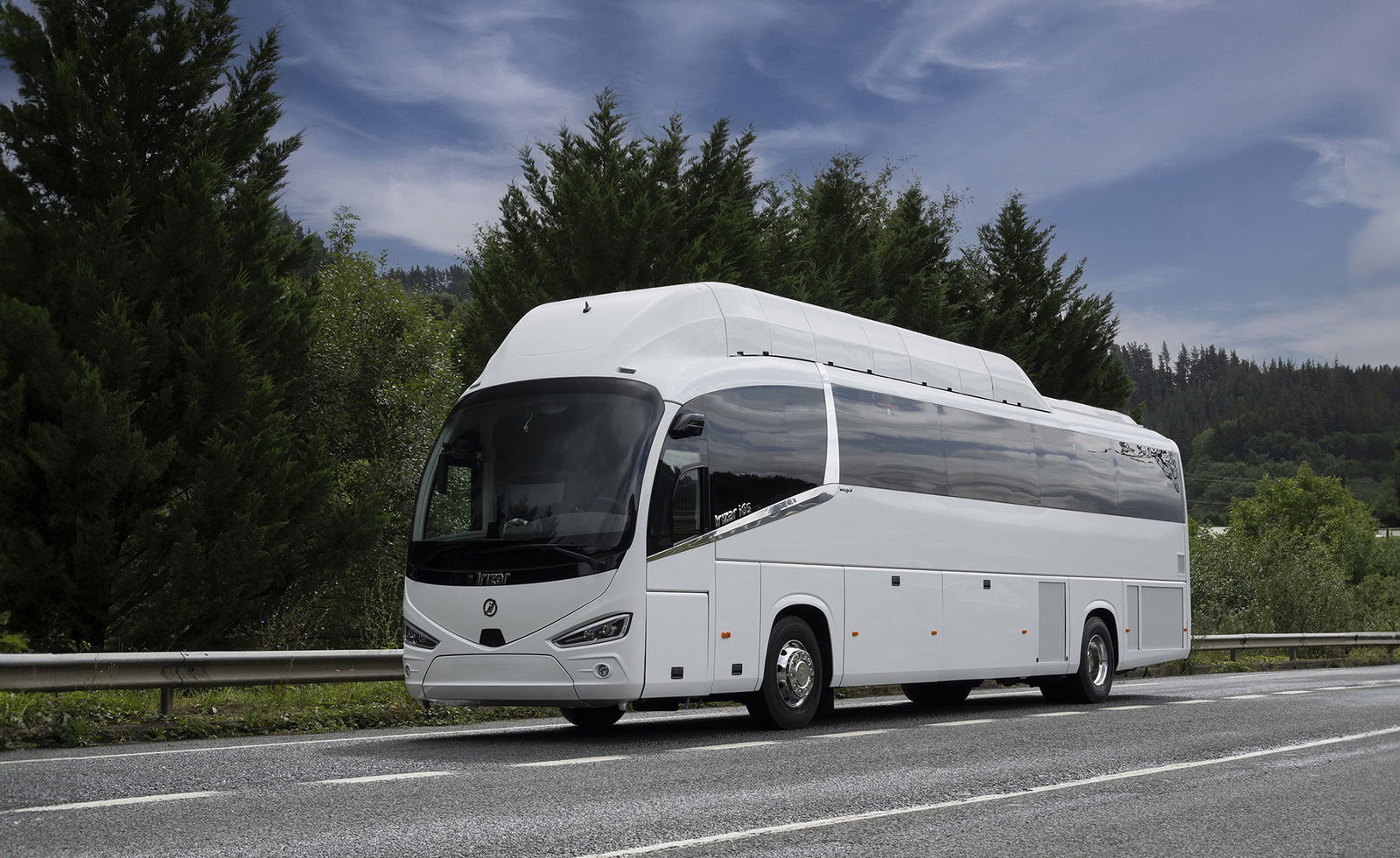
One of the main limiting factors in the uptake of hydrogen propulsion – hydrogen buses in this case – is that a fuel-cell bus currently costs considerably more than a battery-electric bus, although this may change as the technology develops. The greatest challenge, however, is not this but access to green hydrogen, i.e. hydrogen produced from renewable sources. Producing green hydrogen requires large quantities of electricity from renewable sources, which remains scarce in much of the world. Although considerably cheaper methods of producing hydrogen are also available, such as steam methane reforming, which entails the release of large quantities of CO2 emissions, if a hydrogen-powered vehicle runs not on green but on grey or brown hydrogen, its emissions profile may be worse than that of diesel operation. Naturally, the cost of producing green hydrogen may also change over time, but in the meantime significant advances may also be made in batteries, charging infrastructure and battery-electric vehicles.
Thus, despite annual sales increasing year by year, hydrogen buses are still very much in their infancy, as demonstrated by the fact that in the past 12 months alone, two cities have decided against the technology: Wiesbaden is getting rid of its fleet, while Pau will not purchase any more hydrogen-powered buses. In Liverpool, the introduction of a 20-strong Enviro400 H2.0 fleet failed due to hydrogen supply problems, while Montpellier has also backed away from procuring 51 hydrogen buses, as calculations by the Montpellier authorities show that the per-kilometre operating cost of a hydrogen fuel-cell bus is more than six times that calculated for electric buses relying solely on batteries.