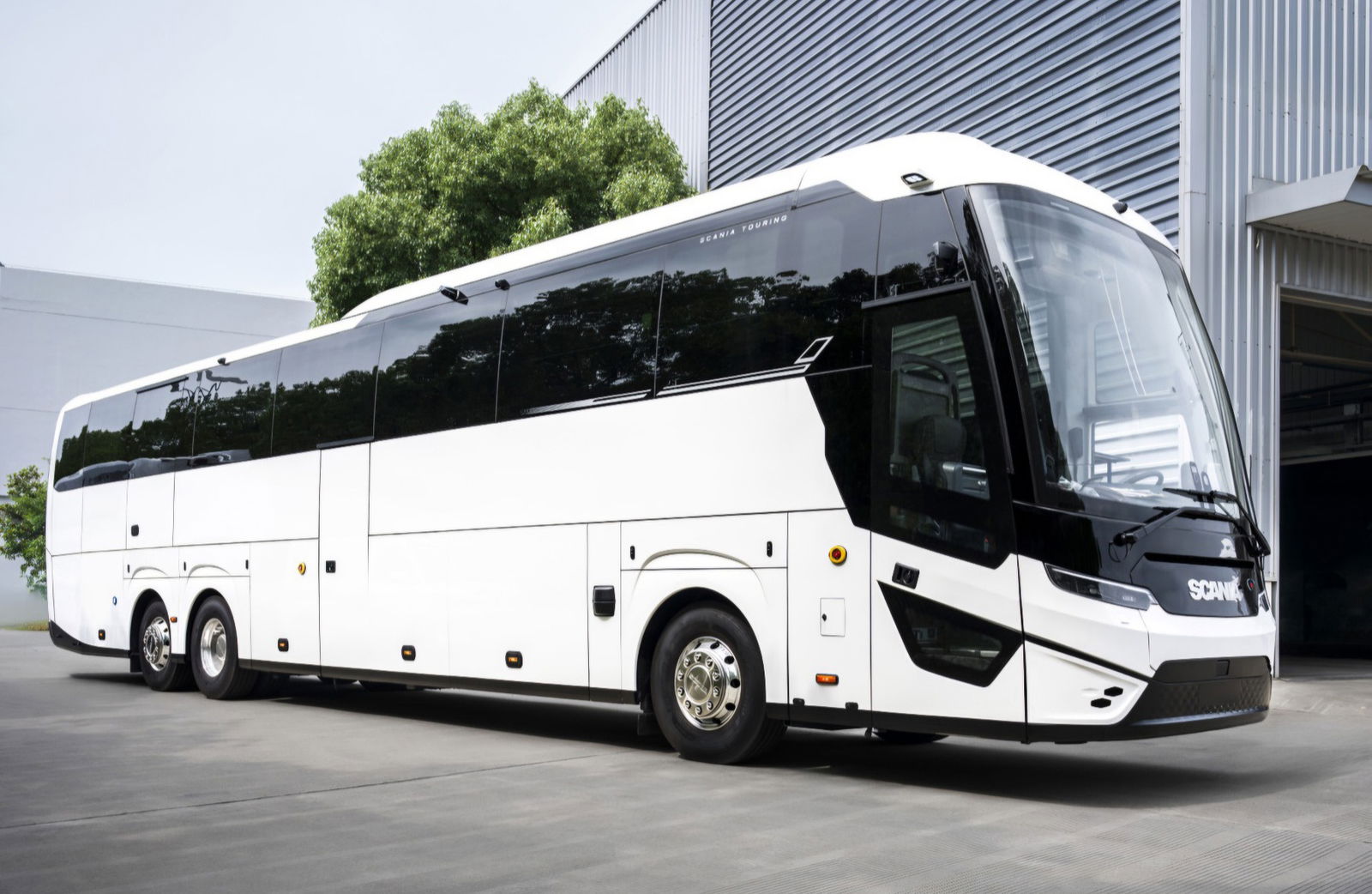
New Scania Touring arrives with fresh look, Super powertrain and electric future
The story of the Scania Touring continues with a new generation: following teasers released in recent days, the Swedish manufacturer has now fully unveiled its updated coach. This marks another important milestone in the model’s development, as this time the renewal goes far beyond a conventional model update: a completely redesigned exterior aligned with Scania’s current design language, improved aerodynamics, a renewed driver’s and passenger environment, increased luggage capacity, and the manufacturer’s latest Super powertrain are among the most significant changes. Scania has also confirmed that the model will later become available with fully electric propulsion.
The history of the Touring dates back to 2009. Developed through cooperation between Scania and China’s Higer, the model has undergone several major technical upgrades since then, most recently in 2021, when it received, among other things, a redesigned driver’s environment, modified suspension and new driver assistance systems. A complete styling renewal had, however, been overdue for years, as the Touring’s fundamental body design had remained unchanged for 17 years, an unusually long model cycle even by bus industry standards. In recent years, however, the focus of Scania’s bus division had primarily been on restructuring its product portfolio and manufacturing strategy rather than on a generational change for the Touring. The version now presented therefore represents a far more striking break with the previous appearance than earlier technical updates: while the proven product concept has been retained, virtually every visible part of the body has been adapted to Scania’s current brand identity.
The importance of the Touring is clearly demonstrated by the fact that the model’s various powertrain versions have continued to play an important role in Scania’s European long-distance offering in recent years. The gas-powered version of the model also won the long-distance category of the Sustainable Bus Award in 2025.
In developing the new generation, Scania focused on comprehensively refining a design that was already mature and proven on the market. In addition to retaining the reliability and energy efficiency associated with the brand, development centred on giving greater prominence to Scania’s distinctive design language, increasing luggage capacity, and improving the driver’s working environment and passenger comfort.
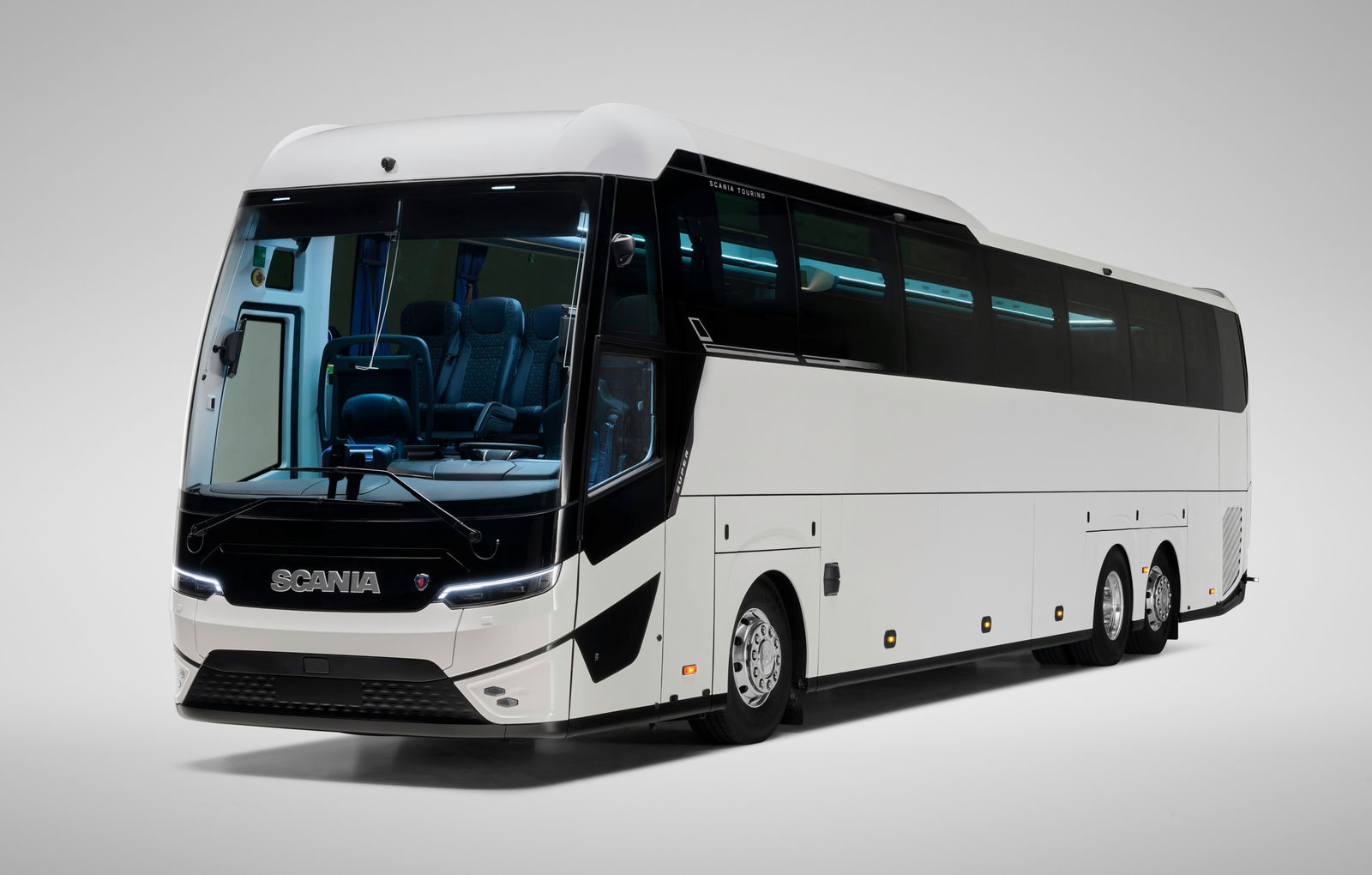
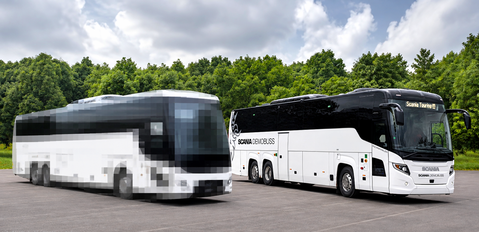
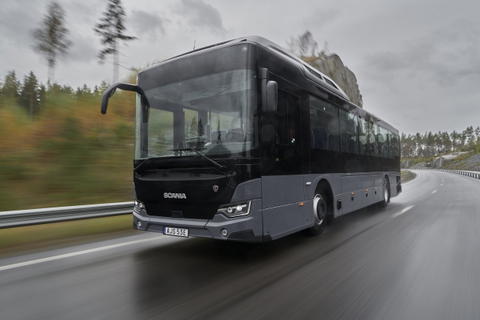
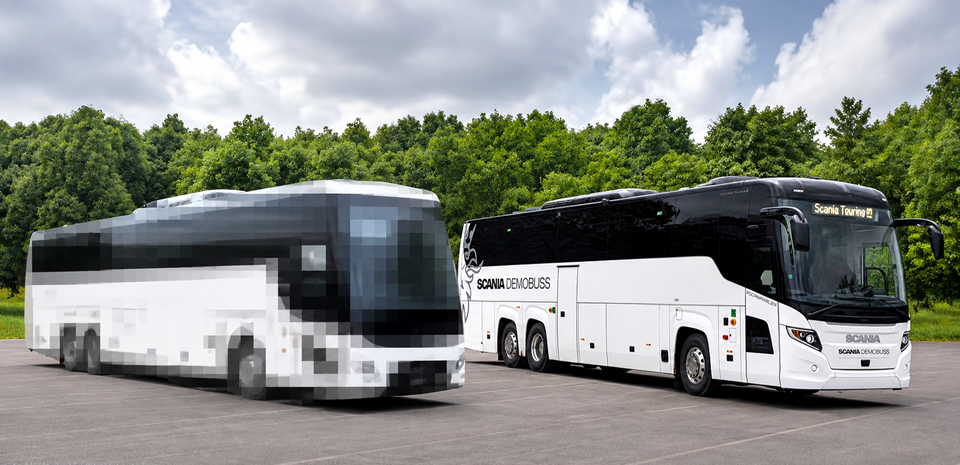
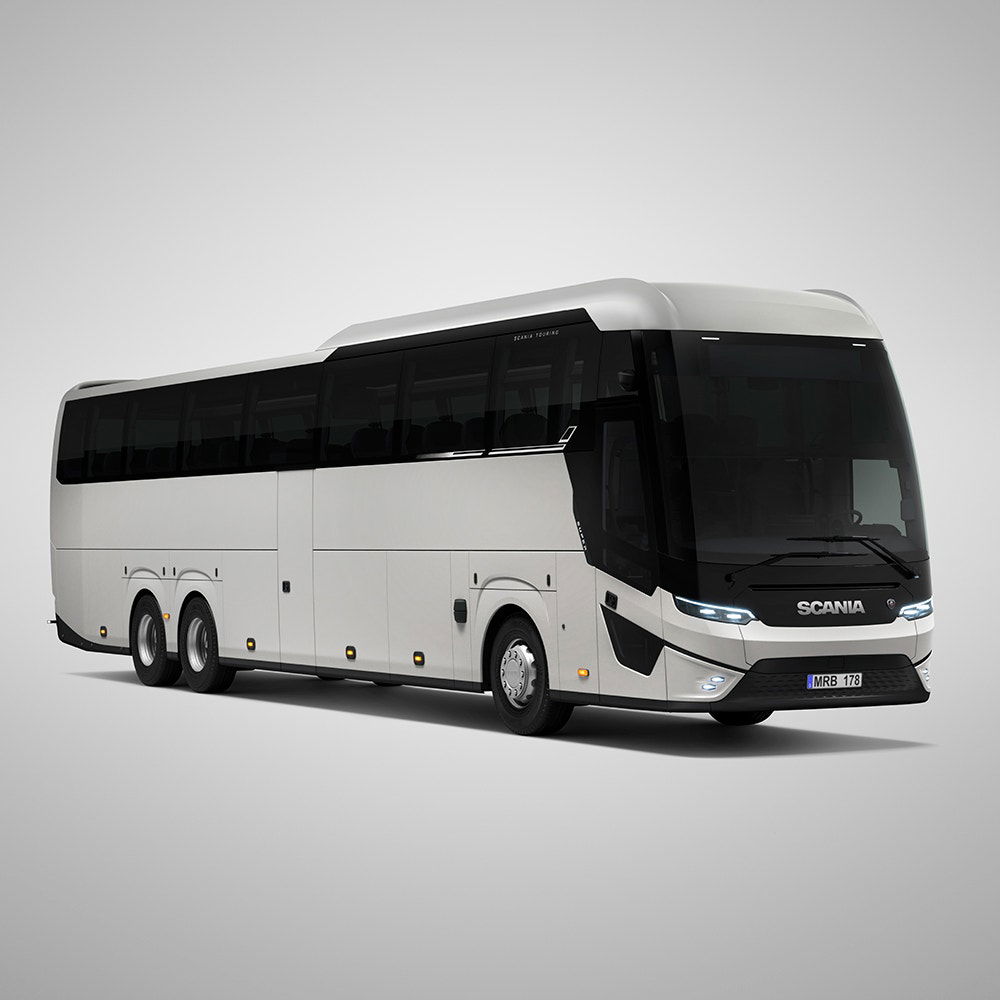
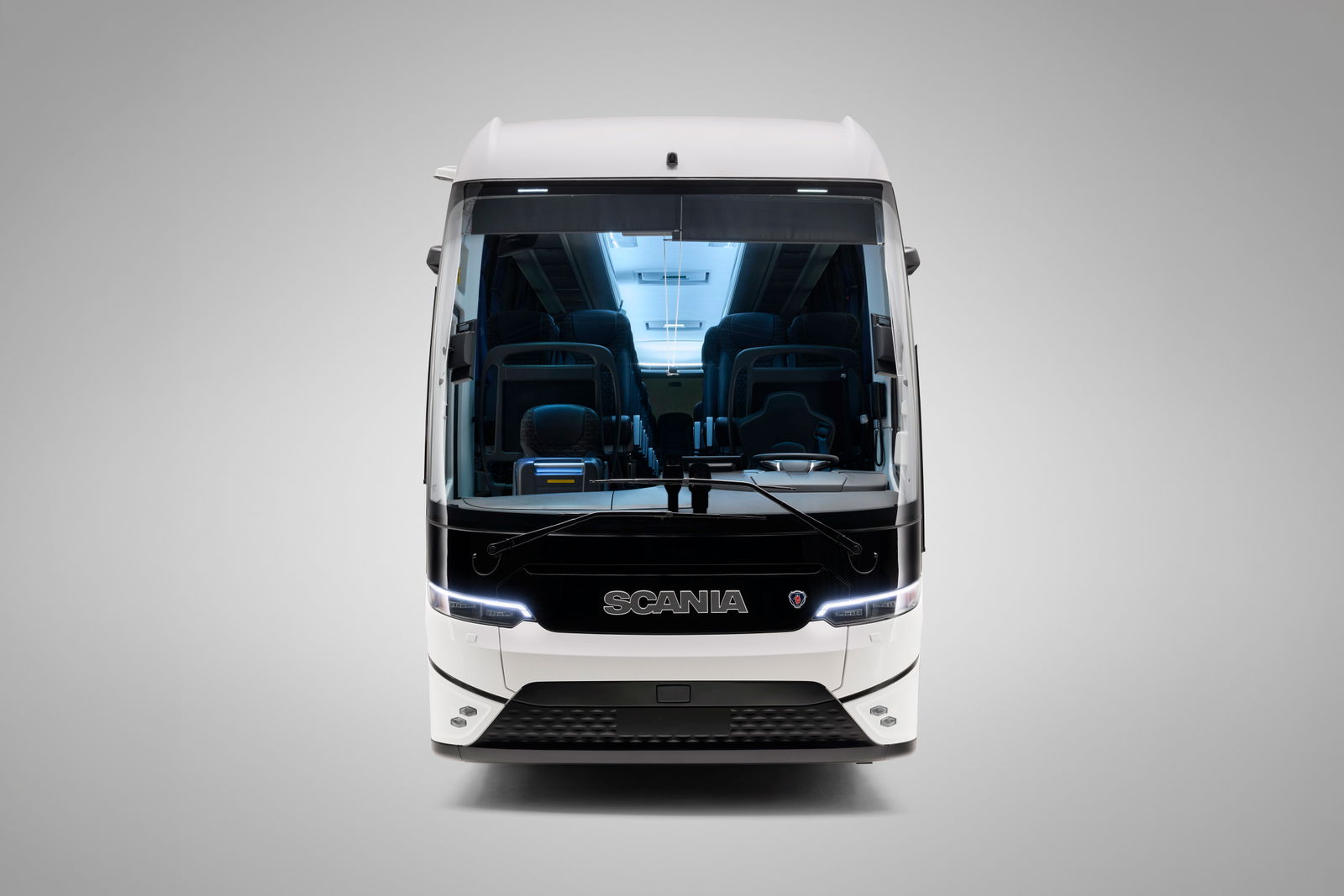
The most conspicuous element of the generational change is, naturally, the new bodywork. The predecessor’s distinctive yet increasingly conservative design language is replaced by a considerably more modern appearance, which bears little direct resemblance to its predecessor and is much more reminiscent in appearance of the high-floor HD version of the Interlink series. The design of the front end in particular shows a strong kinship with the Interlink, while Scania’s brand identity developed in recent years is also much more prominently expressed on the new Touring.
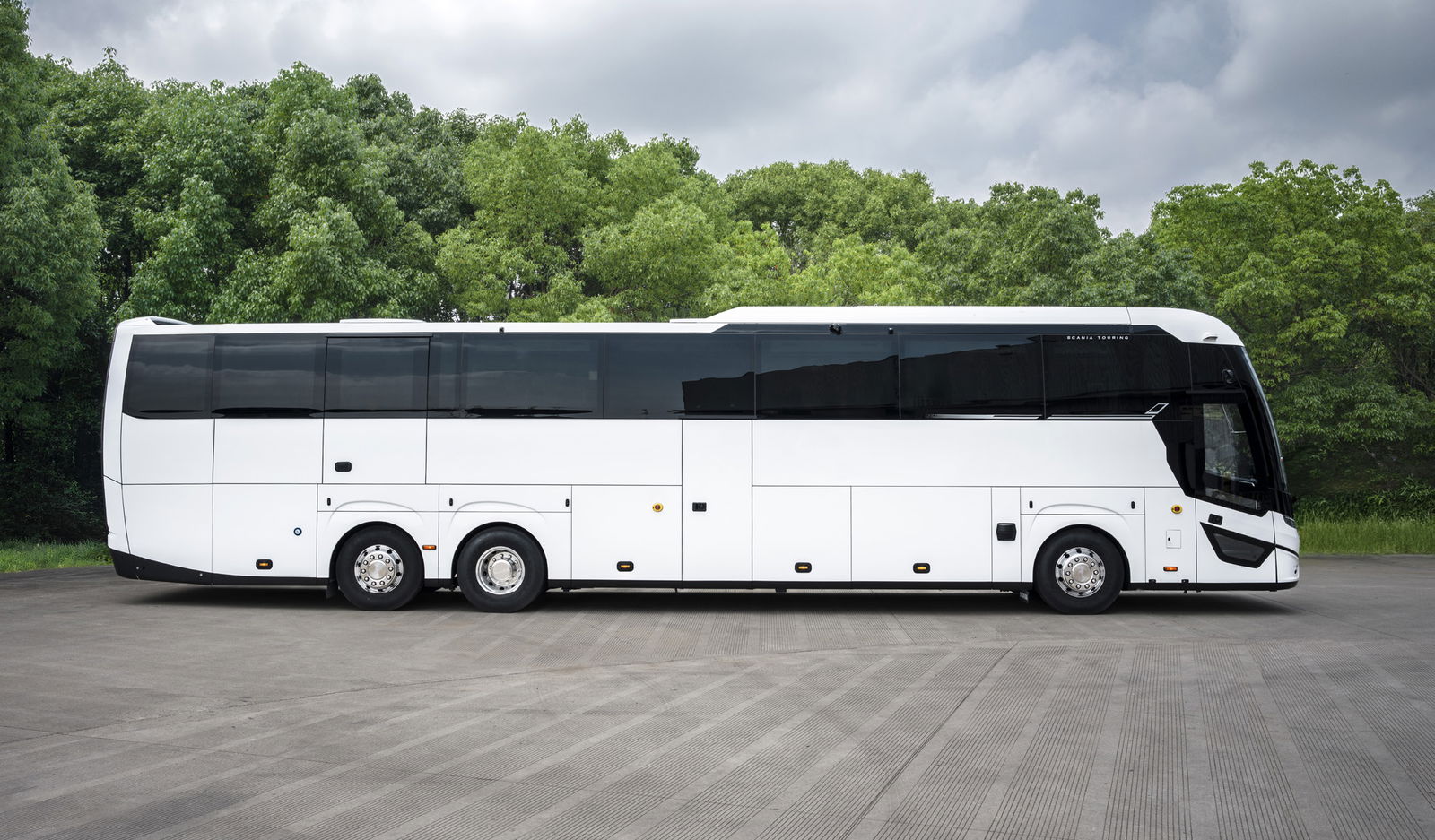
The redesign did not, however, serve aesthetic purposes alone. Scania describes the basic shape of the new body as a “waterdrop” design: the body has a progressively changing cross-section from the front end towards the rear, narrowing more sharply over the final approximately one metre. It is paired with an integrated roof spoiler designed to optimise airflow, reducing turbulence behind the vehicle and, with it, aerodynamic drag. According to the manufacturer, the improved aerodynamics also contribute to lower energy consumption and pollutant emissions, as well as an improved VECTO value.
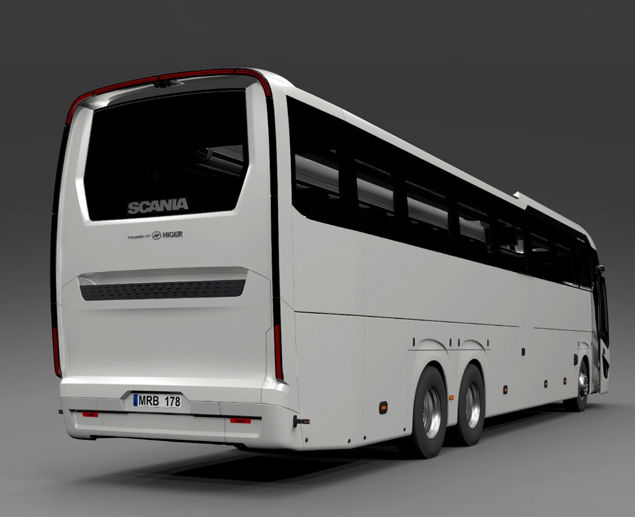
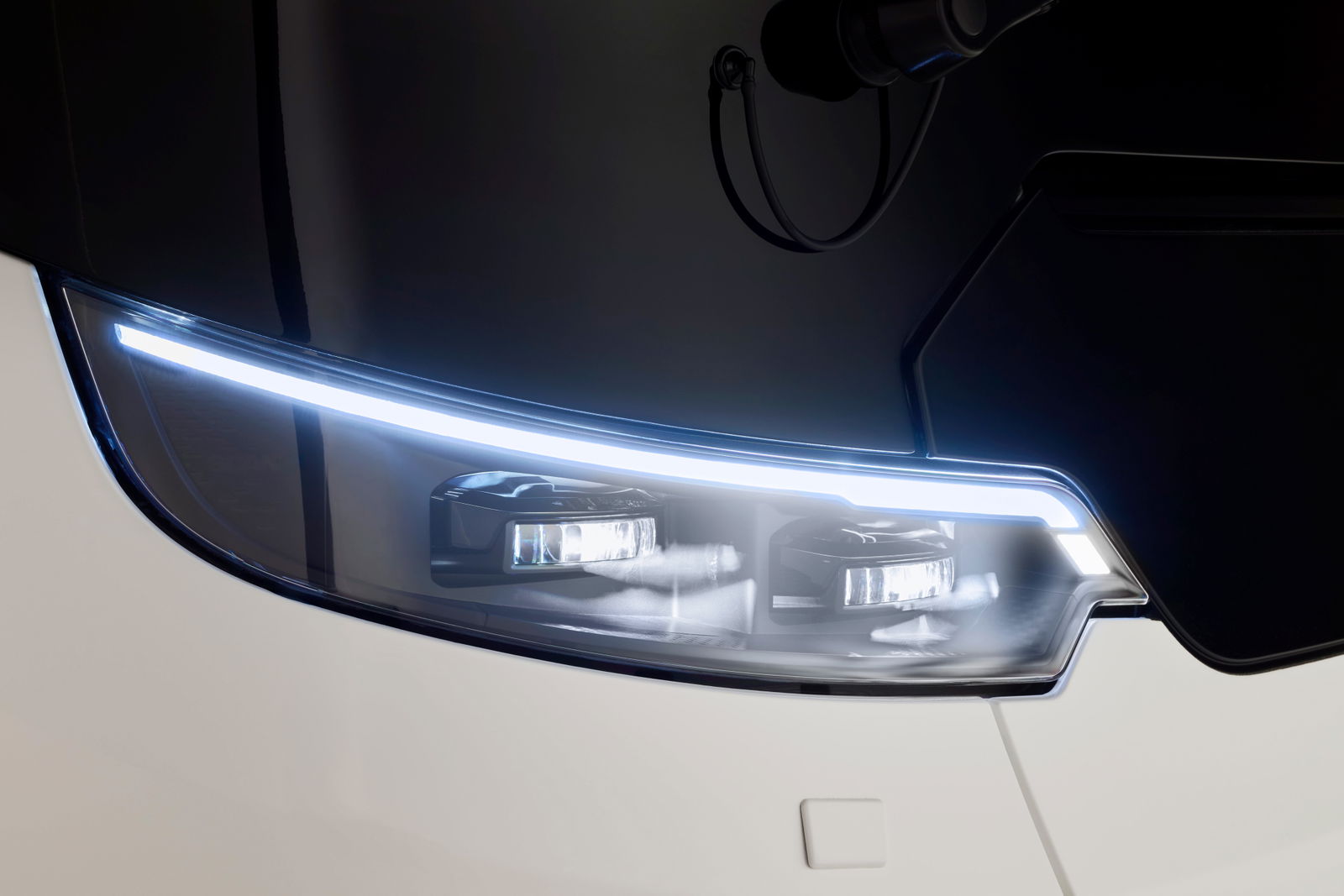
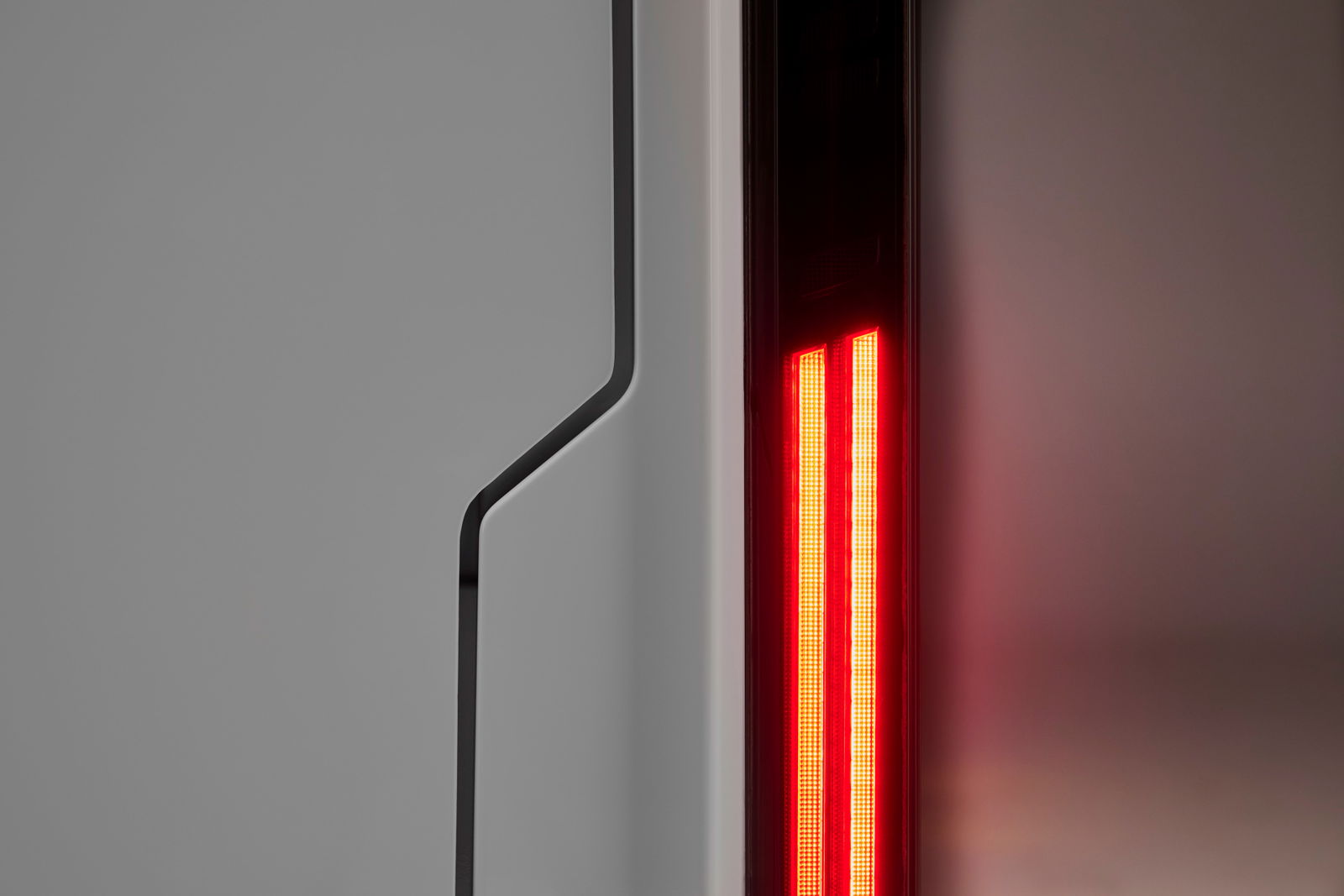
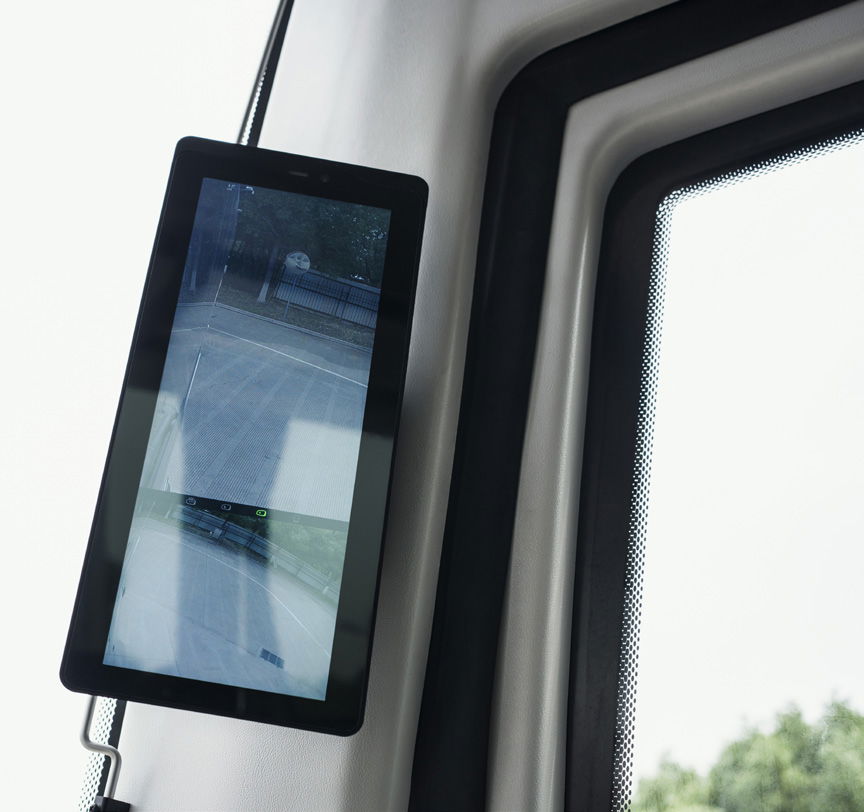
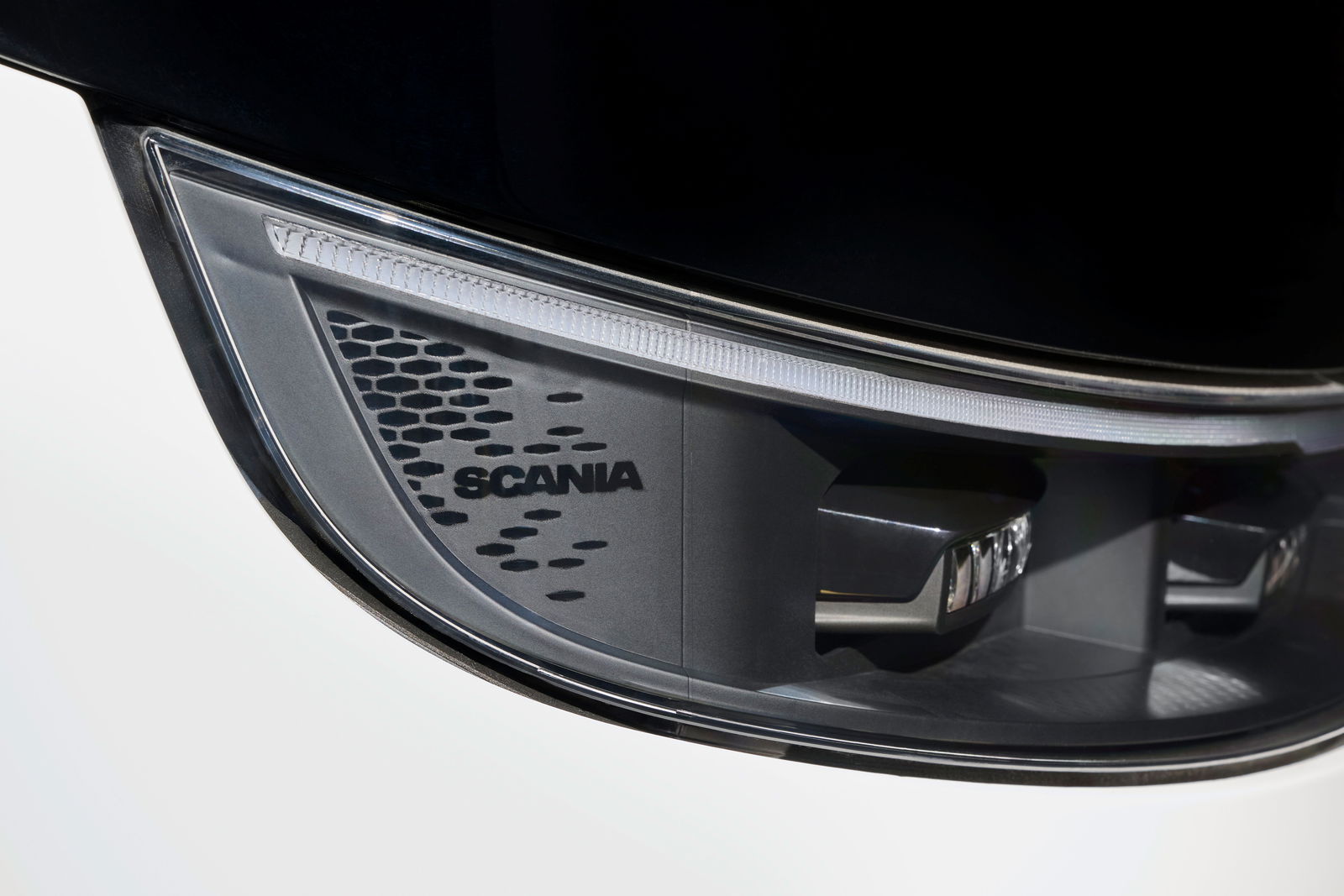
As an option, a camera system can be specified instead of conventional exterior rear-view mirrors, reducing not only aerodynamic drag but also improving direct visibility; its associated displays are positioned on the A-pillars. All exterior lighting uses LED technology, while the distinctive rear light signature has been redesigned and complemented by high-mounted additional brake lights and indicators.
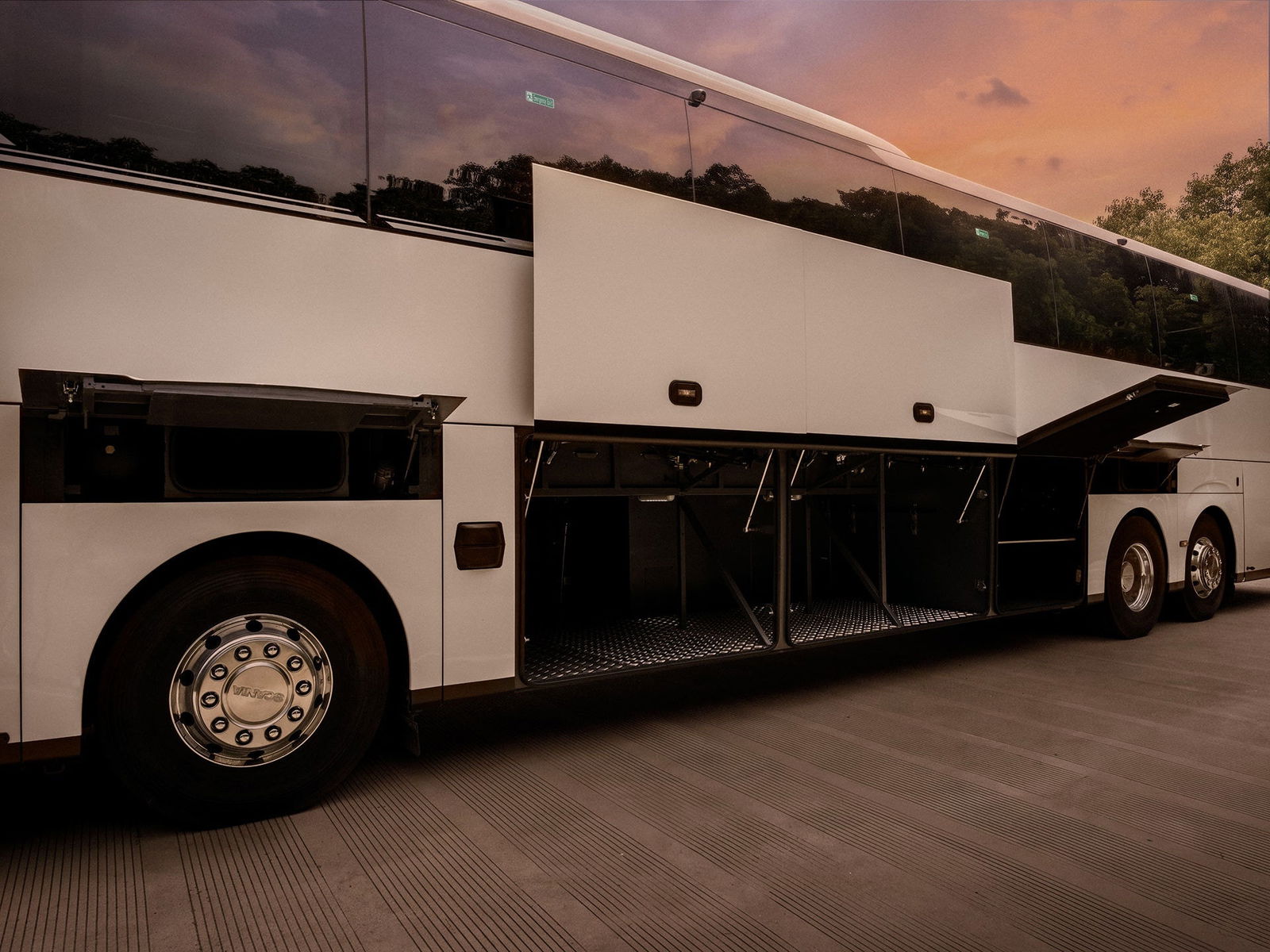
Scania also highlights the use of more modern materials in the bodywork, while one important practical outcome of the revised design is increased luggage capacity. On three-axle versions fitted with internal-combustion engines, the volume of the underfloor luggage compartment has increased by 14.5 per cent, while the overhead luggage racks in the passenger compartment offer approximately 40 per cent more space than those of the predecessor thanks to their new design. Additional optional storage spaces can also be created above the wheel arches.
The new Touring continues to be produced in a particularly wide range of dimensions. Left-hand-drive two-axle versions are available in lengths of 10.9, 12.3 and 13 metres, while three-axle versions with a steered tag axle can measure 13.2, 13.9 and 14.7 metres. The right-hand-drive range is somewhat narrower: the factory specification includes 10.9- and 13-metre two-axle versions, and 13.2- and 13.9-metre three-axle variants. The body is 2.5 or 2.55 metres wide and 3.8 metres high, while the floor layout can be flat or feature a sunken central aisle.
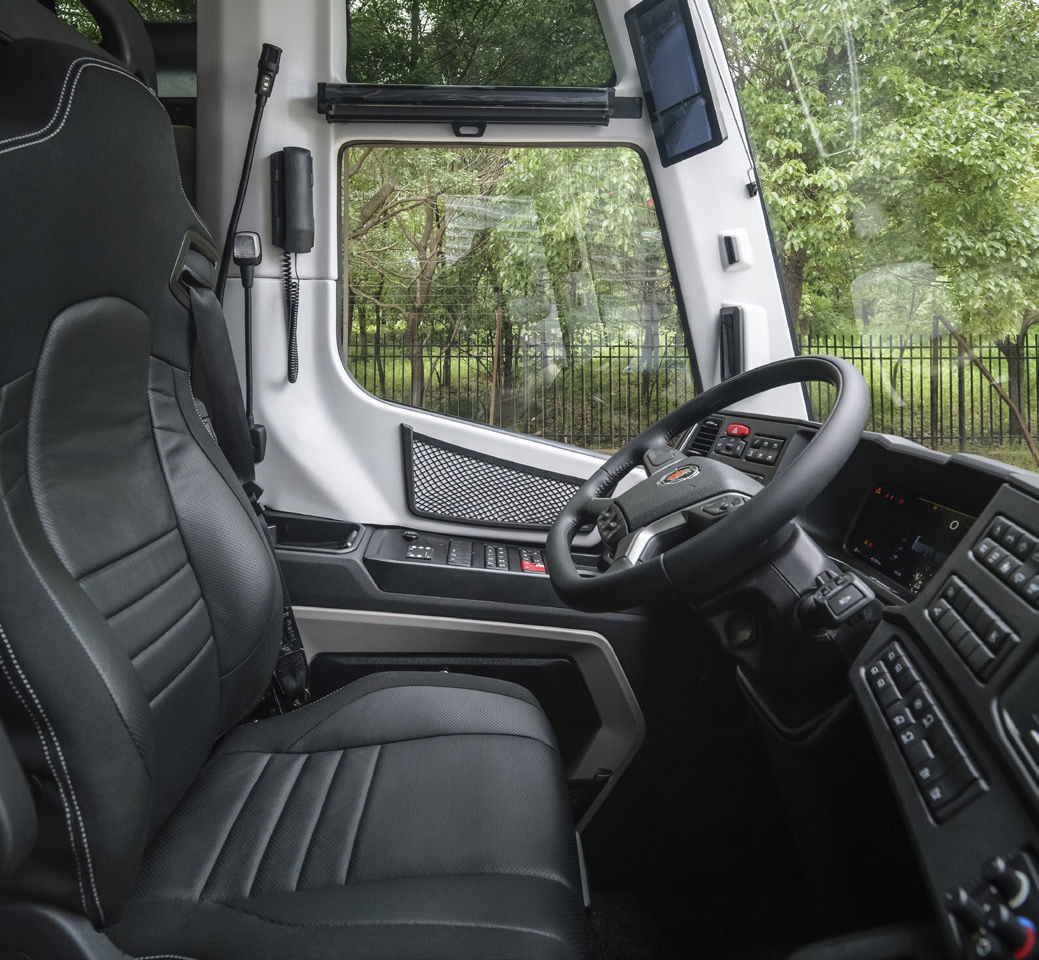
Another important element of the generational change is the redesign of the driver’s area. Scania has not only revised the dashboard, but also the body structure around it in order to improve direct visibility.
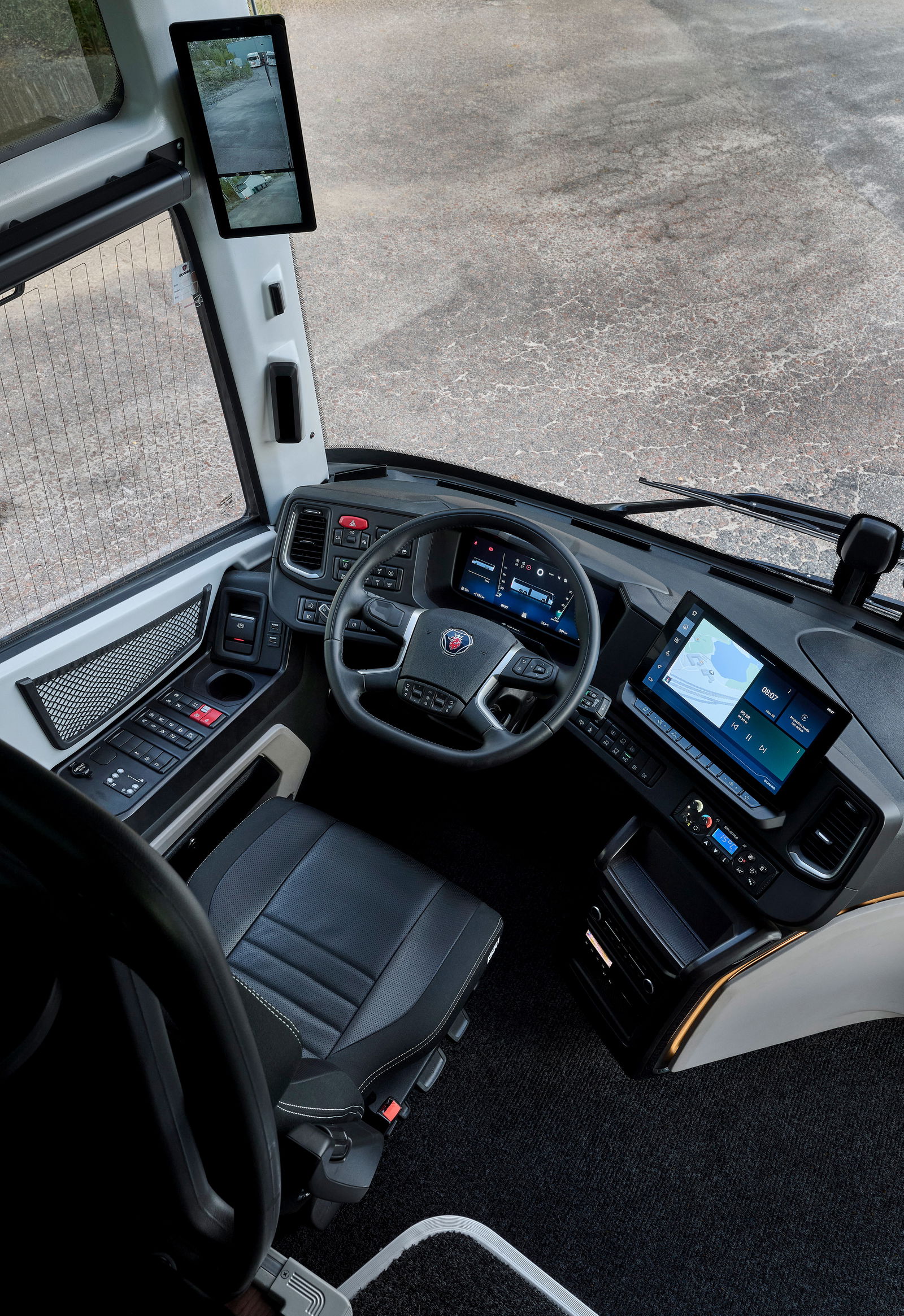
As part of this, not only have the design of the front door and the side glazed areas been modified: the B-pillar has been moved 90 millimetres rearwards, the driver’s electrically operated side window has been enlarged, and the windscreen has been made wider and taller. The glazed area incorporated into the lower section of the front door, referred to by Scania as the City Safe Window, provides a more direct view of pedestrians and cyclists alongside the bus. The sun visors have also been redesigned and now overlap in the centre.
The Touring also receives Scania’s new-generation Smart Dash driver environment. Navigation, passenger infotainment and the reversing camera image are among the functions available via the central display of the expanded digital interface. The system also offers Apple CarPlay and Android Auto compatibility.
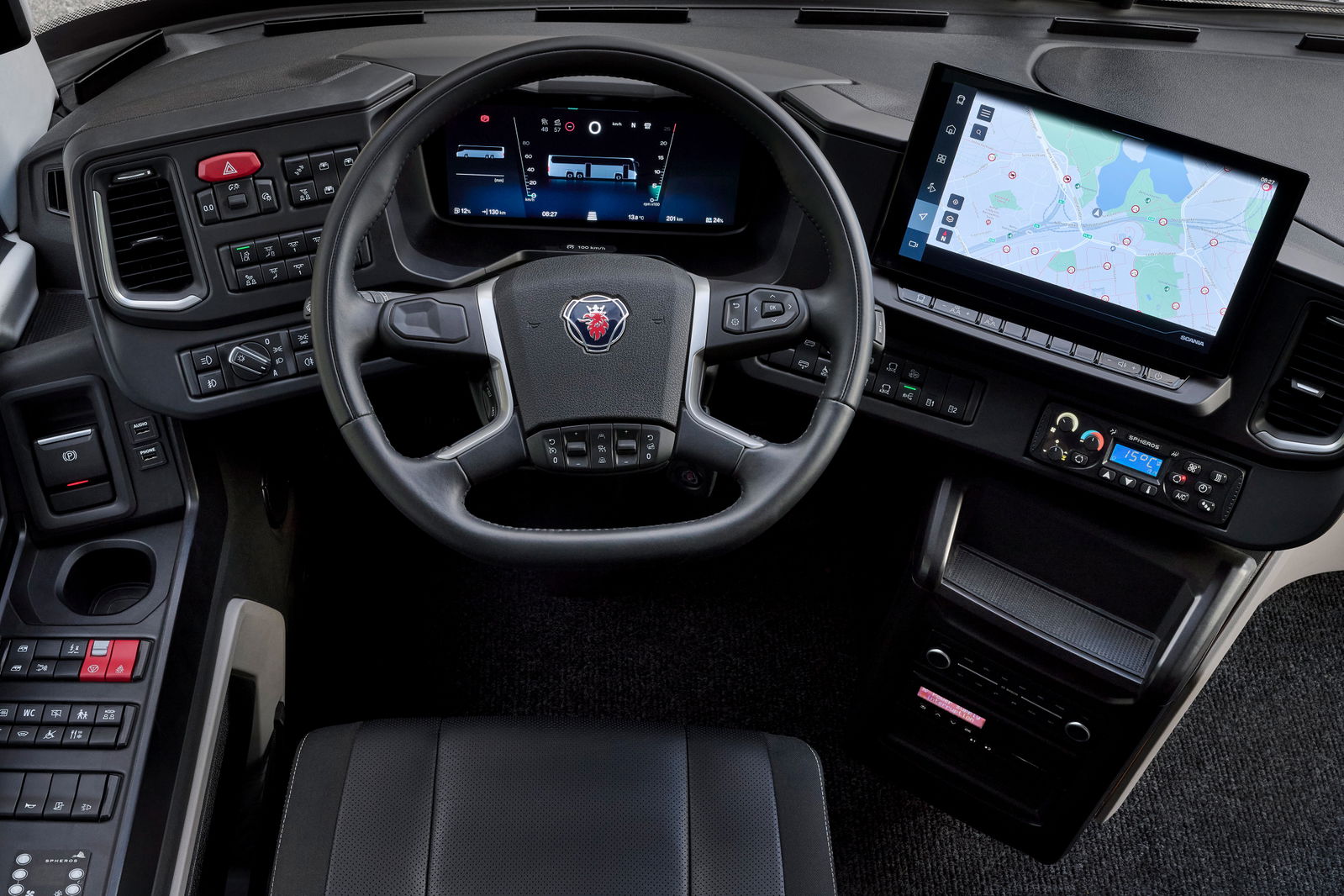
Together with the digital mirror system, all this brings the Touring’s driver environment much closer to the solutions used in Scania’s latest truck and bus generations.
The range of driver assistance systems has also been further expanded. Touring equipment includes, among other features, adaptive cruise control, predictive cruise control, lane departure warning supplemented by active steering, a lane-change collision avoidance system, blind-spot monitoring, driver alertness and attention monitoring, and a system that detects cyclists and pedestrians travelling around the vehicle. Equipment may also include an automatic emergency braking system, tyre pressure monitoring, traffic sign recognition and an event data recorder. Scania has also paid attention to passive protection: rigid front and rear underrun protection, as well as impact-protection elements safeguarding the driver and sensitive technical components, have been incorporated into the design.
In revising the passenger compartment, Scania focused primarily on comfort during longer journeys. Boarding and alighting are made easier by a wider front entrance, as well as wider and deeper steps, also fitted with LED lighting, at the centre and rear doors. The passenger compartment can be specified with two floor layouts: alongside the conventional flat floor, a version with a sunken central aisle is also available, providing full standing height at aisle level. The overhead hand-luggage racks have likewise been redesigned and, thanks to their new layout, offer approximately 40 per cent greater storage capacity than those of the predecessor.
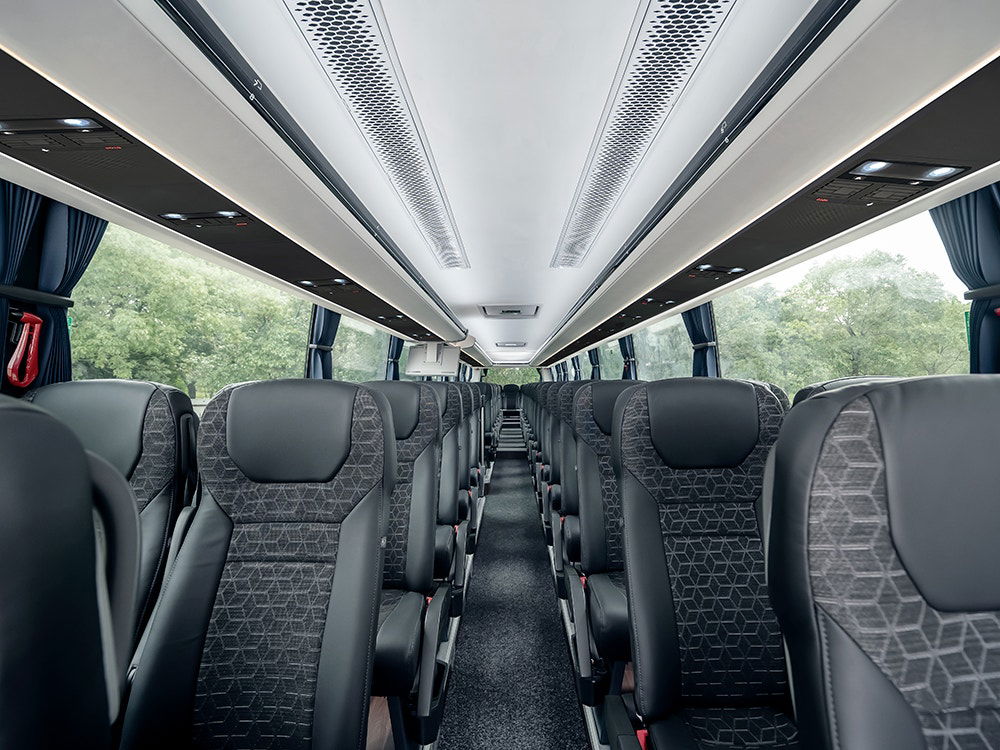
The new interior design is accompanied by new colour and decorative trim options, revised passenger service panels and ambient lighting. Depending on configuration, the new Touring can carry up to 67 seated passengers. The available Kiel Avance X seats can be specified in Comfort and Luxury versions, with lateral adjustment, two- or three-point seat belts, integrated USB connections, footrests, folding tables and cup holders; ISOFIX child-seat anchorage is also included in the range.
Perhaps more important from a technical perspective than the striking bodywork changes is that the new Touring arrives with Scania’s latest bus powertrain based on Super technology. The range is based on two engine families: the 11-litre Super is available with 350, 390 and 430 hp, producing maximum torque figures of 1,800, 2,000 and 2,200 Nm respectively, while the 13-litre Super comes in 420, 460 and 500 hp versions, with maximum torque of 2,300, 2,500 and 2,650 Nm respectively. In addition to diesel, they are capable, depending on the engine, of running on HVO or biodiesel/FAME.
According to the manufacturer, the system, prepared for Euro 7 requirements, typically enables fuel consumption and carbon dioxide emissions to be reduced by 8–10 per cent compared with the previous powertrain. Development has not been aimed solely at reducing consumption, however: Scania promises easier maintenance and a 25 per cent longer powertrain service life.
The transmission is based on the 14-speed Scania Opticruise automated gearbox, which can optionally be paired with a retarder. The Super engines also offer a high-performance, engine-integrated auxiliary braking system: the 11-litre unit uses the Variable Valve Brake (VVB), which exploits variable valve timing, while the 13-litre unit is equipped with a Compression Release Brake (CRB), with maximum braking power of approximately 350 kW. Depending on operating conditions, these can even replace the retarder on their own, although they can also be used in conjunction with a retarder where higher sustained braking performance is required. A six-speed ZF EcoLife 2 fully automatic gearbox is also available for the 11-litre engines, while fuel tank capacity can range from 275 to 460 litres depending on configuration.
The front suspension is available in two versions: the Touring can be specified with independent wheel suspension or a conventional rigid front axle. With wide tyres, front axle capacity can reach 8 tonnes, enabling favourable axle-load distribution even with high passenger capacity; Scania particularly highlights the significance of this for gas-powered versions.
Scania continues to offer the Touring as a complete vehicle, meaning that the chassis, bodywork, powertrain, driver’s workplace, passenger compartment and related services form part of a single manufacturer system.
One of the most important longer-term announcements made at this presentation is that the generational change will not end with the diesel Super powertrain. Scania has confirmed that it will also adapt the new Touring to its additional powertrain platforms introduced recently. Above all, this means plug-in hybrid propulsion, which was first presented as the basis of the Irizar i6S Efficient PHEV. Available in both two- and three-axle versions, the platform pairs the 13-litre Scania Super engine with a new six-speed electrified gearbox incorporating two electric machines, each rated at 145 kW. Energy is supplied by a battery with a nominal capacity of 89 kWh, with which Scania states a fully electric range of up to 70–80 kilometres depending on configuration and operating conditions. The system thus enables the vehicle to operate without local pollutant emissions, for example in urban areas or environmentally sensitive zones, while over longer distances the internal-combustion engine continues to provide the range expected of coaches.
Scania has also confirmed the arrival of a fully battery-electric version of the Touring. The factory specification already takes the BEV version into account in the Touring’s luggage-compartment layout: in the electric version, optional additional storage space can be created above the front and steered rear axles. This suggests that the integration of electric propulsion was considered from the outset during body design.
Its technical basis is not unknown either, as the manufacturer has already presented its HF BEV platform, developed specifically for high-floor intercity and coach applications, at the 2025 Busworld Europe exhibition with CaetanoBus e.Levante bodywork. The chassis accommodates up to six battery modules, each with a capacity of 89 kWh, enabling configurations with 534 kWh of nominal energy storage capacity and approximately 475 kWh of usable capacity. Propulsion is provided by Scania’s 330 kW e-machine integrated with a four-speed gearbox, while charging power can reach 325 kW. Scania has not yet disclosed, however, exactly which battery configuration and technical parameters will be used for the electric Touring in production.
The new-generation Touring is therefore far more than a styling renewal of the model known since 2009. While retaining the fundamental product concept of the previous design, Scania has effectively addressed every area that determines the operational value of a long-distance bus: the engine and powertrain range has been expanded, luggage capacity has increased, the driver’s and passenger environments have been revised, and aerodynamics and safety equipment have been improved, while the design has also been prepared to accommodate plug-in hybrid and fully electric propulsion. With a size range spanning 10.9 to 14.7 metres, the Touring continues its career not as a single model but as a coach family covering a broad range of applications.