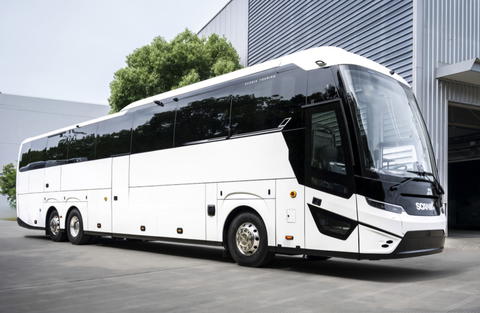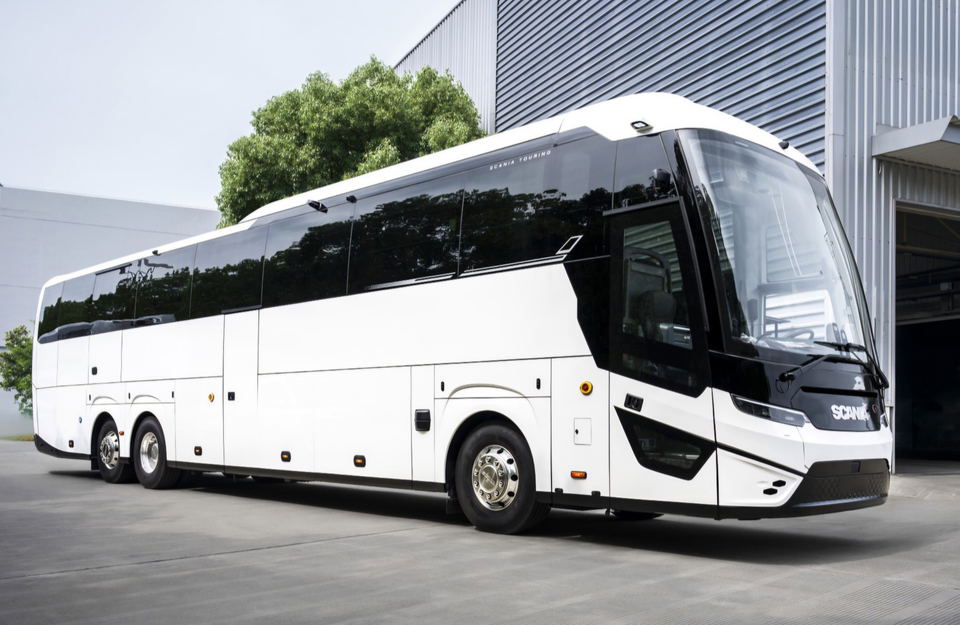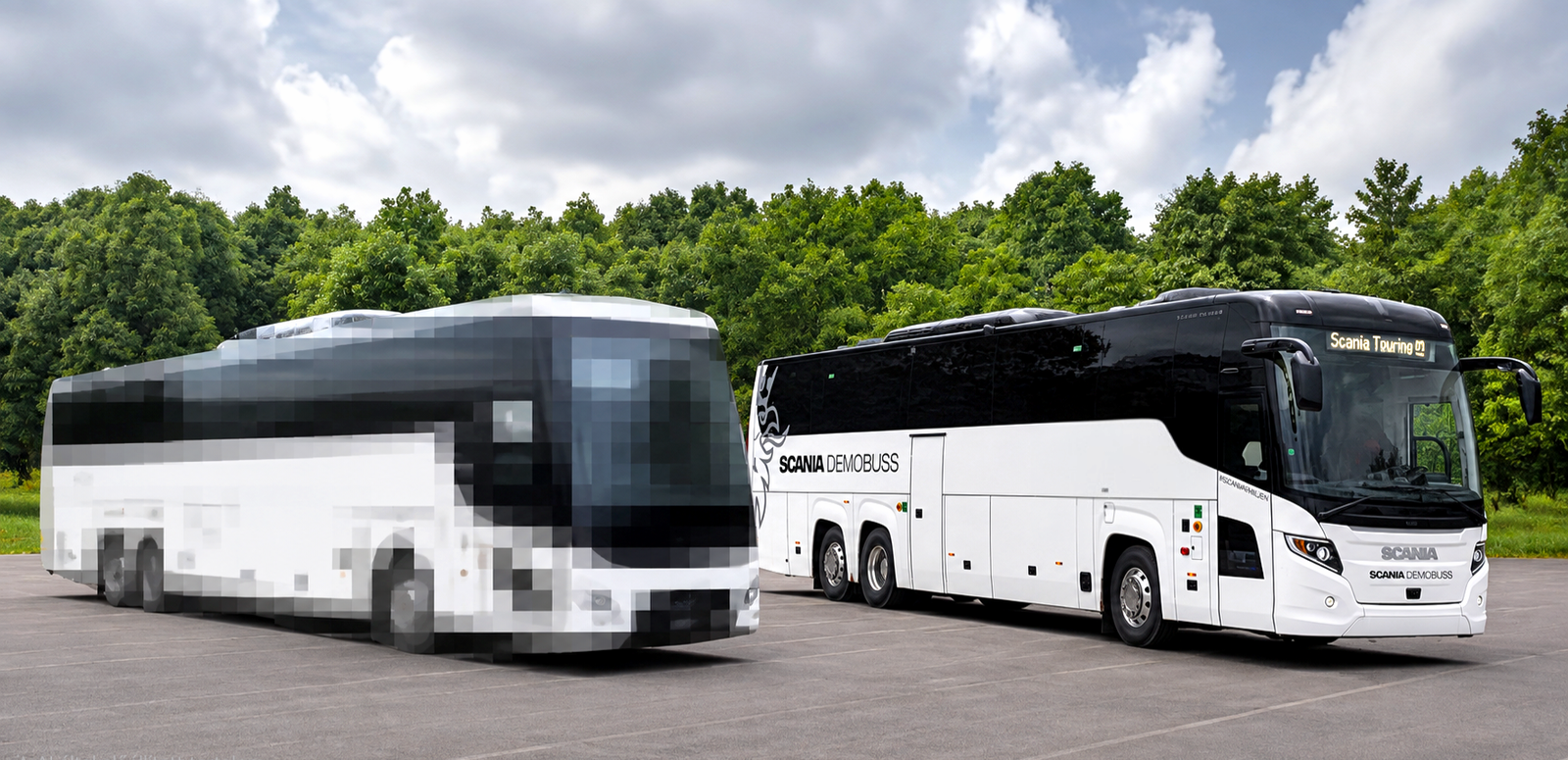
New Scania Touring on the horizon – model could change generation after 17 years
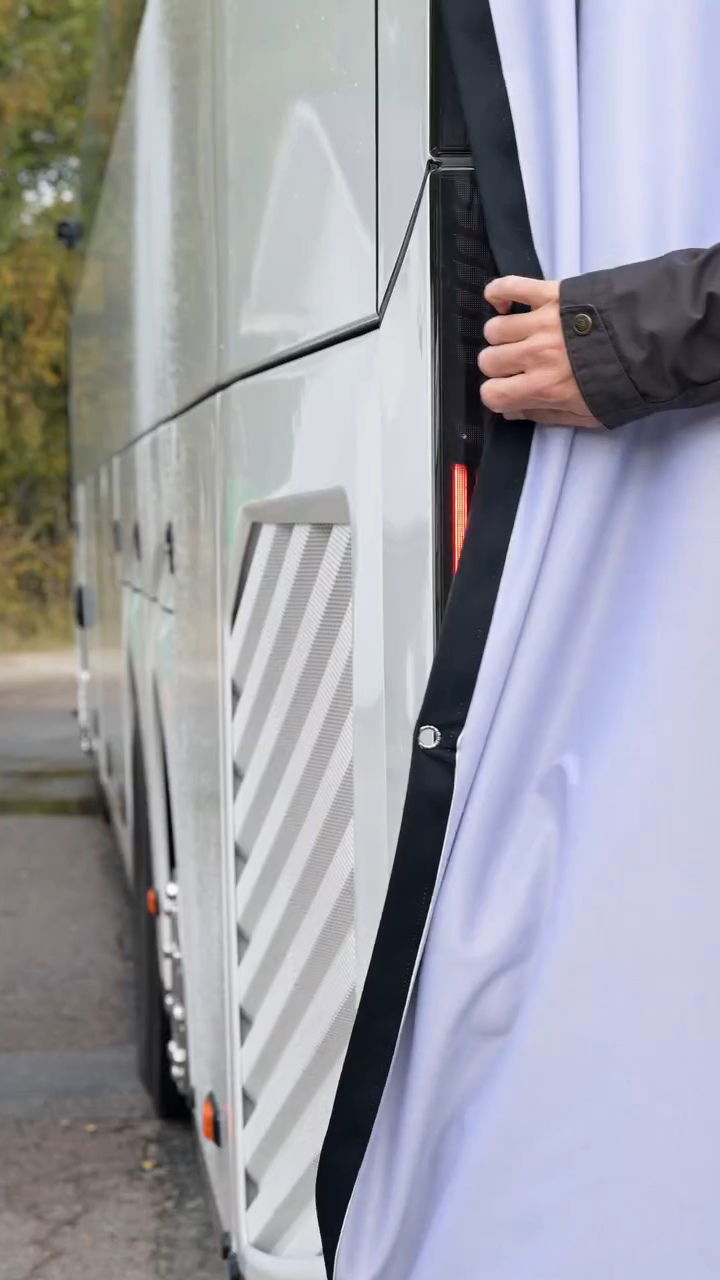
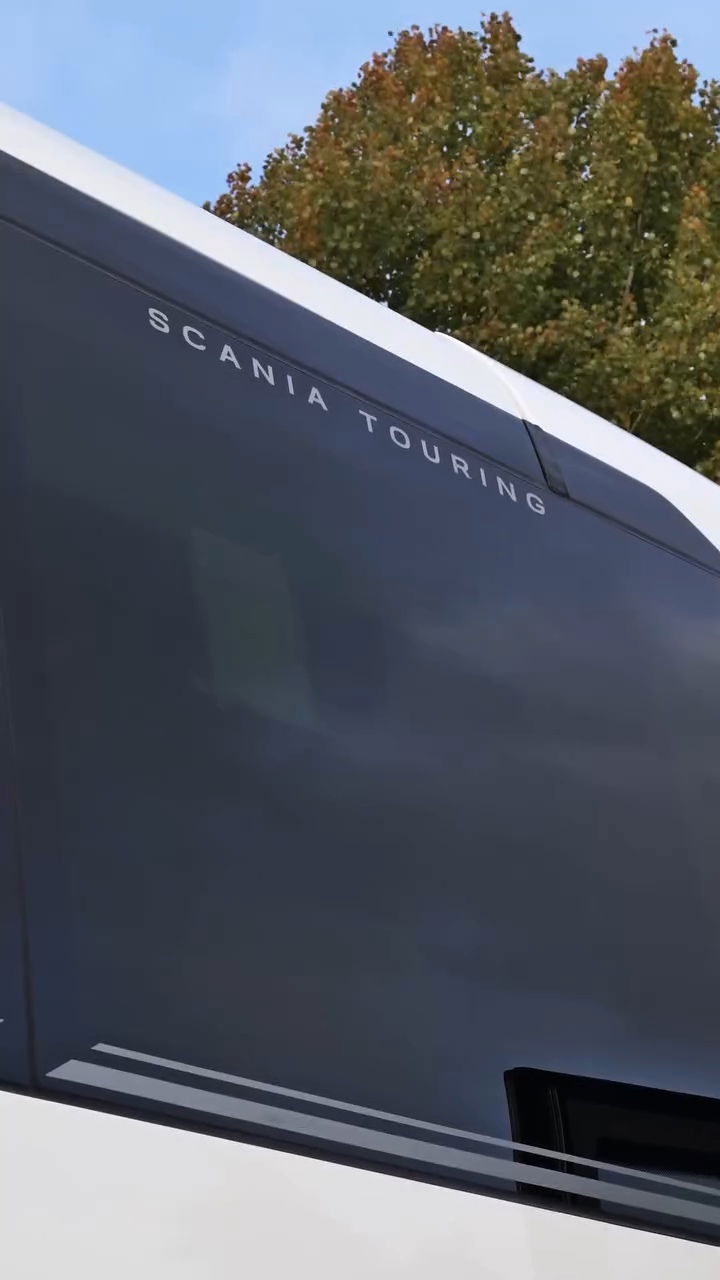
It appears that a new chapter may be about to begin in Scania’s coach range: for the time being, the Swedish manufacturer is teasing its next new product in heavy camouflage, revealing only a few details, but the images released make it virtually clear that a new version of the Touring model family is behind it. Alongside the Touring model name, the word “Super” can also be made out in the published images, suggesting that the newcomer may already be based on the manufacturer’s latest-generation powertrain.
The unveiling of the new Touring will mark a particularly significant model change: the first generation made its world premiere almost exactly 17 years ago, on 15 October 2009, at the Busworld trade fair in Kortrijk. The Touring was born out of a strategic partnership between Scania and China’s Higer; under this arrangement, Scania supplied the chassis, powertrain and experience relating to the needs of international operators, while Higer was responsible for manufacturing the bodywork.
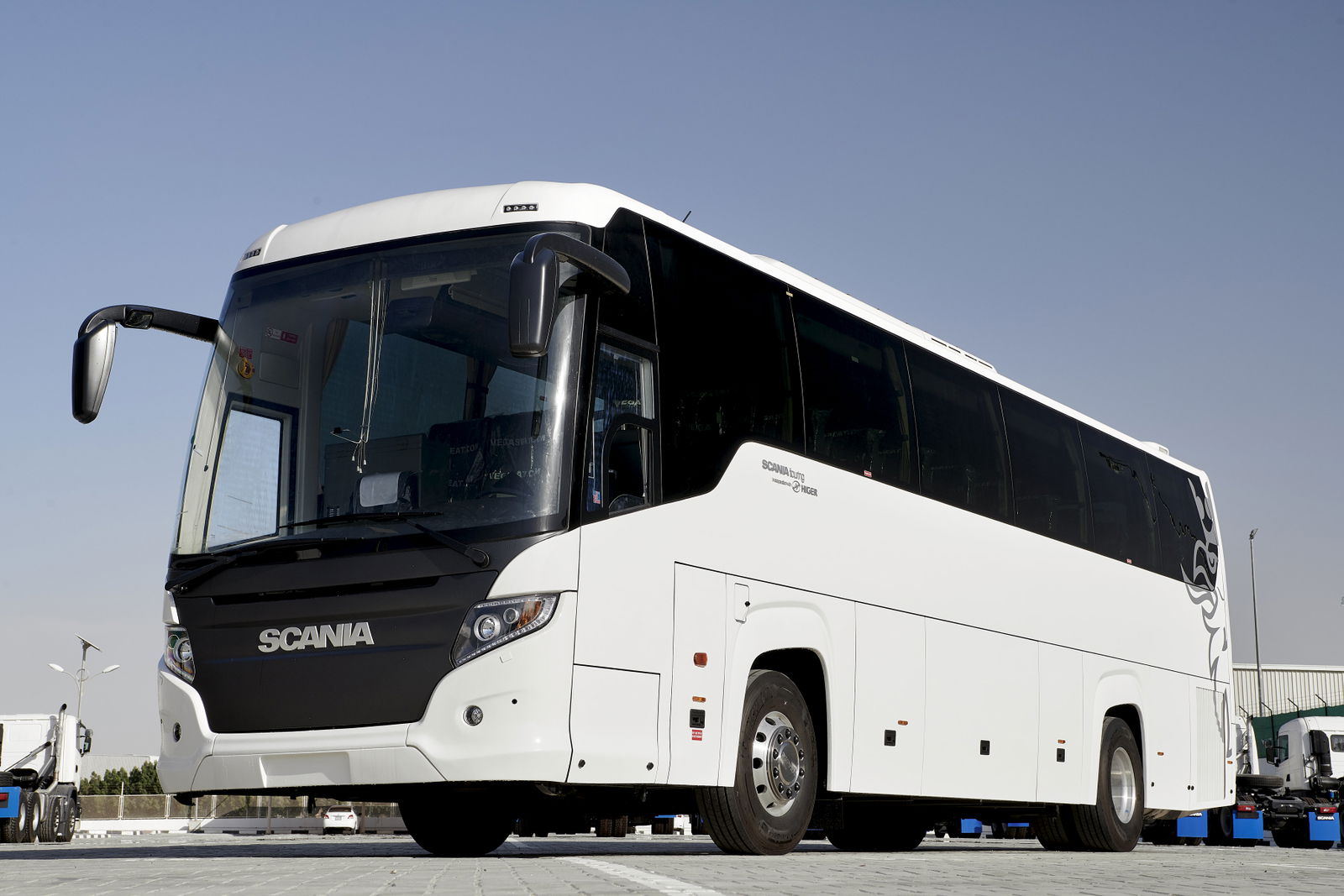
Seventeen years is an exceptionally long time in a coach’s life cycle, but the Touring has of course not reached the present day unchanged. The original design was modernised in several stages over the years, while its fundamental layout and distinctive styling were essentially retained. The most significant revision arrived in 2021: among other changes, the suspension and weight distribution were modified, front axle load capacity was increased by 500 kilograms, the working environments of the driver and tour guide were redesigned, passenger comfort was improved, and the range of driver-assistance systems was further expanded. By contrast, the newly teased model promises a much more extensive change in its exterior appearance as well.
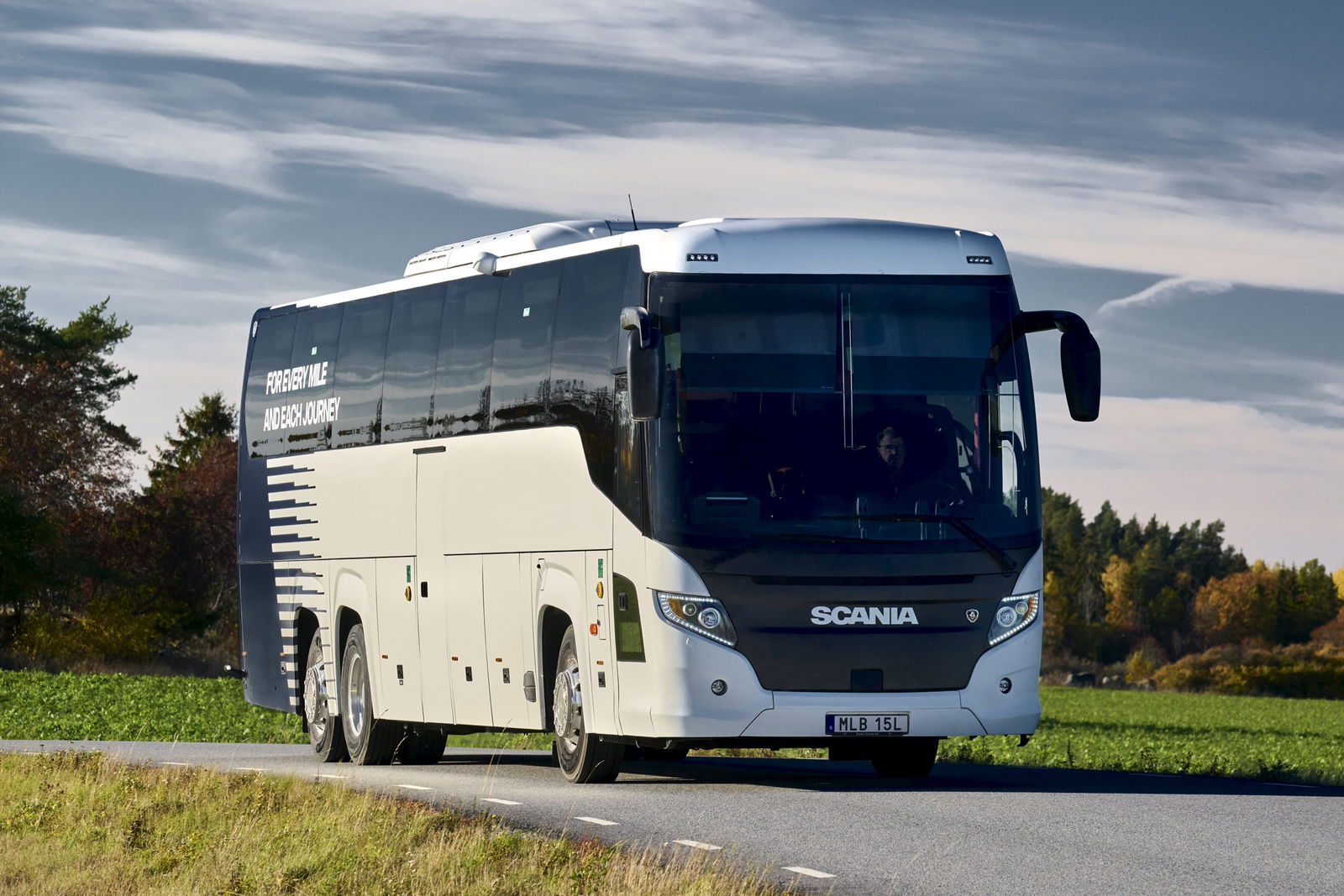
Over the model’s long career, however, Scania’s bus strategy itself has also undergone a fundamental transformation. Similar to the direction chosen by Volvo Buses, the Swedish manufacturer has scaled back its own body manufacturing, placing increasing emphasis on chassis, powertrains and integrated technical systems, as well as on partnerships with external bodybuilders.
In line with this, Scania decided in 2023 to discontinue its own body manufacturing operation in Słupsk, Poland, where production of complete buses ended at the beginning of 2024. At the same time, the Citywide and Interlink model families, as well as low-floor bus chassis, were withdrawn. Chassis production has nevertheless remained in Słupsk, and Scania has since placed even greater emphasis on its modular system, global service network, and international and local bodybuilder partners.
The strategic shift, however, did not mean Scania’s complete withdrawal from the bus and coach segments. These remain part of Scania’s offering, but are increasingly produced through partnership arrangements. One of the most important European examples is the Touring, produced jointly with Higer, which was already based on this co-operation model when it was introduced in 2009.
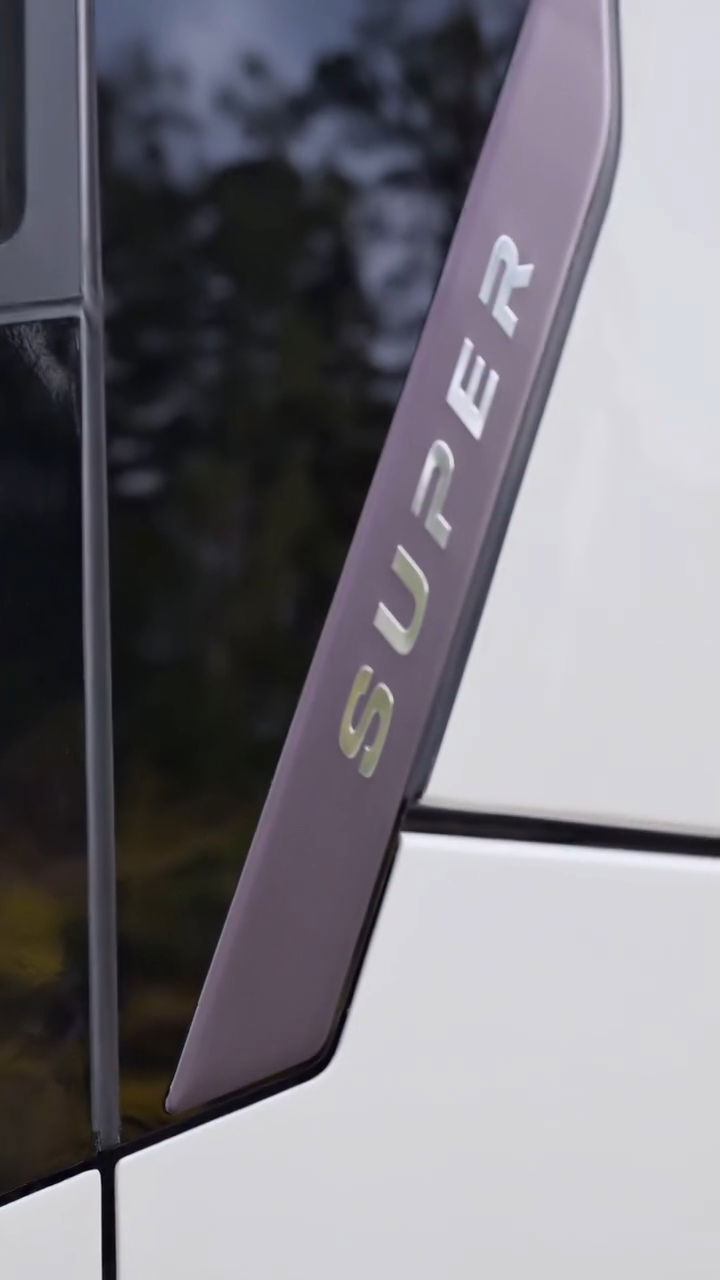
The technical timing of the new generation’s arrival is no coincidence either. In 2025, Scania introduced an entirely new powertrain platform for its buses and coaches, based on the technical foundations of the Super generation familiar from its trucks, but specifically adapted to the requirements of bus applications. The range extends from internal-combustion engines capable of running on conventional and renewable fuels to plug-in hybrid drivetrains.
One important new addition to the range is the 11-litre Scania Super diesel engine, which fills the gap between the 9- and 13-litre units. The manufacturer primarily intends it for duties where the 9-litre engine may no longer provide sufficient output, but use of the larger 13-litre unit is not justified. Together with the new gearbox, Scania promises fuel consumption reductions of up to 10 per cent under representative operating conditions compared with the previous powertrain, while for the 13-litre Super it cites savings of up to 8 per cent.
Also of particular interest in terms of the new Touring’s powertrain offering is Scania’s new plug-in hybrid chassis, which first appeared as the basis for the Irizar i6S Efficient PHEV. Available in both two- and three-axle versions, the platform combines the 13-litre Scania Super engine with a new six-speed electrified gearbox integrating two electric machines, each rated at 145 kW. Energy is supplied by a battery with a nominal capacity of 89 kWh, with which Scania quotes a purely electric range of up to 70–80 kilometres, depending on configuration. Under suitable operating conditions, the system can reduce fuel consumption by as much as 47 per cent compared with a conventionally powered coach, according to the manufacturer. As Scania offers the plug-in hybrid drivetrain as a standalone chassis platform, its use in the new Touring is naturally also a possibility.
What is more, the chassis’s first application has already earned significant industry recognition: the Scania Irizar i6S Efficient PHEV based on it won the Sustainable Bus Award 2027 Coach category award.
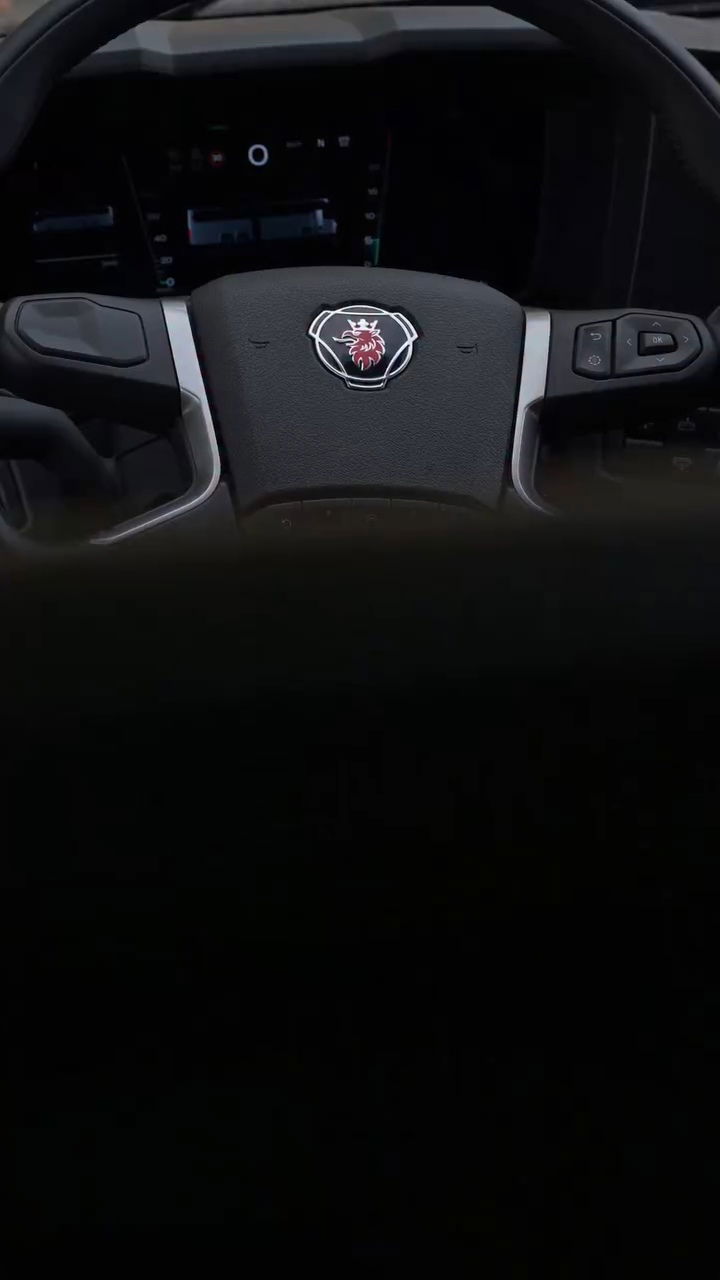
Scania has not yet revealed exactly which powertrains, size variants and technical specifications the new Touring will feature. However, the teaser already indicates rather clearly that the Touring name will remain, while Super technology will arrive in the model family. And, if all goes to plan, there will not be long to wait for further details: Scania will officially unveil the new Touring on 7 October.