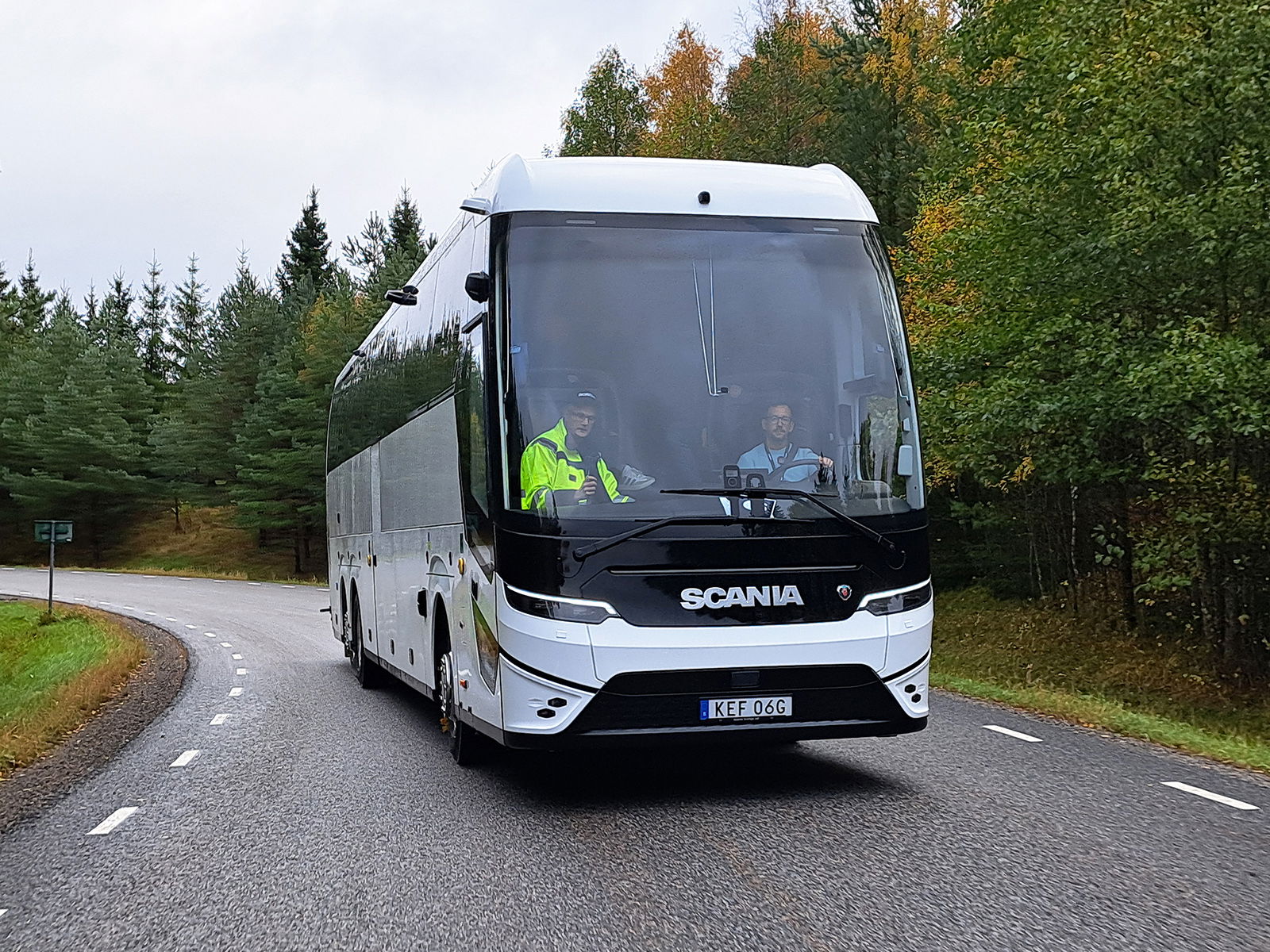
Swedish recipe for the buses of the future: we tried out Scania’s latest developments in Södertälje
On 13 October, we visited Scania’s headquarters in Södertälje, one reason for which was the almost customary suddenness with which the company unveiled the second-generation Scania Touring, but even aside from this, the long-established Swedish commercial-vehicle manufacturer, currently working on building a global brand, has been through a particularly busy period. The bus division discontinued its own body production in Europe, which was a difficult decision, but in retrospect it can be said to have created the necessary financial basis for a number of investments and developments undertaken since 2023, the results of which we were able to see during our latest visit.
According to Scania’s strategy, the challenges facing today’s bus transport cannot be answered by a single propulsion technology, and understanding customers’ realities is essential to success. The Swedish manufacturer sees this as achievable through the creation of a global network and vehicle platform, while working with local partners that are well acquainted with varying market requirements in order to offer tailored products. To illustrate all this, our visit to Södertälje gave us a comprehensive overview of Scania’s latest developments: dedicated technical presentations introduced us to the details of the Super 11 and Super 13 drivetrains, plug-in hybrid and fully electric chassis, and the new Touring range, while test drives and a visit to Scania’s own battery assembly plant completed the press event programme.
A proven recipe, further refined
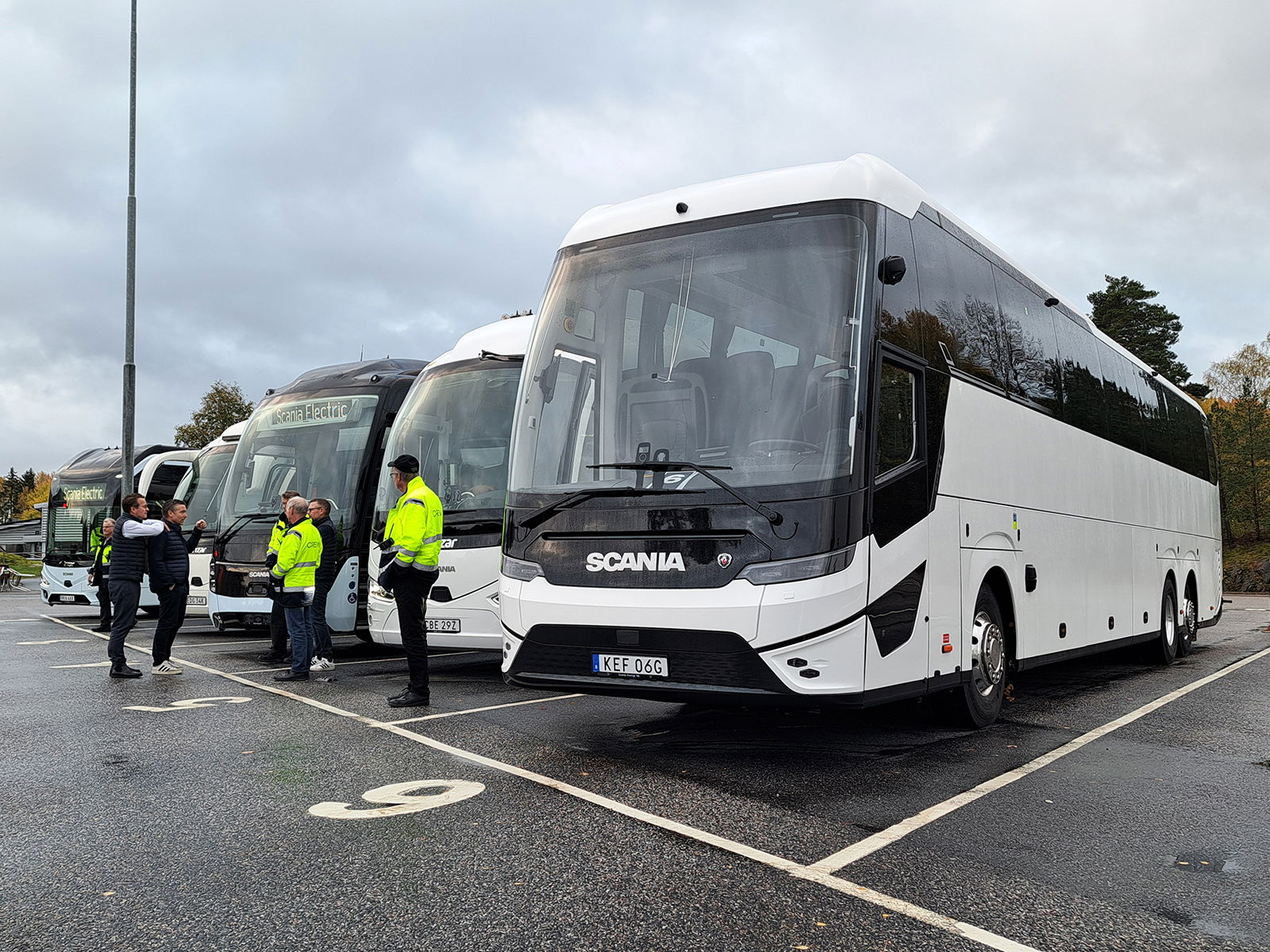
Our day began with test drives on the three-kilometre test track at the Scania Demo Centre, where we were spoilt for choice, with no fewer than six factory demonstrator buses available to try. The conditional tense is also appropriate here because the limited time available in the tightly scheduled programme did not allow for an in-depth exploration of every vehicle, especially if one also spent a few moments discussing technical details and other finer points with the manufacturer’s representatives. The test laps took place in first drizzly and then steadily heavier rain – apparently, that is our luck with Sweden, as we encountered similar weather two weeks ago during our visit to Volvo’s headquarters in Gothenburg.
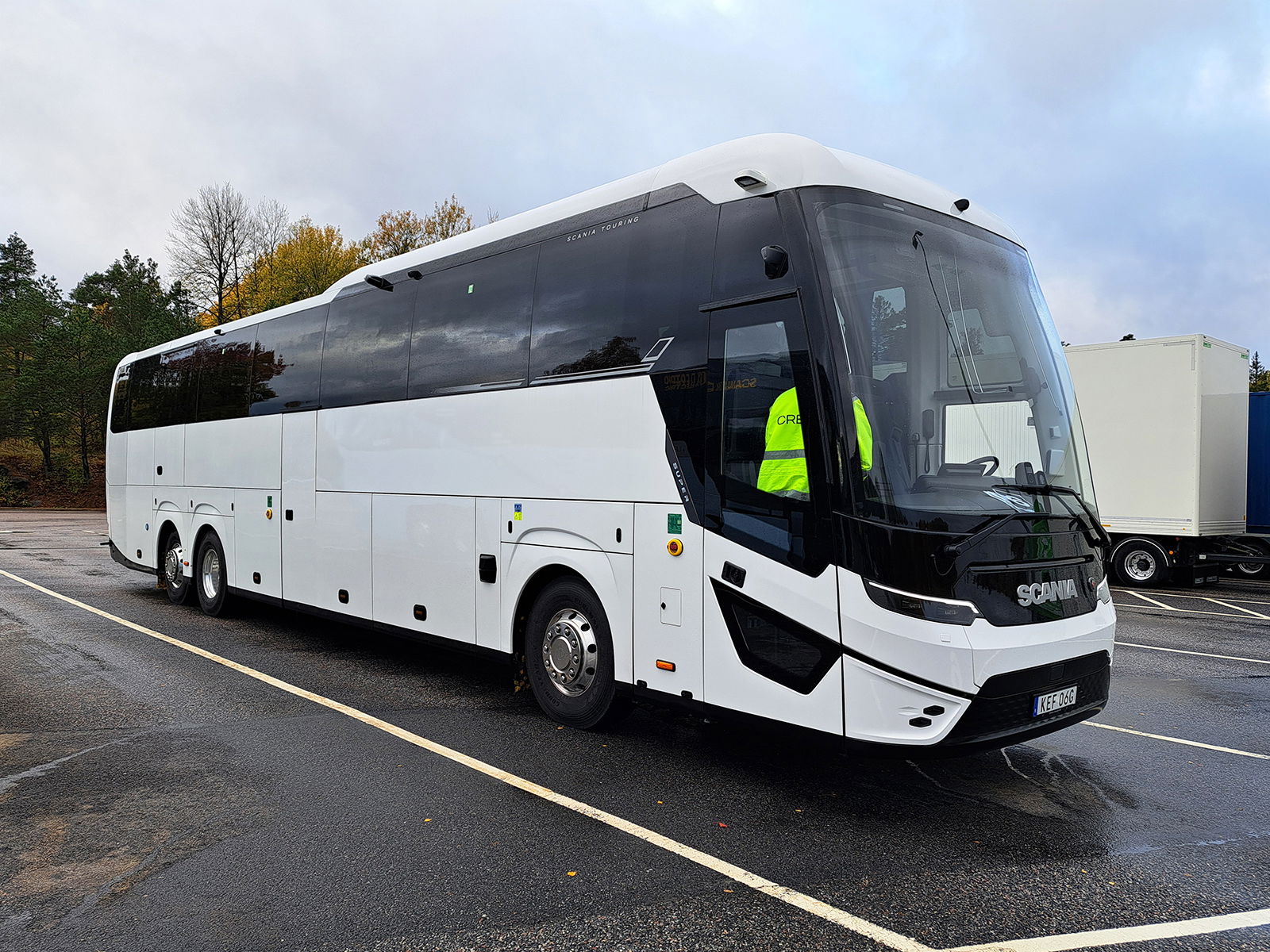
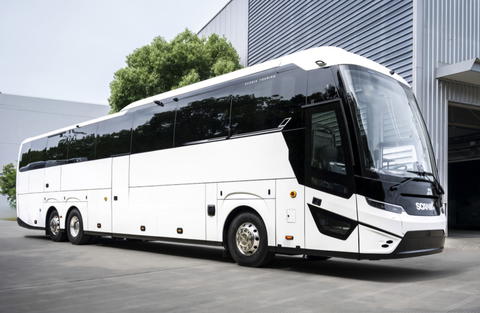
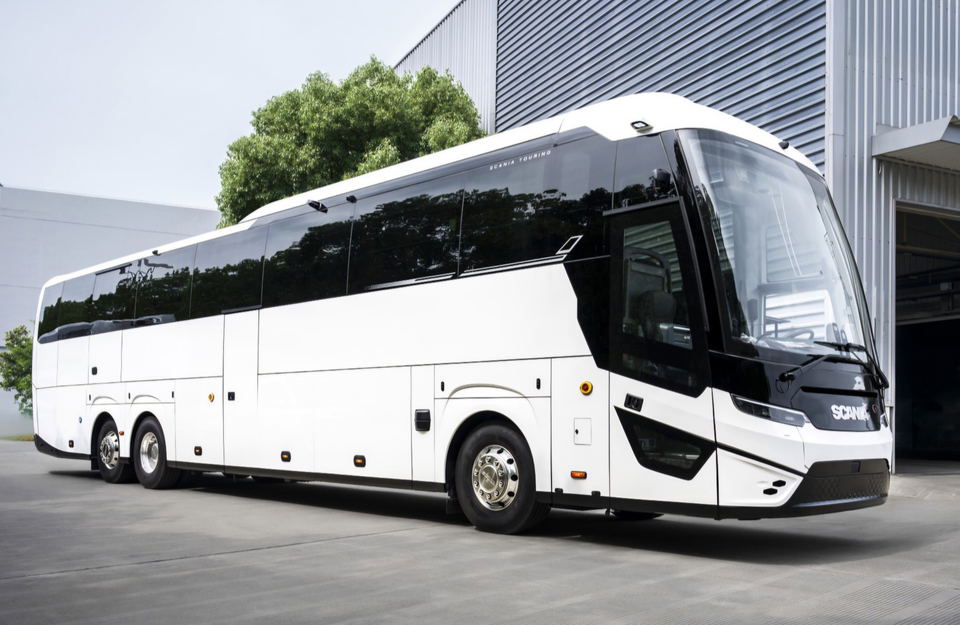
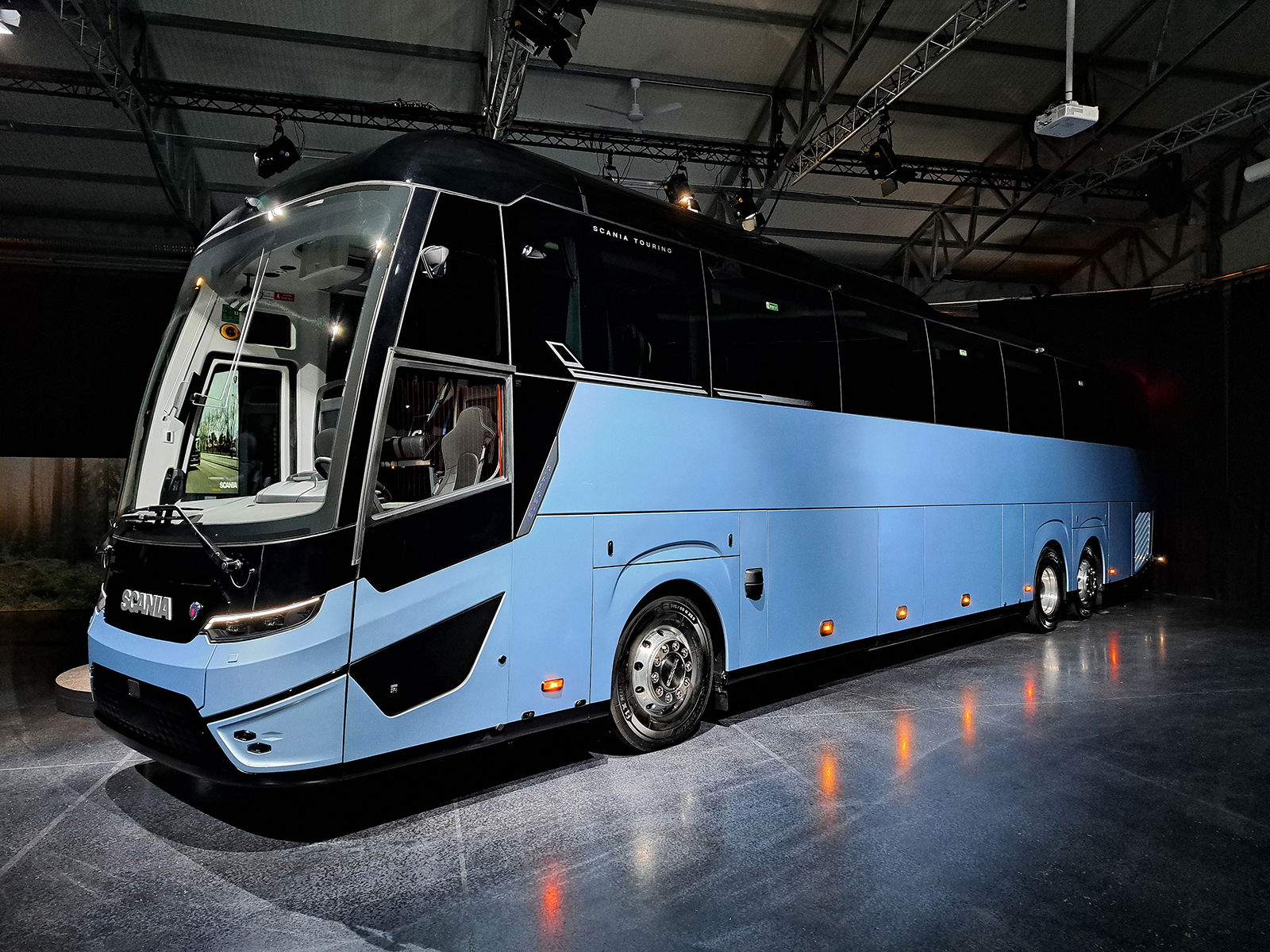
The main attraction was naturally the brand-new Scania Touring unveiled a week earlier, currently the only member of the Swedish manufacturer’s bus range with a body developed in-house. Although, as with the previous generation, the body is contract-manufactured by China’s Higer under the supervision of Scania’s local team, its design and validation are a testament to Swedish expertise. Scania previously delivered the buses’ chassis to China in driveable form, but as we learned, it now does so in most cases ‘flat-packed’, in kit form – in addition to lower assembly costs, the main reason is that sea freight in standard containers involves far less red tape, which had previously been a logistical bottleneck. The completed buses are likewise shipped back to Europe by sea, where they are prepared for handover to customers at Scania’s Amsterdam base, and any minor damage potentially incurred during transport is also repaired there.
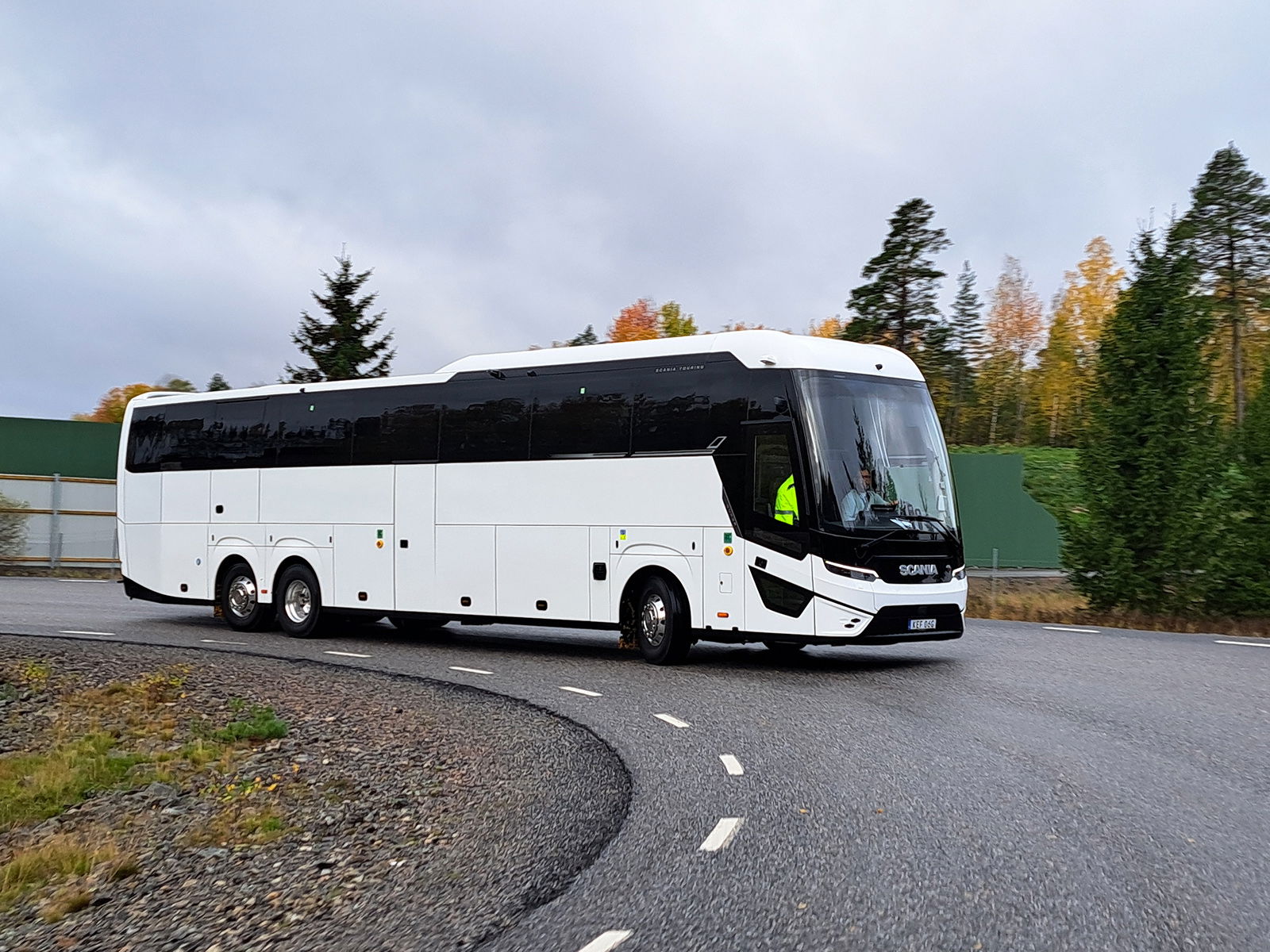
Our hosts specifically drew our attention to the fact that the new Touring is not a facelift, but an entirely new product. Although the previous generation was unveiled in 2009, it did not look dated – only when placed alongside the new version does the passage of more than a decade and a half become apparent – and it sold well. Indeed, rather surprisingly, it achieved its best sales figures in its final years: around 780 units were sold last year, instead of the usual annual 300–350. We presented the details of the new generation in this article, so we will only briefly summarise the key points here: it features improved aerodynamics, new power units, wider steps and up to 14.5% more underfloor luggage space, partly thanks to optional compartments above the wheel arches. The fresh styling is closely related to Scania’s latest trucks, while no corners have been cut on appearance either: the black decorative element beneath the driver’s window, symmetrical with the viewing window in the front door, is a black glass panel rather than paintwork. Scania is even reportedly unwilling to deliver the bus without the distinctive black detailing beneath the windscreen – anyone wishing to spoil the painstakingly refined shape in this way must do so themselves.
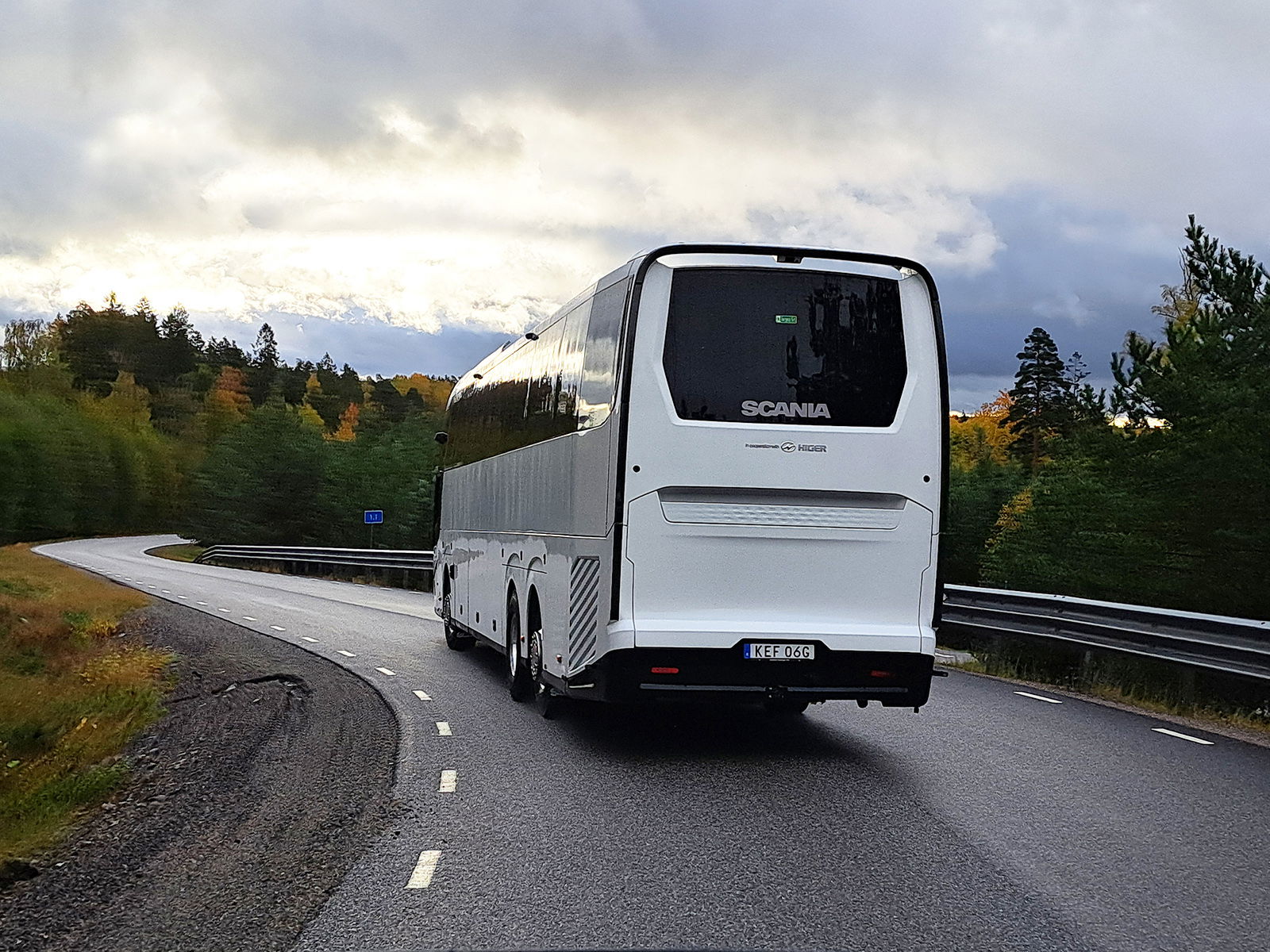
The new Touring will be produced in a total of six length variants. The 11-metre version serves as the entry-level model, followed by variants measuring 12.3, 13, 13.2 and 13.9 metres, while the range is topped by the 14.7-metre version also tested on site – the latter two variants already feature three axles. The teardrop shape cited as one of the main innovations in the press materials is readily apparent in the flesh; in practice, this means that both the width and height of the body decrease from the penultimate window pillar rearwards. This tapering is clearly visible from outside under certain lighting conditions, but less noticeable from within the passenger compartment. Together with the spoiler treatment now found on almost every newly developed coach, it makes a significant contribution to reducing the area of negative air pressure that forms behind the bus, thereby lowering consumption.
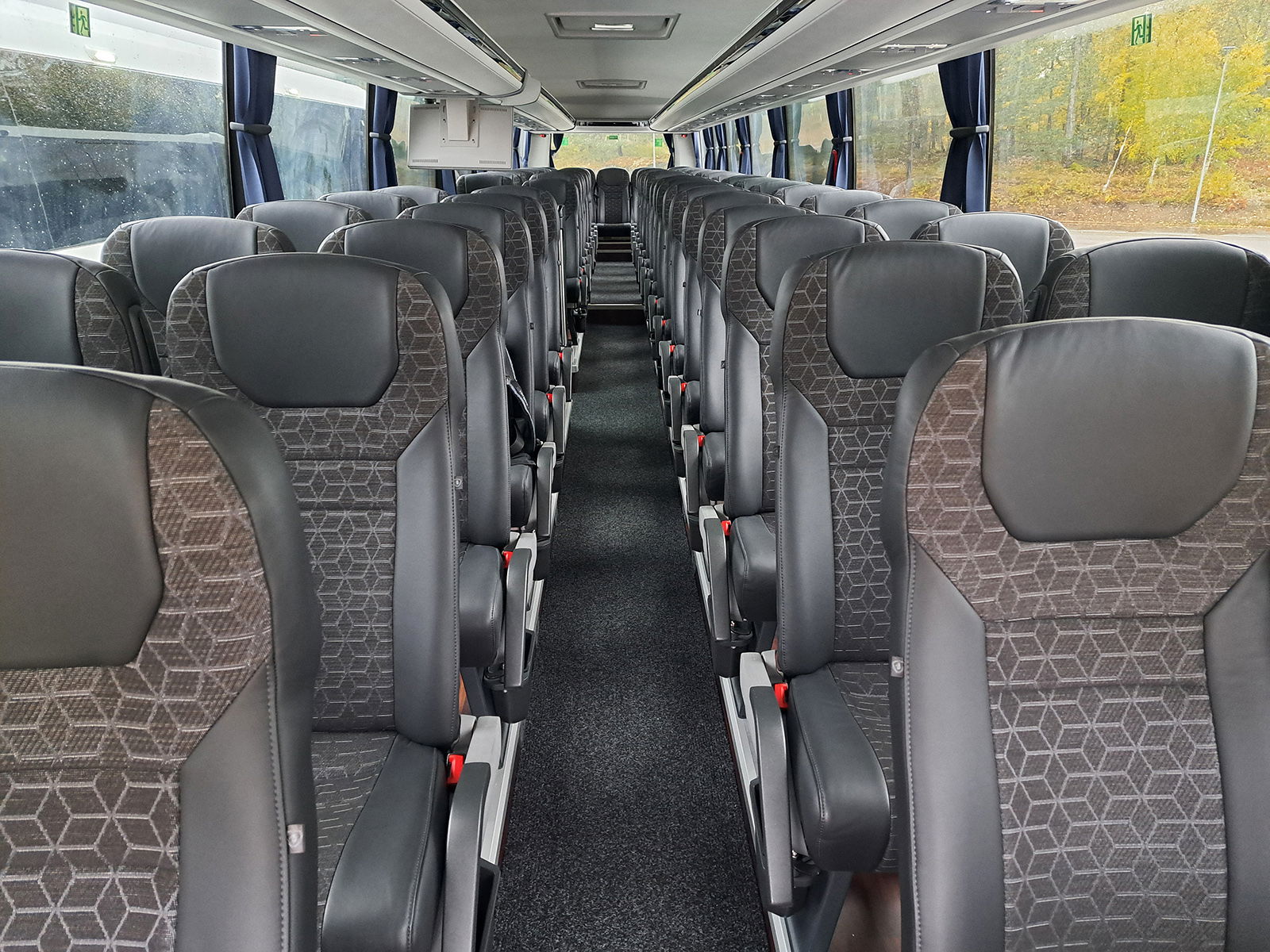
The demonstrator’s passenger compartment has a premium feel and forms a visually coherent whole thanks to the elegant luggage racks converging at the front and rear. Not only have these received new service panels, but they are also deeper than before, giving them 40% greater storage capacity; lockable versions with lids are also available on request. The sole unwelcome feature of the interior layout is the step running across the aisle around two-thirds of the way along the passenger compartment, which one would not necessarily expect in the aisle of a high-floor coach. At first, we thought it was necessary because of some engineering solution, but as we learned, its purpose is to provide a level floor area for the wheelchair user accommodated here. Consequently, the aisle of versions without a wheelchair lift is – thankfully – step-free.
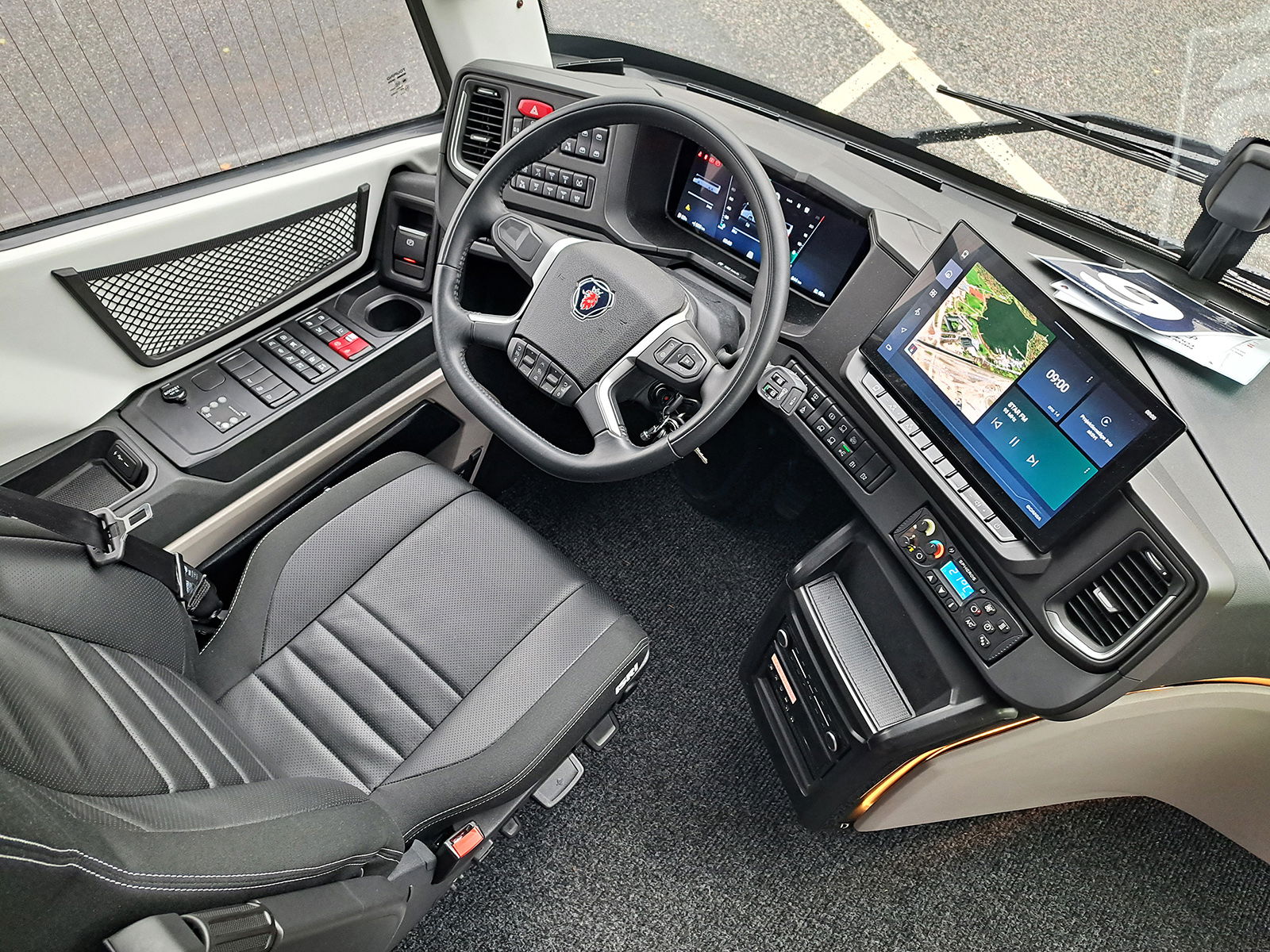
Thanks to the more curved A-pillar and the B-pillar moved 90 mm further back, the driver’s seat provides a better view of the vehicle’s immediate surroundings than before. The dashboard has also been updated, with infotainment and less frequently used functions now also controllable via a large tablet. This is an optional extra; if it is not specified for the bus, the necessary information is displayed on the digital central instrument cluster. Our test bus was fitted with the range-topping 500 hp (368 kW) version of the 12.7-litre Scania Super 13 diesel engine, which was not particularly troubled by the test track’s 8% gradients. The improved noise and vibration reduction also performed well, with the engine’s hum virtually imperceptible at the front of the passenger compartment.
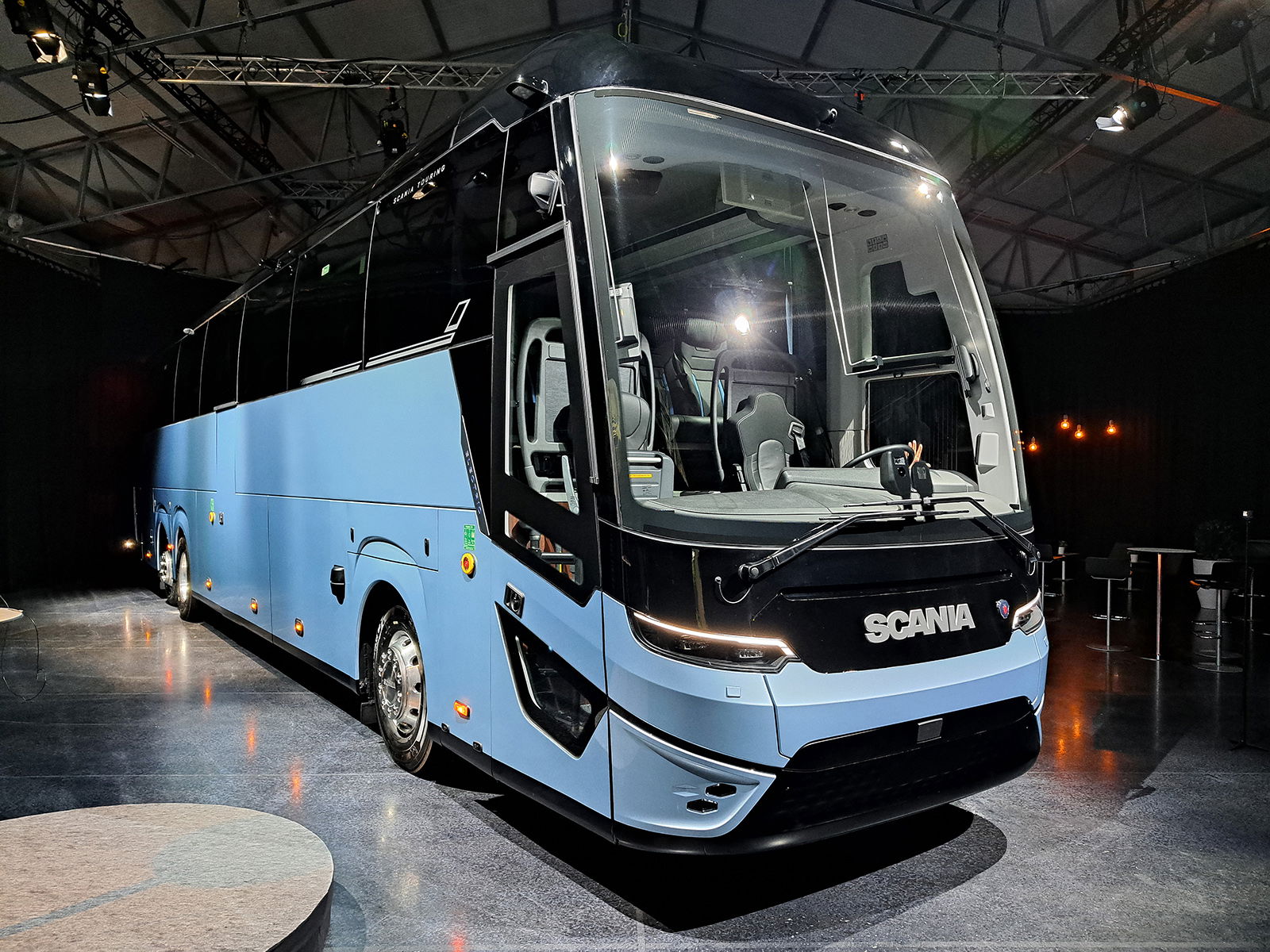
As part of the event, the new fully electric (BEV) version of the Touring was also officially unveiled. Scania is already accepting pre-orders for it, although we could for the time being inspect the demonstrator only while closed up and stationary. Nevertheless, the factory representatives were not especially secretive about the technical data, explaining that the bus is built on the HF BEV chassis, which will be presented in detail later in our article, so its technical characteristics are identical to those described there. From the outside, only the discreet Electric lettering at the base of the B-pillar indicates the electric drivetrain; another tell-tale detail is that the luggage compartment above the B axle cannot be opened on this version, meaning future operators and their passengers will have around 8 m3 of luggage space at their disposal. From a market perspective, it may be important that the electric version of the Touring will be available with a two-axle body from the outset, which could provide an advantage over the within-group and external rivals that for now are mainly offering heavier three-axle designs. Nevertheless, the Euro 6 diesel-engined version will be the first to reach the market and deliveries will begin with it, followed by the BEV version; according to Scania, further propulsion options may also appear later (by process of elimination, this could mean a gas-powered or possibly hydrogen-powered version).
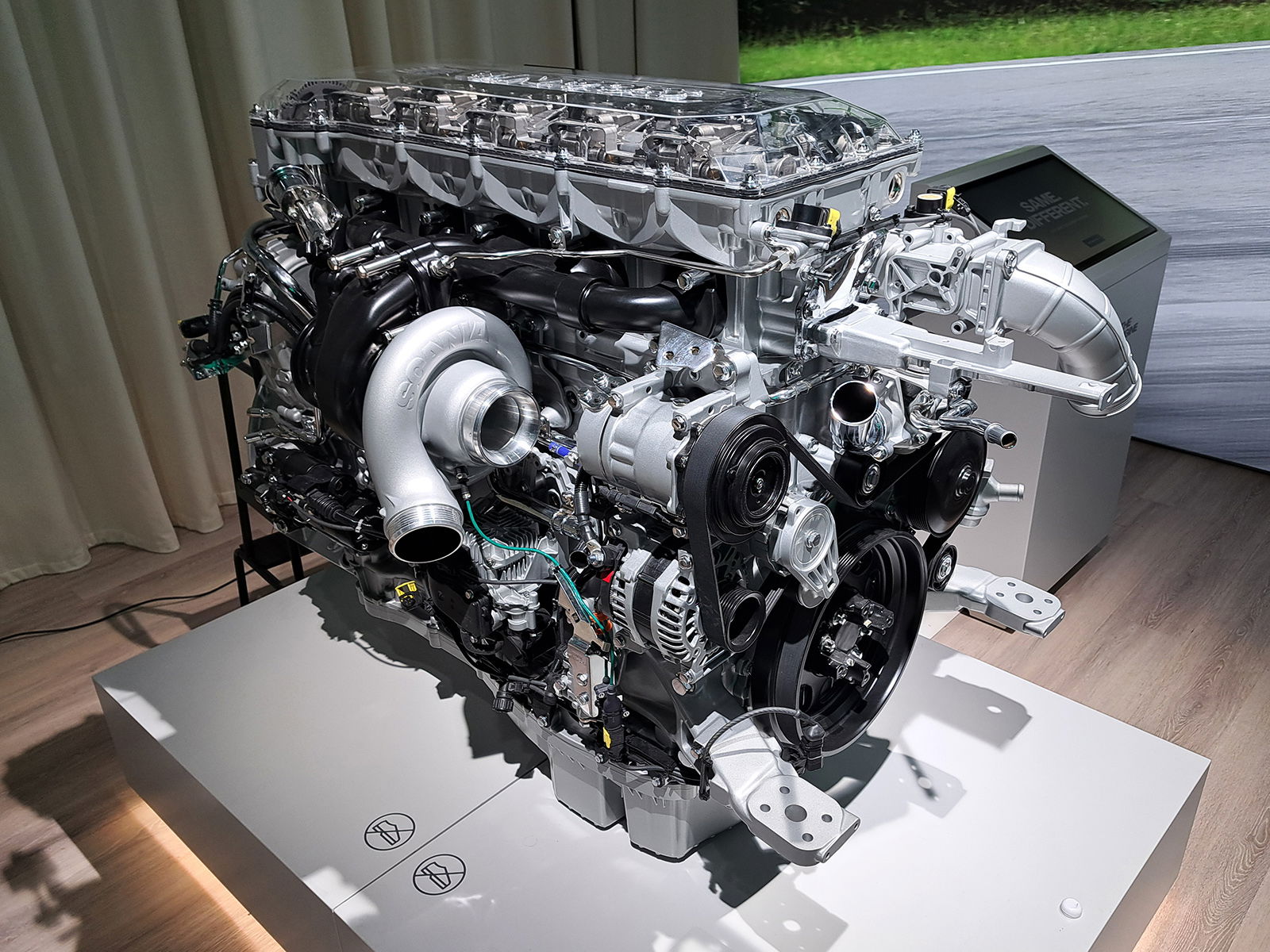
Members of the new Touring range – at least the diesel-powered versions – will be built exclusively with the new-generation Scania Super 11 and Super 13 engines, which we also had the opportunity to examine in detail during the day. The question may arise as to why Scania is still investing in the development of internal-combustion engines when the industry consensus is that electric propulsion is the future, but according to our hosts, one simply has to acknowledge that not every customer is currently ready for the electric transition, and this is even more true globally and in the long-distance segment.
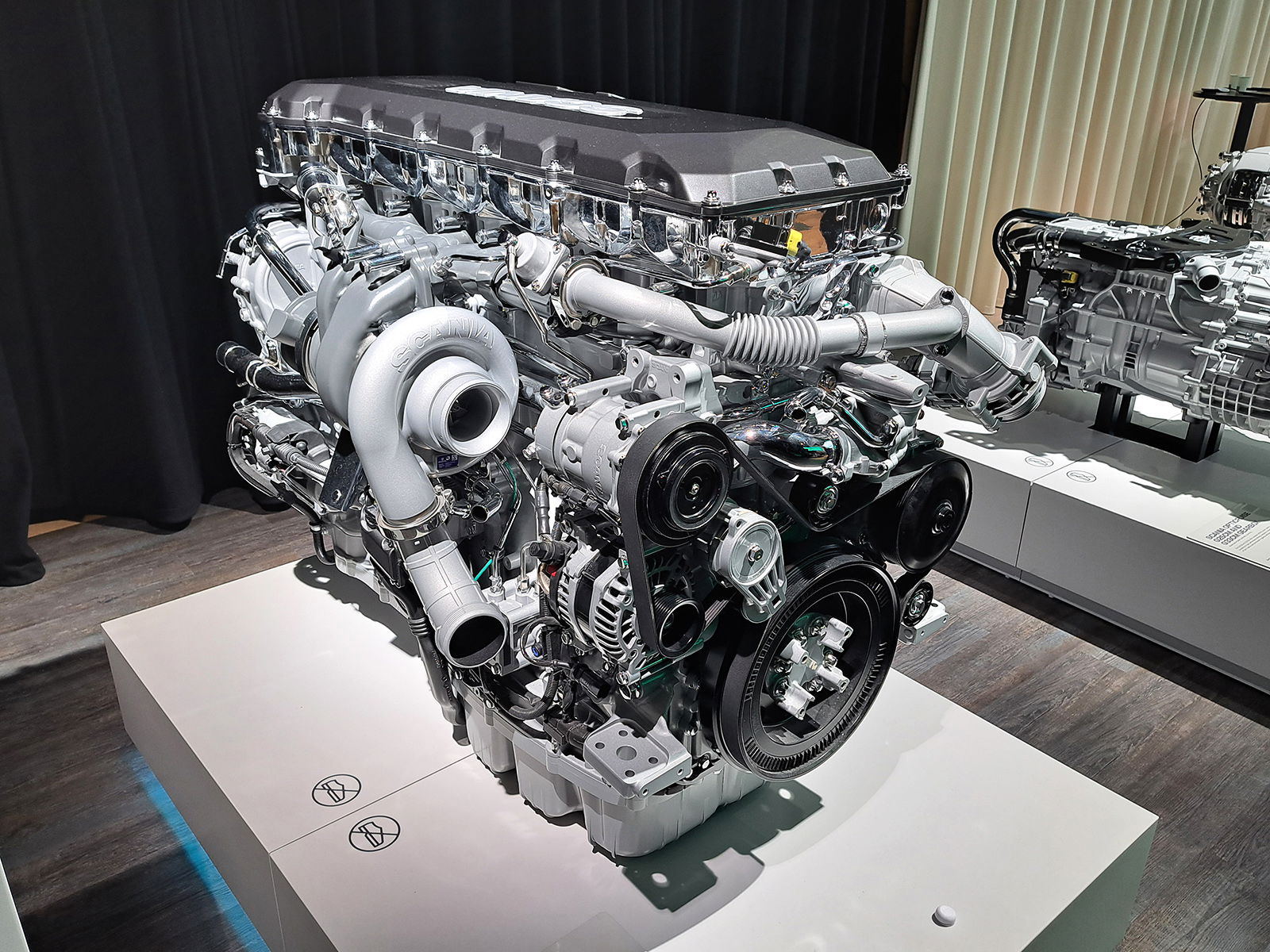
Although the Super 13 designation essentially refers to a newly developed diesel engine, Scania often describes it as a complete drivetrain, chiefly because the claimed 8% reduction in fuel consumption is achieved when paired with the appropriate gearbox and drive axle – developments associated with the engine alone deliver savings of roughly 6.5%. Developed in accordance with Scania’s philosophy of combining high torque with low engine speeds, this inline six-cylinder, twin-cam, double overhead camshaft (DOHC) power unit is available with 420, 460 or 500 hp (309, 338 and 368 kW respectively), and peak torque of 2,300–2,650 Nm; the latter two can also run on biodiesel (FAME) or hydrotreated vegetable oil (HVO). In addition to the European-specification version compliant with the Euro 6 emissions standard, Euro 3 and Euro 5 variants are also produced for markets with less stringent emissions requirements, while the manufacturer estimates its service life at around 2 million kilometres.
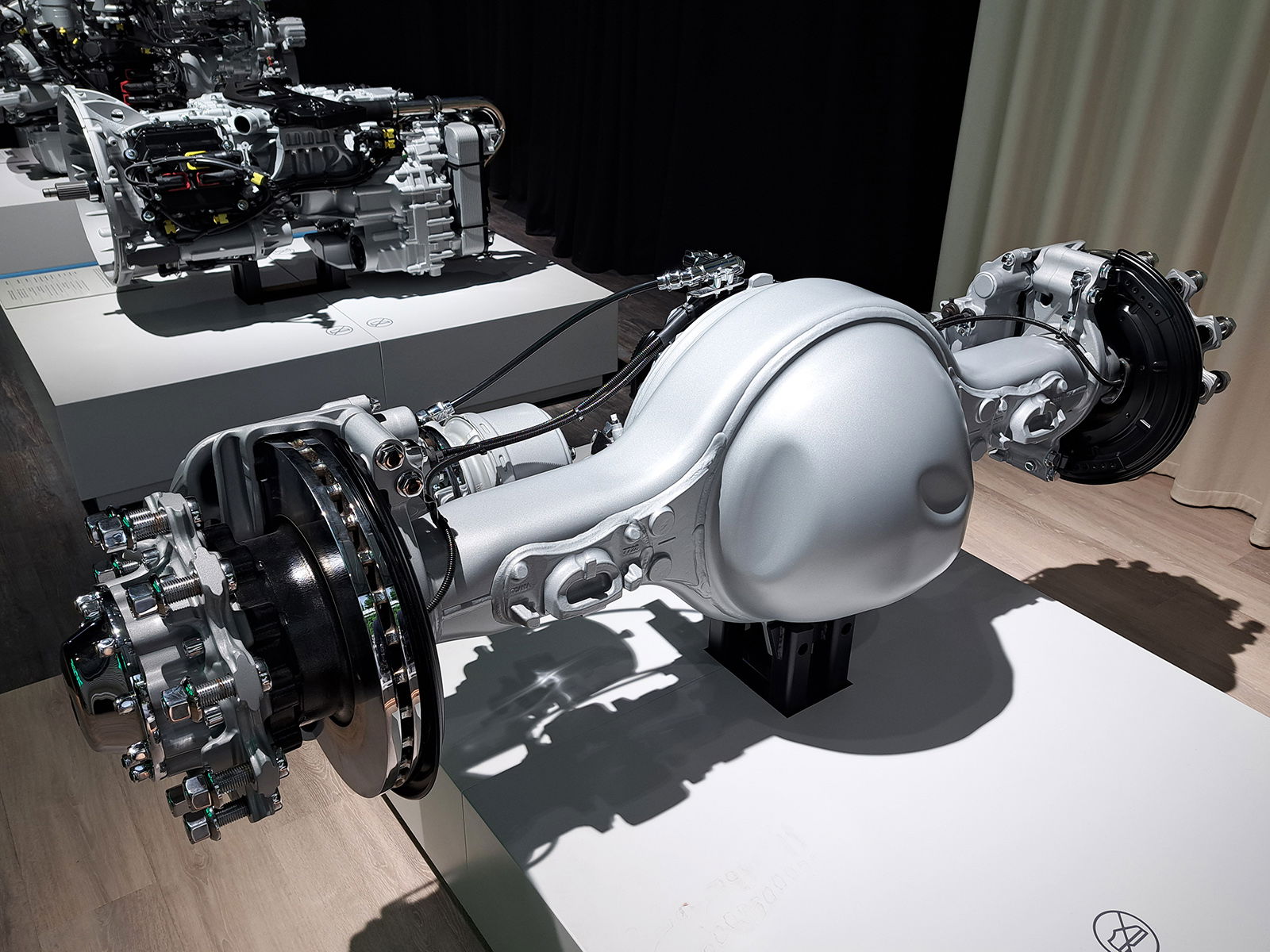
The paired Scania Opticruise G25CM automated gearbox, with a total of 14 forward ratios (including one crawler and one overdrive) and two reverse ratios, is likewise a recent development. Among its main features, our hosts highlighted the lighter aluminium gearbox housing and the improved electric clutch. Customers can also choose from several options for continuous braking: alongside the optional integrated Compression Release Brake (Compression Release Brake, CRB), the new Scania Retarder 4700D and the conventional exhaust brake are also available, delivering braking power of 344, 500 and 200 kW respectively. By definition, the driveline is completed by the axles, and Scania has new offerings in this area too, in the form of the R716 drive axle optimised for lower consumption and noise, and the R756 drive axle designed specifically for demanding use, while the previous R660 unit remains available. The fixed A461 and steered AM461 tag axles are also new for three-axle versions.
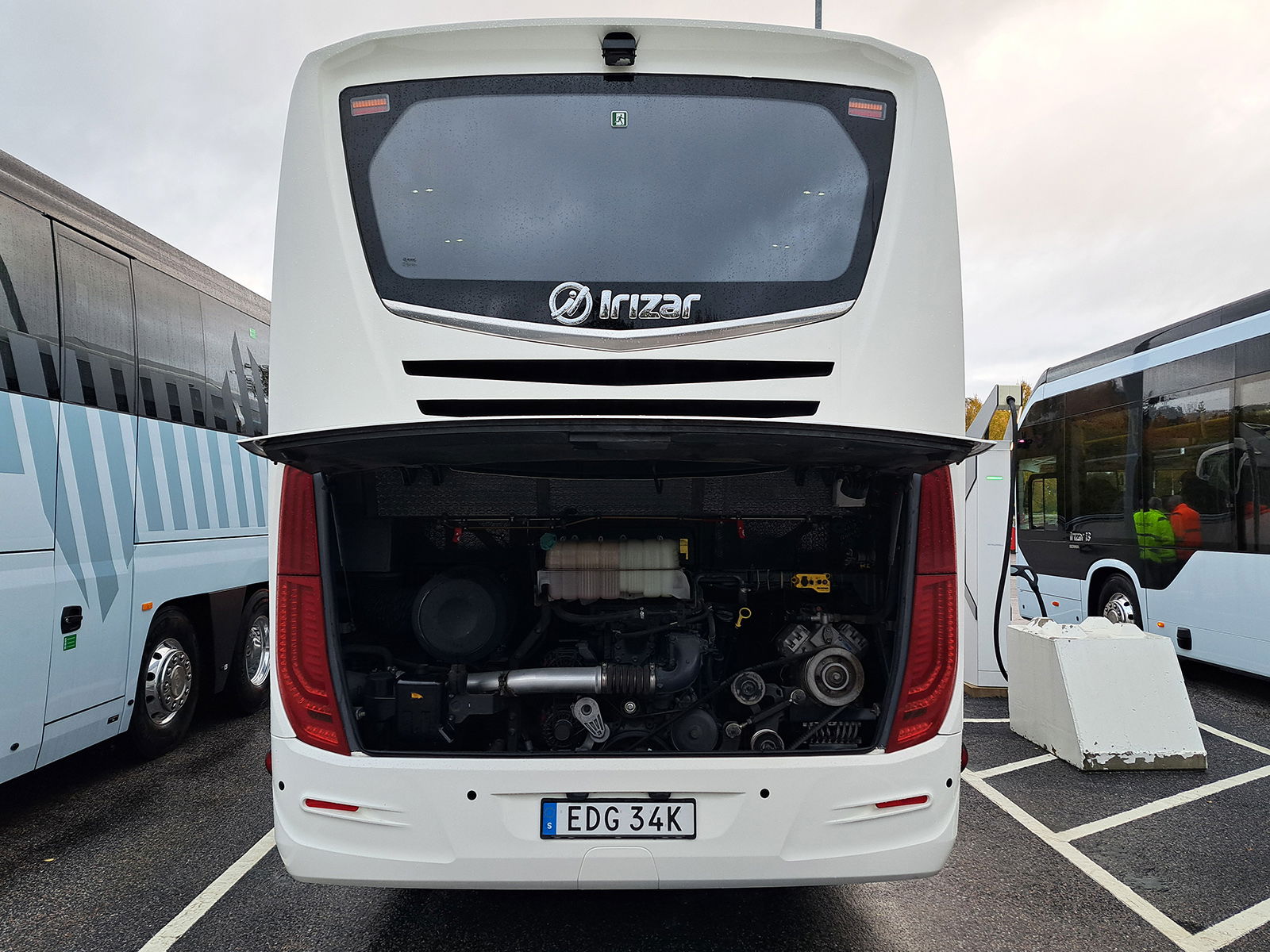
The somewhat smaller, 10.6-litre Super 11 diesel engine could be tried on site installed in a two-axle Irizar i6S Efficient coach. This five-cylinder unit is Scania’s latest development, and when combined with the appropriate transmission system and drive axle, it can deliver up to 10% better fuel consumption than its 9-litre predecessor, while also offering longer service intervals. The new power unit is available in Euro 5 or Euro 6 versions, with outputs of 350, 390 and 430 hp (257, 287 and 316 kW respectively), all of which are compatible with biodiesel and HVO. In addition to the Scania Opticruise G25CM automated gearbox mentioned above, the well-known ZF EcoLife 2 automatic transmission is also available as a transmission unit, although this is recommended primarily for urban-type applications. The former can be paired with the new Scania R716 and R756 rear axles, while the latter is offered with the likewise new R886 axle alongside the still available earlier R660 and RP835. The optional tag axles for three-axle versions are the same as those described for the Super 13 drivetrain.
An important innovation of the Super 11 is the Variable Valve Brake (Variable Valve Brake, VVB), which combines the operation of the CRB with camshaft phasing, as its name suggests. The engine management system can thus adapt valve timing to the prevailing engine speed and operating conditions, allowing strong and more consistent braking performance. This solution not only replaces the conventional exhaust brake, but with braking power of 344 kW it can even substitute for the retarder in certain applications. Accordingly, the hydraulic Scania Retarder 4700D is only available as an option with this engine, and is worth adding to the specification for applications requiring greater continuous braking power, such as mountainous operations.
The golden middle ground
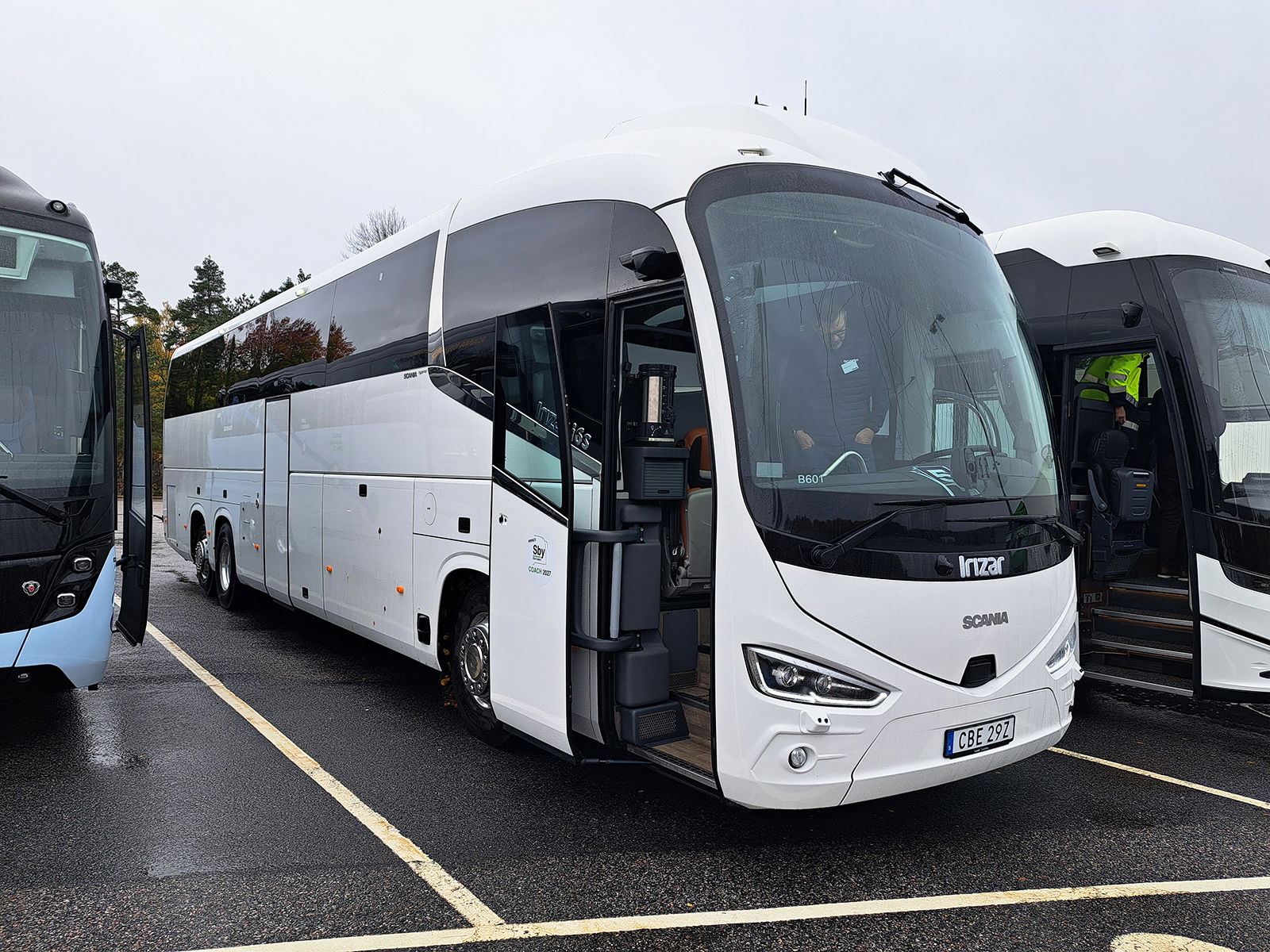
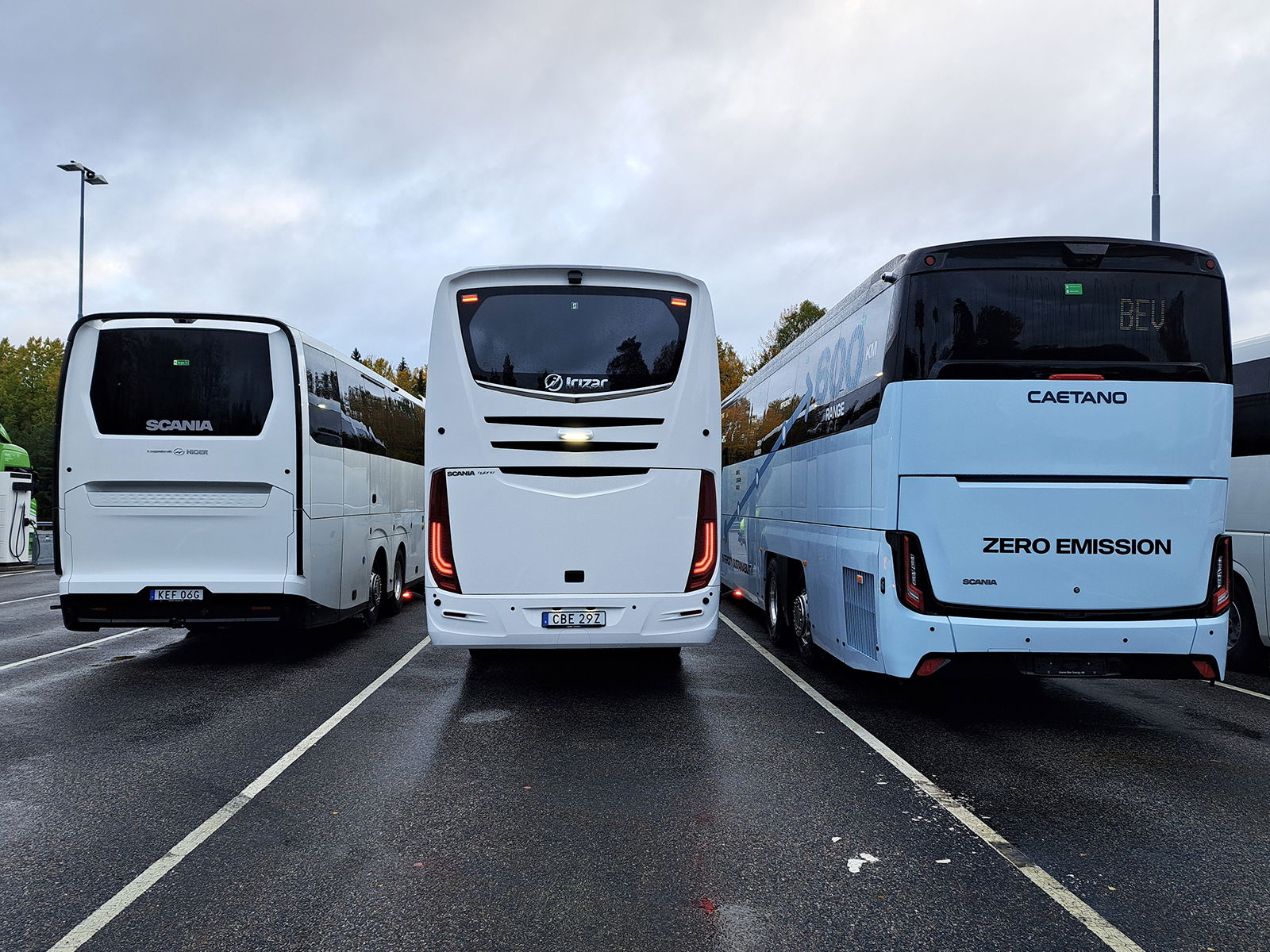
Until long-distance electric buses become more widespread, Scania nevertheless also offers an interim solution for operators more open to alternative propulsion. Its main exponent is the plug-in hybrid (PHEV) chassis range developed specifically for long-distance buses and unveiled last year, which has already earned several prestigious international accolades: after receiving the Label of Excellence for Driveline Technology at the 2025 Busworld Vehicle Awards, this year it was also chosen as the best type in the coach category of the Sustainbale Bus Awards 2027. At Scania’s test track, we were greeted by the award-winning model itself, namely the three-axle version paired with an Irizar i6S Efficient body, which was also among the demonstrator buses we had the opportunity to try while driving. Chassis manufacturers must always think somewhat ahead, but according to Scania’s estimates, the three-axle platform can underpin coaches with around 55 seats and 9.4 m³ of luggage space. Naturally, the platform is also available in a two-axle version.
Scania unveiled its first hybrid concept bus back in 2007, so the Swedish manufacturer already has almost two decades of experience in this field. At the heart of its latest plug-in hybrid system are two electric motors, each rated at 145 kW, integrated into the six-speed gearbox. They are coupled into the driveline via a planetary gearset and, naturally, also enable regenerative braking. The system is currently available exclusively in combination with the 420 or 460 hp versions of the Super 13 engine. The simple reason for this initially somewhat oversized-looking choice is that only this engine was available when development of the PHEV driveline began; the smaller Super 11 power unit joined the range only later. Energy is buffered by a single lithium nickel manganese cobalt oxide (NMC) battery module with a total capacity of 89 kWh. Its position can be varied virtually freely by bodybuilders, with longitudinal, transverse or even diagonal installation all possible. It enables the two-axle version to cover 80 kilometres and its three-axle sibling 70 kilometres in electric mode, more than enough to negotiate the zero-emission and low-noise zones of Western European cities. Due to the battery's charging limitations (a maximum of 1 C), the vehicle can be charged via a CCS Combo 2-standard plug-in connector at up to 130 kW, more slowly than the purely battery-electric (BEV) versions, but this remains sufficient in practice precisely because of the relatively small battery capacity. What is more, the energy storage unit can be conveniently fully charged overnight even from a standard car charger, which is good news for operators not yet wishing to invest in heavy-duty vehicle charging infrastructure.
Scania's new PHEV chassis family is regarded by the industry as a well-balanced, realistic alternative leading towards sustainable coach transport, and the platform also made a good impression during our brief test drive. The bus starts off in electric mode by default, which is also useful when inching through traffic jams; the diesel engine cuts in only later, and when the accelerator is floored it also helps meet the higher tractive-effort demand even if the bus is otherwise operating in electric mode. The internal-combustion power unit engages extremely smoothly, almost imperceptibly, with its activation indicated primarily by the rev counter coming to life. On the move, no 40 hp deficit was felt compared with the previously tested 500 hp Touring, especially as in practice the two electric motors add around 100 hp to the combined output, meaning that under full load the PHEV version is ultimately even more powerful than the top diesel variant. Its consumption is nevertheless restrained: according to Scania, in intercity use, with the battery charged twice daily, savings of up to 47% can be achieved – and this is a real test result, not an estimate. Moreover, if biodiesel or HVO is used instead of conventional diesel fuel, the carbon footprint can be reduced by as much as 88–94% on a well-to-wheel basis.
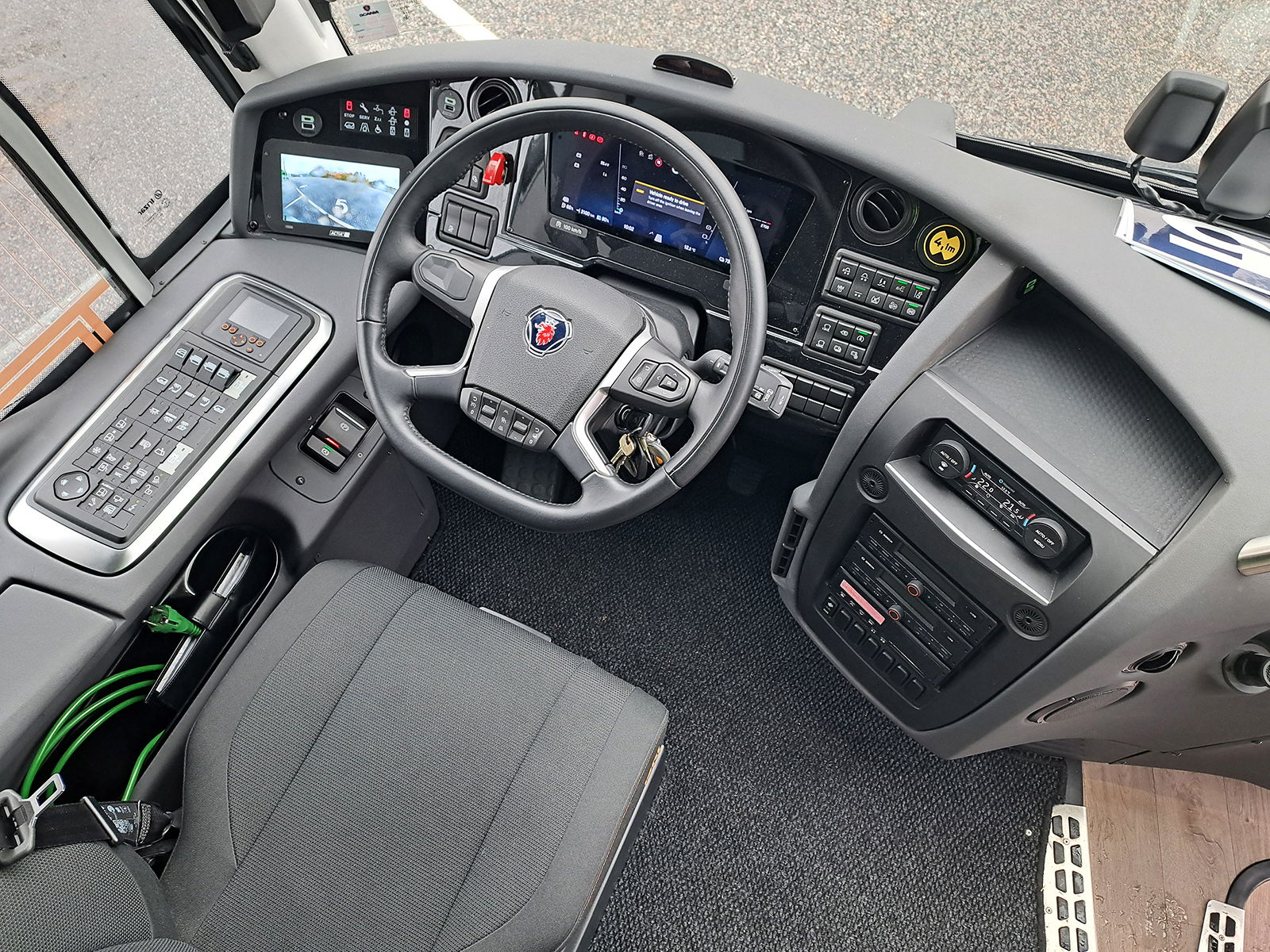
As we already know from the press materials, the PHEV system can operate in four different modes – electric, hybrid, charge sustain and forced charging – which the driver can select using individual buttons on the dashboard. With the GPS-based Scania Zone function, route sections can be preconfigured so that the bus automatically switches to zero-emission mode upon reaching them; this was demonstrated to us on a designated section of the test track. Control nevertheless remains with the driver throughout: with heavy accelerator input, for example, the diesel engine will still start even then, although in that case a text message appears in the central instrument display stating that the conditions prescribed for the given zone are not being met. In practice, it is worth bearing in mind that the system is not clairvoyant, so it does not automatically reserve sufficient electrical energy in the battery for the zero-emission section. The amount of energy needed to complete it also depends on prevailing traffic conditions, so this is something the driver must keep an eye on.
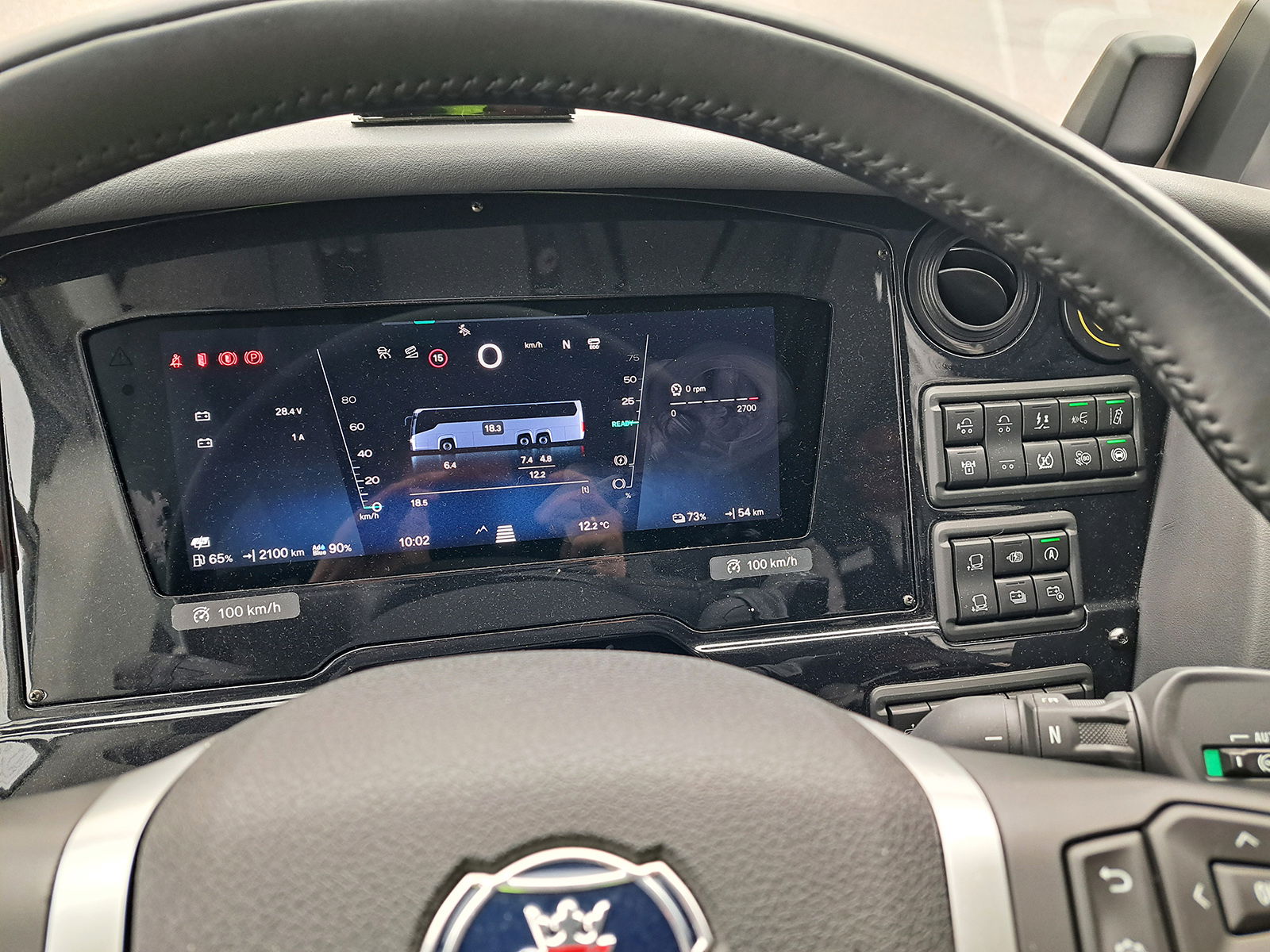
An important feature of Scania's PHEV platform is that, although the retarder lever is found in its usual place and the continuous braking force can be set in five different stages, the vehicle does not actually have a hydraulic retarder in the conventional sense. Instead, in the first three stages it relies exclusively on regenerative braking for deceleration, while in the two strongest stages the CRB also intervenes. With a fully charged battery, only the latter is available alongside the pneumatic service brake. The basic idea is for the energy released during braking to be used to charge the battery rather than wear out the brakes, so the system uses regenerative braking whenever possible. In fact, this is also the first to activate when the brake pedal is pressed, although little of this can be felt from the driver's seat.
Cleanly, globally
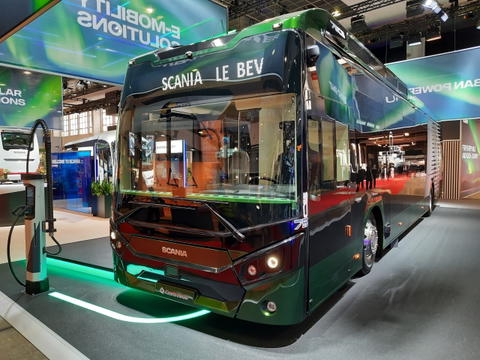
Naturally, the day's programme also included a presentation of the fully electric product range. Nor can it be described as limited, even though the full-length low-floor C-series chassis family that also formed the basis of the former Citywide range has fallen victim to range rationalisation, and according to Scania representatives there are currently no plans for a successor. The Swedish manufacturer is striving to create a global offering, while low-floor types are something of a peculiarity of major European cities: in other parts of the world, low-entry layouts are standard even in metropolises with populations in the millions, while conventional-floor city buses remain common in Latin America to this day. Accordingly, the electric-bus chassis range comprises low-entry (LE) and conventional-floor (HF) platforms, both available in two- and three-axle variants.
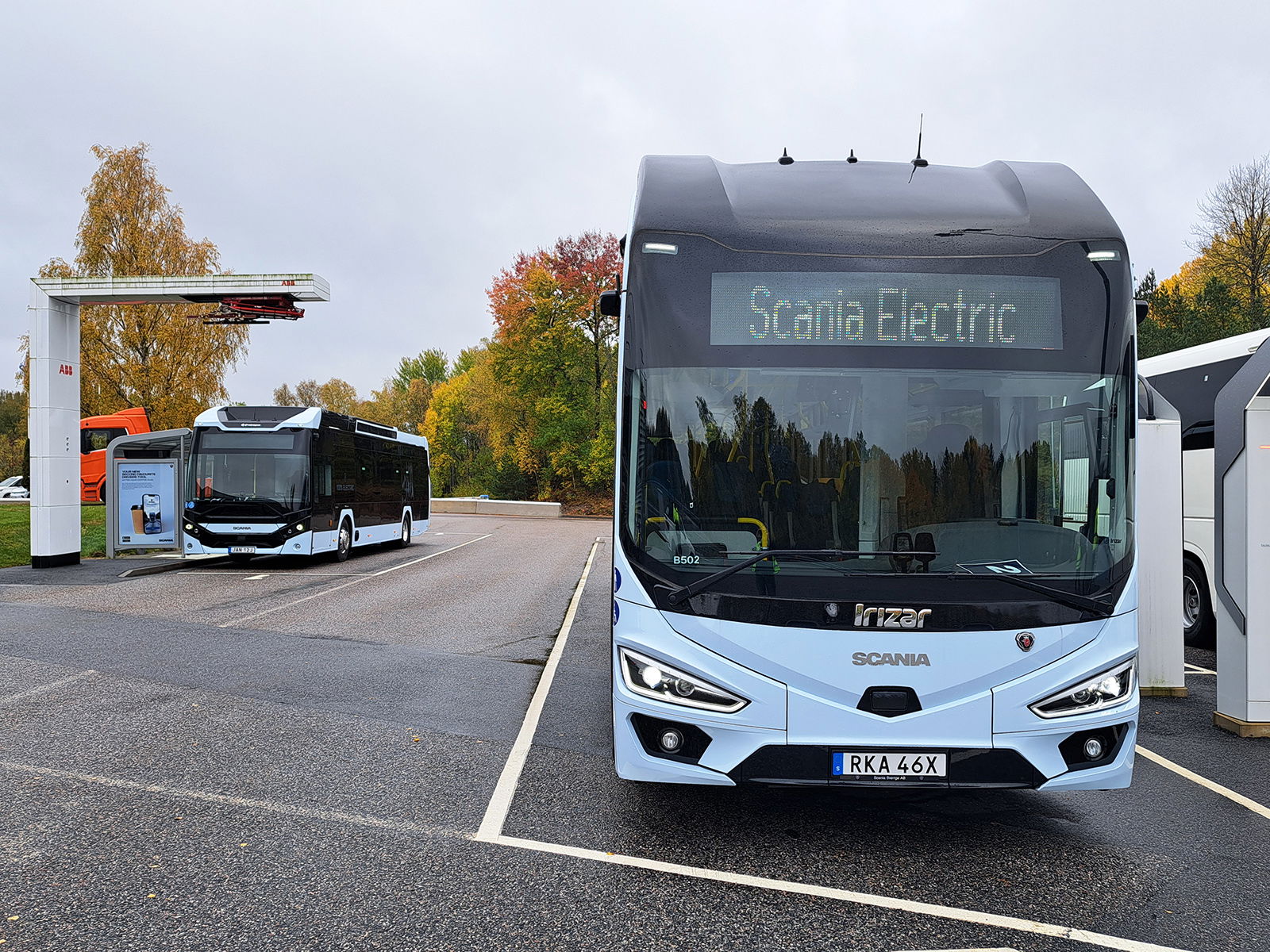
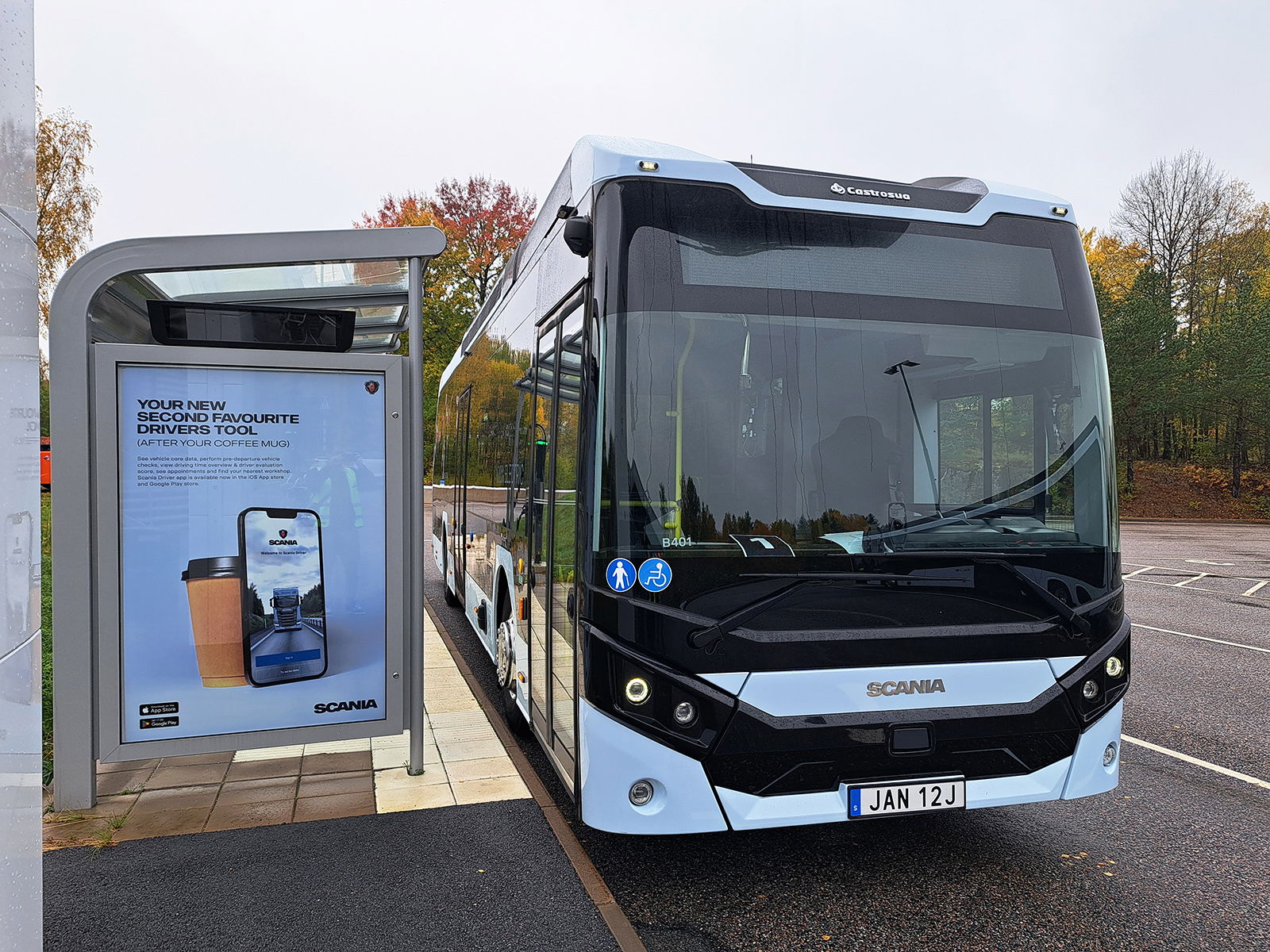
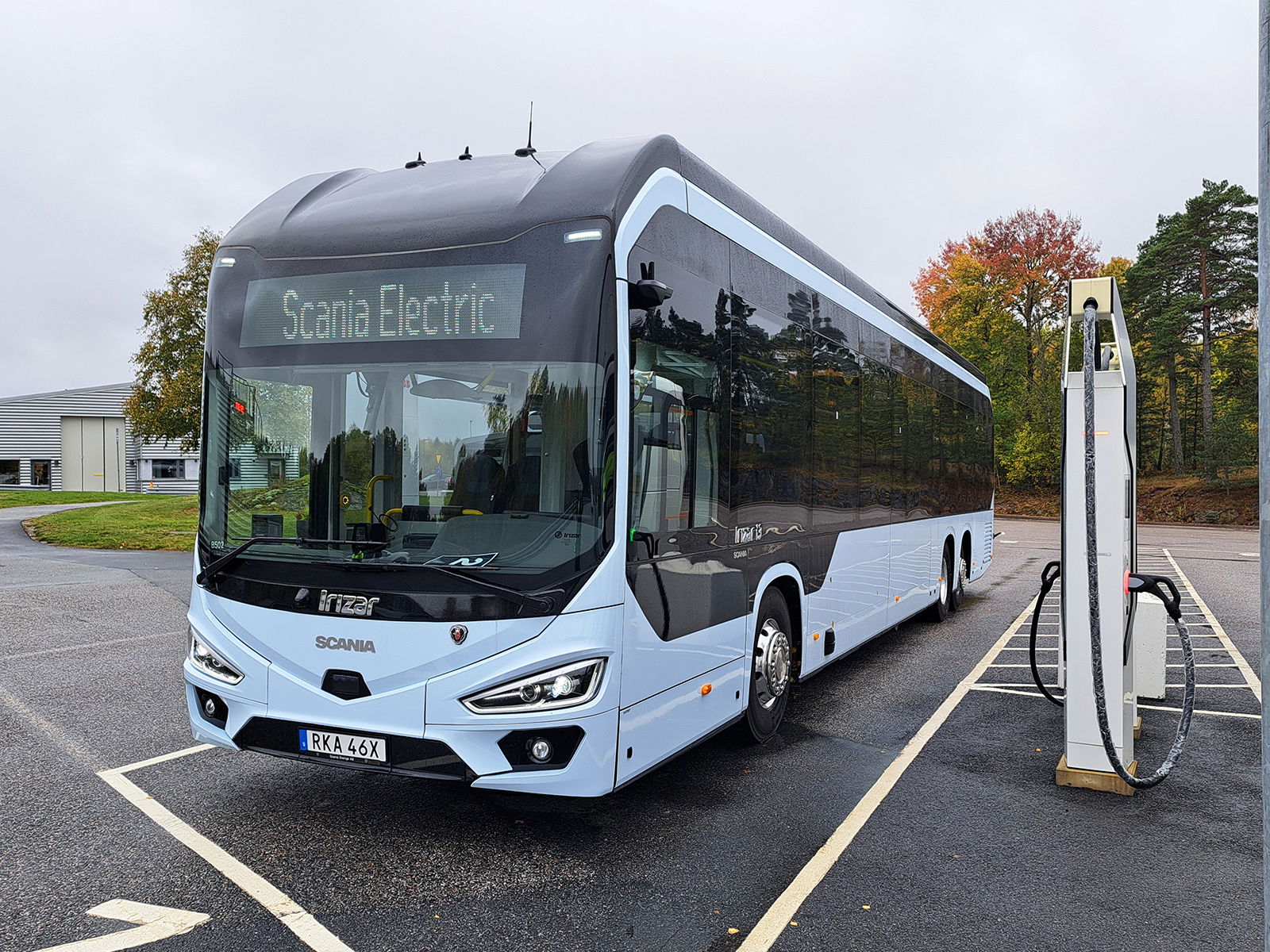
The low-entry product line marketed as LE BEV is intended primarily as the mechanical basis for urban and interurban (M3/I or M3/II vehicle class) buses, although according to the manufacturer it may also be suitable for long-distance applications, for example as the basis for double-deckers. The two-axle version debuted at the 2023, while its three-axle sibling made its debut at the 2025 Busworld Europe exhibition in Brussels; at the Södertälje test track, the former was available to us with Castrosua 75CS bodywork and the latter with Irizar i3 electric bodywork . The zero-emission models, including the electric Scania Touring viewed in the reception building, were all presented at the event in a uniform light blue colour.
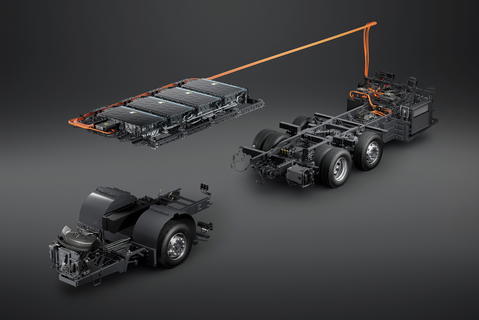
Scania equips the low-entry versions exclusively with the 89 kWh battery modules familiar from the plug-in hybrid driveline. Three, four or five modules can be specified, resulting in installed total capacities of 267, 356 or 445 kWh respectively. Of these, 240, 320 or 400 kWh can actually be used, sufficient for ranges of approximately 300, 400 and 500 kilometres respectively, depending on operating conditions. One battery module is always located in the former engine compartment, while the remaining units are mounted on the roof. Scania leaves their longitudinal positioning to the bodybuilder and supplies the chassis with high-voltage cabling of the appropriate 6–20-metre length. Up to two CCS Combo 2-standard charging sockets can be fitted to a bus, with their positions essentially unrestricted. Charging power can be 195 or 325 kW, at charging currents of 300 and 500 A respectively. It is worth noting that even a single connector is sufficient for 325 kW charging, which is currently a leading-edge figure. Depending on power output and the number of battery modules, a full charge takes between 45 and 120 minutes.
The platform's power unit, the central electric machine – which incorporates the electric motor, traction-control inverter, transmission unit and oil system – can be scaled across a particularly wide range. It is available with continuous outputs of 240, 270, 300, 330, 360 or 400 kW, with versions above 300 kW recommended for long-distance applications. The lowest-output variant is paired with an integrated two-speed gearbox, while all others receive a four-speed unit to optimise energy consumption. In first gear, more than 21,000 Nm of torque is available at the wheels, resulting in excellent starting performance and hill-climbing ability. The compact main unit is Scania's own product and, like the traction batteries, is manufactured in Södertälje. The integrated cooling system, which separately serves the batteries, the electric machine and the power electronics, is also a Scania development.
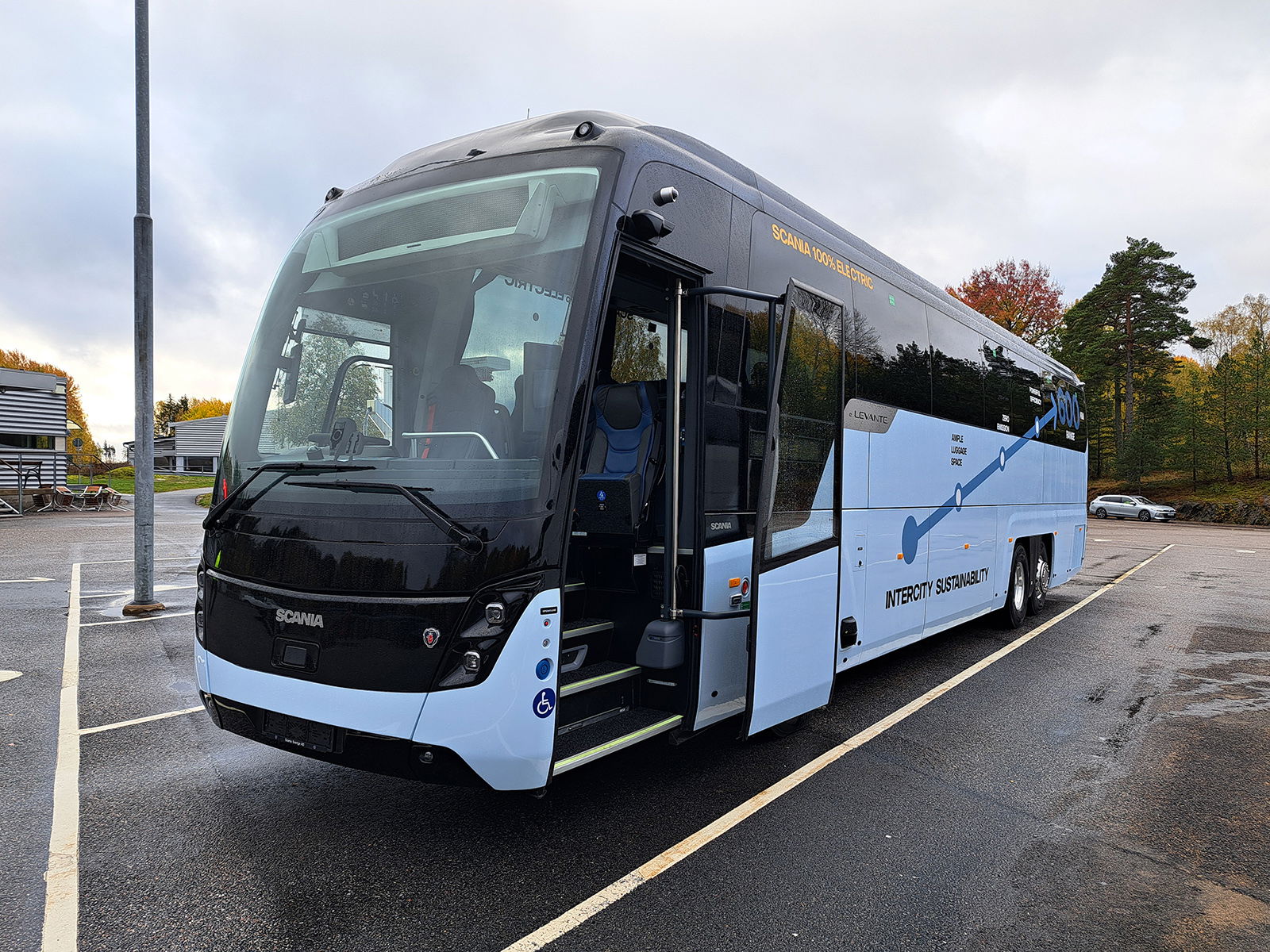
In the case of the HF BEV chassis family, suitable for building conventional- and raised-floor electric buses – offered in Europe, logically, for long-distance types, but potentially also as the basis for urban BRT buses in Latin America – the electric machine's characteristics and charging capabilities are identical to those described for the low-entry version. However, in view of the anticipated longer journeys, this platform can also be fitted with one additional battery module, bringing the nominal installed total capacity to 534 kWh. Assuming a 90% DoD value, approximately 480 kWh of this can actually be used, which according to Scania may be enough to cover up to 600 kilometres. The battery modules are not entirely identical to those used in the LE BEV, as the rear of the raised-floor version also accommodates a larger, 180 kWh unit. According to the manufacturer's estimates, buses with capacities of 80 passengers on the two-axle version and 57 passengers on the three-axle version can be built, with the latter offering up to 9.25 m3 of luggage space.
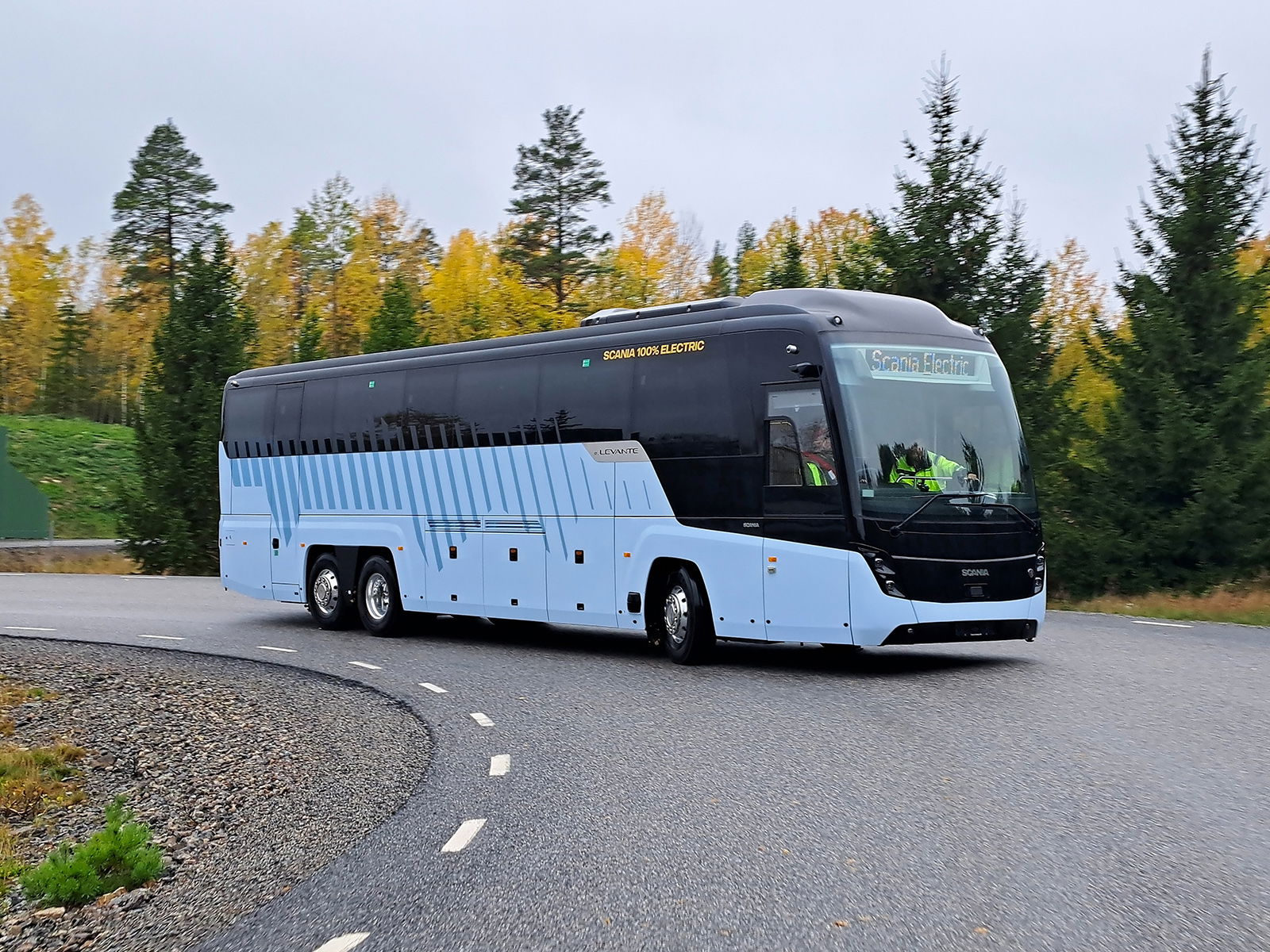
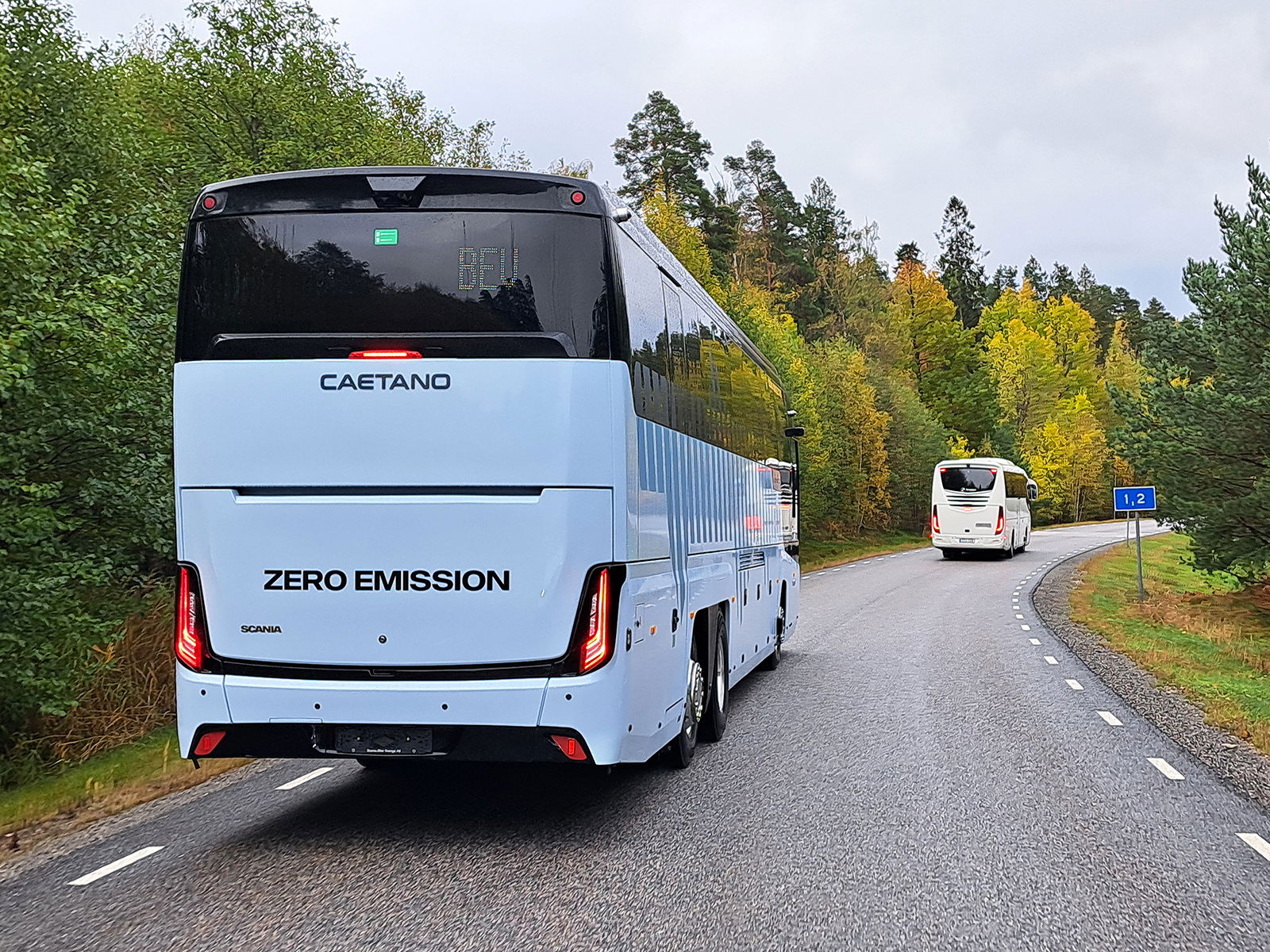
As mentioned, this is the platform that will also underpin the newly unveiled electric version of the new Scania Touring, but on this occasion we had the opportunity for a practical introduction from behind the wheel of a CaetanoBus e.Levante for the British market, and therefore in right-hand-drive form. The chassis, incidentally, debuted with this bodywork at the 2025 Busworld Europe exhibition. To eyes accustomed to continental Europe, the bodywork itself is already interesting due to its single-door configuration supplemented by an emergency-exit door, the toilet compartment positioned at the rear of the passenger saloon, and the wheelchair space created behind the front passenger door; overall, however, the interior is less refined than in the Touring. During the short test circuit, the vehicle moved dynamically for its size and the anticipated high starting torque did not disappoint either. Only the conspicuously loud compressor of the air-conditioning system spoiled the electric bus's silent progress. Due to its greater kerb weight, the electric version's payload is around 10% lower than that of the diesel version.
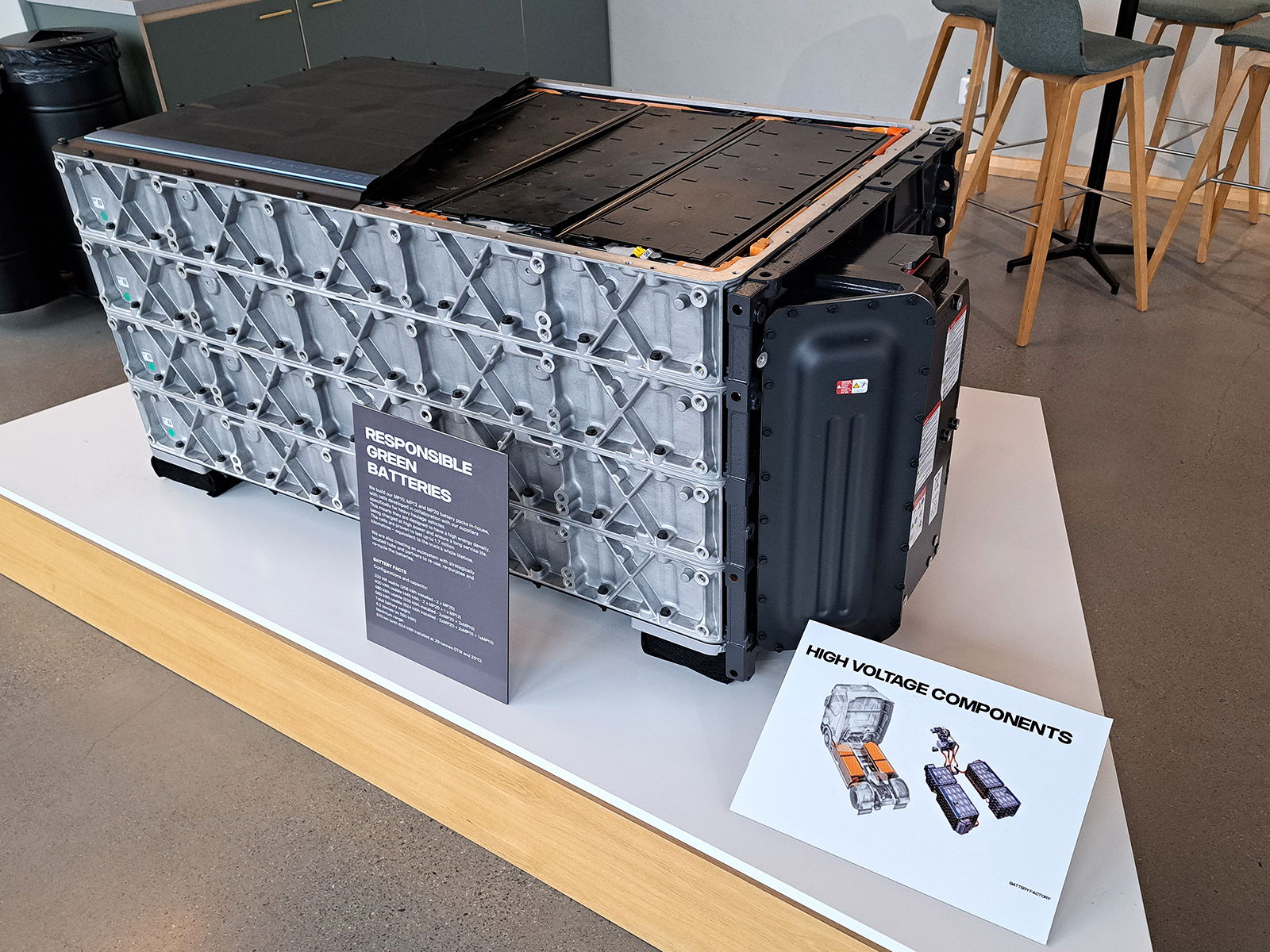
During the day, we also visited Scania's battery manufacturing plant, where traction batteries for the company's electric trucks and buses are assembled from incoming cells, first into modules and then into installation-ready packs. We were not permitted to take photographs at the plant, located around a ten-minute drive from the test track – where a car park stood barely six years ago – and the products made there were presented to us in the reception area at the main entrance. Scania wants to exercise the greatest possible control over the manufacturing process, which is why it has opted to assemble batteries in-house rather than purchase finished products; it even manufactures the high-voltage cables for them itself.
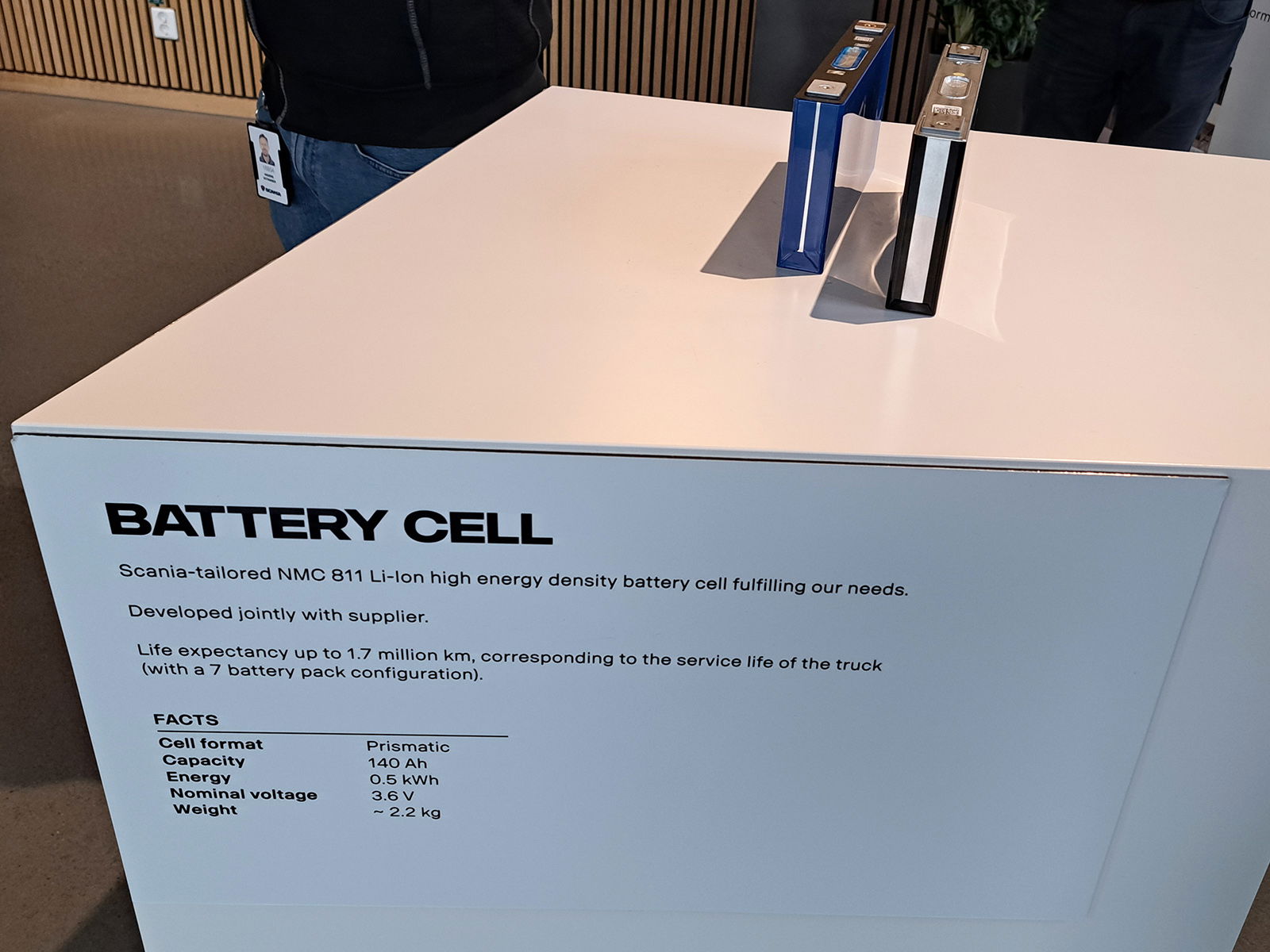
Although Scania is currently, like MAN, a member of the Traton Group, the two manufacturers' trucks still use different traction batteries because of the differing positions of the chassis longitudinal members. However, the designs are intended to be standardised in future in order to achieve better economies of scale. Four types of battery pack are manufactured in a modular system at the Södertälje plant, with nominal total capacities of 89–180 kWh and weights of 620–1,150 kg. Following the bankruptcy of the former European supplier Northvolt, the cells currently come from China's CATL, although Scania representatives say they are continuously exploring which other potential partners they could work with. Prismatic NMC cells with a nominal voltage of 3.6 V are currently used, but a switch to cell chemistry using lithium iron phosphate (LFP) as the cathode is expected later. A module generally consists of 18 cells connected in series, and ten such modules connected in series provide the pack's full nominal operating voltage of 650–700 V. In the larger packs, these groups of ten are connected in parallel with each other to achieve the desired battery capacity. The batteries have a service life of 1.5–1.7 million kilometres in normal vehicle use, by the end of which their SoH indicator is 70–80% of its value when manufactured; after this, they may begin a ‘second life’ in wind and solar farms.
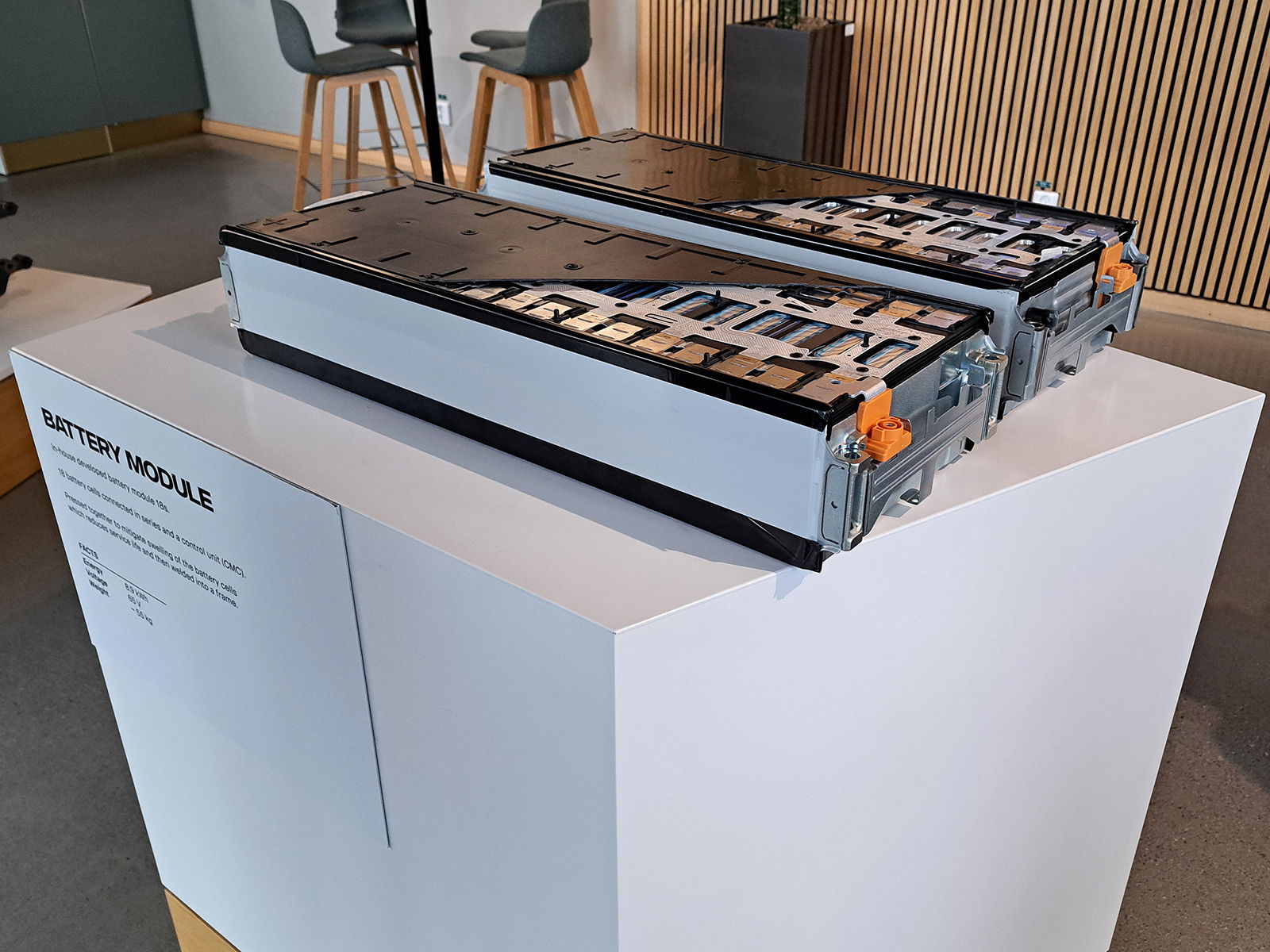
The battery manufacturing plant – or, more precisely, battery assembly plant – is divided into two main sections. On the so-called module line, covering around 2,100 m², incoming cells are first checked individually for voltage, gas leaks and so on. Thermal-expansion and heat-shielding elements are then fitted to them, before they are arranged in series and combined into modules, with care taken to establish a polarity arrangement favourable for the assembly process. This section of the plant is 100% automated: a total of 38 assembly robots work here, including fitting the various cables, busbars and connection interfaces, while the human workforce consists solely of a small supervisory team. The other half of the hall is occupied by the pack line, which produces installation-ready battery packs and covers an area of around 3,000 m². Here, the level of automation is ‘only’ 50%, yet 34 assembly robots still carry out the work. The modules are fitted into aluminium cast housings after the latter have been provided with heat-conductive sheets and paste to aid cooling, and the external connectors and plastic covers are then added. The cells arrive at the factory with a 30% state of charge, are charged to 50% at the end of the process, and the completed batteries are stored at that level until they are installed in vehicles.
The results of Scania's strategic shift are already clearly apparent in its current product range. The company also wants to retain as much manufacturing activity as possible in and around Södertälje, relying to a significant extent on regional suppliers. This approach is not yet widespread among Europe's leading vehicle manufacturers, but as a result of the political changes currently under way, it may come to the fore at other companies too. The new bus product line tested here is rational and convincing, so Scania's management can justifiably hope that it will help enhance the Swedish brand's century-old reputation.