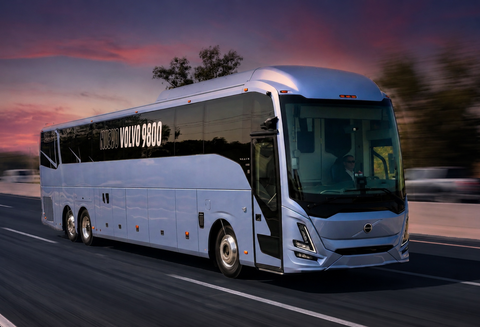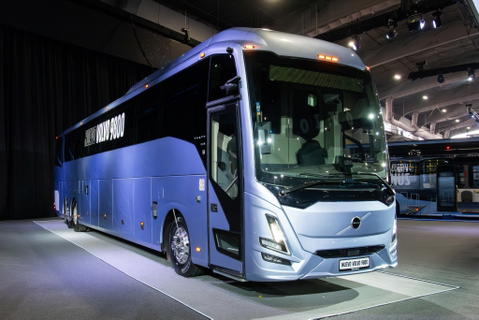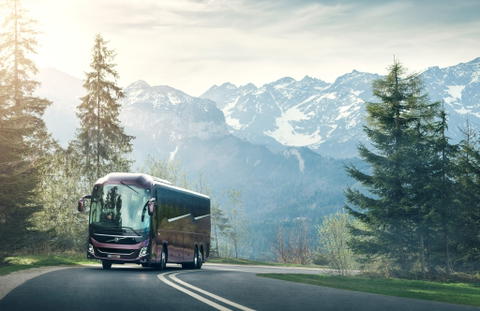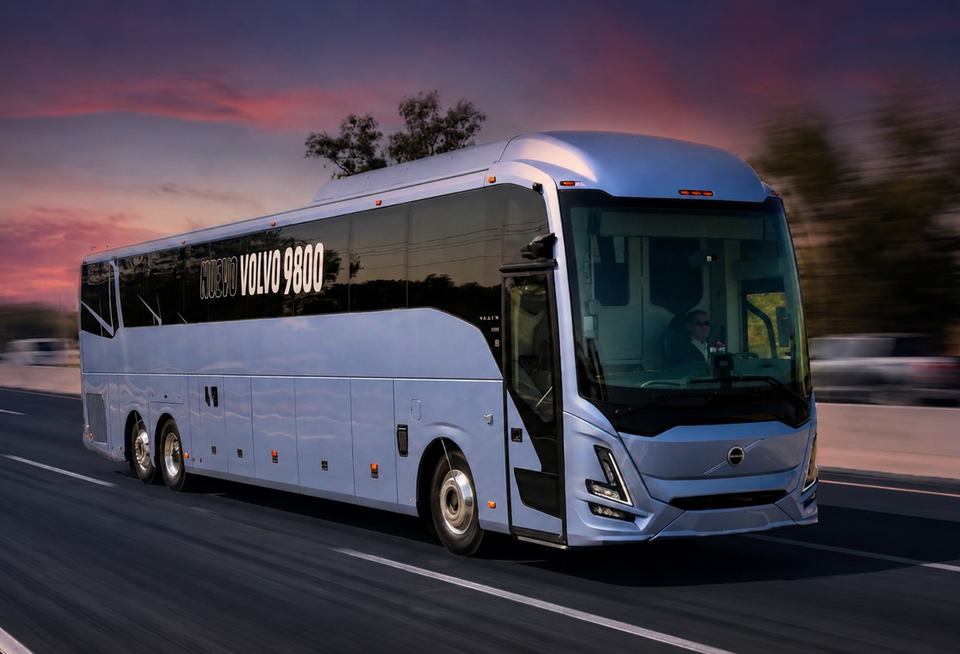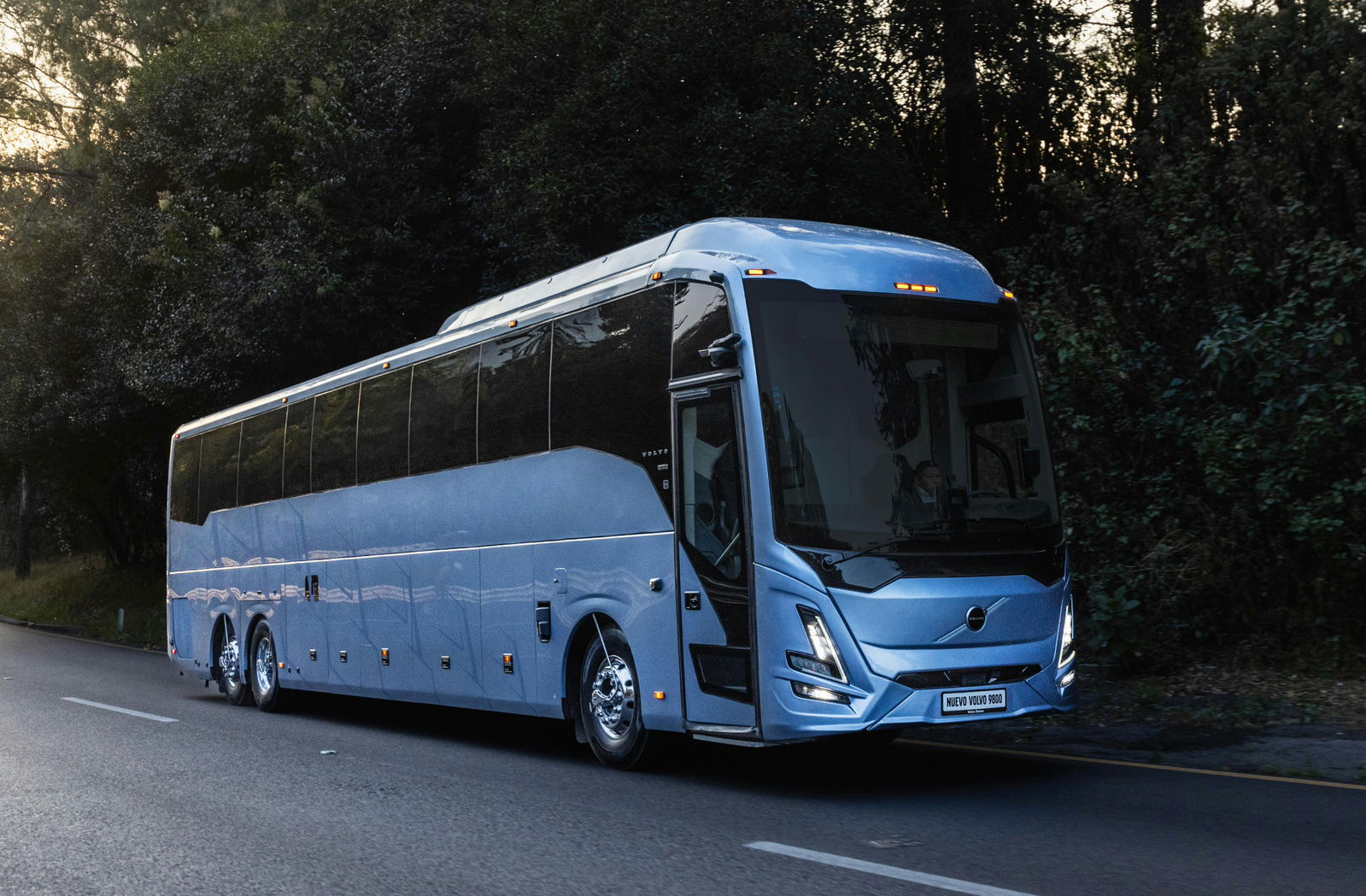
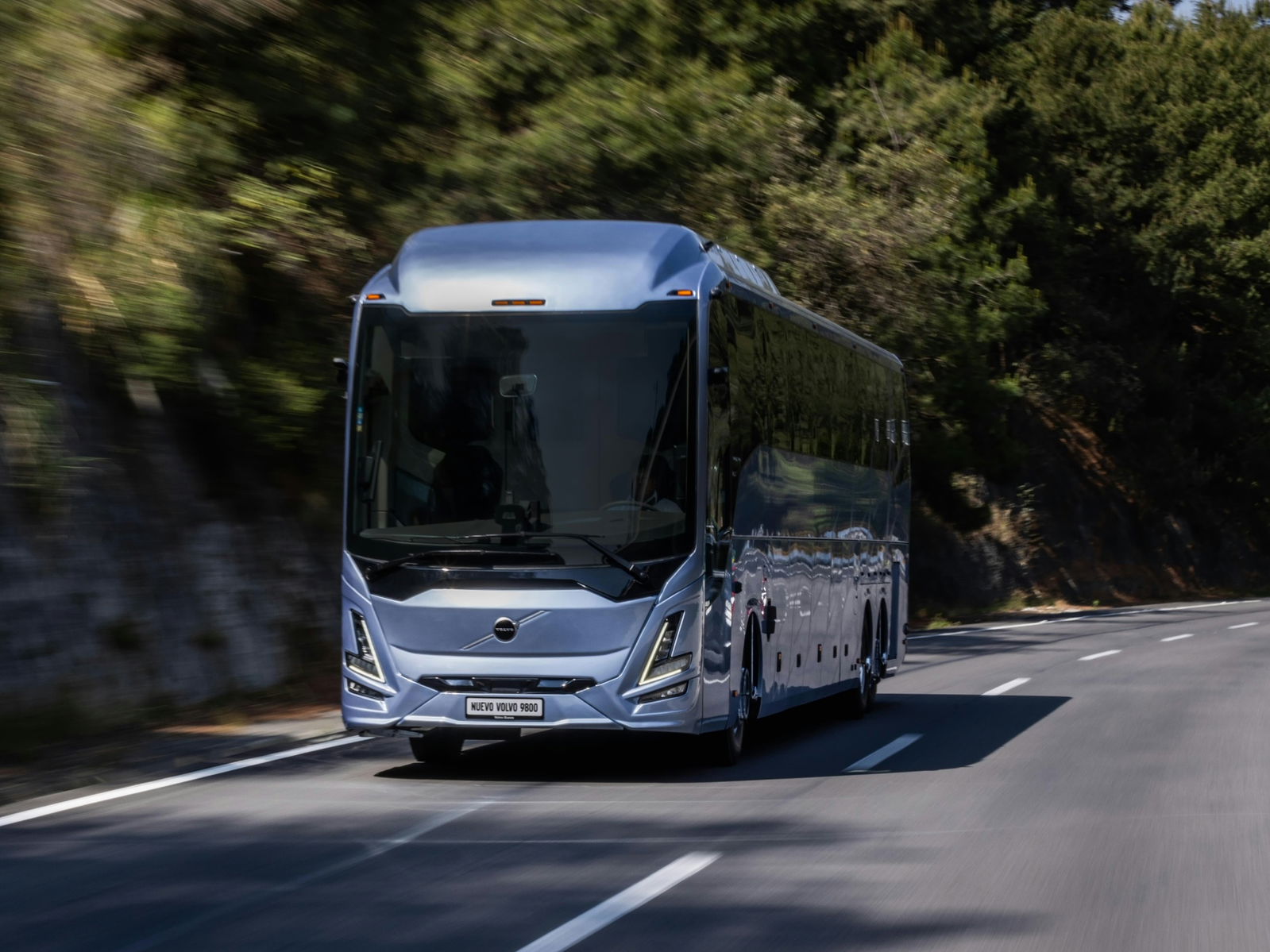
Five hundred horsepower and serious weight loss: new Volvo 9800 has changed considerably beneath the bodywork, too
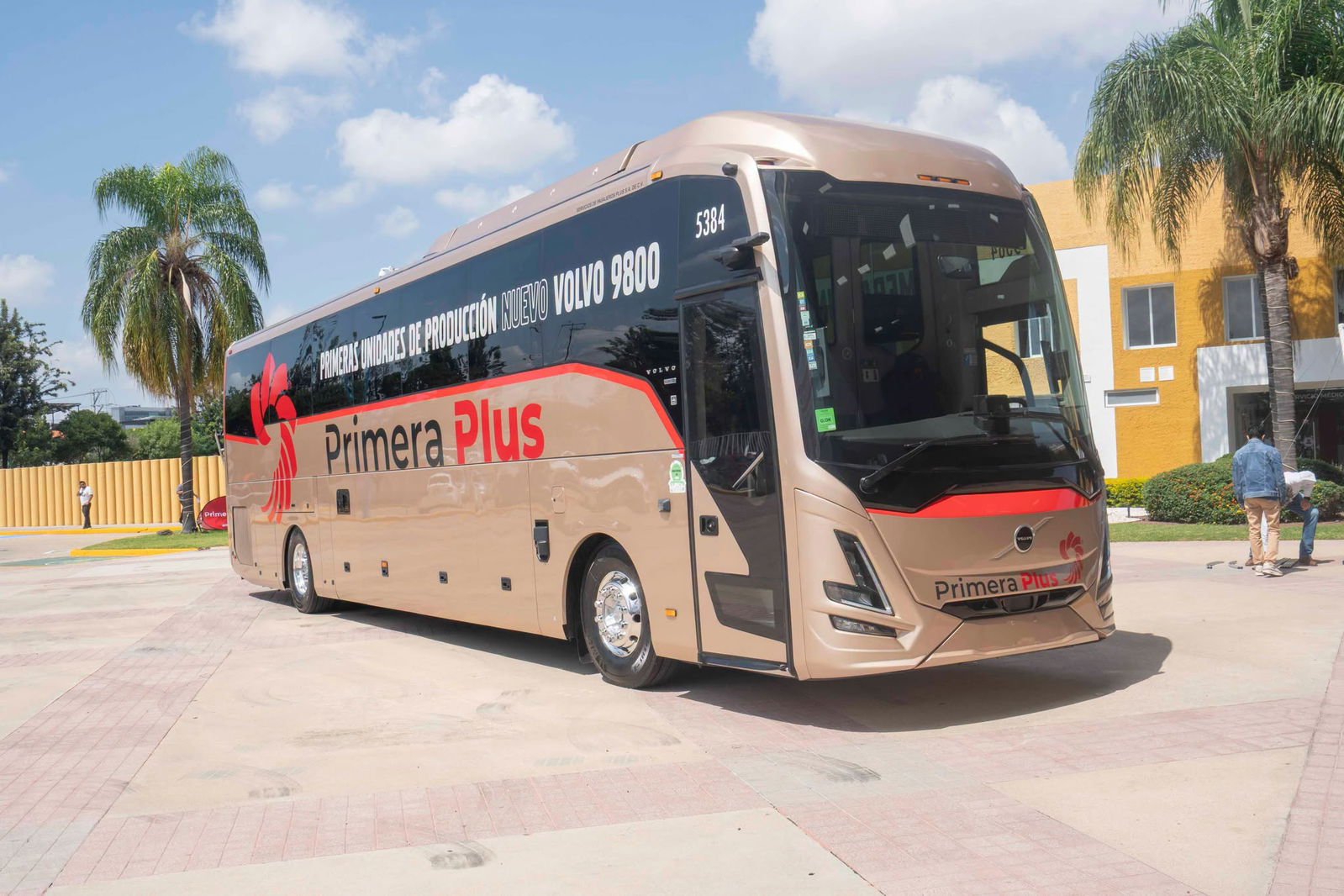
This spring, at the Mexico City Expo Foro Movilidad exhibition, the new generation of the Volvo 9800 made its debut, although at the time of the world premiere the manufacturer released relatively few detailed technical specifications for the model. Since then, the model’s market launch has begun and more comprehensive technical documentation has also become available, giving us a much clearer picture of what lies beneath the new bodywork. The changes extend far beyond the striking exterior redesign: the new generation is lighter and more aerodynamically efficient than its predecessor, while also featuring the technical solutions and driver-assistance systems of Volvo’s latest B13R platform.
The new 9800, intended for the Mexican market, is particularly interesting from a European perspective because the previous generation was closely related, both in design and construction, to the well-known European Volvo 9700/9900 model pair. The first-generation 9800, introduced in 2015, foreshadowed several styling cues that reappeared three years later on Volvo’s new-generation European coaches. This time, however—at least for now—history is not repeating itself. The returned to production in Mexico this year, European-market 9700 has not had its exterior styling aligned with the design identity introduced on the updated 9800. Volvo wishes to underline to its customers that the 9700 has returned to the European range in the same form in which they previously knew it, meaning that relocating production to Mexico has not entailed a fundamental change to the model. At the same time, this certainly does not rule out the possibility of a future facelift. Not least because Volvo has evidently devoted considerable development work to creating the 9800’s new design identity.
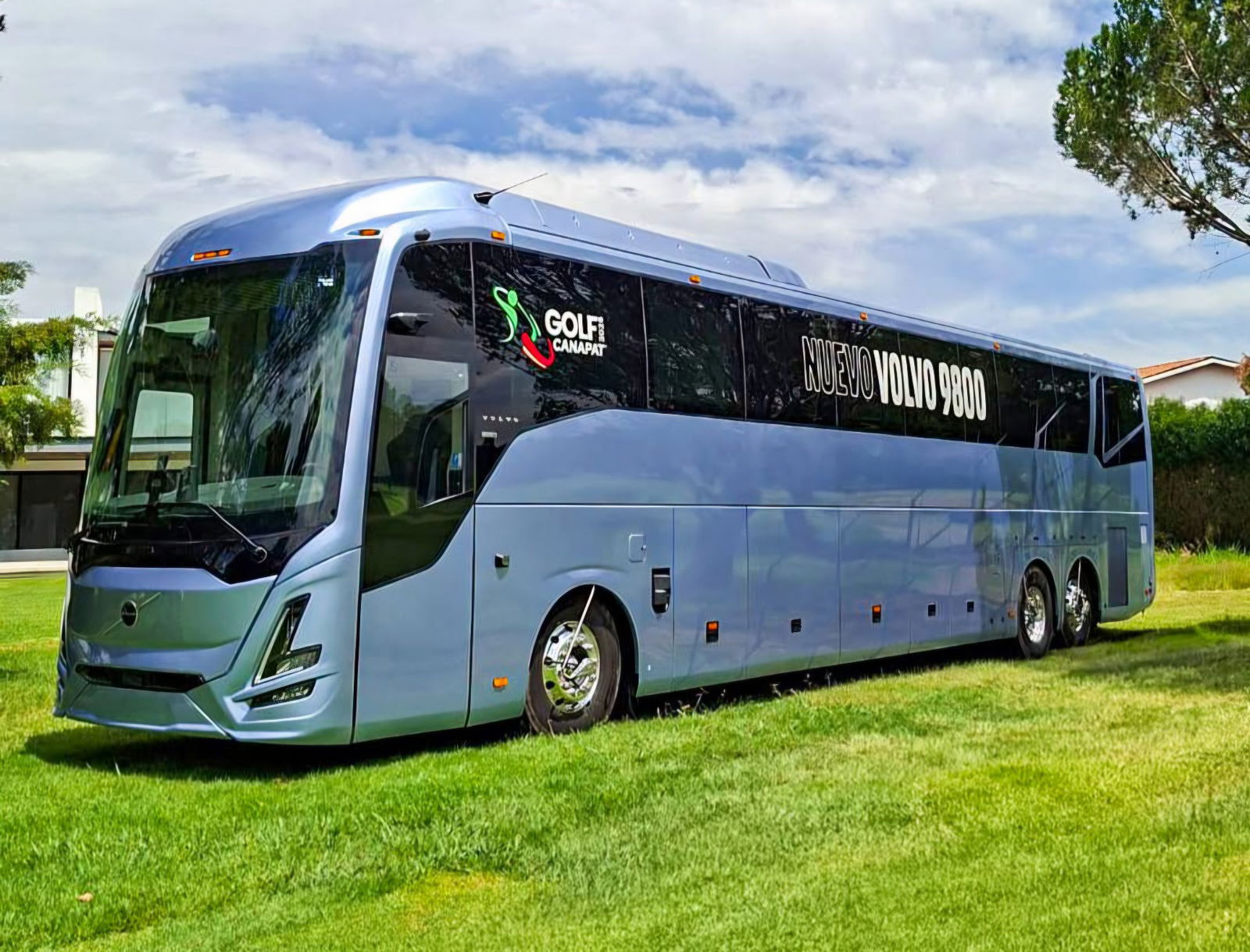
Based on Volvo’s global B13R coach platform, the 9800 is produced in three versions. The entry-level model is a two-axle vehicle with a 4×2 drive configuration and a length of 13,175 mm, while the tri-axle versions measure 13,995 and 15,004 mm respectively. In all three cases, the bodywork is 2,600 mm wide and 3,850 mm high including the roof-mounted air-conditioning unit. The two-axle and shorter tri-axle versions both have a wheelbase of 7,150 mm, whereas the 15-metre flagship model has an 8,150 mm wheelbase.
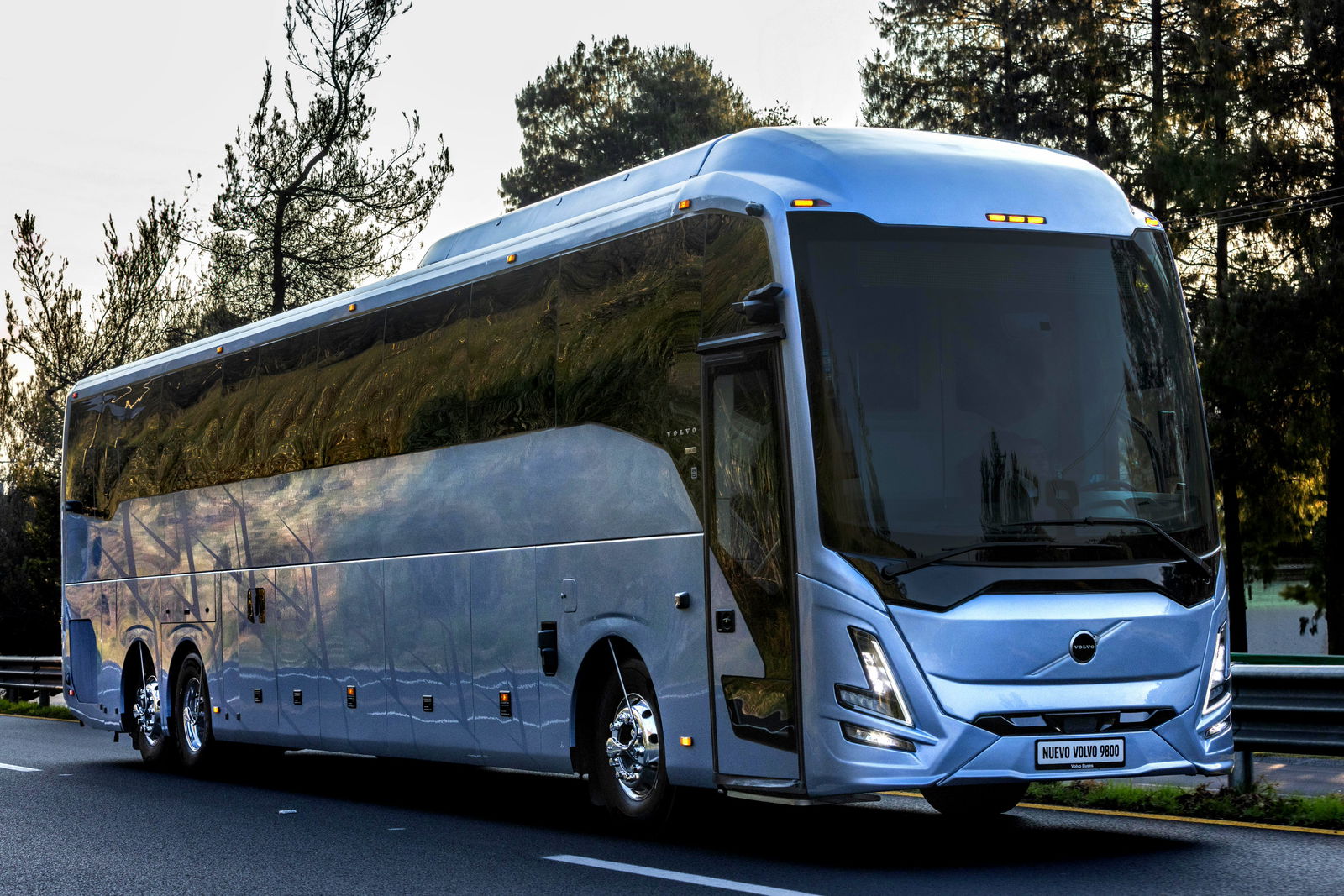
In their standard configurations, seating capacities are 46, 50 and 54 respectively, while underfloor luggage-compartment volume is 10.7 cubic metres for both the 13.2- and 14-metre versions and 13.2 cubic metres for the 15-metre model. Interior hand-luggage racks provide a further 1.79–2.31 cubic metres of space, depending on configuration, while the driver’s rest compartment has a volume of 2.2 cubic metres in all three versions. Depending on the passenger-compartment specification, the 9800 can be configured with one or two toilets.
Interestingly, the longest version does not have the highest gross vehicle weight rating. The two-axle 9800 has a permissible gross weight of 19.5 tonnes, the 14-metre tri-axle version 27 tonnes, and the 15-metre model 24.75 tonnes. The front axle has a uniform load rating of 7.5 tonnes, while the driven axle is rated at 12 tonnes on the two-axle version and 11.5 tonnes on the tri-axle models.

One of the key development priorities for the new generation was weight reduction. The previously reported figure of 650 kilograms does not apply uniformly to every version: the two-axle 4×2 model is 500 kg lighter, while the tri-axle 6×2 versions are 650 kg lighter than their direct predecessors. In parallel, the engineers also carried out considerable work on body aerodynamics, reducing the drag coefficient by 11%. According to Volvo, the lower weight and revised aerodynamics together can reduce fuel consumption by up to 4%. Automatic ride-height control also contributes to the aerodynamic improvements, lowering the vehicle’s ground clearance above 80 km/h to further reduce drag and fuel consumption.
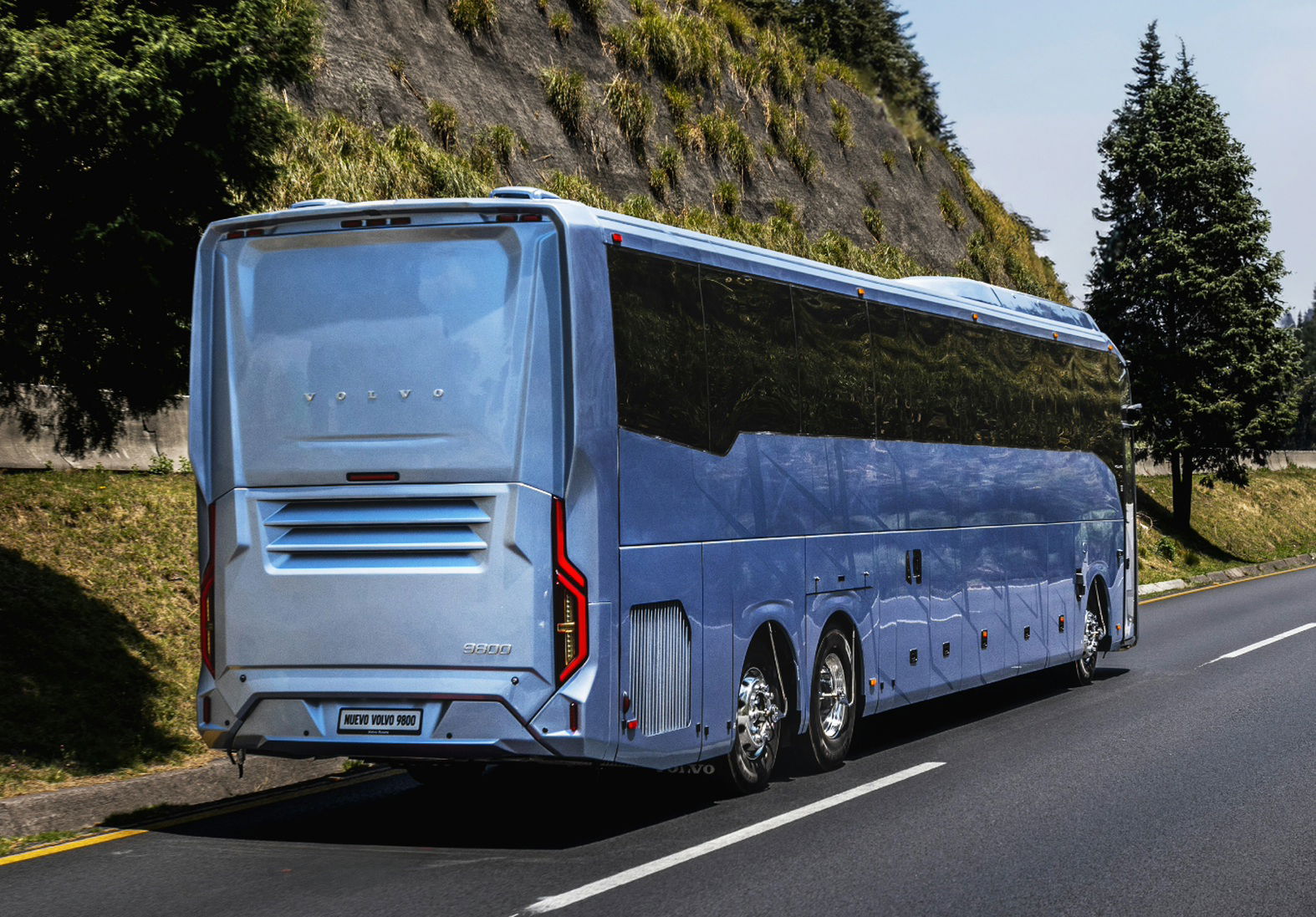
The redesign of the rear auxiliary axle on the tri-axle versions has also contributed to the weight reduction. There is, however, a difference between the two versions in this respect as well: the 14-metre 9800 receives a hydraulically steered tag axle as standard, whereas the 15-metre model uses an electrohydraulically steered unit.
The steered tag axle is also significant in terms of manoeuvrability. With a fixed tag axle, the outer front corner of the 14-metre version traces a circle with a radius of 12.888 metres; with a steered tag axle, however, this falls to 12.295 metres, effectively matching the figure for the 13.2-metre two-axle version. For the 15-metre model, the equivalent figure is 13.638 metres.
Power comes from Volvo’s D13K in-line six-cylinder common-rail diesel engine, available in the 9800 at two output levels. The 460 hp version delivers maximum torque of 2,300 Nm, while the 500 hp version produces 2,500 Nm; both figures are available from 945 rpm and maintained up to 1,400 rpm. In addition to diesel, the engine can also run on HVO fuel.
The engine is paired with Volvo’s own 12-speed I-Shift automated transmission, in AT2612G or ATO2612G specification. The new-generation I-Shift promises faster shifts and lower internal losses, while its control software has been optimised specifically for coach, private-hire and long-distance scheduled operations. Overdrive gearing is standard, while a direct-drive version is available as an option. The front axle is a Volvo RFS unit and the rear axle an RS1328C.
The fuel tank holds 560 litres, while a 90-litre tank is provided for AdBlue. Exhaust aftertreatment includes EGR and an SCR system, an oxidation catalyst, a diesel particulate filter and an ammonia-slip catalyst.
A less conspicuous but technically all the more interesting detail is the cooling-system layout. This is not specifically a novelty of the 9800’s generational change, but rather one of the distinctive technical solutions of the B13R chassis updated by Volvo in 2022. Instead of the conventional ‘sandwich’ arrangement, in which the charge-air cooler and engine radiator are installed one behind the other, Volvo has physically separated the two cooling units, while the former large hydraulically driven fan has been replaced by smaller electric fans that can be controlled independently. In the new 9800, the charge-air cooler has four such fans, while the engine radiator has six. Eliminating the hydraulic drive reduces the engine power required to operate auxiliary equipment, while the output of the individually controlled fans can always be matched to the current cooling requirement, which, according to Volvo, also contributes to lower fuel consumption.
The physical separation of the two cooling units also allows a more deliberate arrangement of thermal management within the engine compartment. Components that tolerate higher temperatures can be placed on the warmer side, while more sensitive equipment, or equipment requiring rapid access after the engine has been shut down, can be located on the cooler side. Lower-temperature air from the charge-air cooler is routed over the engine, while the heated air flowing through the engine radiator is led out of the engine compartment by the most direct possible route. Serviceability is improved by the fact that the engine radiator can be tilted out, while no separate coolant filter is used in the system.
A whole range of electronic functions supports fuel economy. I-See adapts acceleration, gear changes and deceleration to the terrain, which according to Volvo can in itself achieve fuel savings of up to 2.5%. ISO Flow limits the quantity of fuel injected at higher engine speeds, while the Vehicle Acceleration Limiter is intended to curb unnecessarily harsh acceleration.
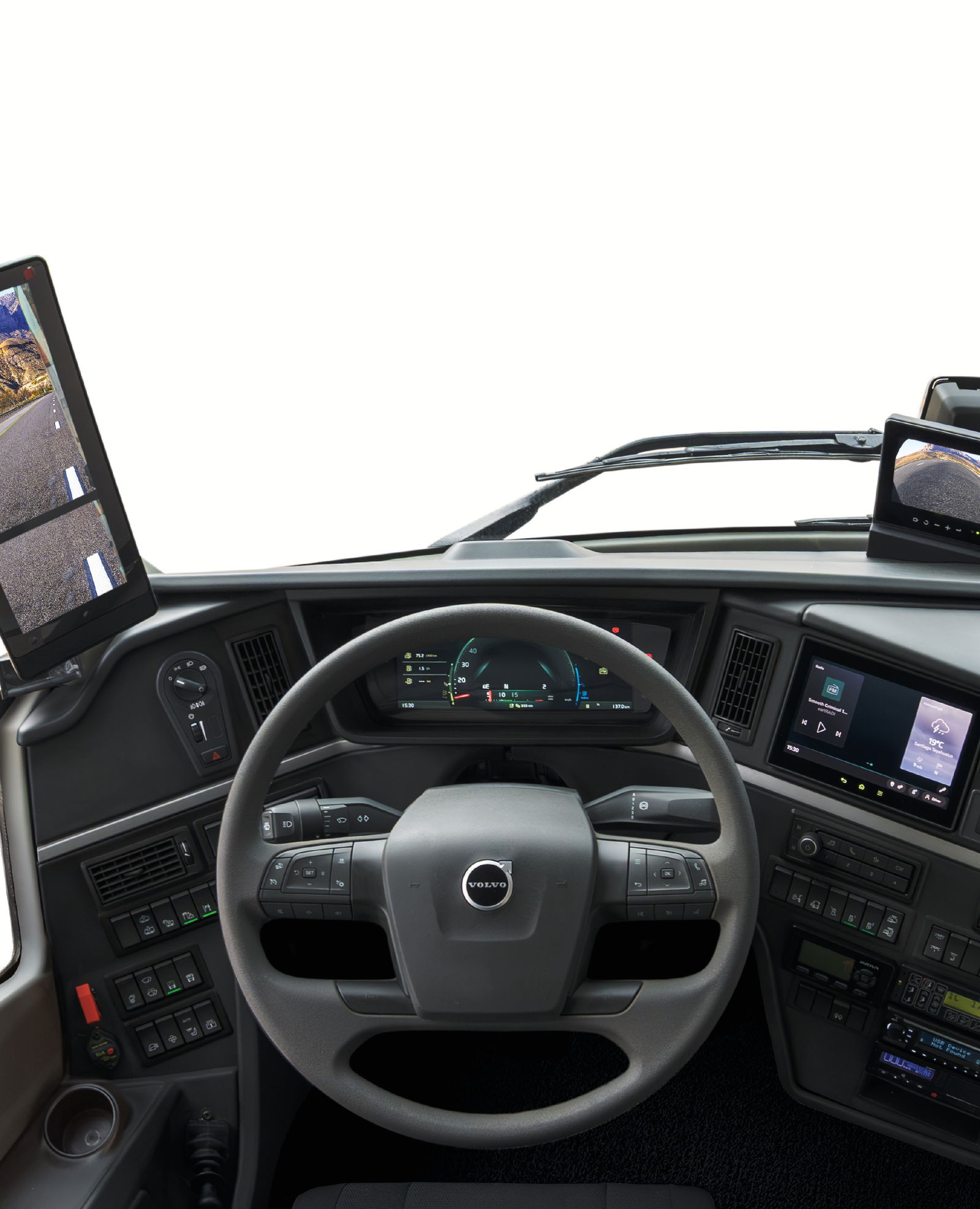
The driver’s area has also been extensively updated. Conventional external rear-view mirrors can be replaced by cameras, whose images are displayed on screens positioned alongside the A-pillars. The system also includes the Corner Eye function, which improves visibility of the vehicle’s immediate surroundings and reduces blind spots. In front of the driver is a fully digital instrument cluster with analogue-style and digital display modes, while Sygic navigation can be displayed directly on it, optionally with wireless monthly map updates.
The 9800 also receives Volvo Dynamic Steering, which not only improves steering precision and stability but also reduces the driver’s physical workload. Safety equipment includes, among other features, an automatic emergency braking system, forward collision warning, adaptive cruise control, intelligent speed assistance, a side collision avoidance system, front close-proximity monitoring, lane-change and lane-departure warnings, and a driver alertness monitoring system.
Among the passive-safety solutions, Volvo lists front and knee impact protection, front and rear underrun protection, and rollover protection. With the Safety Zones geofencing function, the vehicle’s maximum speed can be automatically limited within predefined geographical areas, while I-Coaching warns the driver, among other things, of harsh acceleration and braking, excessive cornering speed, high engine speed and unnecessary idling.

The load-bearing elements of the 9800 bodywork are made from high-strength carbon steel, while the body frame is galvanised steel and can optionally be specified in stainless steel. The roof panels and luggage-compartment doors are made of aluminium, while the one-piece front and rear panels are composite. The front and rear frame sections are constructed from stainless steel.

The braking system uses Volvo disc brakes on all axles, with EBS 5 electronic control, ABS, electronic stability control, hill-hold assistance and traction control. The system also monitors brake-pad wear, warns of excessively high brake temperature and deteriorating braking performance, and carries out automatic calibration after brake-pad replacement. The retarder can be controlled both manually and via the brake pedal.
The electrical system uses two 12-volt starter batteries and two separate service batteries, along with three 150-amp alternators. The I-Start system is designed to increase battery life and availability, while regenerative charging control contributes to reduced fuel consumption. The 9800 runs on 315/80 R22.5 tyres.
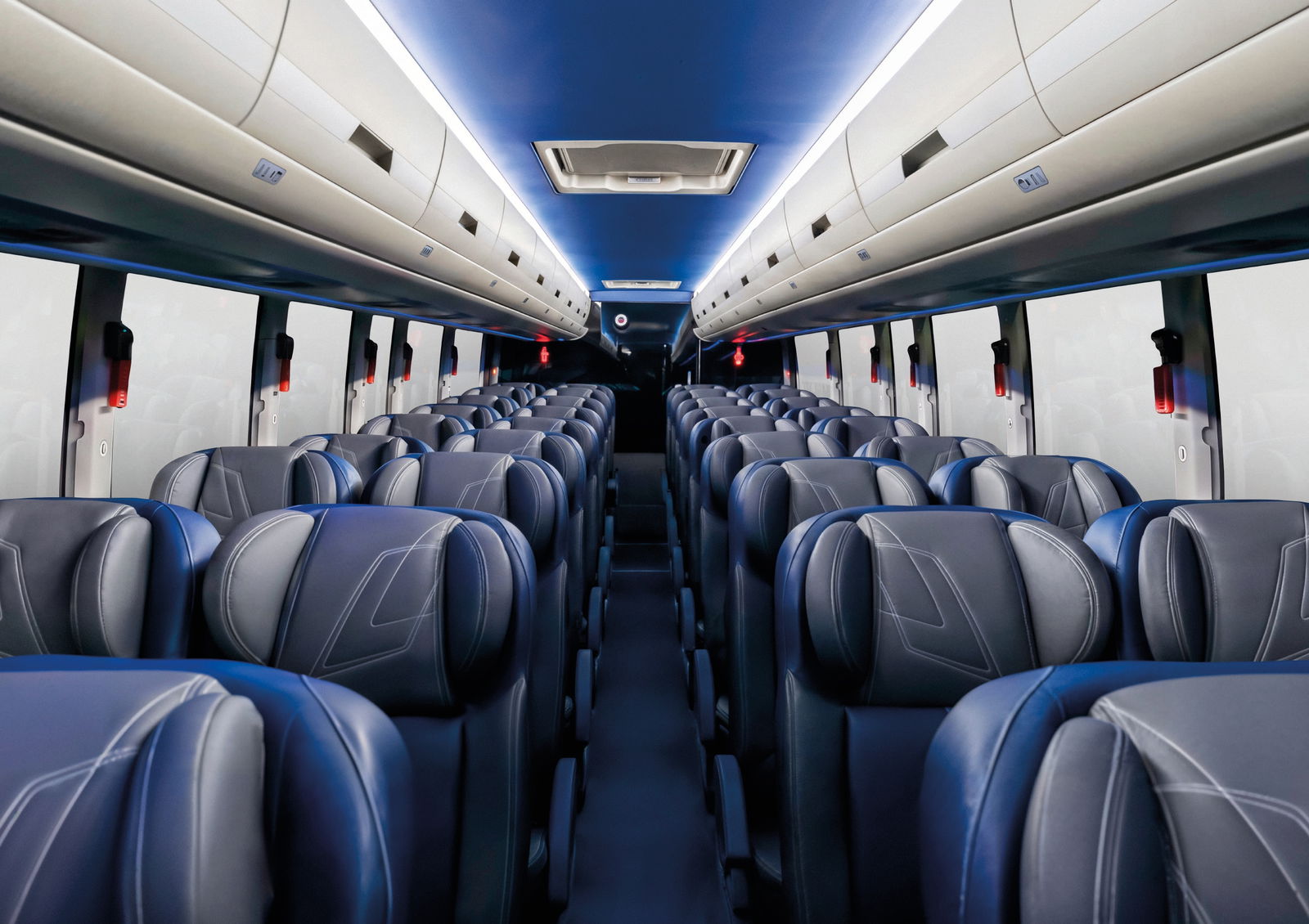
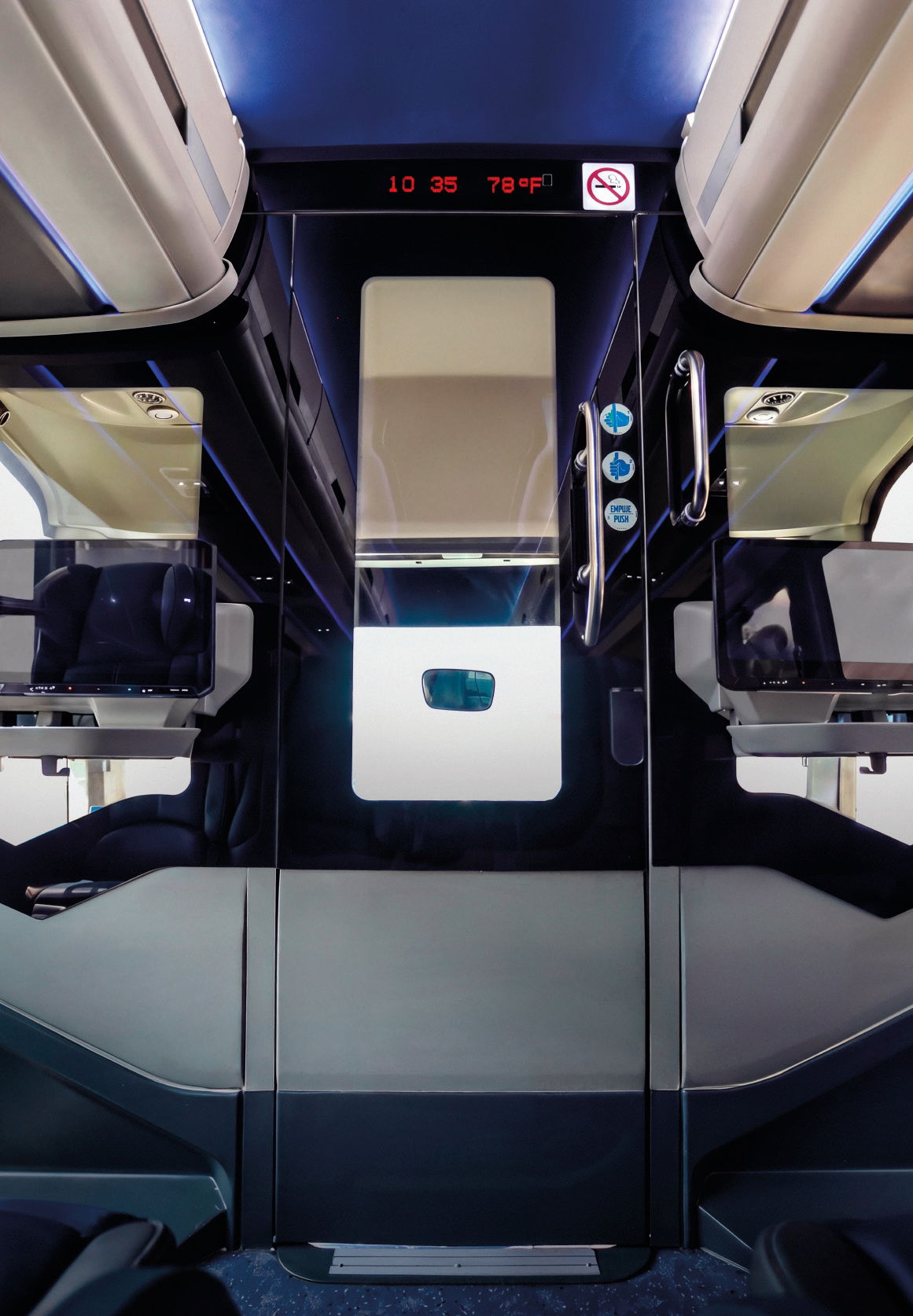
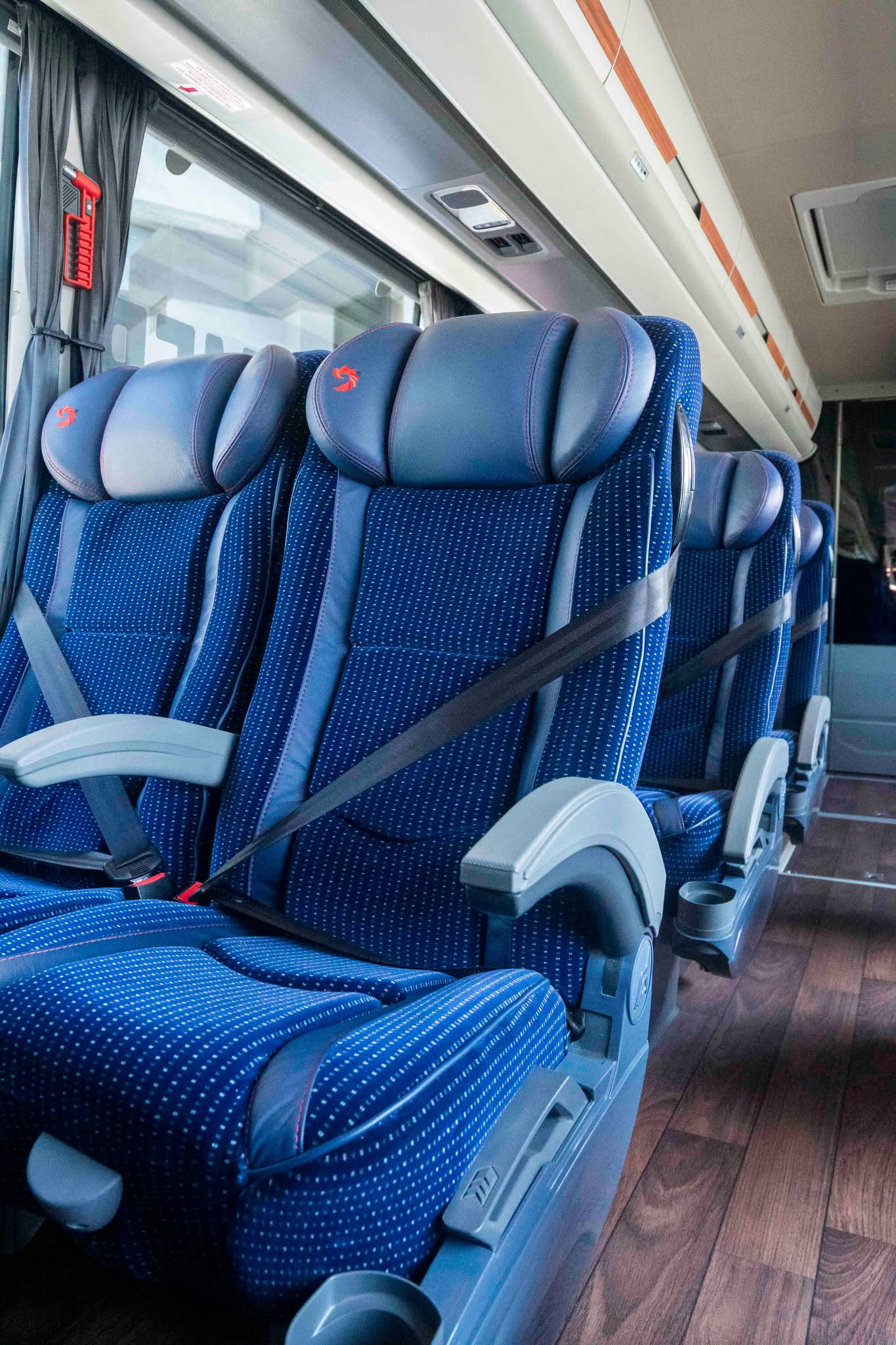
Volvo continues not to position the 9800 solely as a conventional private-hire coach. In line with the characteristics of the Mexican market, the model can be configured both for long-distance scheduled services and for premium private-hire duties. Passenger-compartment equipment can accordingly be tailored within broad limits. The 46–54 seats can be specified at several comfort levels, while equipment may include one or two toilets, a rear kitchenette, enclosed hand-luggage racks, charging facilities at each seat, and individual audio and video systems. The central audiovisual system can include four or five 17-inch monitors.
While at first glance it is above all the completely redrawn exterior that distinguishes the new Volvo 9800 from its predecessor, the detailed technical data show that the generational change goes much deeper. Weight savings of up to 650 kg, 11% lower aerodynamic drag, the new tag axle, an electric-fan-based cooling system and the revised driveline are together aimed primarily at reducing operating costs, while the driver’s area and safety systems have also been brought into line with Volvo’s current technical standard.
For European audiences, it also remains particularly interesting that the 9800 is now built at the same Tultitlán plant from which the Volvo 9700s returning to Europe also originate. For now, the 9700 has retained its familiar appearance, but given the two models’ shared production background and the relationship between their previous generations, it will be worth watching which of the solutions now introduced on the 9800 later appear on the European model family as well.