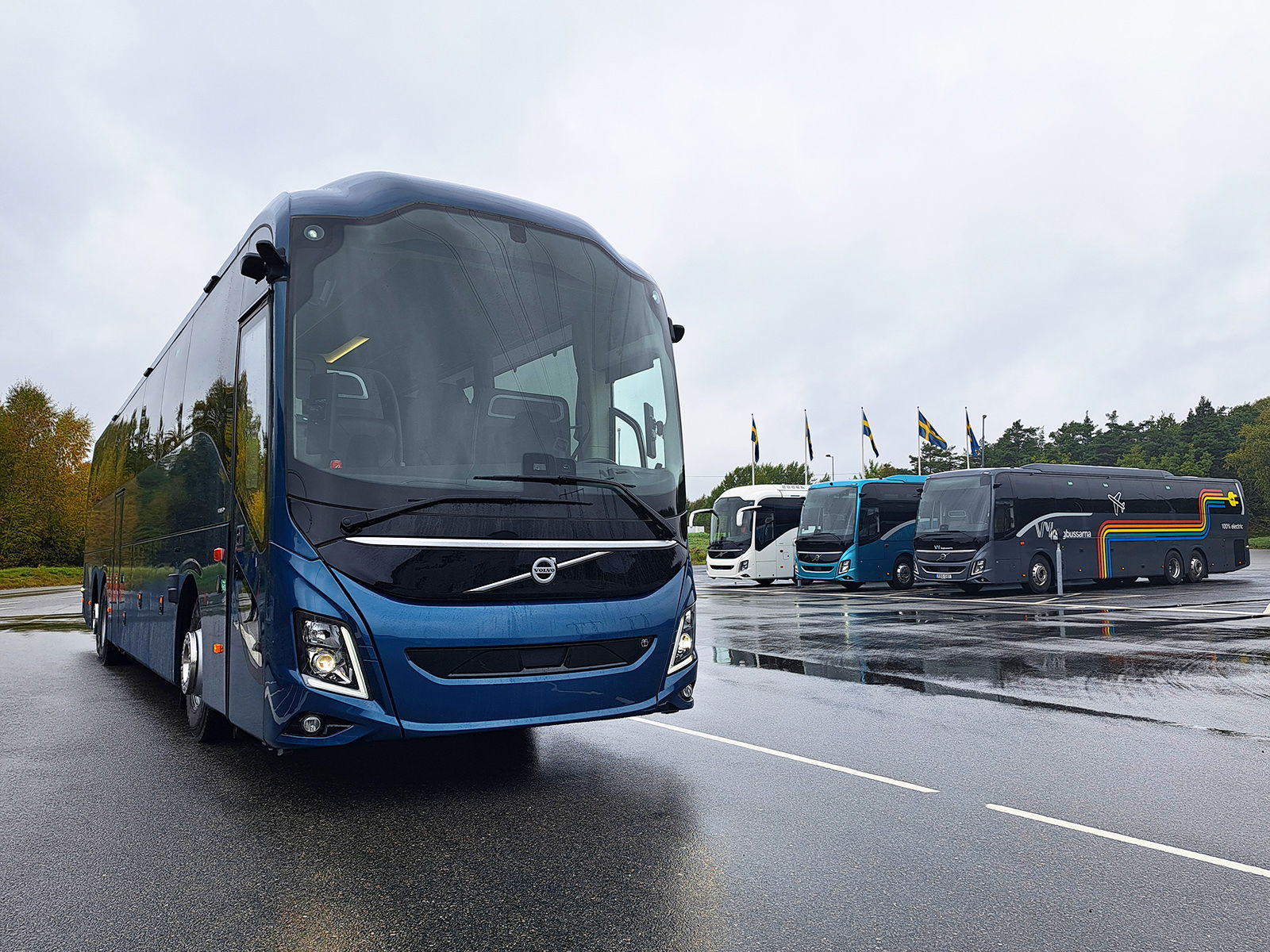
We drove Volvo’s latest coaches in Gothenburg
Over the past three years, Magyarbusz [Info] has continuously followed the transformation of Volvo Buses’ European strategy. The process began with the announcement of the closure of the Wrocław factory, and since then the manufacturer has placed its European operations on a new footing: rather than its previous business model based on complete buses, it has begun rebuilding its product range and regaining the market positions it inevitably lost during the years of transformation by focusing on chassis production and relying on external bodybuilders. The first result was the reorganisation of its urban and suburban range, which now consists exclusively of electric buses, in cooperation with Egypt’s MCV, and the brand is now shifting up a gear in another area that is at least as historically important to it. The next major task is to strengthen Volvo’s share of the European coach segment once again, and the company is building its offering from several directions at once. To see the results, we travelled to Gothenburg at Volvo’s invitation, where we were able to try the Swedes’ latest long-distance models for ourselves.
A stronger Volvo presence is much needed in the European coach market. After the coronavirus pandemic subsided, demand quickly returned, while the supply side narrowed significantly: fewer manufacturers and lower production capacity are facing growing customer demand. The long delivery times seen in the segment are also a clear indication of the situation.
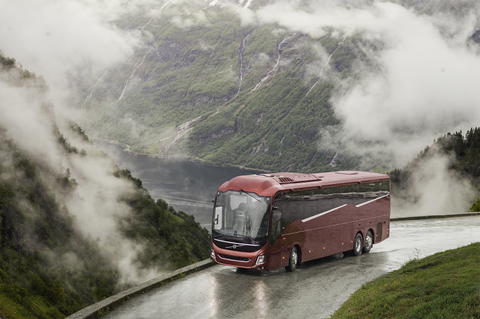
One pillar of the Swedish manufacturer’s return strategy is its cooperation with Carrus Delta, which mainly serves the Northern European markets. The Finnish partner is involved not only in the production of the second-generation, diesel-powered Volvo 9700, but now also builds fully electric coaches based on the BZR Electric chassis for Volvo. The other direction is represented by a new partnership with Marcopolo: the Brazilian bodybuilder is entering certain Southern European markets with a version of its Paradiso G8 1200 model built on the Volvo B13R chassis. The third element of the plan, and perhaps the most important in terms of geographical coverage, is the reintroduction of a well-known acquaintance, the Volvo 9700.
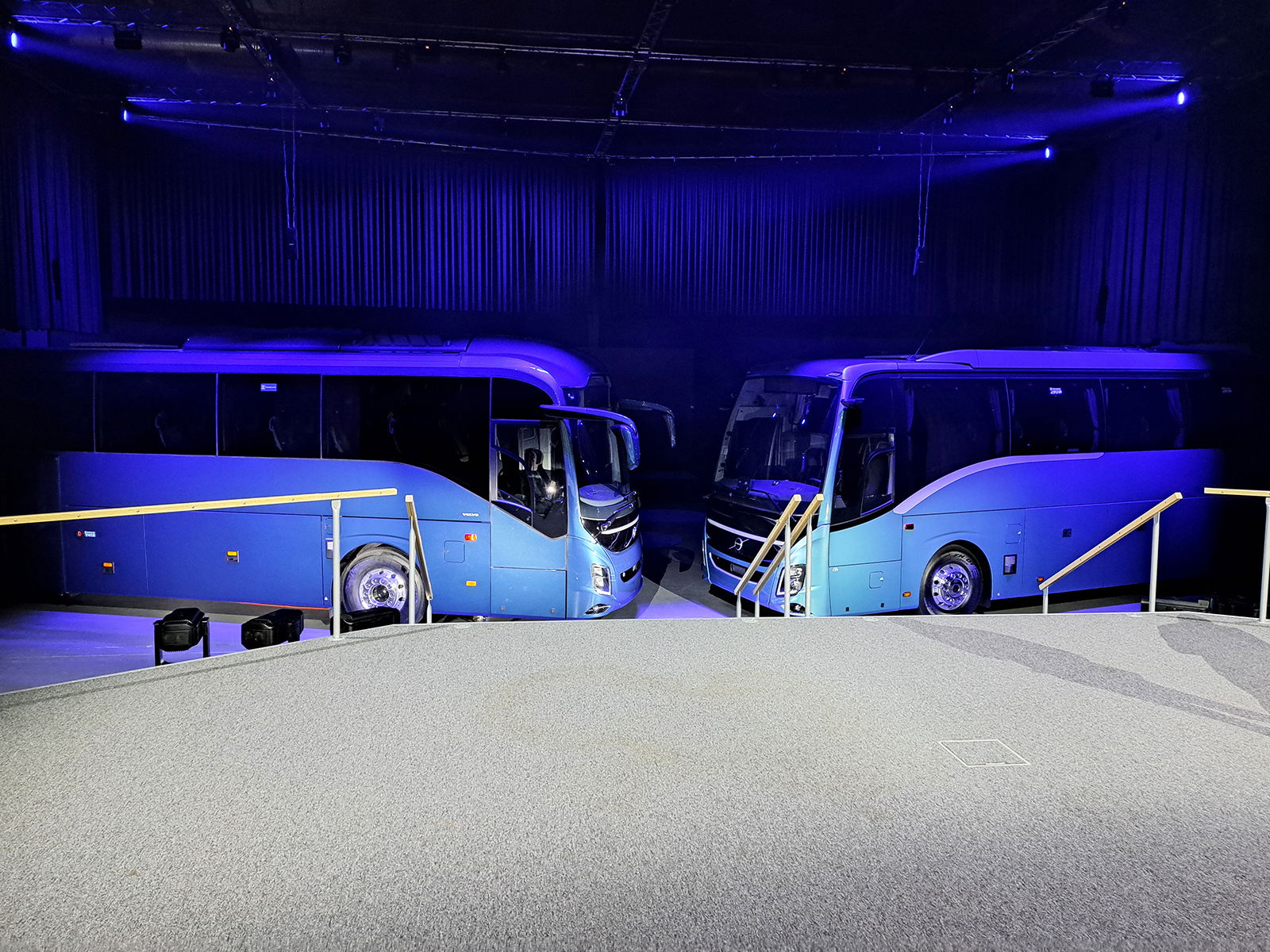
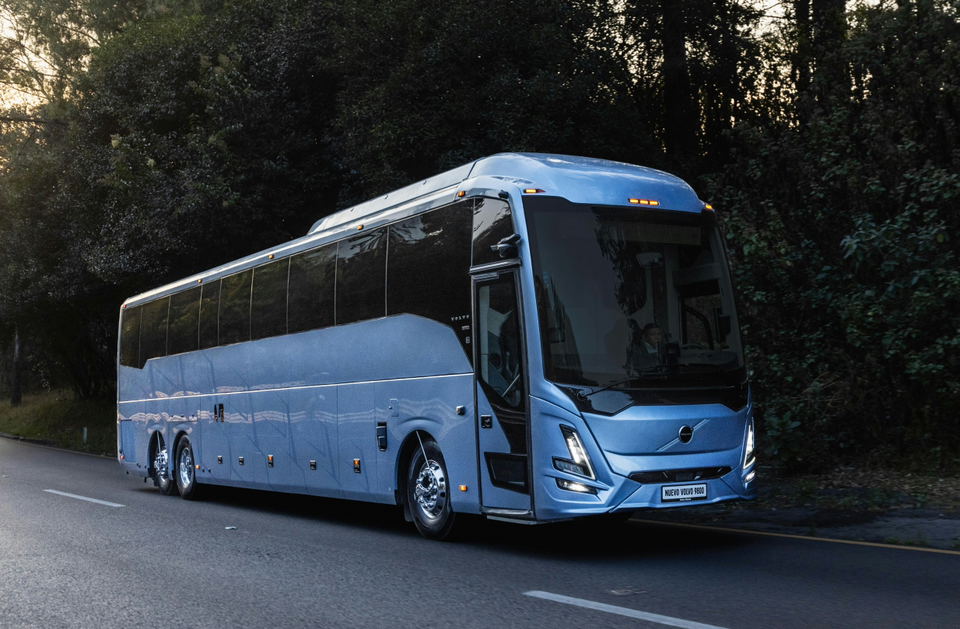
The long-distance model offered in its current form since 2018 did not see its story end with the closure of the Wrocław factory, although its route back to Europe proved far more winding than planned. Under the original plans, the model and its theatre-floor sibling, the 9900, would have continued to be built under licence by Spain’s Sunsundegui, but this arrangement ultimately fell through due to the latter company’s financial difficulties. Volvo therefore had to find a new solution and reorganise its supplier base. In the end, the matter was resolved in-house: production of the 9700 was transferred to Volvo Buses’ Mexican plant, although this does not mean that the model is produced entirely overseas. The Volvo B13R chassis forming the mechanical basis of the current version continue to arrive from Volvo’s Borås plant in Sweden, but rather than as rolling units, they are delivered to Tultitlán in knocked-down kit form, where the chassis are prepared for bodybuilding and the complete buses are assembled.
The Tultitlán production site has now also been prepared for series production of the European-specification 9700, while the plant also continues to serve the local market with models from the 9800 range. Because of the dimensional differences between the bodies of the two product lines (the Mexican sister model is 50 mm wider than its European counterpart), a separate welding line has been established for 9700 production, while final assembly will take place on a shared line. The production ramp-up will initially be modest: around 30 buses are expected to be exported to Europe this year, before volumes are gradually increased to around 200 units annually. The programme’s primary target markets will be Italy, France, the United Kingdom and the Scandinavian countries – largely the regions where Volvo has traditionally held strong positions in the long-distance bus and coach segments.
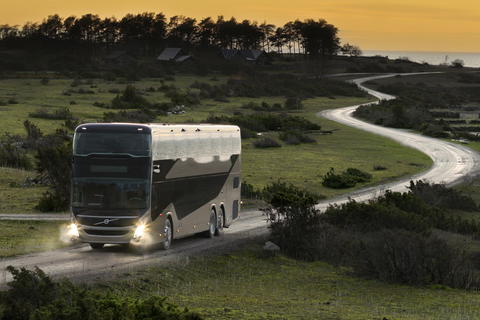
Volvo hopes that serving the European market will make production in Tultitlán, which is currently highly volatile, more even, as Mexican customers are fond of ordering large-volume batches, followed by long periods of ordering nothing at all. As for suppliers, many former partners have been retained even after production was relocated, although new names have also appeared on the list. We also learned that, although only the return of the 9700 is currently under discussion, the fate of the former flagship, the theatre-floor 9900, has not yet been finally decided either: Volvo Group executives told us in response to our question that they are still examining the options, as feedback suggests there would also be demand for a premium model with a higher bodywork than the 9700.
A proven product, further refined
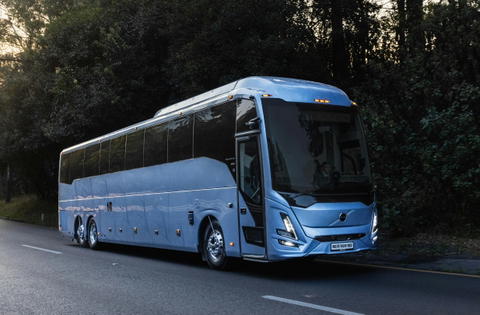
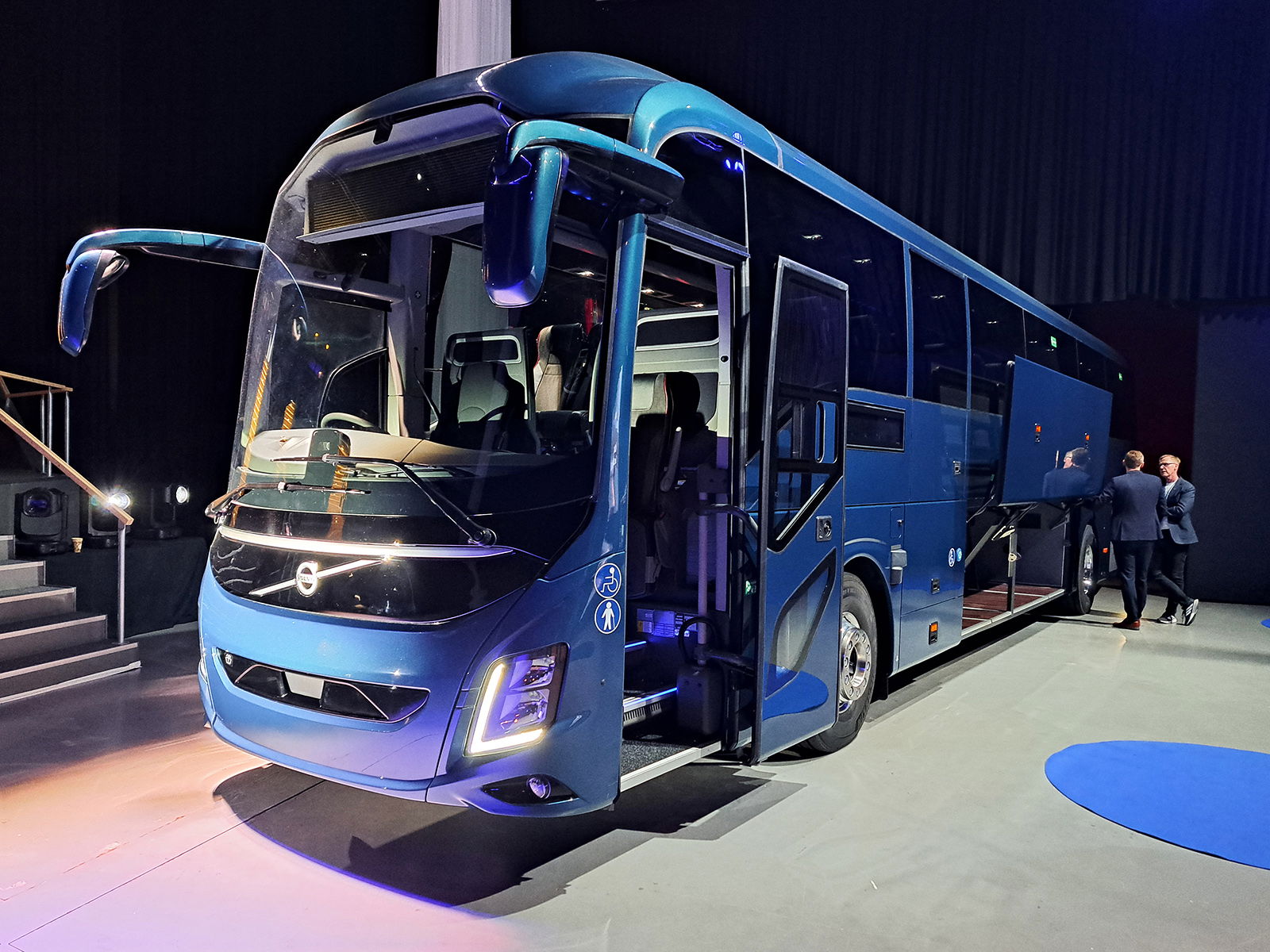
To mark the Volvo 9700’s return to Europe, the manufacturer held a major press event including test drives, to which our publication w also invited. In Gothenburg, at the joint test track of Volvo Group and Volvo Cars, we were able to take a closer look at the first Mexico-built demonstrators and customer vehicles, as well as the latest technical developments affecting the model. For the time being, however, the exterior styling is not being aligned with the corporate identity introduced with the 9800, which was renewed this year, as the aim is to emphasise that, despite now being built in Mexico, this is exactly the same product that customers had previously grown accustomed to and appreciated.
In technical terms, the model continues to be based on the Volvo B13R platform introduced in 2022 as the successor to the previous B11R chassis, which received a minor technical update at the same time as the 9700’s return to Europe. Its most important advances include a newly developed independent front-wheel suspension, which serves not only to improve ride comfort. The maximum steering angle of the inner wheel has increased from 54° to 56°, while the front axle load capacity has risen from 7.5 to 8.2 tonnes. The latest version of the B13R chassis entered series production in production week 37 of 2026 .
The B13R is available in both standard-floor and low-entry configurations (the latter, designated B13RLE, is primarily intended for double-decker applications). Both two- and tri-axle configurations are offered, with the latter featuring either a fixed or electro-hydraulically steered tag axle. This design is also a new development: its simpler construction is advantageous from a maintenance perspective, while the weight reduction also helps to lower fuel consumption. The engine range comprises 380, 420, 460 and 500 hp (279–368 kW) versions of the 12.8-litre Volvo D13K engine, although Volvo offers only the three more powerful variants for the 9700. An I-Start system is also available as an option. In this case, the diesel engine is started by a separate battery reserved exclusively for this task, meaning that the energy reserve required for starting remains independent of the batteries supplying the vehicle’s other electrical consumers.
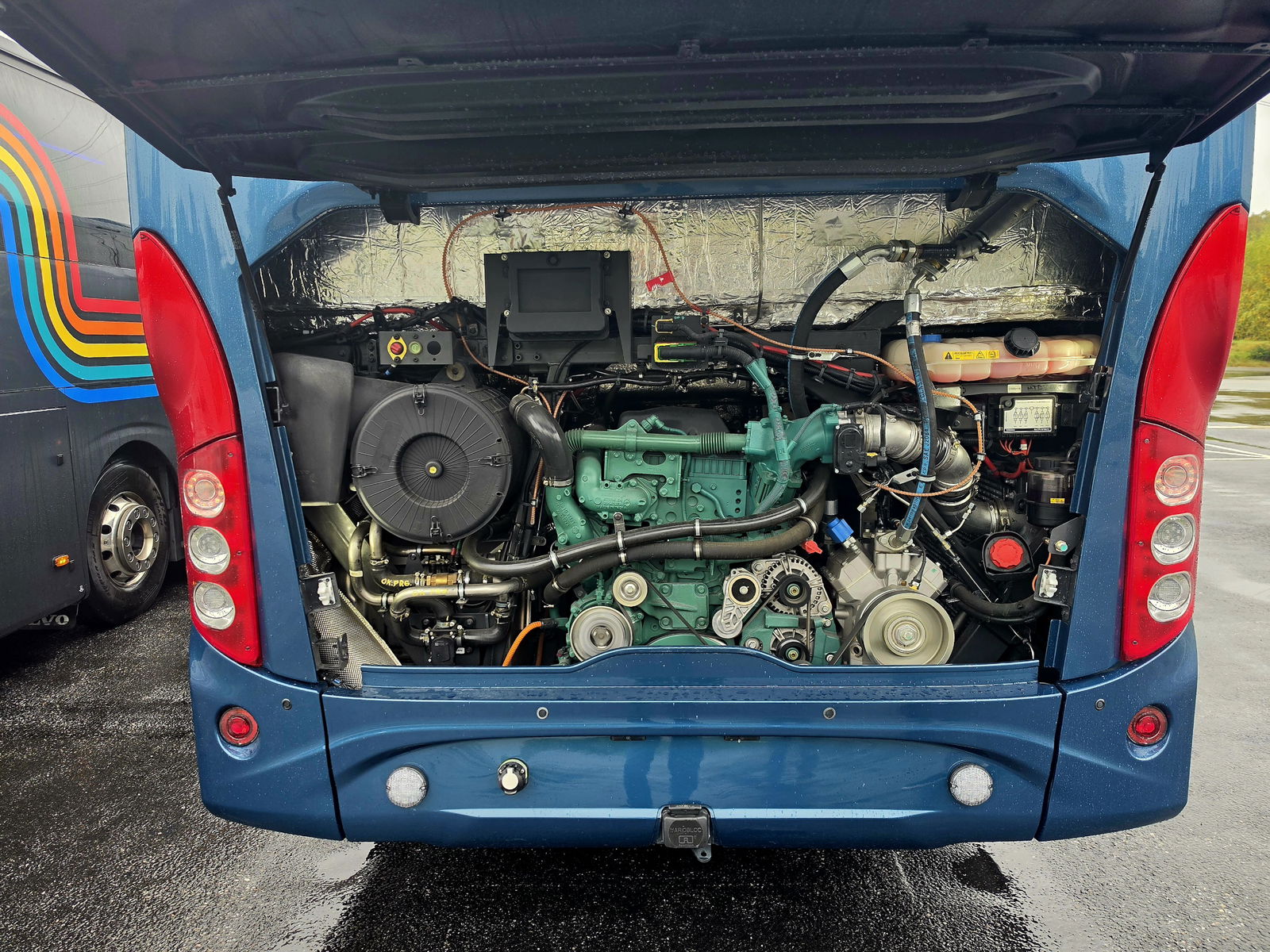
A characteristic feature of the Euro 6 engine version of the B13R chassis is that, rather than the usual ‘sandwich’ arrangement of charge-air and water radiators mounted one behind the other, Volvo’s engineers have physically separated the two cooling units and replaced the former large, hydraulically driven fan with smaller electric fans that can be controlled individually. One advantage of this solution is that the engine bay can be divided into two thermal zones: components able to withstand higher temperatures can be placed on the warmer side, while more sensitive equipment, or equipment requiring immediate access after the engine is switched off, can be placed on the cooler side. Lower-temperature air arriving from the charge-air cooler is routed over the engine, further reducing the thermal load in the engine bay, while the heated air flowing through the water radiator is discharged by the most direct route possible. As the electric fans can be regulated independently of each other, the system’s output can always be adapted to the current cooling requirement, which according to Volvo also contributes to favourable fuel consumption.
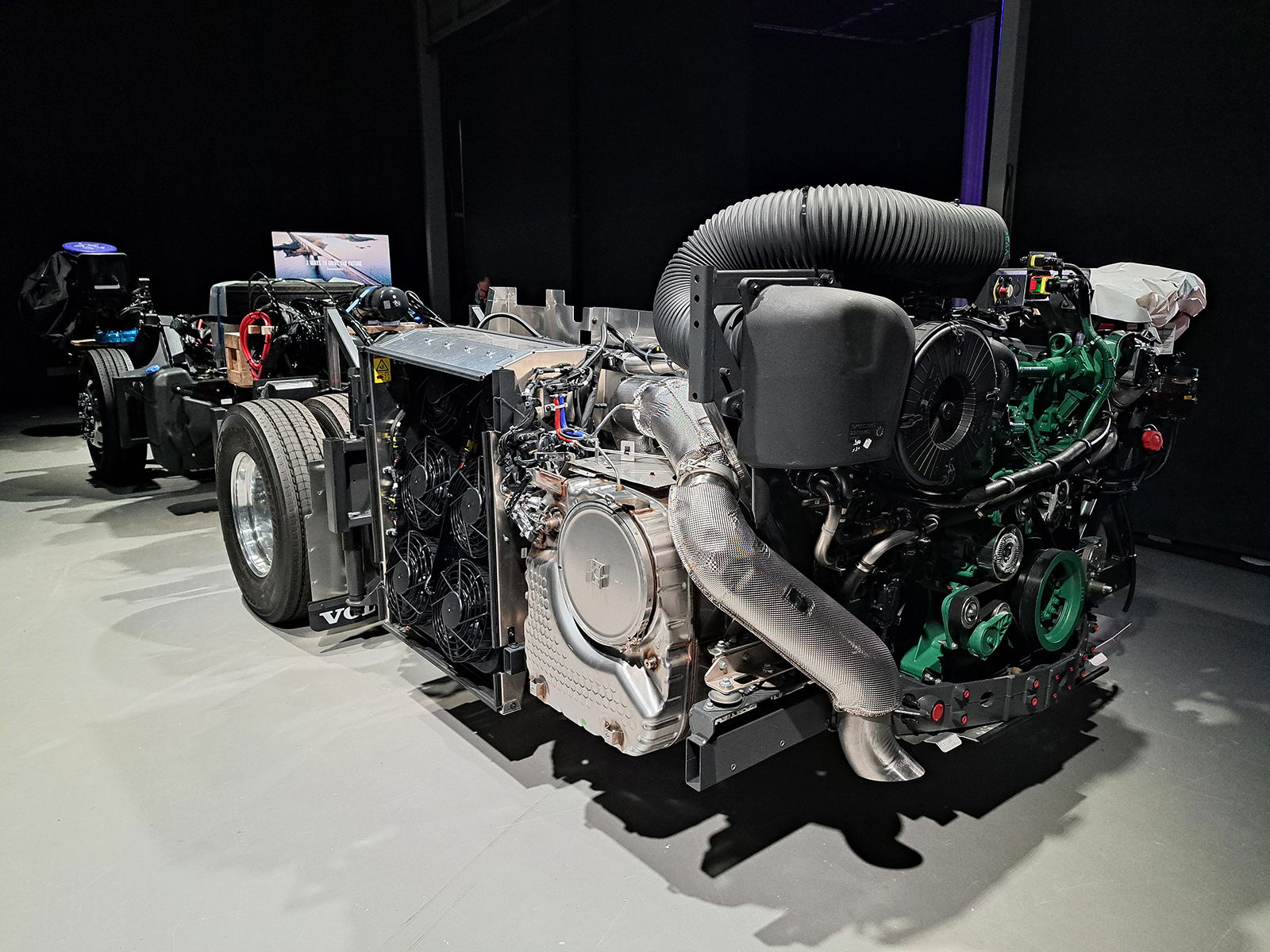
A key element of the powertrain remains Volvo’s own 12-speed I-Shift automated gearbox, available in both normal and overdrive versions. The latter is recommended primarily for long-distance operations at high average speeds. As part of the latest development, the B13R’s drive axle has also been revised and new, taller final-drive ratios have been introduced: when paired with I-Shift, ratios of 2.47, 2.64 and 2.85 are available, of which 2.64 is currently the most popular among customers. The different ratios allow the powertrain to be tailored to the relevant operating profile, such as a high proportion of motorway use. I-Shift can be paired with all engine variants of the B13R chassis, while the alternatively offered ZF EcoLife automatic transmission is available only with the 380 hp version. Volvo’s experience is that there is no significant customer demand for a conventional automatic gearbox with the more powerful engines; I-Shift is the dominant choice for these.
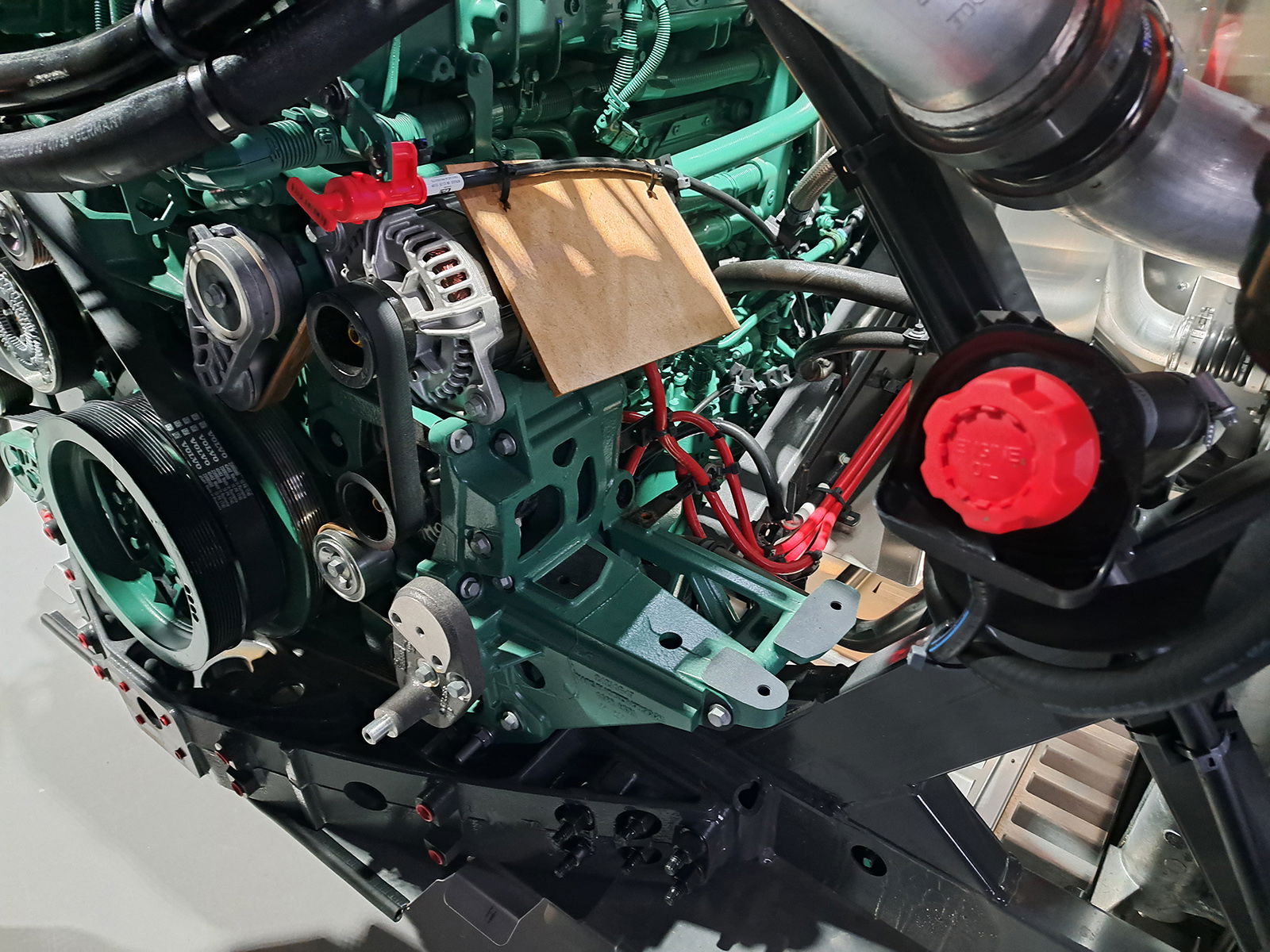
The mounting bracket for the air-conditioning compressor can be fitted directly to the engine block, which is beneficial, among other things, in reducing vibrations, although a chassis-mounted solution remains available if this is more advantageous for the bodybuilder or if a higher-output compressor is required. Similarly, three or even four alternators can be mounted directly on the engine. The B13R has also received a new air intake unit, with improved dust and water separation and a more precisely defined body connection point, ensuring that the engine’s air supply can be properly provided with different bodywork configurations.
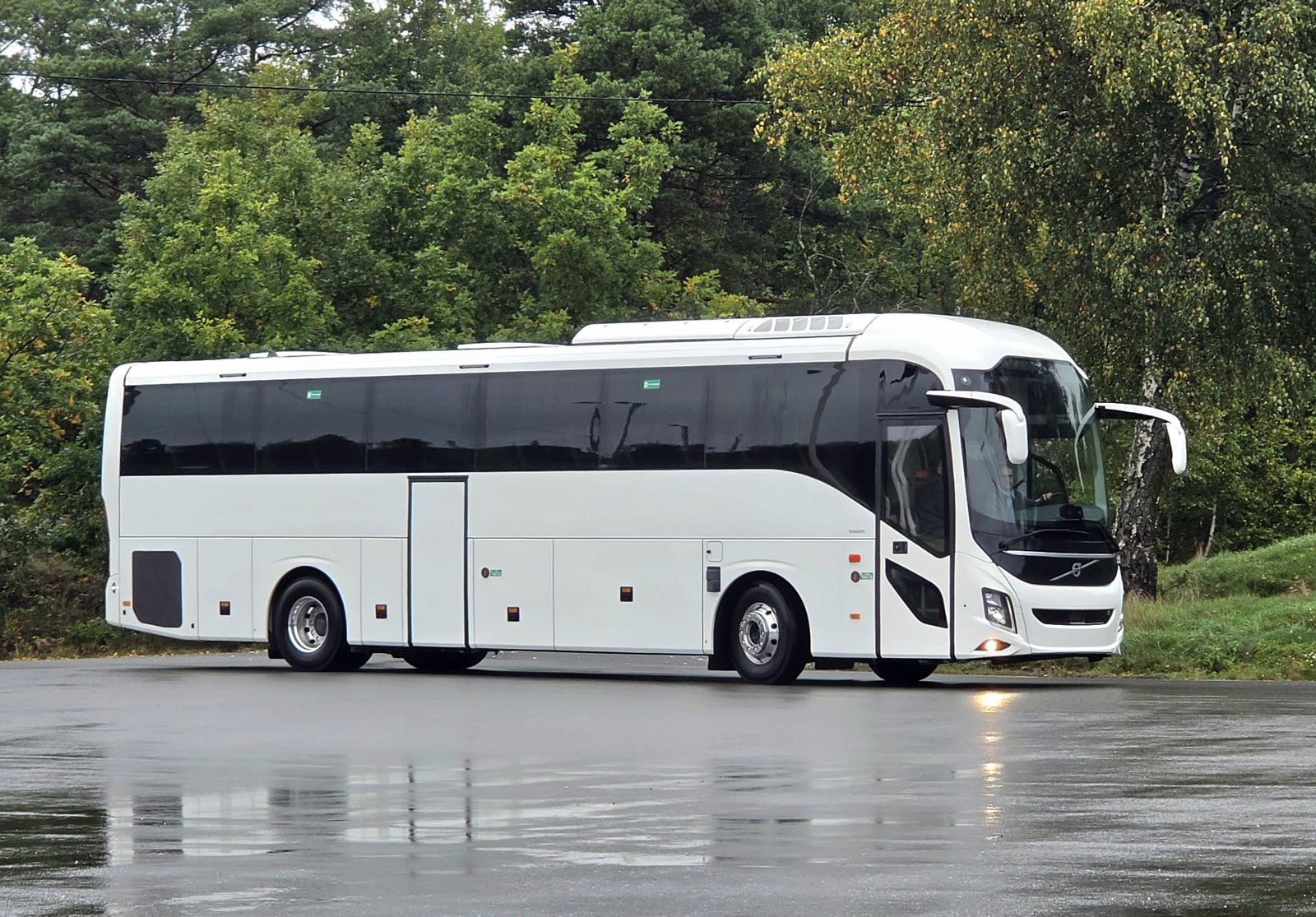
The 9700’s body range also reflects the chassis’ numerous configuration options. The model is produced in three lengths – 12.4, 13.1 and 13.9 metres – in two- and tri-axle versions. The different lengths naturally come with several possible seating layouts, allowing the 9700 to be specified not only for typical coach duties but also for long-distance scheduled services.
The basis of the 9700’s active safety equipment is the Volvo Active Safety System, built on the shared technical architecture of Volvo Group. In keeping with its name, the concept’s primary aim is not to mitigate the consequences of a potential collision, but to prevent a dangerous situation from arising. Accordingly, the 9700’s driver-assistance systems continuously monitor the vehicle’s surroundings and the driver’s activity. The equipment includes adaptive cruise control, lane departure warning and lane-keeping systems, tyre-pressure monitoring and automatic emergency braking. The latter can react not only to moving or stationary vehicles ahead: beyond statutory minimum requirements, Volvo has extended its operation to the recognition of vulnerable road users, including pedestrians, and has also paid particular attention to detection in the dark. The driver is supported by both direct and indirect alertness monitoring. The former uses a camera to check whether the driver’s gaze is directed at the road, while the latter can infer a reduction in attention, among other things, from patterns in the vehicle’s movement within its lane.
The driver-assistance functions also work closely with the active steering system known as Volvo Dynamic Steering (VDS), which supplements the hydraulic power steering with an electronically controlled electric motor and adjusts the steering effort required to the prevailing driving conditions. At low speeds, it can reduce steering effort by up to 70%, while at higher speeds, together with the new independent front suspension, it helps increase directional stability and reduce the effects of crosswinds and the continuous minor steering corrections required to maintain straight-line running. This reduces driver workload, while lane-keeping support functions can also intervene through it. The new design has also made it possible to use a smaller-diameter steering wheel.
Volvo also complements its active safety systems with digital services. With the GPS-based geofencing function called Safety Zones, operators can assign safety parameters to geographically defined areas, while the telematics system can monitor energy consumption, driving and safety indicators across the fleet. Based on frequent harsh braking, rapid acceleration or high lateral acceleration, for example, operators can identify problematic patterns and use the data for targeted driver training.
Naturally, passive safety has not been compromised either: in addition to three-point seat belts, the coaches’ seats are available with ISOFIX mounting points, booster seats and rearward-facing child seats integrated into the backrests. However, Volvo’s safety concept does not end with protecting the vehicle’s own passengers. Its in-house bodied buses use a reinforced front structure that complies both with UN/ECE Regulation No. 29 on driver protection and UN/ECE Regulation No. 93 on the requirements for front underrun protection, even though their application is not yet required for buses. The purpose of underrun protection is primarily to protect occupants of smaller vehicles involved in an accident, reducing the risk of a car going underneath the bus’s front overhang in a head-on collision.
At the Gothenburg presentation, Volvo specialists confirmed that Euro NCAP intends to extend the assessment programme launched for trucks in 2024 to buses in the coming years, although no precise target date has yet been set. Active accident prevention and so-called compatibility are expected to play an important role in the forthcoming assessment system, meaning that it will examine not only how well a vehicle protects its own occupants, but also the level of protection it provides to pedestrians and occupants of other vehicles around it. This is particularly important in the case of heavy buses, as their mass means they represent substantial kinetic energy in a collision.
Back on track
During our visit, we were able to try both a two-axle and a tri-axle example of the 9700 returning to Europe, both already built in Mexico – indeed, the white-liveried two-axle demonstrator was specifically the first Volvo 9700 produced in the Latin American country. The first right-hand-drive examples for the UK and Irish markets have since also been completed, and one of these could likewise be viewed at the event. The test drives took place at the Volvo Trucks Experience Center (VTEX) test track in Gothenburg, which was hosting a bus-related press event for the last time, as the new test track for Volvo’s commercial vehicle division will soon be completed. The existing facility will therefore be used exclusively for testing Volvo passenger cars in future.
We found no compromise in the quality of the Mexican assembly that would represent a step backwards compared with the former Polish-built 9700s: in this respect, both test buses were convincing, and the panel gaps and interior finish suggested that the standard of production in Tultitlán is equivalent to that of the earlier Wrocław-built examples.
Beyond the number of axles, there was one further significant technical difference between the two 9700s we tried: the two-axle test bus still had the previous-generation independent front suspension (IFS), whereas the tri-axle vehicle was already fitted with Volvo’s new development described above – and, according to the manufacturer’s representatives, this is what production vehicles will receive too. The difference was clearly noticeable in practice: the tri-axle vehicle equipped with the new front suspension dealt more smoothly with imperfections in the test track surface, transmitted fewer impacts to the body and, overall, the movement of the front of the vehicle felt calmer and more controlled.
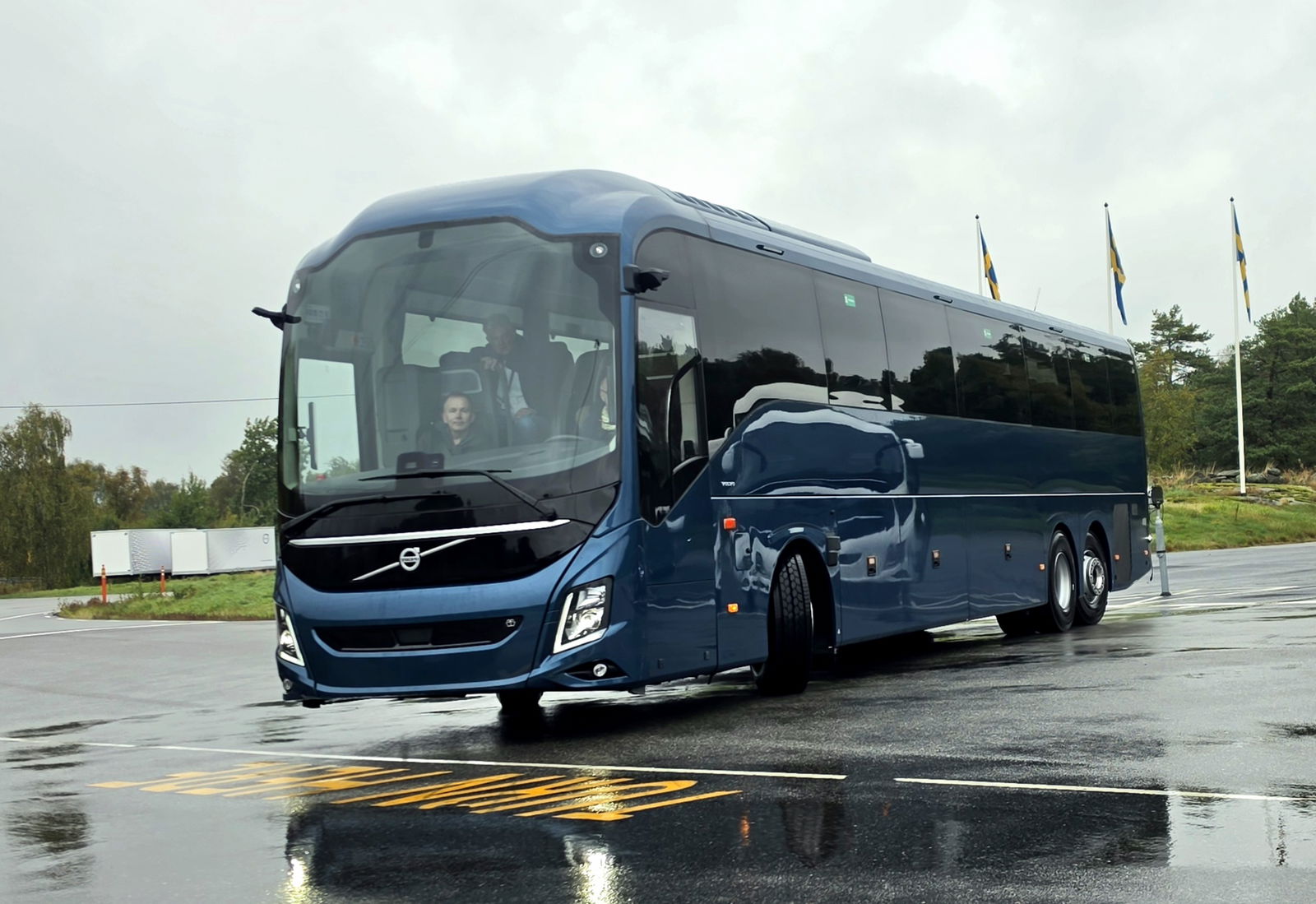
The tri-axle demonstrator was fitted with digital cameras replacing conventional exterior rear-view mirrors. Getting used to them took surprisingly little time, and the system also performed well in the rainy conditions prevailing during the test drive. Despite its body length of almost 14 metres, the manoeuvrability of the tri-axle 9700 also made a favourable impression, with the larger steering angle of the previously mentioned new front axle and the electrohydraulically steered tag axle both playing an important role. The vehicle was equipped with the range-topping 500 hp version of the 12.8-litre diesel engine, whose power we were able to put to the test on the test track’s 12% gradient, although the steep section posed no particular challenge for it. Mated to the automated Volvo I-Shift gearbox, the power unit propelled the tri-axle coach resolutely up the incline, clearly demonstrating the performance reserves available in the most powerful version.
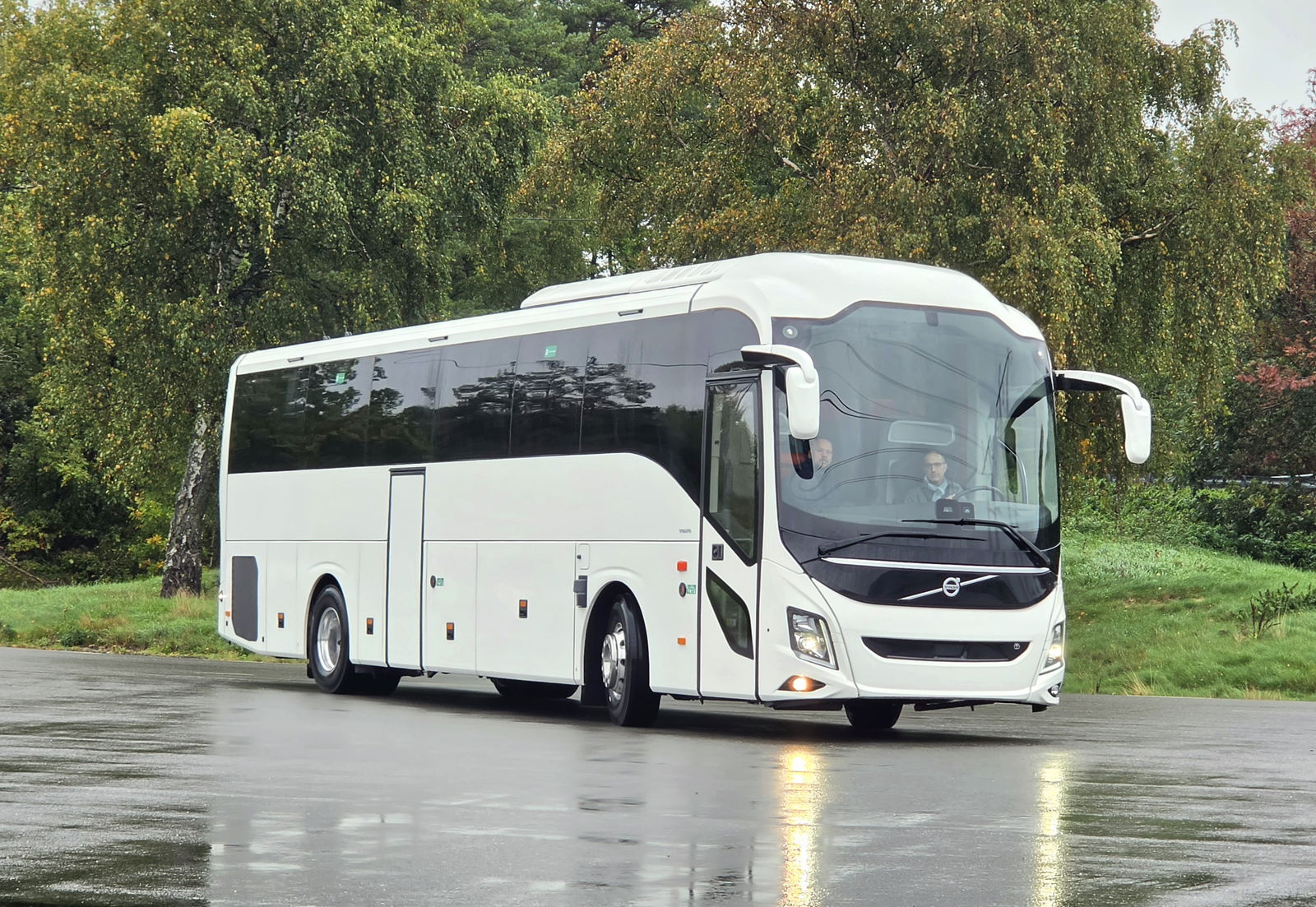
The two-axle 9700 built for an Italian order was also equipped with a geofencing function which automatically limited the vehicle’s top speed to 10 km/h in a pre-defined section of the test track, demonstrating the possibilities offered by Volvo’s digital services. From the driver’s seat, however, the set value proved to be quite a strict restriction. Even more striking was the system’s behaviour when leaving the restricted zone: as soon as the geofencing released the powertrain, the coach with more than 400 hp accelerated rather abruptly, with little transition. The operation of the function was therefore convincing in itself, although the smoothness with which the speed restriction is lifted could still be improved.
Electric drive, Finnish bodywork
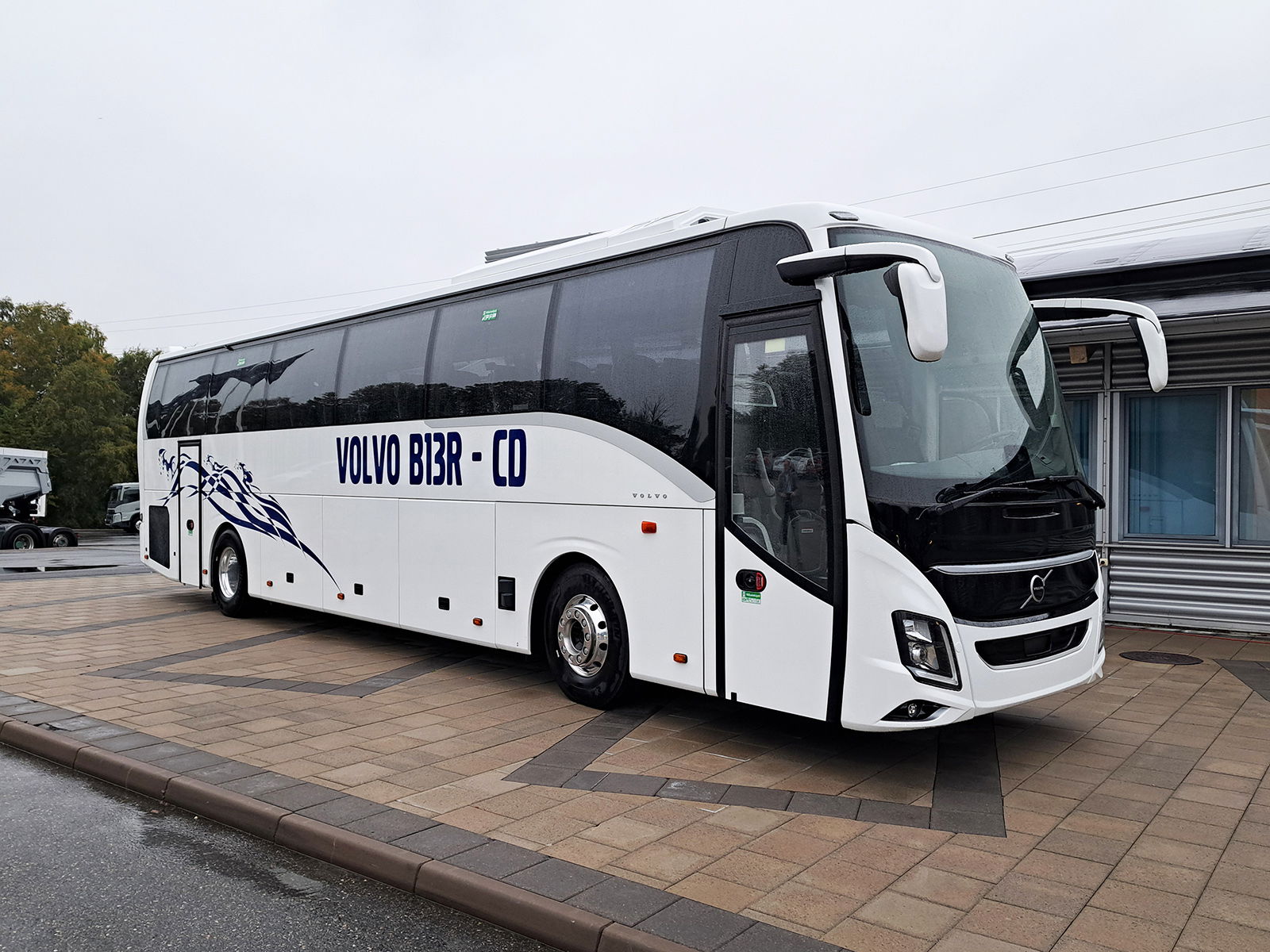
Alongside the returning Volvo 9700 range, the other main attraction of the event was the long-distance electric coach unveiled last autumn, bodied by Finnish company Carrus Delta on the high-floor version of the Volvo BZR Electric rolling chassis, which essentially uses the bodywork of the previous-generation 9700, with front and rear ends adapted to the styling of the new generation. The model, known simply as the Volvo BZR Electric - CD, is also produced in a diesel-powered version under the Volvo B13R - CD designation; a two-axle example of this could also be viewed in front of the test track’s reception building, albeit only stationary. This coach was built to Finnish specifications, with a 1-0-1 door layout maximising luggage compartment capacity and a toilet cubicle positioned at floor level at the rear of the passenger compartment. According to our hosts, Finnish customers favour this layout, despite it requiring the sacrifice of two seats in the rearmost row, because it makes the toilet easily accessible even to elderly passengers or those with reduced mobility.
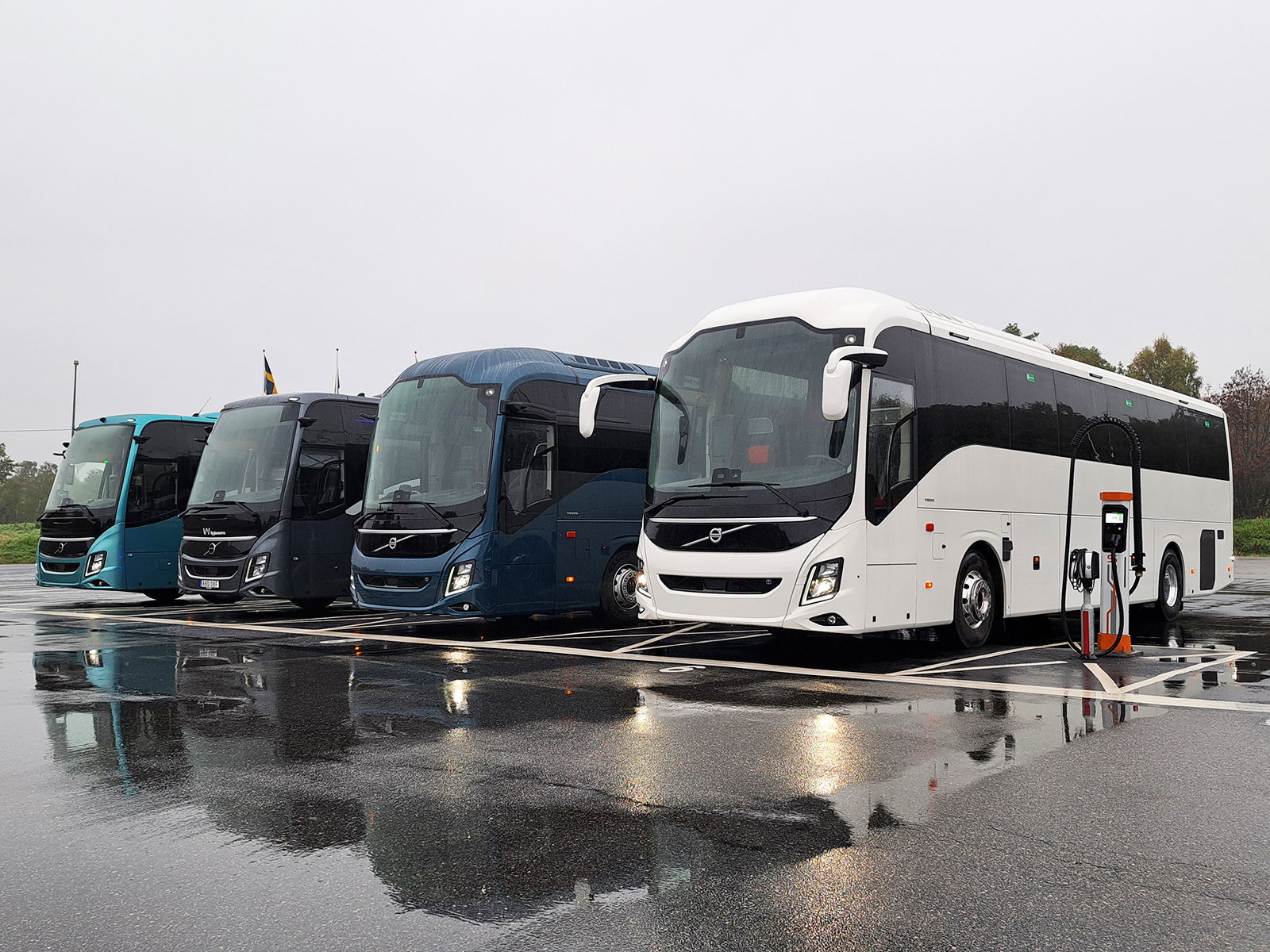
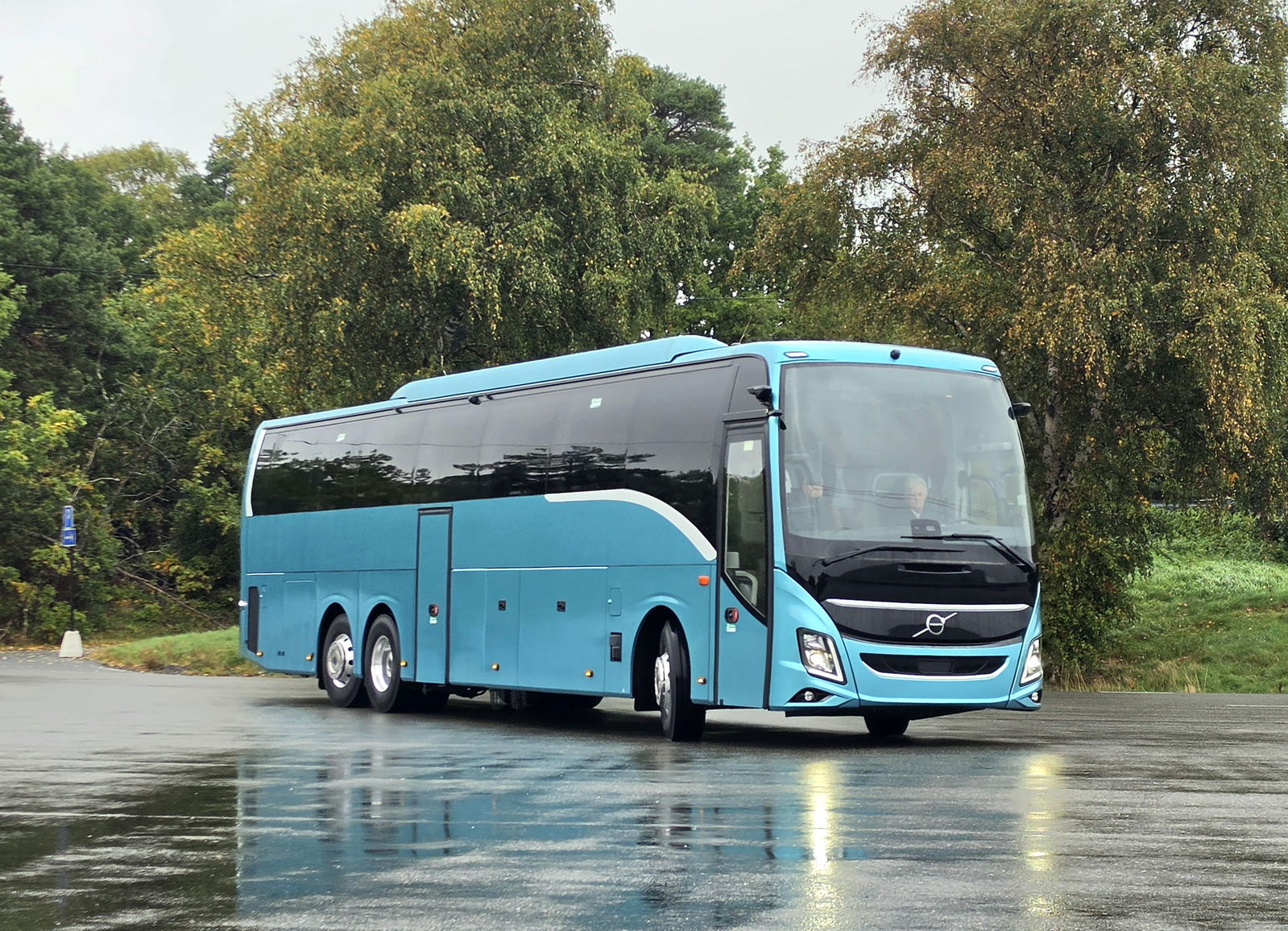
Two virtually identical examples of the tri-axle, all-electric version, which could also be tried out on the test track, were available to us. The attractively turquoise-liveried coach is a brand-new factory demonstrator which will shortly be delivered to Norway for a test tour. Its counterpart, wearing the graphite-grey fleet livery of the company that was the first to place the type into service Vy Flygbussarna, is by contrast an already sold customer vehicle, and operates in daily service on the route linking central Gothenburg with Gothenburg Landvetter Airport, just over 20 kilometres away – the manufacturer borrowed it from there a few days before the press event. Its special purpose is chiefly evidenced inside by the large luggage racks for cabin baggage, installed behind the driver’s area and opposite the second door.
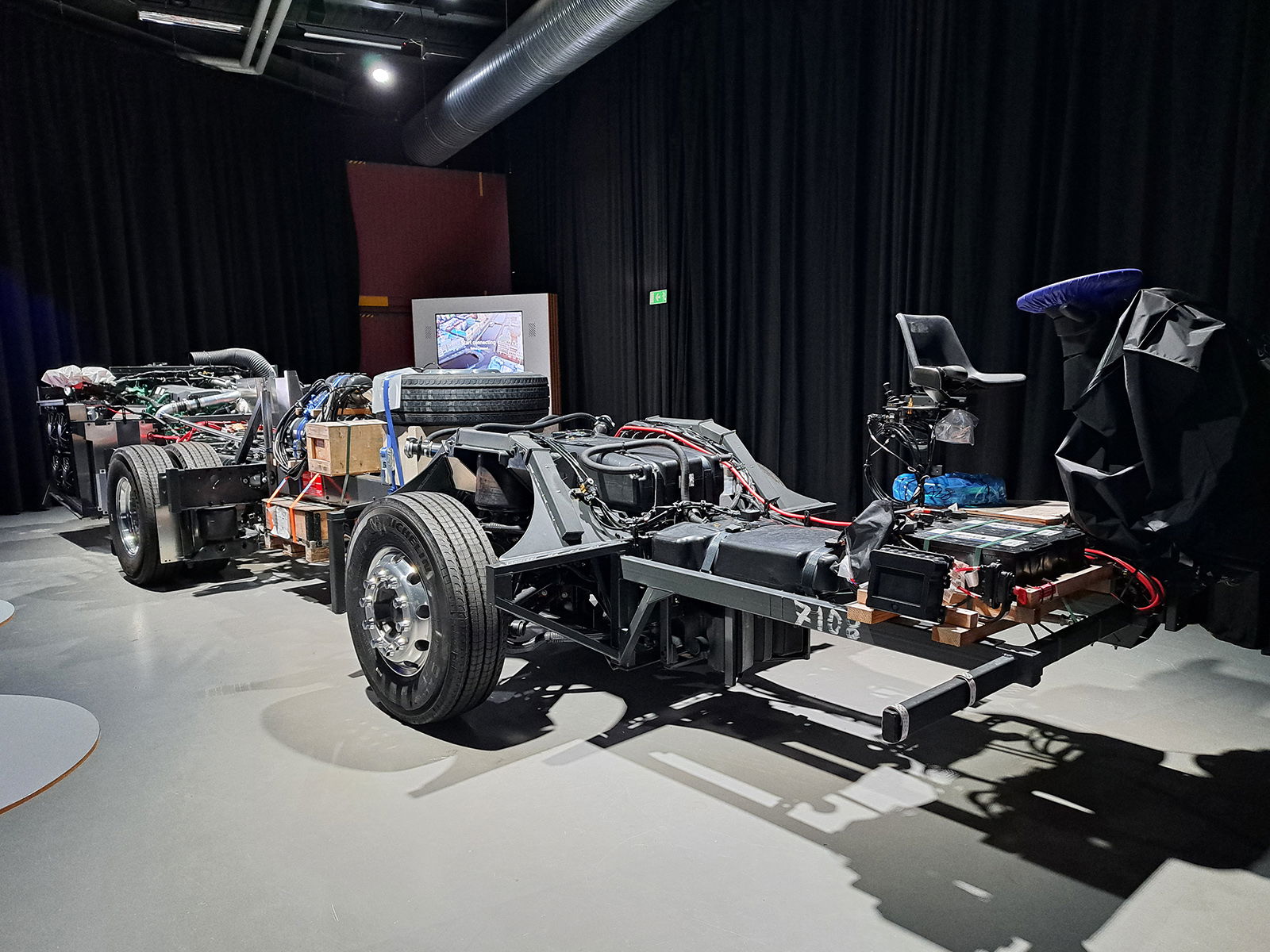
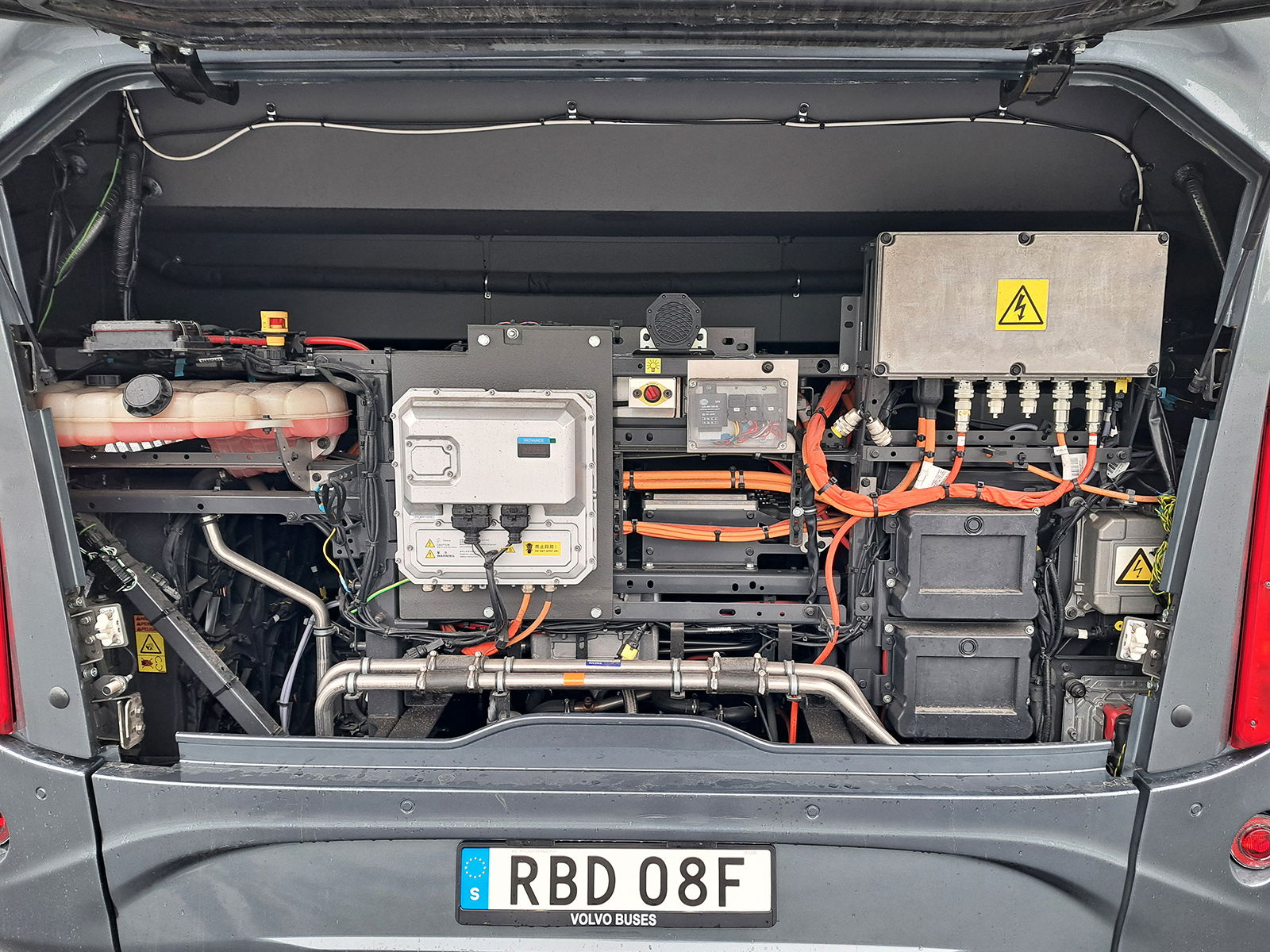
Volvo representatives also showed us the mechanical layout of the BZR Electric chassis underpinning the coaches on a 1:6-scale model, and revealed, as an interesting aside, that 3D-printing the detailed model took around 2,000 hours. Although the electric platform is fundamentally also based on the B13R chassis, the main units naturally differ: alongside the batteries, the former engine compartment houses the drive-control inverter, DC-DC converter and other power-electronics equipment, while the air compressor and air-conditioning compressor are electrically operated as well (the latter is three-phase). Unlike Volvo’s electric city buses, the cooling systems of the motors and batteries can here be interconnected if necessary, allowing heat generated by the motors to be used for battery thermal management as well. Somewhat surprisingly, the electric buses we tried had a rigid-beam front axle, but Volvo says independent front suspension will also be available shortly.
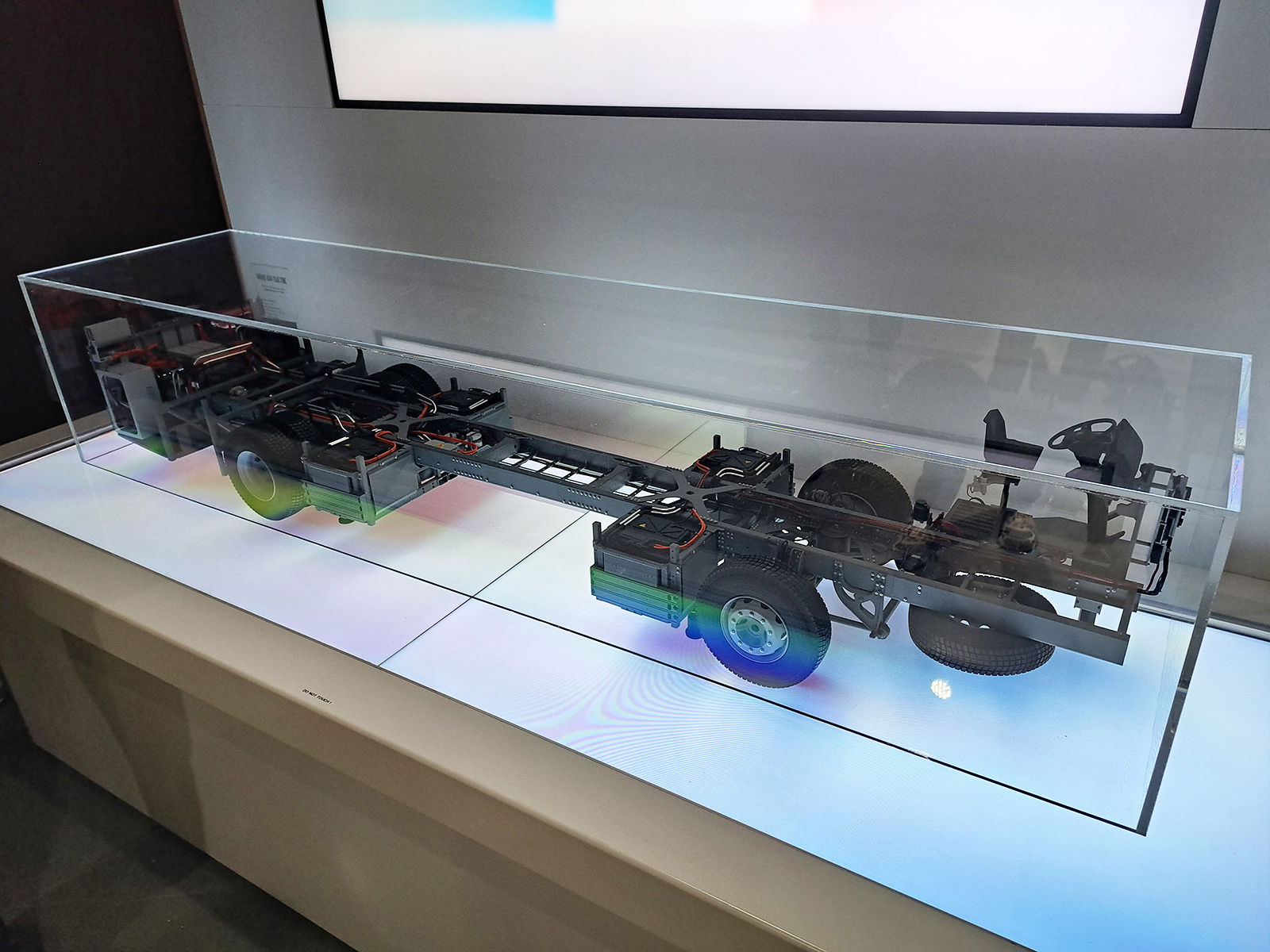
Both test buses feature a seven-module lithium-nickel-cobalt-aluminium oxide (NCA) traction battery pack operating at 600 V, with a nominal total capacity of 630 kW – in the maximum eight-module, 720 kW configuration, two battery modules rather than one are fitted directly behind the front axle. The remaining energy storage units are located ahead of the B axle and behind the C axle; because of the latter, the rear overhang is visibly larger than on the diesel-powered 9700s (a version with a shorter rear overhang is also available to reduce rear swing, but this entails losing three possible battery positions). When purchasing the platform as a rolling chassis, Volvo naturally affords bodybuilders a certain degree of freedom regarding battery placement – at present, 10 different companies worldwide already produce bodywork for the low-entry or standard-floor versions of the BZR Electric.
Of the installed battery capacity, 547 kWh in the case of eight battery modules and 479 kWh in that of seven can actually be used in practice – this is the value the driver effectively sees as 100% on the dashboard – at least at the beginning of the energy storage units’ service life; by the end, these figures fall to 383 and 438 kWh respectively. Volvo representatives did not specify a concrete expected service life, saying that this also depends on operating conditions and annual mileage. Assuming average consumption of 1.0 kWh/km and allowing a 12% margin, the manufacturer promises a range of 420–480 kilometres on a single charge, which is not yet at the level of a conventional touring coach, but may already be sufficient for scheduled services and shorter daily private-hire duties. In addition to CCS Combo 2-standard plug-in charging, OppCharge-system inverted-pantograph rapid charging is also available as an option, with charging power of 250 kW and 450 kW respectively.
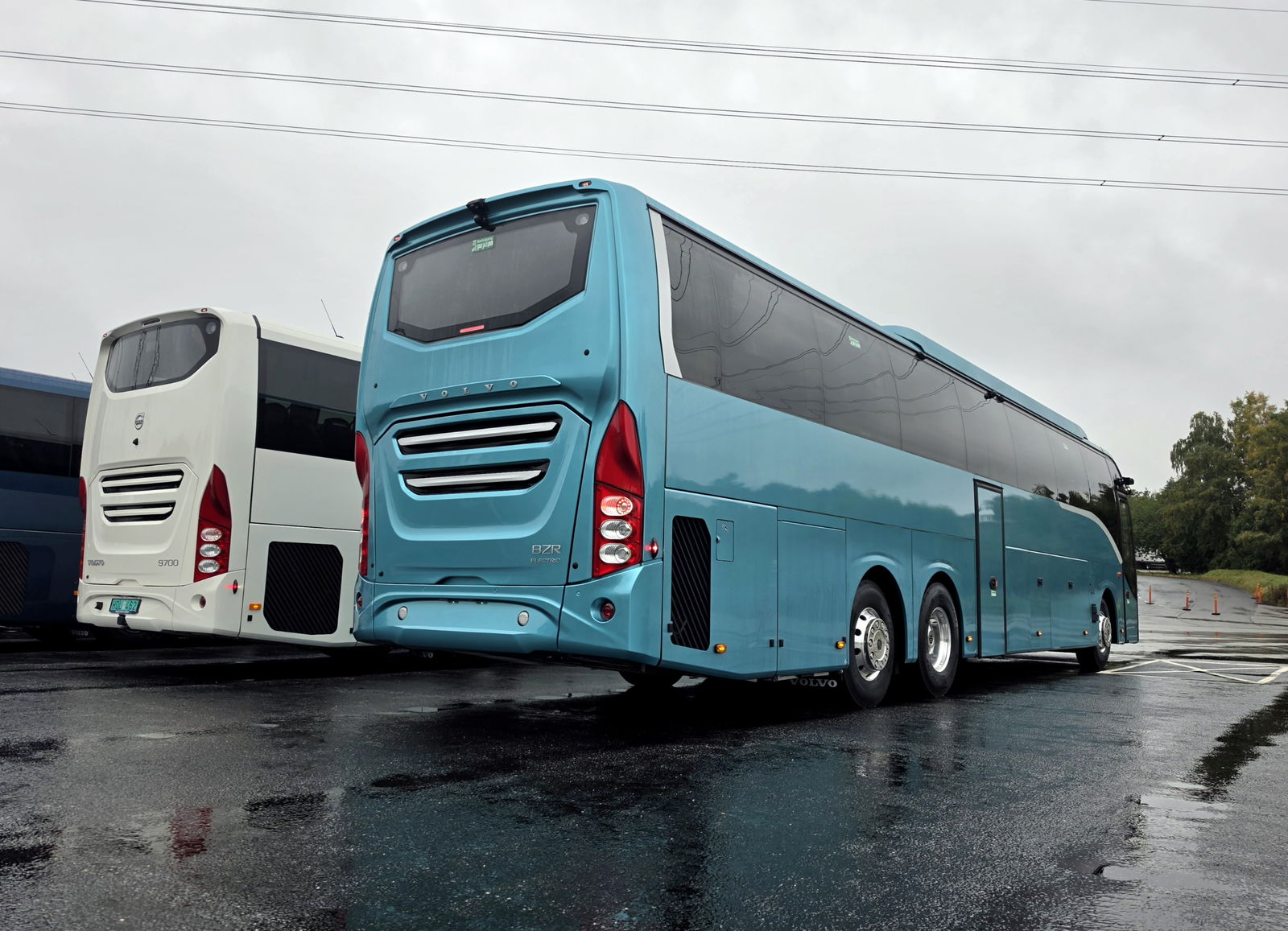
As part of the test drive, we had the opportunity to compare directly the technology and driving experience of Volvo’s diesel-powered and electric touring coaches. The tri-axle BZR Electric - CD accelerates with remarkable force for its size and also climbs the 12% gradient briskly: Volvo’s central drive unit, integrating twin motors and a two-speed automated gearbox, delivers a combined maximum output of 400 kW, while as much as 33,500 Nm of torque can ultimately be available at the wheels. Thanks to the electric motor’s instant torque delivery, the bus responds much more directly to the accelerator pedal than the diesel-powered 9700 despite its substantial body, while the multi-stage adjustable regenerative brake feels at least as sharp as the retarder used in the diesel version. On the move, the passenger compartment is noticeably quieter than that of the 9700 with its internal-combustion engine, which also gives a refined impression; however, although the two electric test buses theoretically had identical technical specifications, the dark-grey example borrowed from Vy Flygbussarna’s fleet seemed louder. This may be explained by the fact that this bus has already been in daily use for some time, and that the luggage racks occupying a large space, but naturally empty on this occasion, absorb noise less effectively than the thickly upholstered long-distance passenger seats.
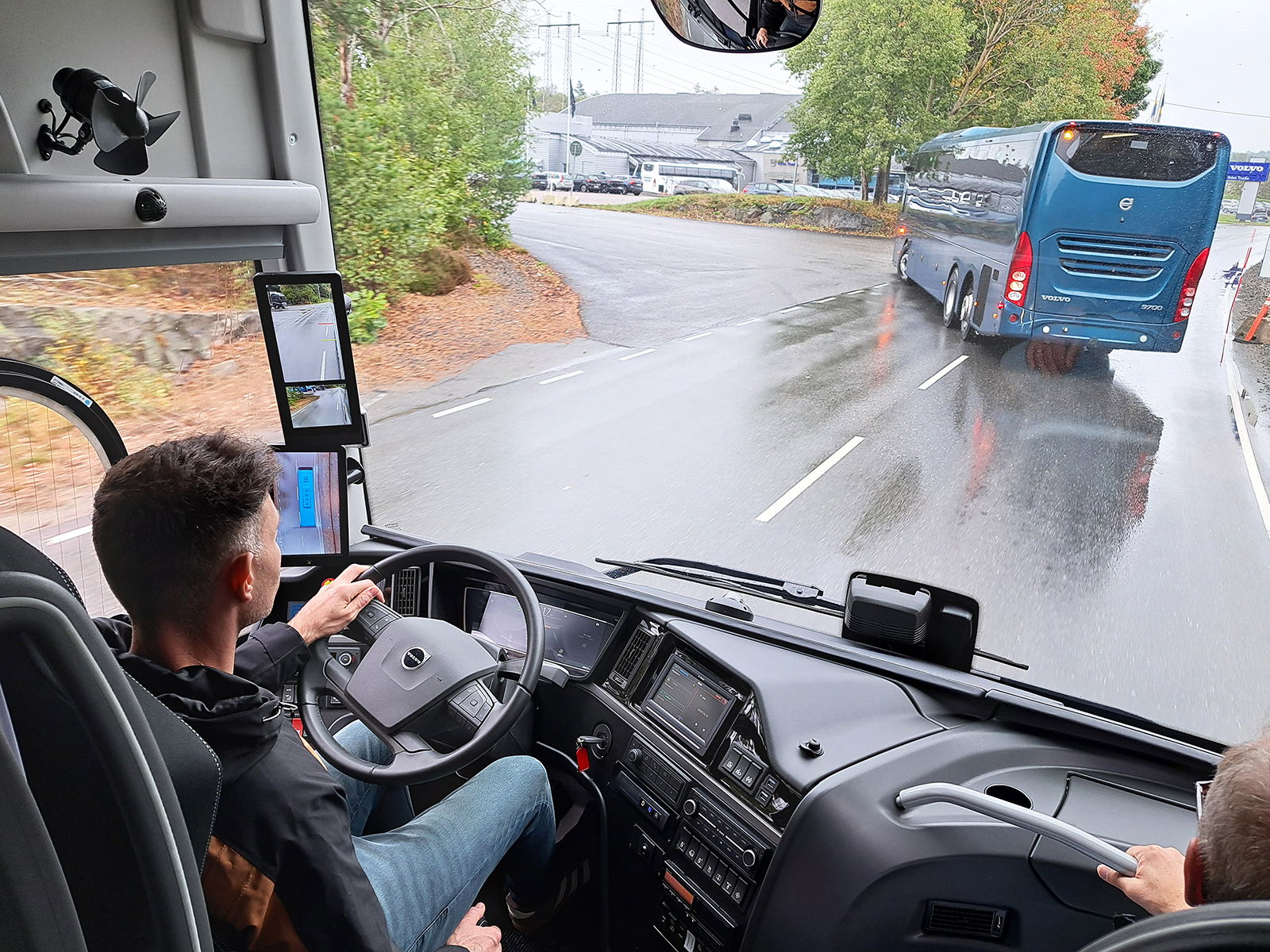
The difference between diesel and electric propulsion is not, however, limited to acceleration and noise levels. Due to the substantial weight of the traction batteries and their placement on the chassis, the electric version has a noticeably different driving character from conventional rear-engined touring coaches. Interestingly, several participants in the test drive reported that, owing to its more balanced weight distribution, driving the BZR Electric - CD creates an impression similar to that of the older models built on the legendary mid-engined Volvo B10M chassis. As the weight of the mechanical components is not concentrated at the rear of the vehicle to the same extent as in a rear-engined touring coach, the movement of the electric version when cornering and changing direction does indeed show some similarity to the characteristic behaviour of the B10Ms.
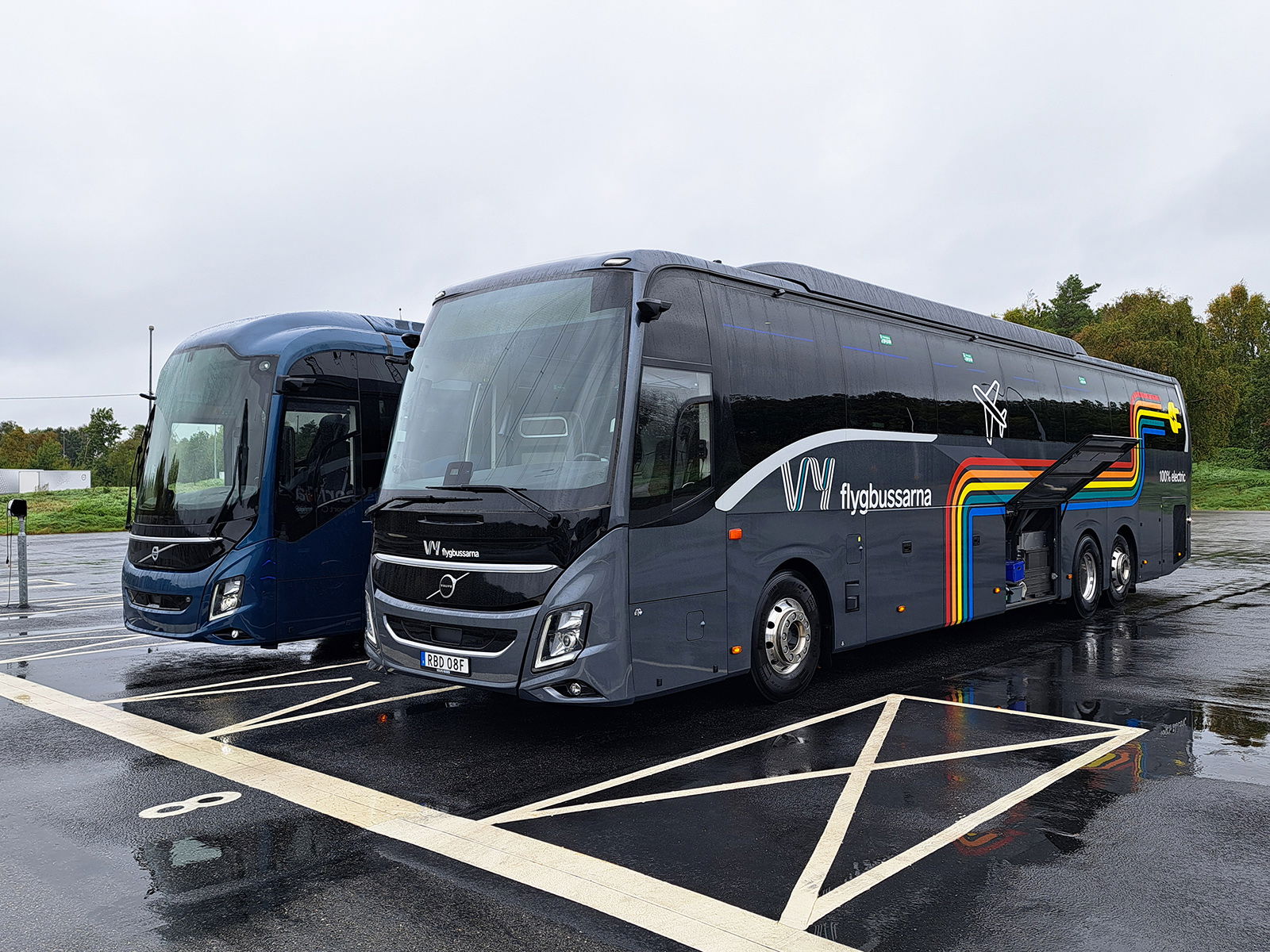
Overall, during our visit to Gothenburg, we were able to see that Volvo remains true to its traditions and continues to lead the way in safety solutions, while the 9700, now returned to Europe, has every chance of resuming its career where it temporarily left off when production in Wrocław ceased.