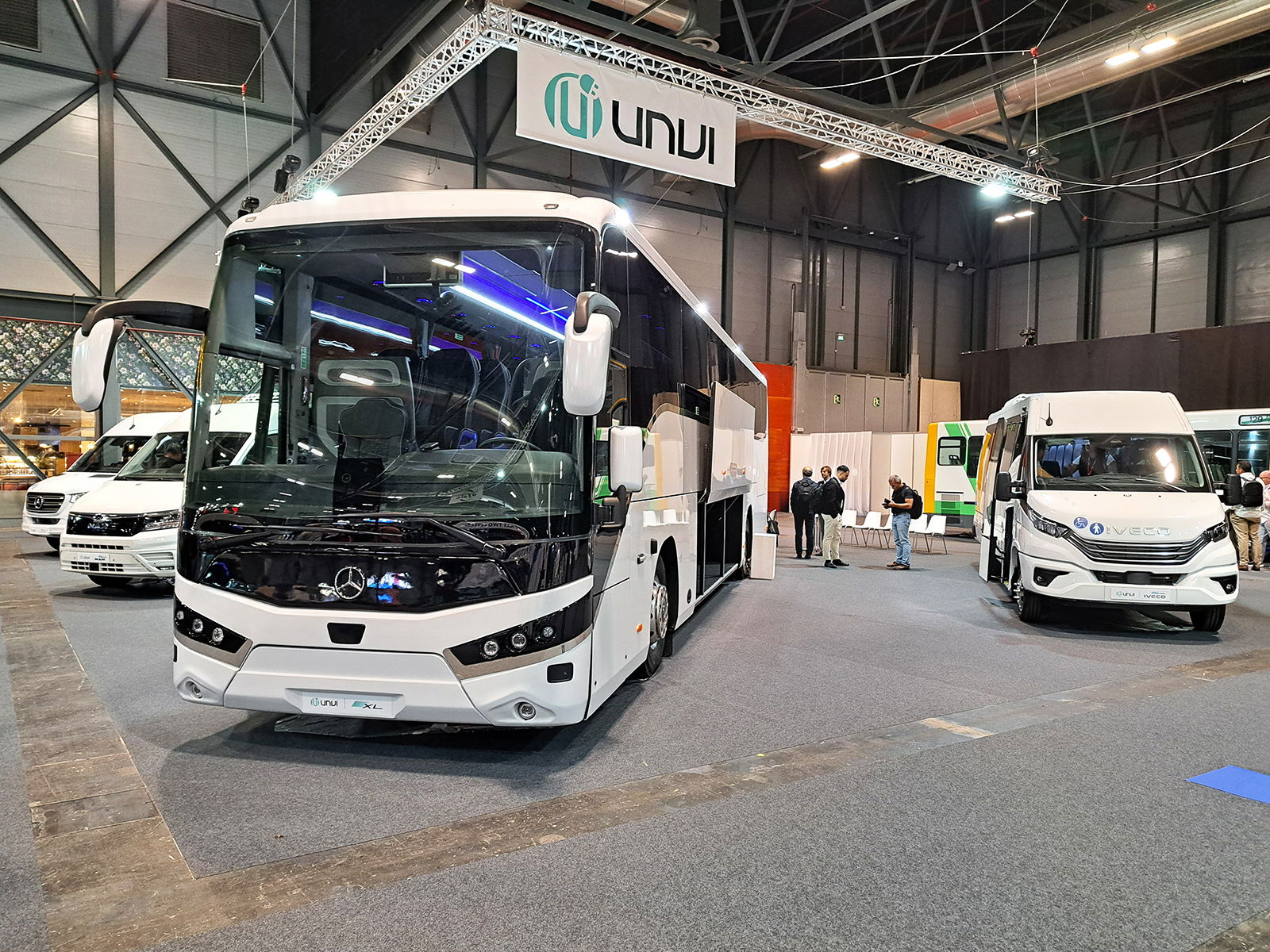
FIAA 2026: small and large coaches at the UNVI booth
UNVI brought display vehicles from both ends of its product range to the FIAA 2026 exhibition in Madrid, held between 22 and 24 September. Alongside its already familiar light-commercial-vehicle-based minibuses, the Spanish bodybuilder also unveiled a new product in the form of a version of the UNVI XL coach built on the Mercedes-Benz OC 500 RF rolling chassis.
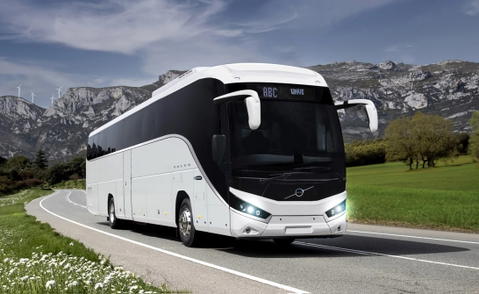
The centrepiece of the booth of the Ourense-based bodybuilder this year was clearly the two-axle UNVI XL coach, which until now we had mainly heard of in connection with Volvo. The version of the model built on the Volvo B13R chassis is marketed by the Swedish giant through its own network in the British and Irish markets, and the first examples arrived in the United Kingdom in April. However, the left-hand-drive version exhibited in Madrid qualifies as a Spanish product not only in terms of the bodywork but also its mechanical underpinnings, as it is built on the Mercedes-Benz OC 500 RF self-supporting chassis manufactured at Daimler Buses España's Sámano plant, now also available in mild-hybrid form. According to UNVI representatives, this version is intended primarily for the domestic Spanish market, and only this one example currently exists, meaning that the white-liveried vehicle displayed in Madrid is essentially a prototype.
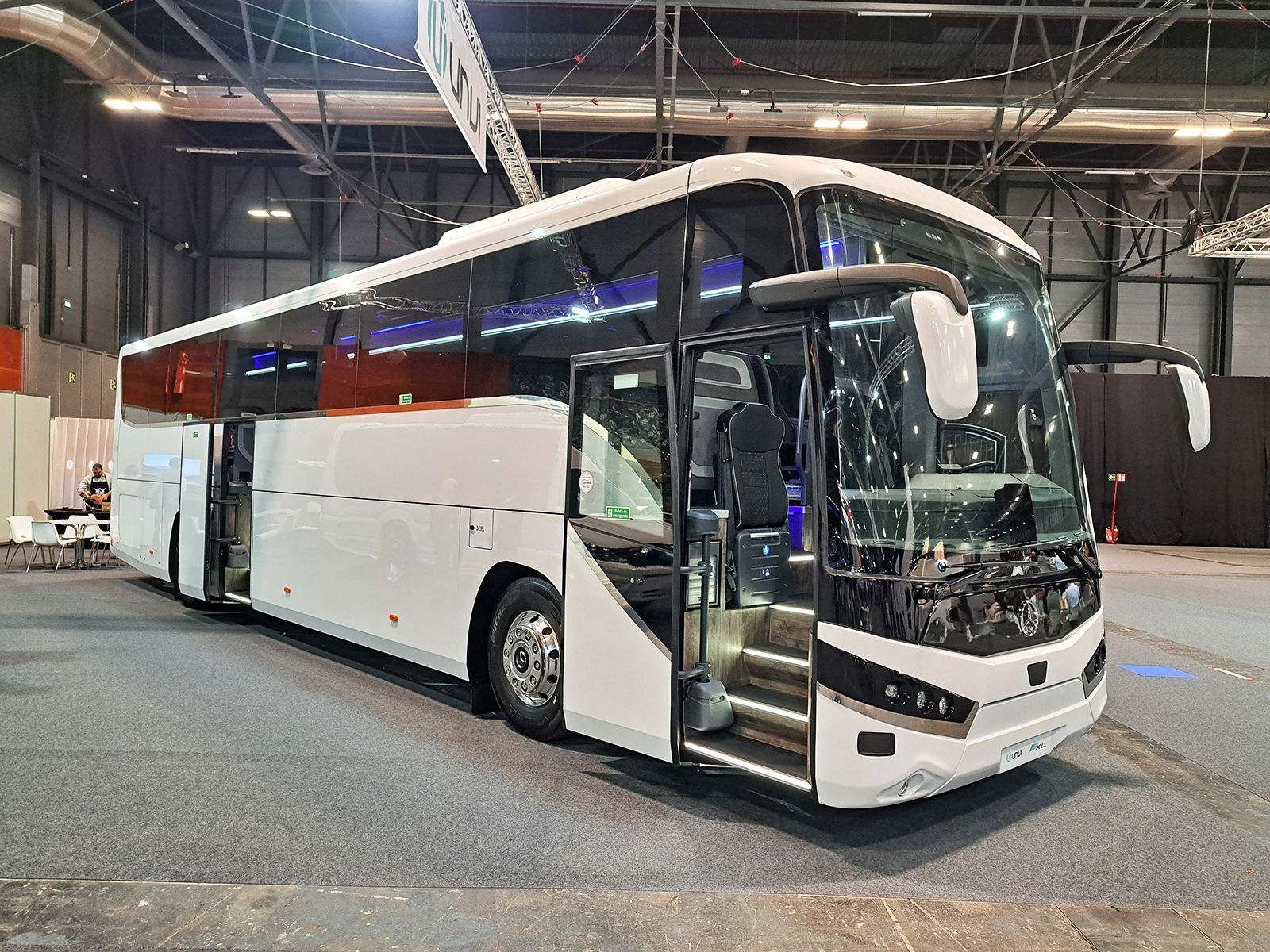
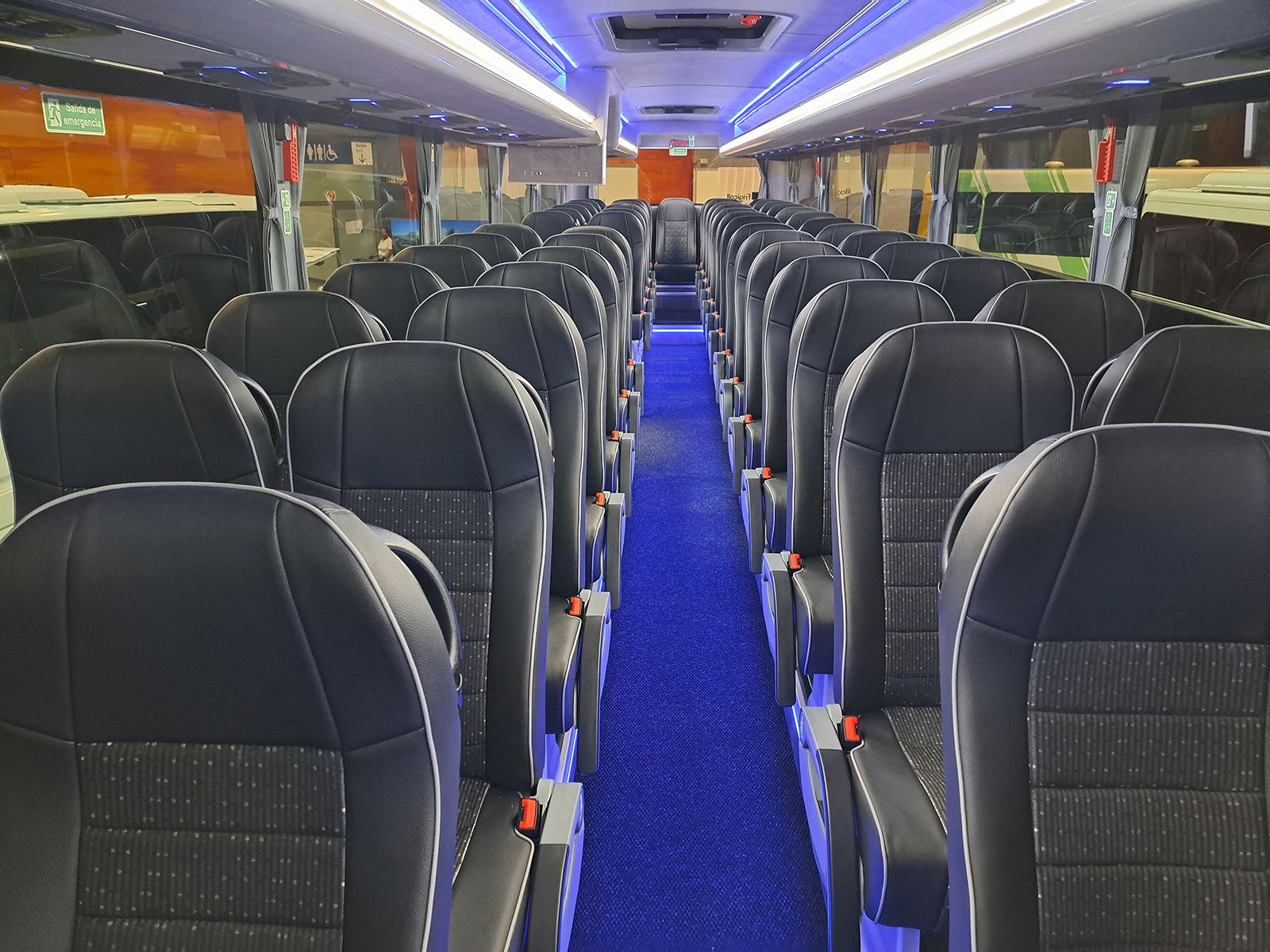
According to information provided by the manufacturer, the model will be produced in two lengths, with bodywork measuring 12.2 and 12.9 metres respectively; the vehicle exhibited in Madrid represents the longer version. Including the driver and courier/tour guide, the former can accommodate 55+1+1 people, while the long-wheelbase variant seats 59+1+1 – these figures exclude a toilet cubicle and wheelchair space. UNVI says it has paid considerable attention to the driving position and an ergonomic working environment. The options list includes features customary in this category, such as individual USB charging points, toilet, refrigerator or coffee machine, but equipment primarily recommended for scheduled services is also available, including electronic destination displays, CCTV camera system and remotely controlled luggage-compartment doors. Digital cameras can also be specified in place of conventional exterior rear-view mirrors.
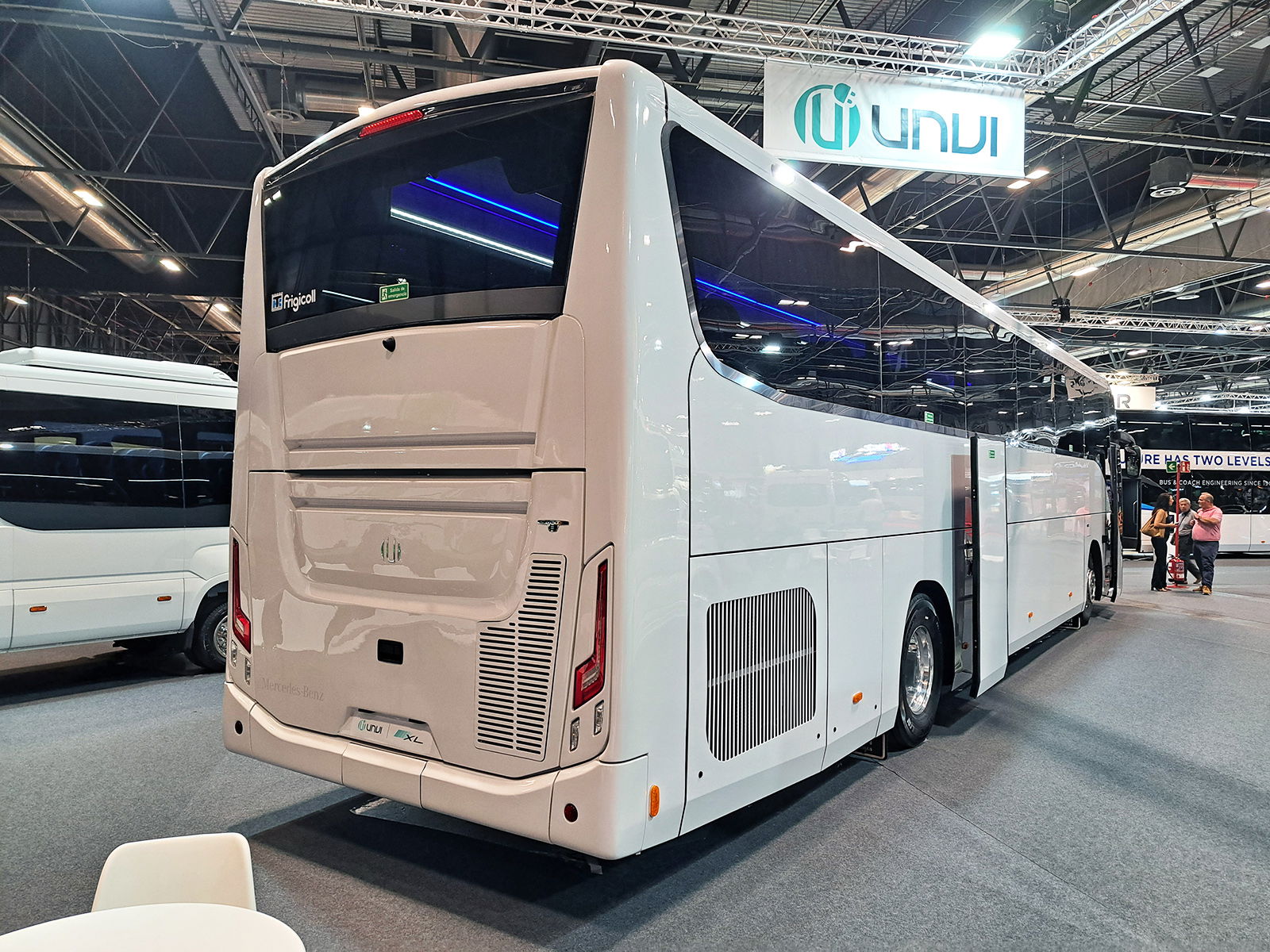
In terms of finish and material quality, the passenger compartment and dashboard are less refined than those of the coaches exhibited by larger manufacturers, including at this very event, while certain detail solutions have a small-scale, handcrafted feel. This is particularly noticeable given that UNVI is otherwise targeting the premium segment with this model, as indicated, for example, by the luggage-compartment doors that open parallel to the sidewall. Nevertheless, with suitable pricing, UNVI's coach could be an attractive proposition on the Spanish market, as demonstrated on site by the numerous interested visitors and potential customers. Propulsion is provided by the mechanical package supplied with the chassis: either the 7.7-litre Mercedes-Benz OM 936 or the 10.7-litre OM 470 diesel engine can be selected (the characteristic positioning of the engine-compartment ventilation openings may be revealing to the trained eye), with outputs of 299-354 hp (220–260 kW) and 395-429 hp (290–315 kW) respectively, although the larger engine will obviously be the more popular choice for long-distance applications. A ZF EcoLife 2 automatic transmission is fitted as standard. The advanced driver assistance functions (Advanced Driver Assistance Systems, ADAS) also come with the chassis; for example, the arrangement of the radar sensors in the front panel may likewise be familiar from Daimler Buses' own coaches.
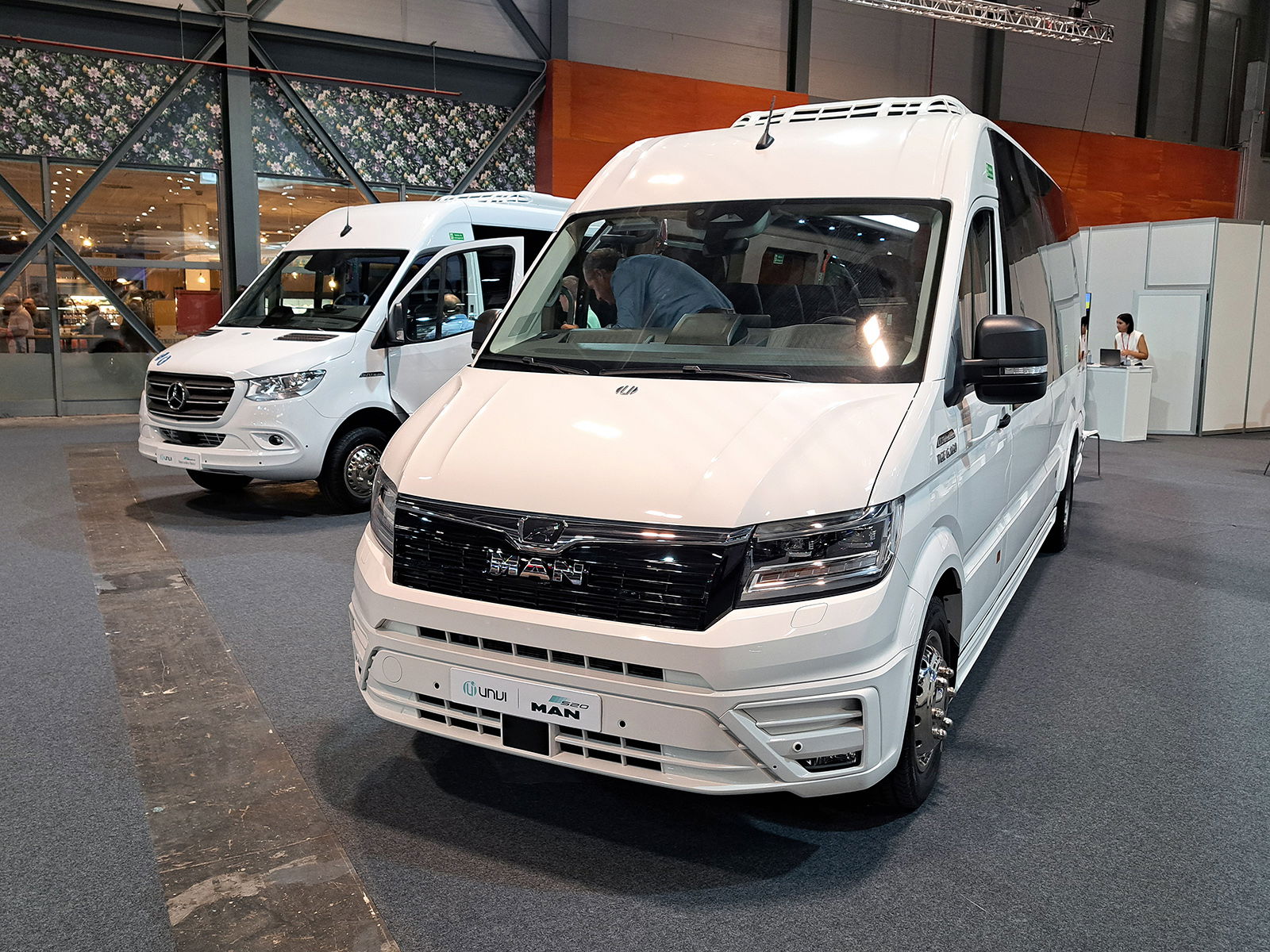
Alongside the XL coach, the current flagship of the range, UNVI also displayed in Madrid the S20 long-distance minibus, the smallest member of the product range, which can carry up to 19–22 passengers depending on the version and is based on a light commercial vehicle. To demonstrate the breadth of the range, it was shown in no fewer than three different versions, built on the Mercedes-Benz Sprinter, MAN TGE and Iveco Daily (Vendal) platforms. These small vehicles also play an important role in the portfolio of UNVI, which now has a history of more than 30 years and is capable of producing up to 600 buses annually.
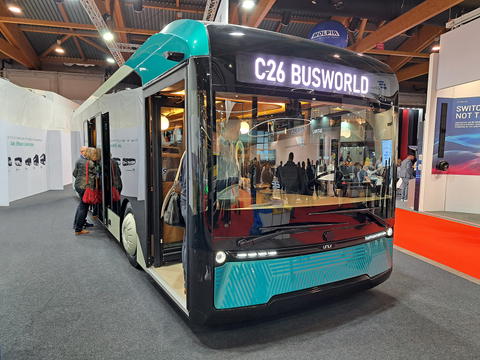
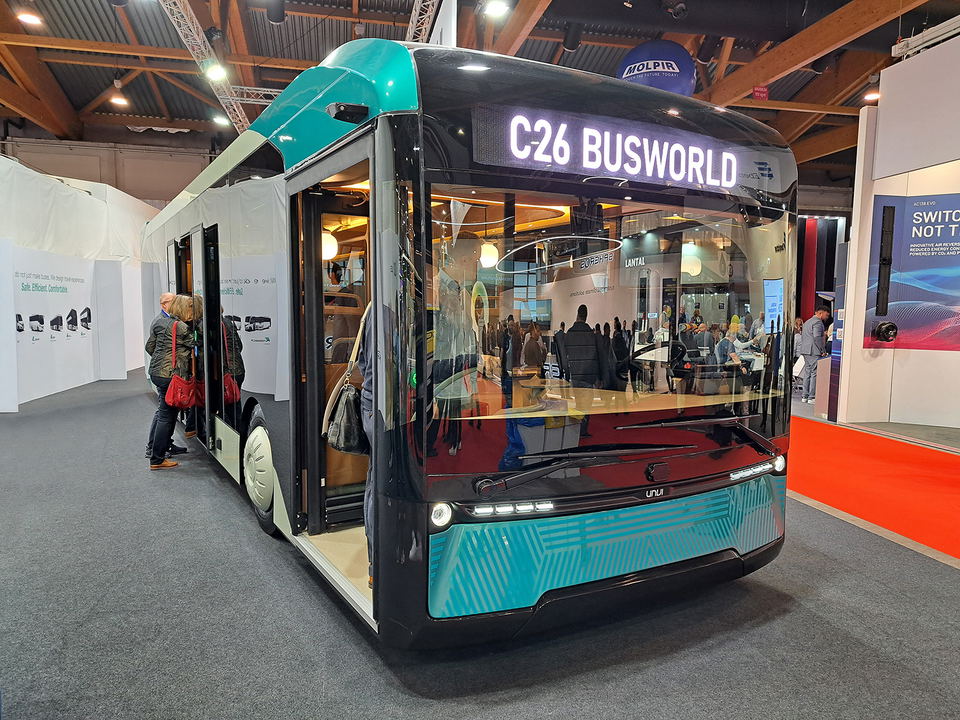
We also asked the manufacturer about the future of the UNVI C26 urban concept bus, which was warmly received at last autumn's Busworld Europe 2025 exhibition. In response, UNVI representatives said that although the striking vehicle did indeed receive positive feedback, they primarily regard it as a styling study, and other projects currently have greater priority, so the debut of a production version is only expected further in the future.