FIAA 2026: Iveco Bus enters new minibus segment
Months before the opening of the FIAA 2026 trade fair, held between 22 and 24 September, it was already known that Iveco Bus was preparing the European premiere of a brand-new electric bus type for the Madrid show. As nothing else had been shared about the new vehicle since then, it was not until the first day of the exhibition that it emerged that it was a compact minibus. With the product range unveiled under the eFlexy name, Iveco Bus aims to take on the steadily growing – predominantly Turkish – competition in the increasingly popular segment for small electric buses around 6 metres long, with the first customer vehicles promised for delivery in the first quarter of 2027.
Having renewed its full-size bus range, Iveco Bus has recently been focusing on mini- and midibuses. Following last autumn's Busworld Europe exhibition, it has once again introduced a new product in this segment, extending its range downwards. With the eFlexy product range, the company is entering the segment for electric minibuses with a maximum permissible gross vehicle weight of under 5 tonnes, in the M2/A and M2/B vehicle classes. Although the smallest member of Iveco's range to date, the Daily series, is a genuinely successful product and is also popular as a minibus base, the manufacturer needed an even smaller platform to complete its bus portfolio – preferably without having to start development from scratch in the interests of reducing costs. Iveco Bus engineers and decision-makers therefore looked at what they had available and ultimately chose the Fiat Ducato, a product of a former group sister company that is now part of the Stellantis Group (although there is still some overlap in ownership). Body-related production processes were entrusted to Olmedo, one of Italy's largest van conversion specialists, which knows the base vehicle well, as its portfolio includes ambulances and special vehicles alongside Ducato-based minibuses.
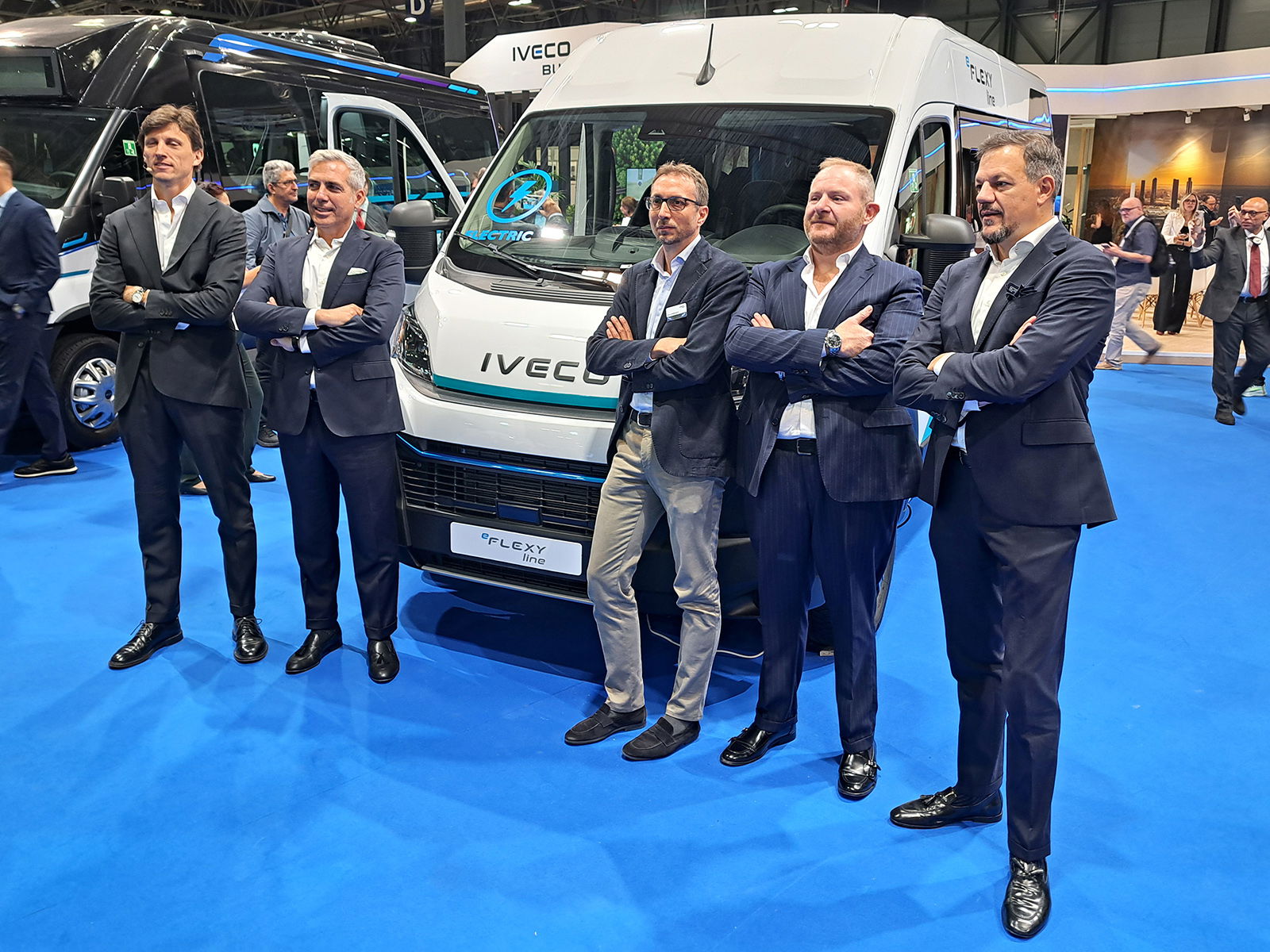
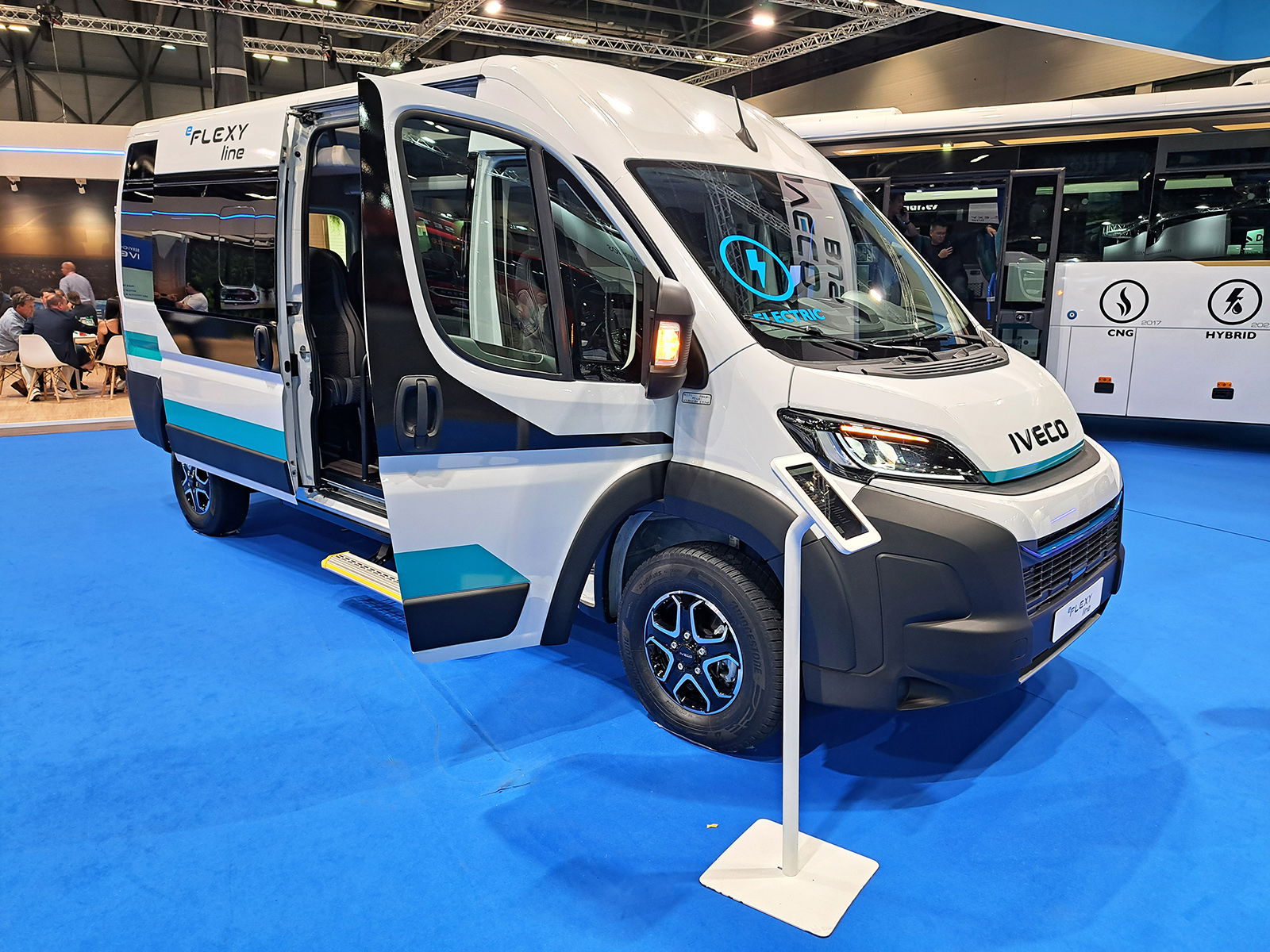
The new model will be offered in two basic versions. The M2/A-class eFlexy City variant, featuring a slightly taller body, a 1,200 mm-wide double-leaf passenger door and a destination display housing, is intended for urban use, as its name suggests. The eFlexy Line variant, classified as M2/B and equipped with a single-leaf sliding door and an electrically operated side step, is intended for interurban and shuttle services – it was this version that represented the model range at its Madrid premiere. According to the information displayed on site, this version is 5,998 mm long, 2,050 mm wide and 2,524 mm high.
Designed for city centres, restricted-access areas and demand-responsive urban services, the eFlexy City can carry up to 17 passengers, including passengers with reduced mobility, depending on specification. Access for the latter is assisted by a retractable hydraulic lift, installed beneath the threshold not at the passenger door but at the double-leaf rear door. The urban version comes as standard with Ruspa Citipro passenger seats, while the wheelchair space is located on the left-hand side at the rear of the passenger compartment. According to Iveco Bus, the interior layout maximises usable space for rapid passenger turnover and travelling comfort.
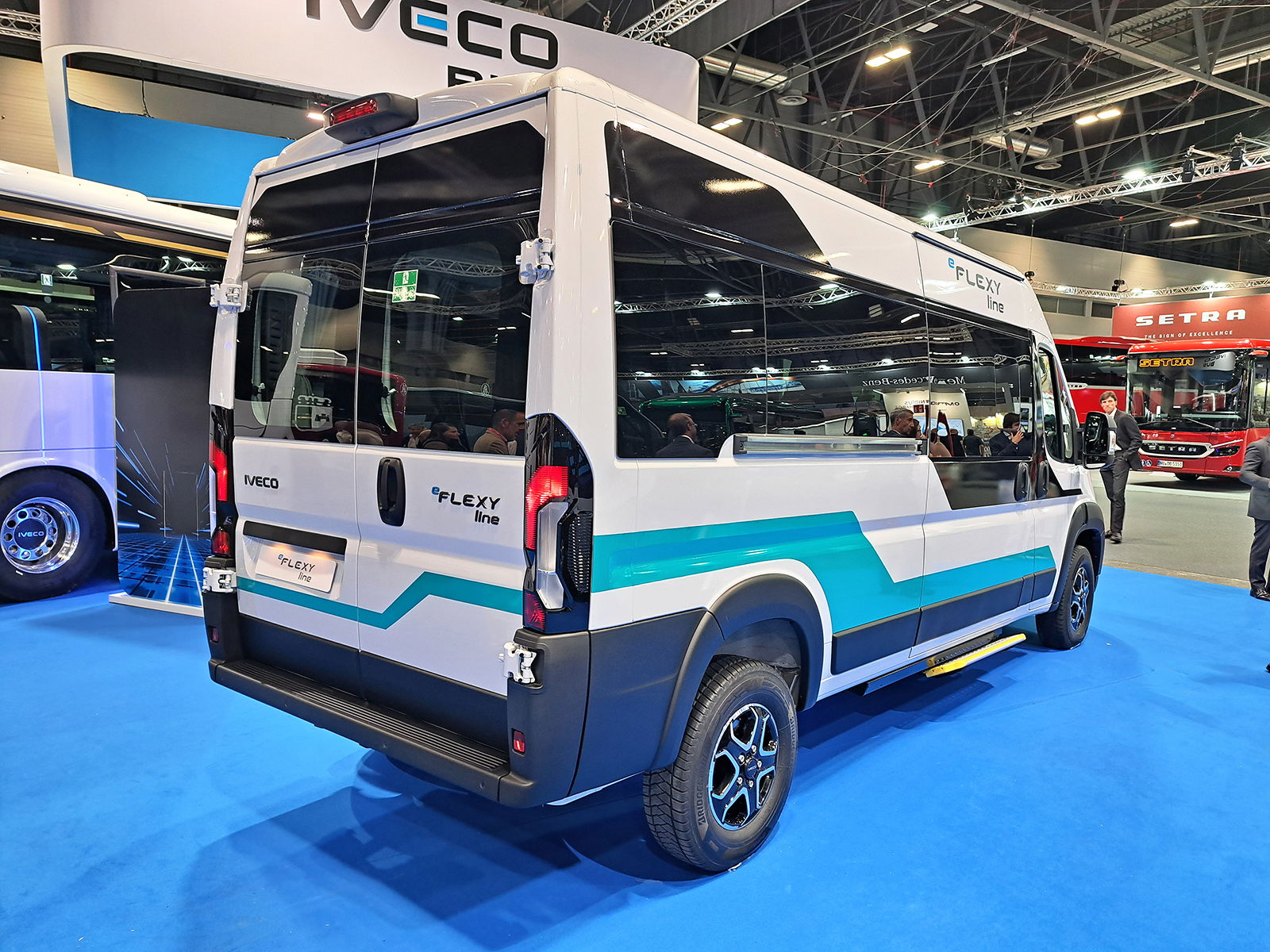
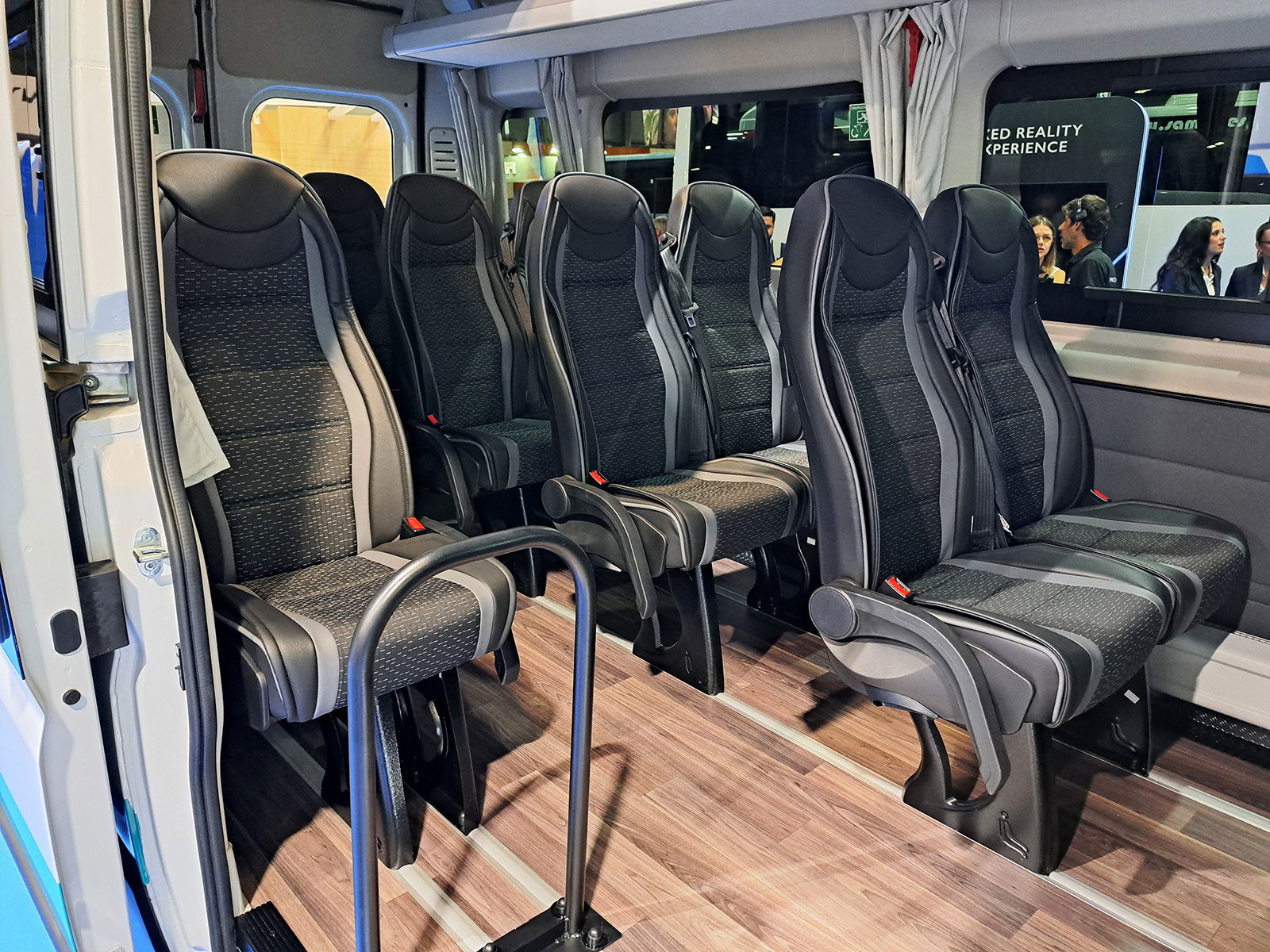
The eFlexy Line version displayed in Madrid, fitted with coach-style seats, accommodates 13 passengers in addition to the driver, and Iveco Bus recommends it primarily for interurban travel, daily commuting and shuttle services. Its passenger compartment also has a completely flat floor, and this version can likewise be equipped with a BraunAblilty hydraulic wheelchair lift, for which there is ample space beneath the floor thanks to the leaf-spring rear suspension providing generous ground clearance. Line passengers also have access to 3 m3 of luggage space, in addition to the overhead luggage racks.
The two subtypes share the same technical basis: energy storage is provided by a 110 kWh traction battery, which, according to Iveco Bus, delivers a range of more than 300 kilometres. A passenger-car-like feature is the option of 7.4, 11 or even 22 kW alternating-current (AC) charging, although 150 kW direct-current (DC) rapid charging is better suited to intensive timetables and bus operations in general. This can restore 80% of full battery capacity in one hour, or take on sufficient electrical energy for 100 kilometres of travel in 15 minutes. Both versions are powered by a centrally mounted permanent-magnet synchronous electric motor producing peak output of 205 kW and 410 Nm of torque. To maximise energy efficiency and range, the eFlexy offers three driving modes, while regenerative braking is adjustable in four stages, allowing operators to tailor the vehicle's operation to current traffic conditions and the nature of the route. The Level 2+ advanced driver-assistance systems (ADAS) supporting active safety comply with the latest European GSR regulations, while a range of connectivity and fleet-management functions shared with the larger eDaily model are also available for the new minibuses via the factory IVECO ON portal.
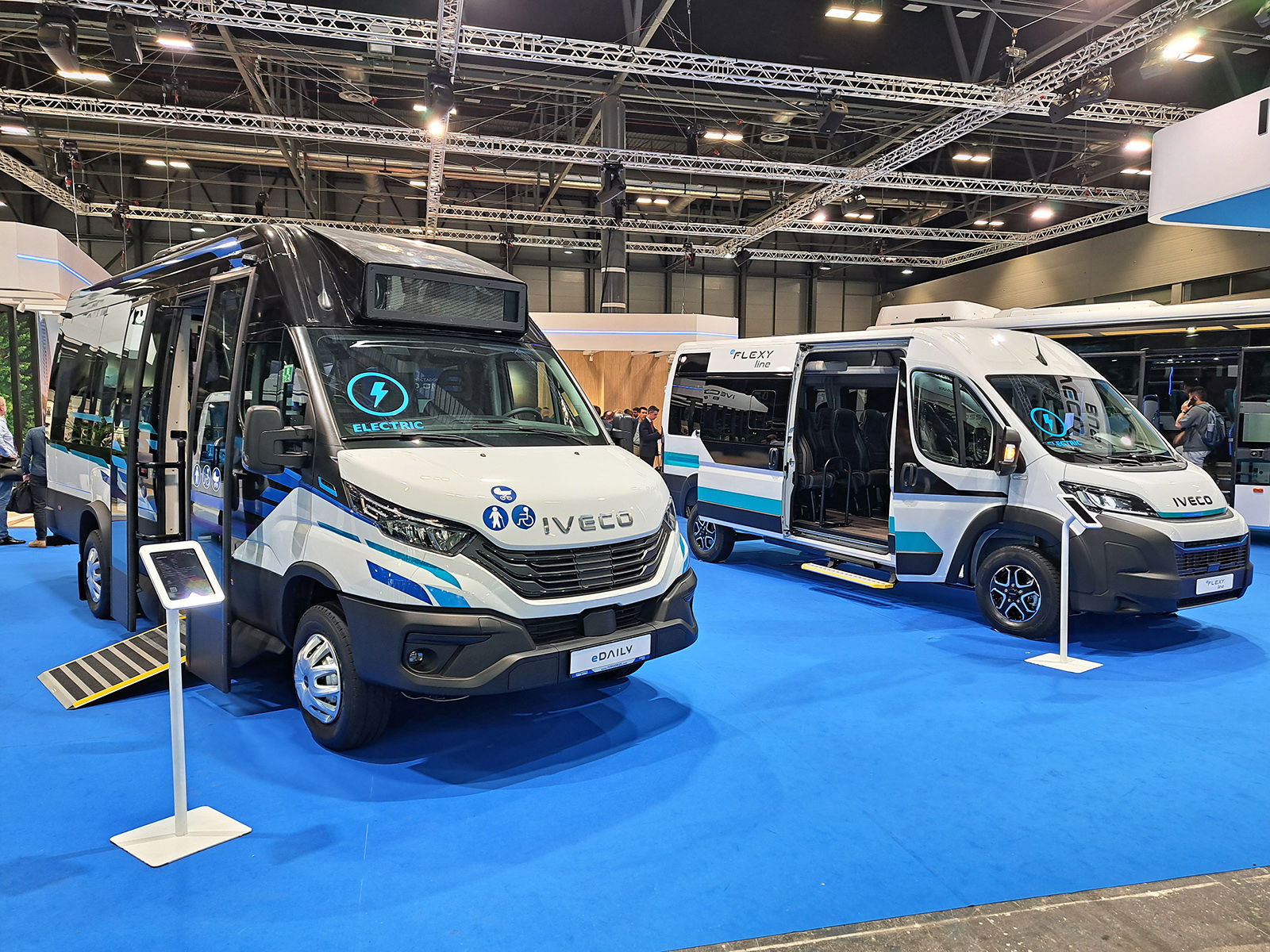
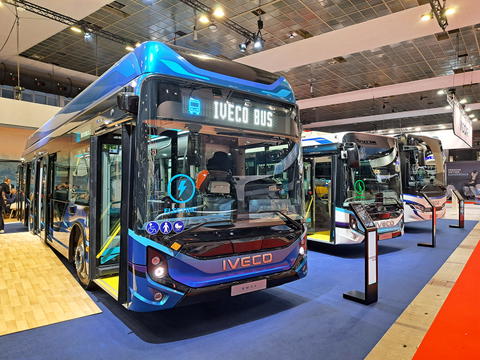
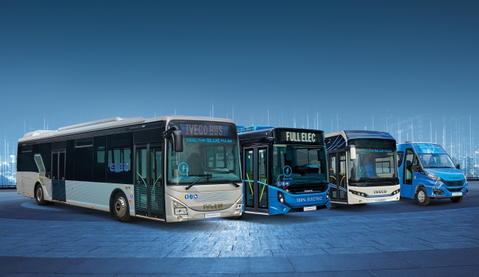
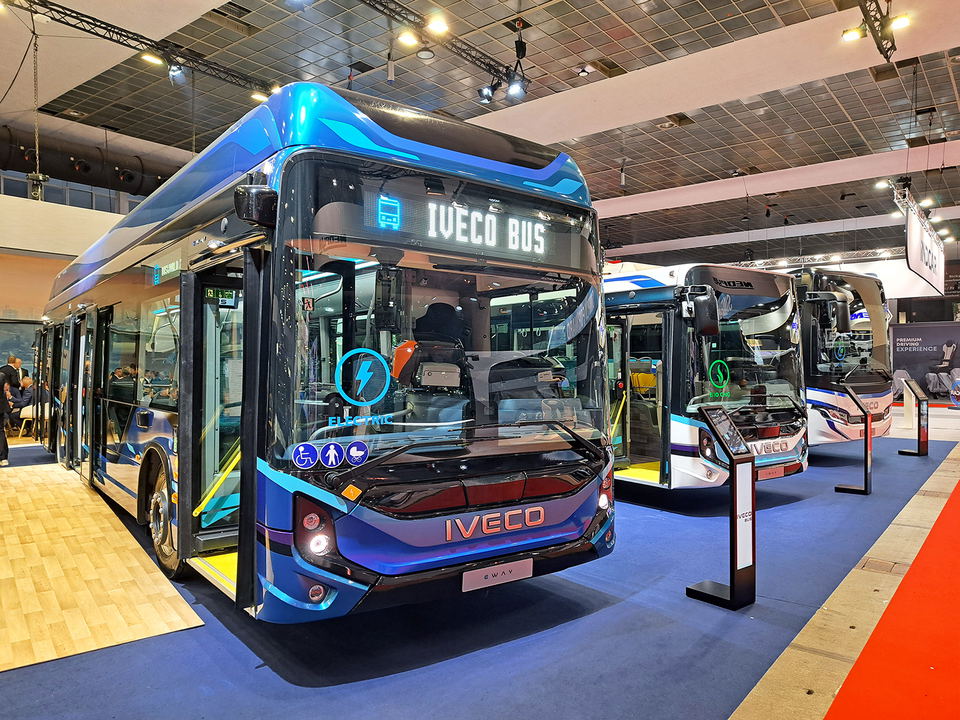
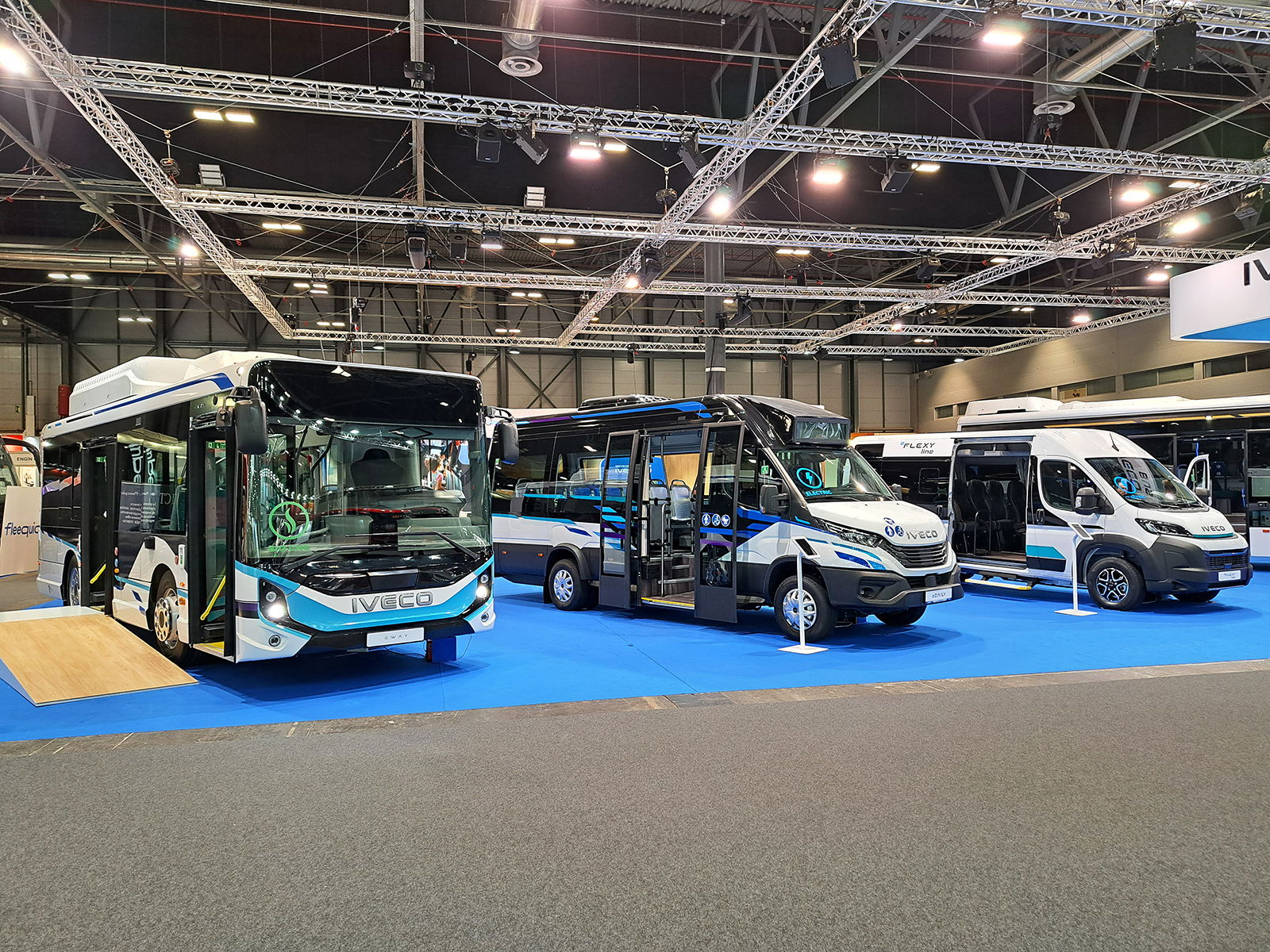
As an important player in the Spanish bus market and one of the largest exhibitors at FIAA 2026, Iveco Bus naturally also had its well-known models on its stand, displayed by the manufacturer with various drivetrains in line with its business strategy. The smaller members of the model range were represented by two types introduced last year: the 7.6-metre-long, all-electric eDaily Low Entry urban minibus and the next-size-up, gas-powered G-Way midibus, which is also available in a 10.7-metre version. We presented the technical characteristics of both vehicles in detail in this previous article.
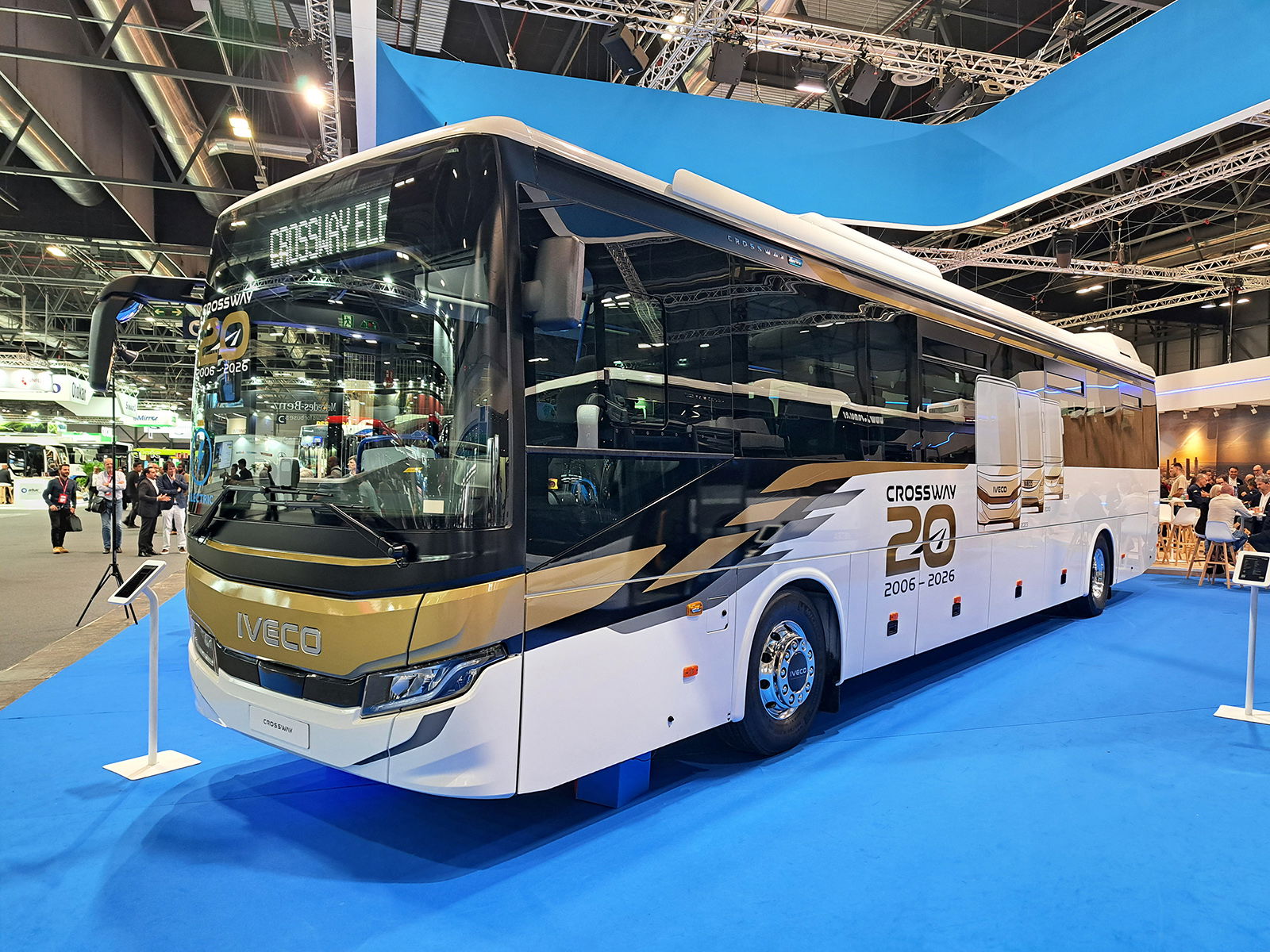
Of the members of the Crossway model family, which has been on the market for 20 years this year, Iveco Bus brought the flat-floor, all-electric Crossway ELEC electric bus, the low-entry Crossway Low Entry hybrid version, and the high-floor Evadys model, which serves as the flagship and features a more lavish coach-like specification. The first was displayed in a 12,962 mm-long version fitted with a 277 kWh battery pack, while the latter two types were represented by customer vehicles already sold, in the respective liveries of the Área Supramunicipal de Transportes de Toledo (ASTRA) network serving the Toledo area and the Auif Irunbus company.