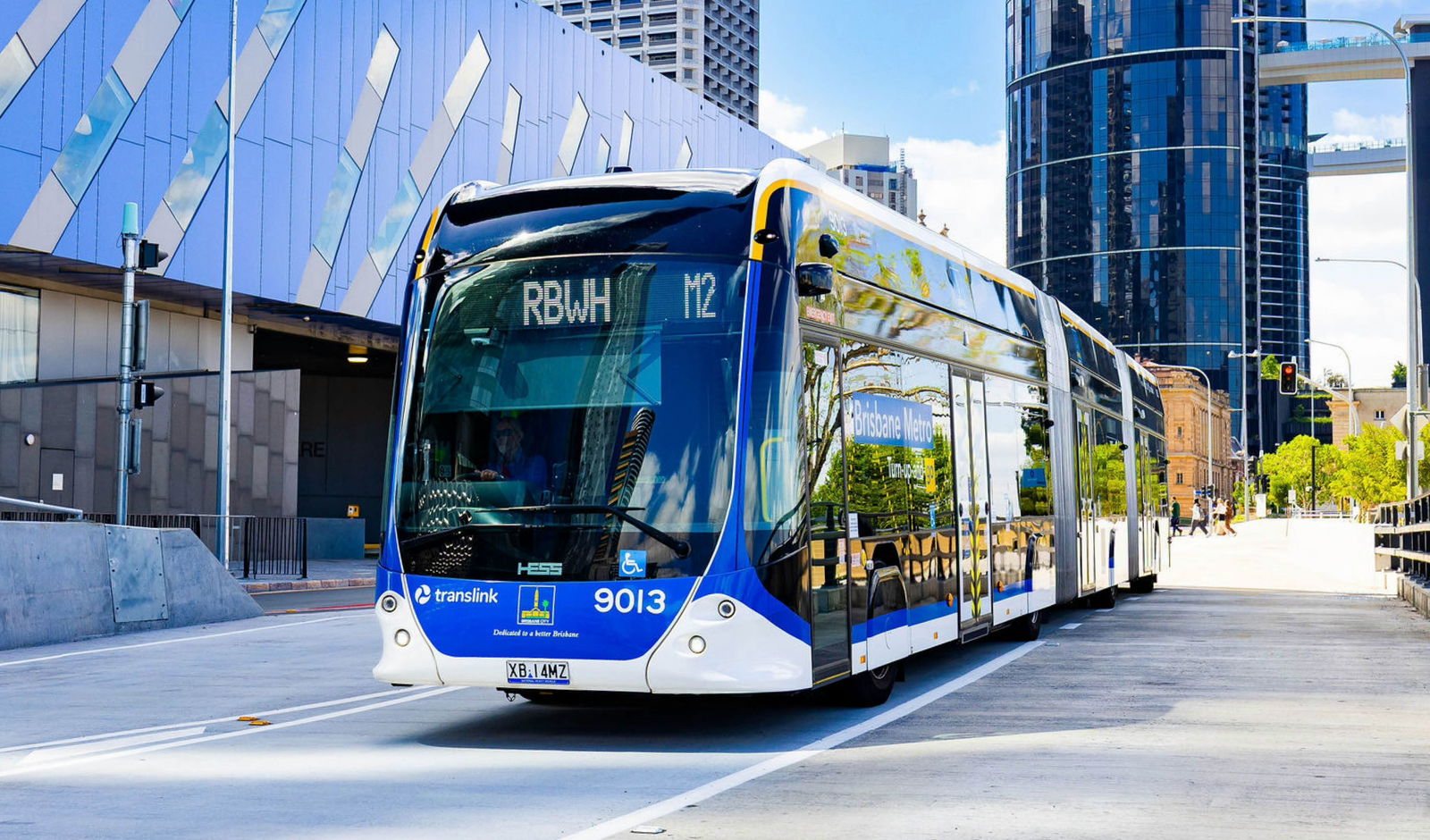
Brisbane Metro, based on Swiss Hess electric buses, receives industry recognition
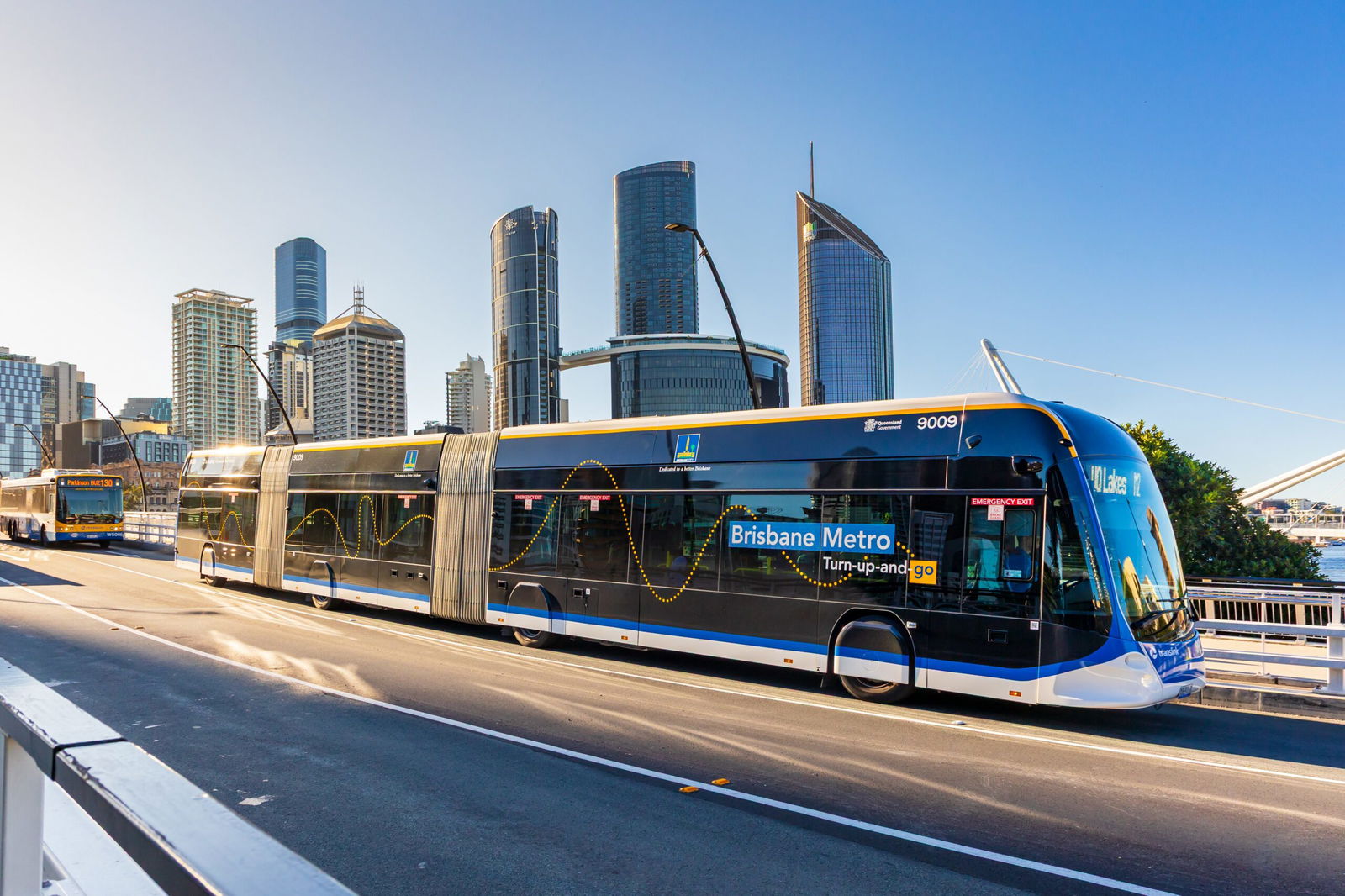
Brisbane’s high-capacity rapid transit system in Australia, based on fully electric buses, has received a prestigious industry accolade. The Brisbane Metro project received a Highly Commended award in the Project of the Year category at the Engineers Australia Queensland Excellence Awards ceremony held on 17 September. The award principally recognises the engineering solutions employed in the investment, the transformation of urban transport infrastructure and its role in advancing sustainable public transport. The project also has significant European industrial connections: Spanish and British companies contributed to the construction and design of the infrastructure, while the backbone of the system consists of double-articulated electric buses developed by Swiss company Carrosserie Hess AG. With these vehicles, Brisbane has introduced a transport solution offering substantially greater capacity than conventional articulated buses, while being more flexible to implement than rail-based systems.
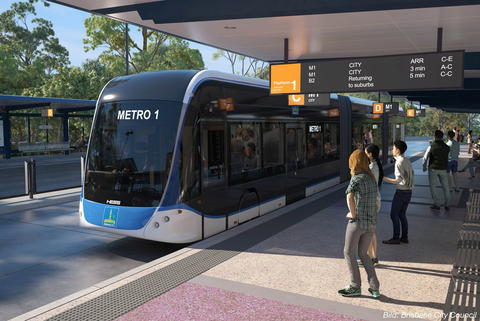
Despite its name, Brisbane Metro is not a conventional metro operation but a high-capacity BRT system based on segregated bus infrastructure. The investment was intended to relieve the city’s busiest transport corridors, make journey times more predictable and increase capacity on routes previously served by conventional buses. The development involved not merely replacing vehicles, but also required a substantial transformation of the existing transport infrastructure.
Construction of the project was led by the Spanish-backed construction and infrastructure development company ACCIONA within the Brisbane Move consortium, while the lead partner for the design work was British engineering consultancy Arup. One of the most important elements of the works was the construction of a new tunnel beneath Adelaide Street; several stations were also rebuilt, platforms were extended, and the charging infrastructure required to operate the electric vehicles was installed. As part of the investment, conditions for pedestrians and cyclists were also improved around Victoria Bridge, while several public spaces in the city centre were renewed.
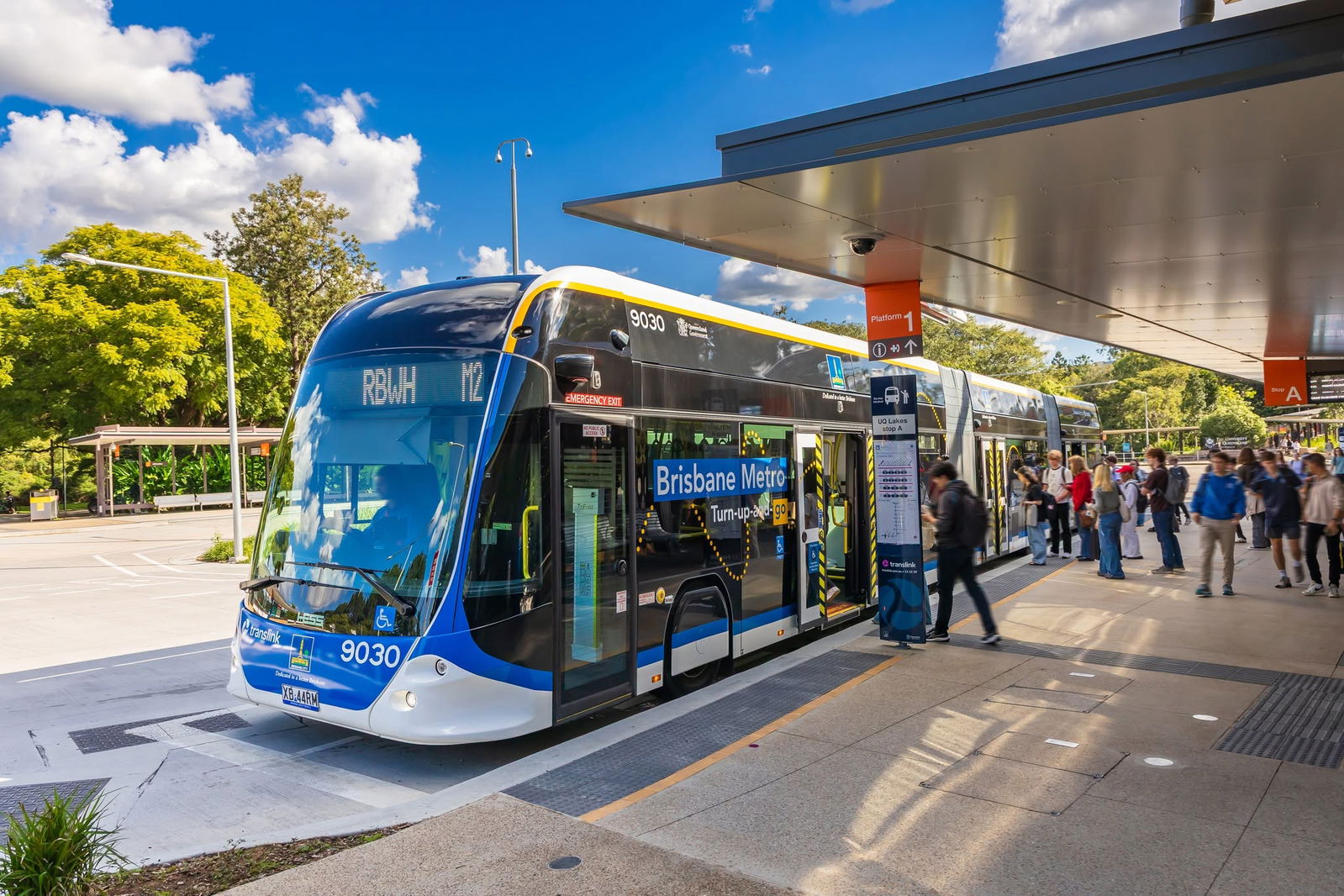
The current network consists of two routes, designated M1 and M2, which use a combined 21 kilometres of existing busway infrastructure and connect 18 stations. Among other destinations, the services provide direct links between Eight Mile Plains, Roma Street, the University of Queensland and the Royal Brisbane and Women’s Hospital. The service operates at five-minute intervals on weekdays and is available around the clock at weekends.
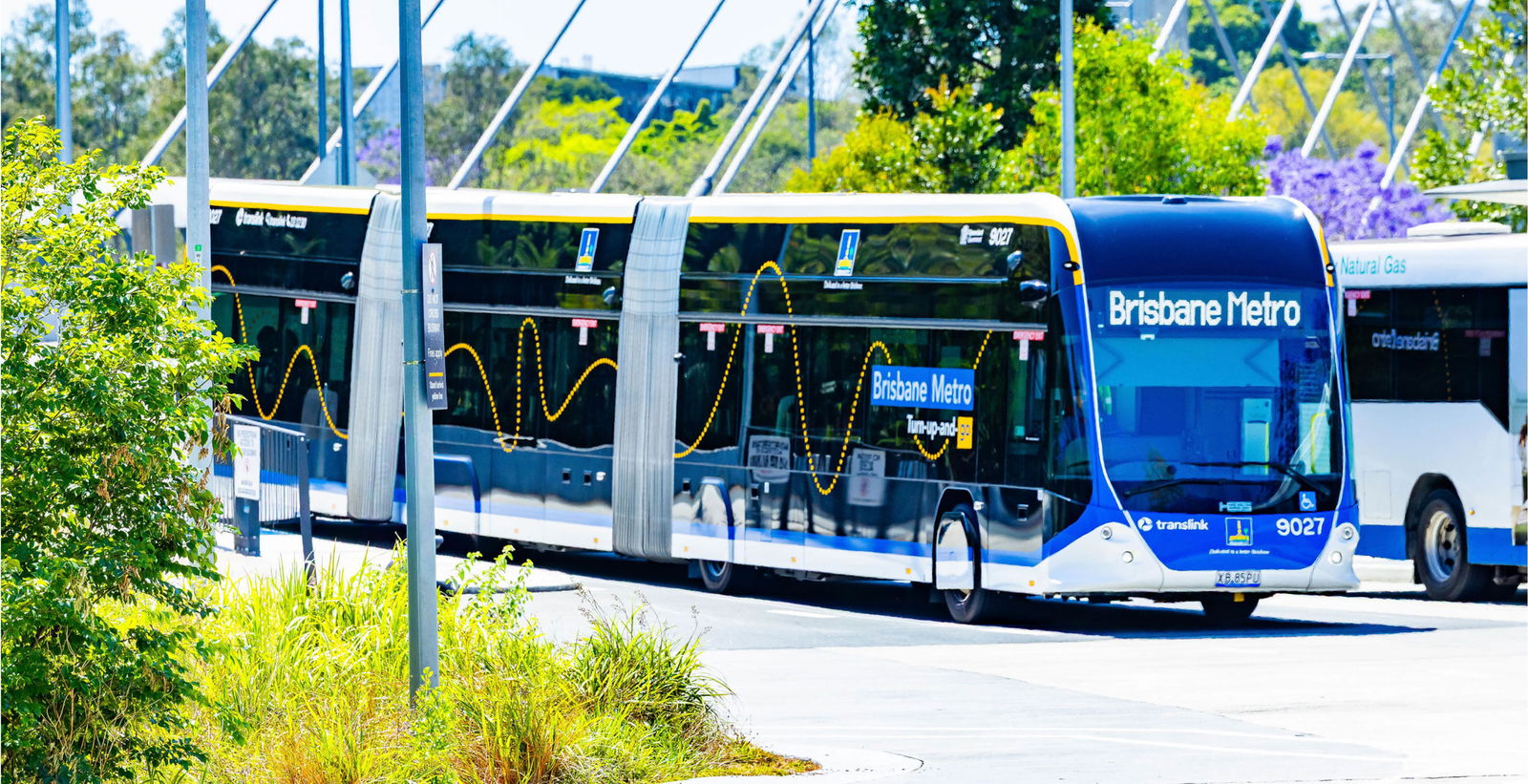
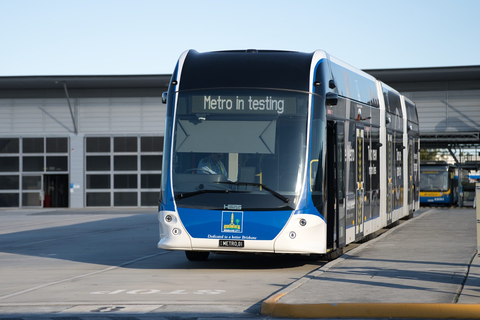
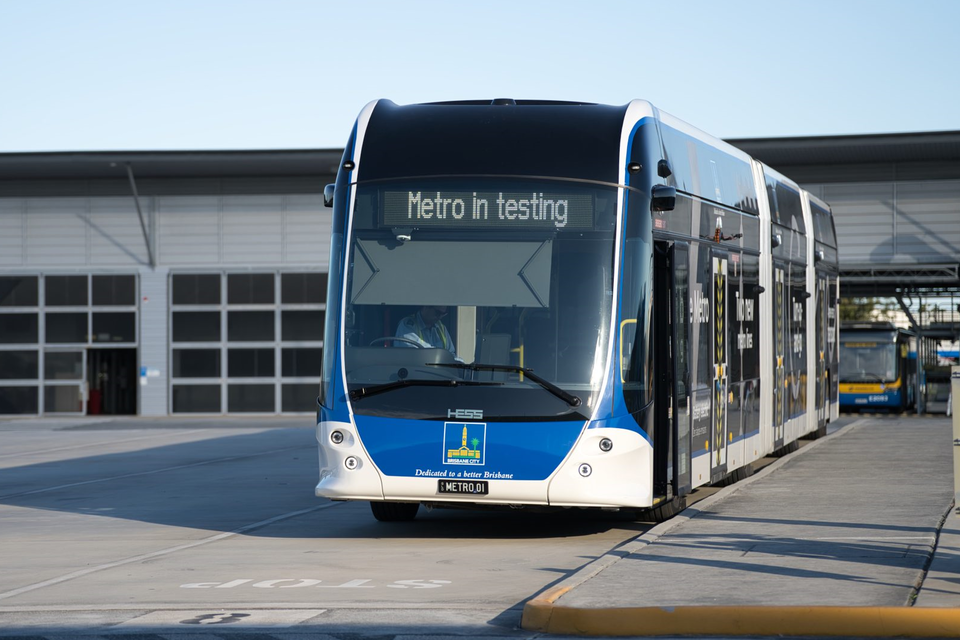
One of the system’s most important features is that its high passenger capacity is provided not by rail vehicles, but by electric buses developed specifically for this purpose. The fleet ordered for Brisbane consists of 60 Hess lighTram 25 TOSA electric buses. The 24.5-metre-long vehicles, which are low-floor throughout, have a capacity of up to 170 passengers. Thanks to their double-articulated design, their capacity substantially exceeds that of the conventional 18-metre articulated diesel buses previously used, which typically carried 100–120 passengers.
Brisbane Metro is therefore also a particularly significant reference project for Swiss manufacturer Hess. The manufacturer has been active in the European market for high-capacity electric buses and trolleybuses with its lighTram vehicle family for years, but the Australian order has also created an opportunity to deploy its technology in a new geographical region. The vehicles’ body structures and electrical systems were manufactured in Switzerland and Portugal, while final assembly and integration adapted to local requirements were carried out at Australian company Volgren’s Brisbane plant.
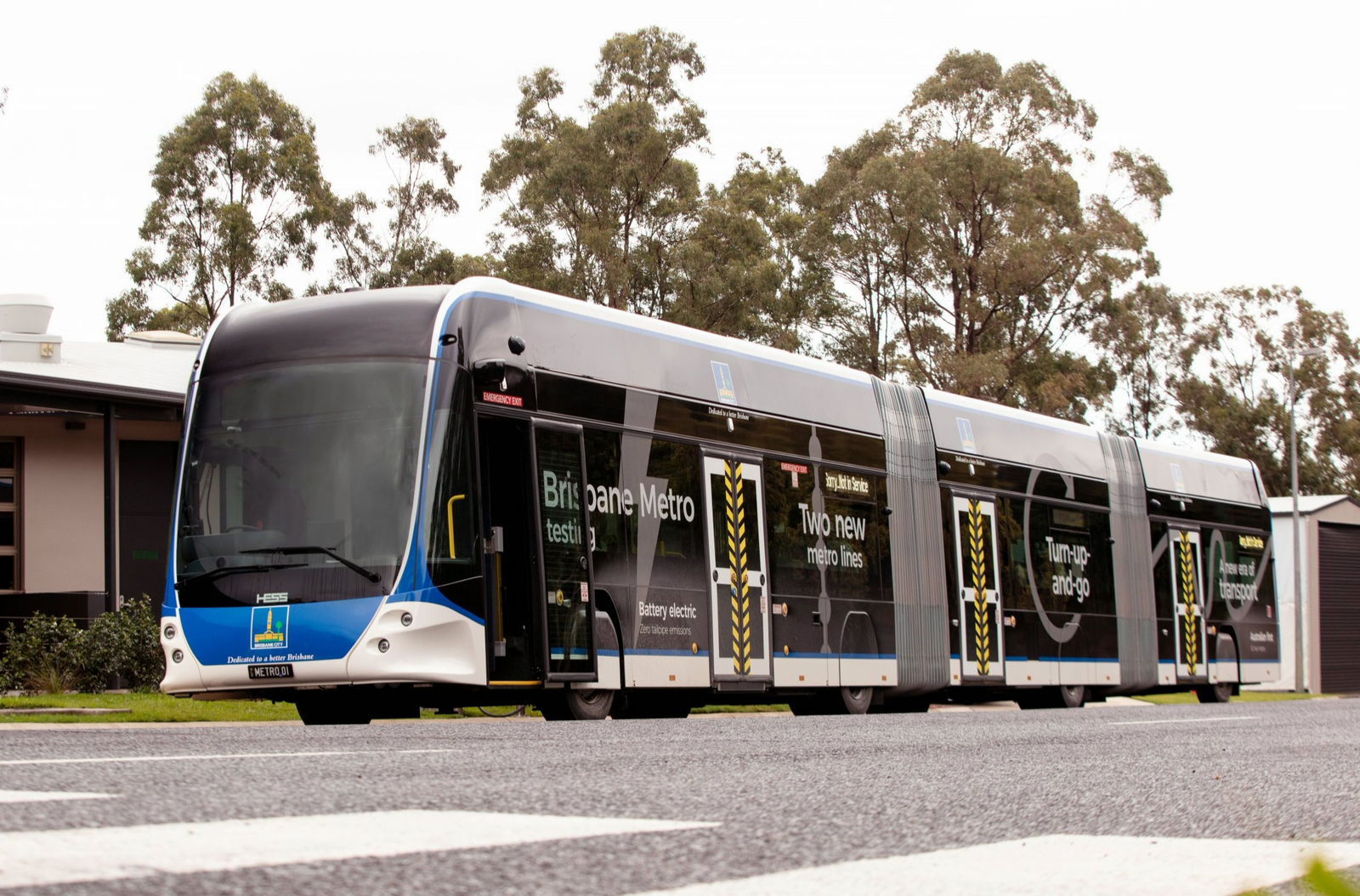
A further special feature of Hess vehicles is TOSA flash-charging technology. The system provides rapid replenishment of the batteries using charging equipment rated at up to 600 kW, installed along the routes and at termini. Thanks to the automatic roof-mounted connection system, the vehicles can be charged during passenger boarding and alighting, eliminating the need for exclusively large-capacity onboard batteries or longer daytime charging breaks for continuous operation.
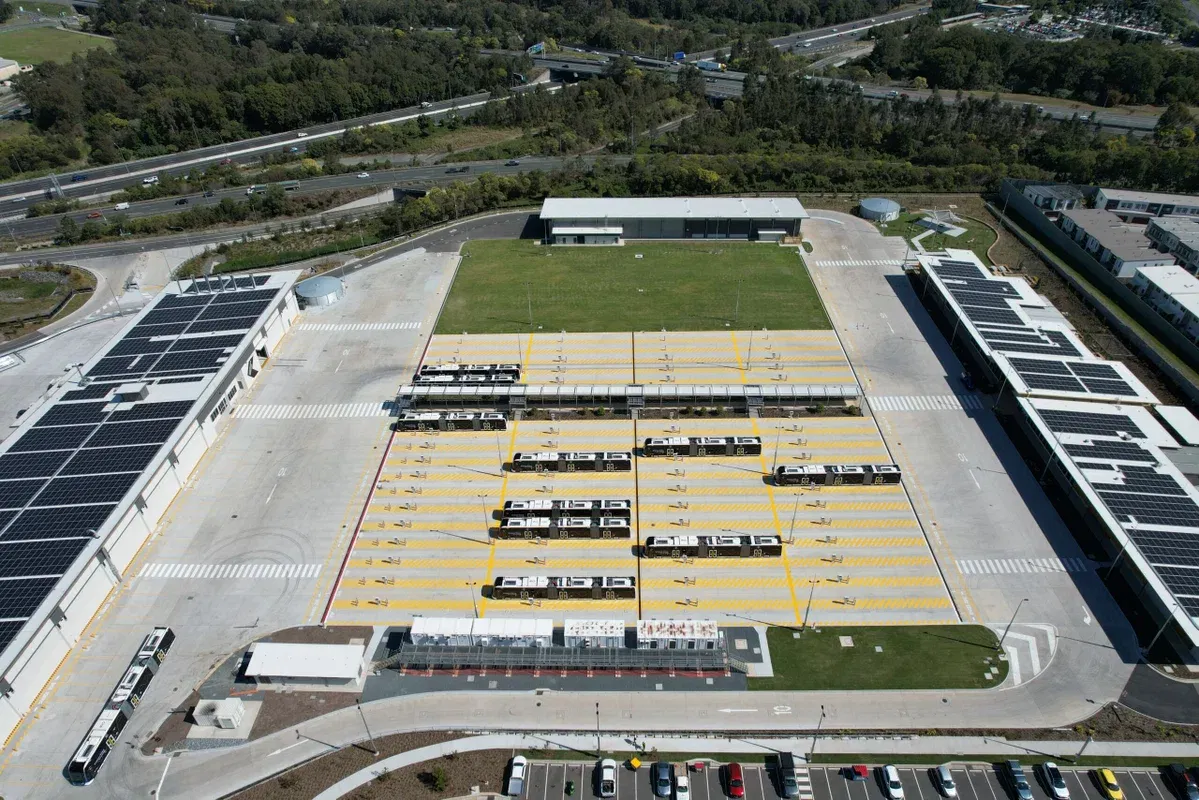
A dedicated operations centre has also been established in Brisbane to support the fleet. In addition to vehicle storage and maintenance, the Metro Operations Centre in Rochedale also handles overnight charging. The facility has 60 50 kW plug-in chargers and five rapid chargers, while energy consumption is controlled by an intelligent load-management system. More than 2,300 solar panels have also been installed on the depot roof, supplying part of the facility’s energy requirements with electricity generated on site.
Brisbane Metro’s first route, the M2, entered service on 28 January 2025 and generated significant passenger growth even in the initial period of operation. The new service replaced the former Route 66 express service and carried its one millionth passenger in little more than two months. The positive trend continued thereafter: in May 2026, the city authorities reported more than 10 million journeys across the two Metro routes, of which 6.68 million were made on the M2 and a further 3.32 million on the M1 route, which had meanwhile been introduced. Passenger numbers on the former were 46% higher and on the latter 43% higher than those of the previous bus services they replaced. The two routes are used by a combined average of around 35,000 passengers on weekdays, while particularly striking growth has also been recorded during evening and weekend periods. In the period examined up to July 2026, weekend patronage on the M2 more than doubled compared with the former Route 66, while the number of journeys on Friday and Saturday evenings increased by more than 160%. In addition to expanded vehicle capacity, the positive results have also been supported by network restructuring, more frequent services and the introduction of flat 50 Australian cent fares.
However, the latest industry recognition is not solely for Hess’s vehicles, but for the implementation of the entire transport system. One of the project’s most important engineering achievements highlighted by Engineers Australia is precisely that the high-capacity electric buses have been integrated into the existing transport network, with new tunnel and station infrastructure as well as dedicated charging solutions, to create a unified system.
Moreover, this is not the first time Brisbane Metro has received industry recognition. In May 2026, the investment also achieved an outstanding result in the Infrastructure Sustainability Council’s sustainability rating scheme: the completed infrastructure received a score of 89.02 points and a ‘Leading’ rating, the highest assessment achieved in Queensland to date. The technical solutions and material-efficient construction methods used during construction reduced life-cycle carbon dioxide emissions from the investment by almost 60% compared with the original concept, while asphalt recycling, reducing the cement content of concrete and other material-selection measures avoided almost 43,000 tonnes of emissions.
Furthermore, the development of Brisbane Metro is far from complete with the opening of its first two routes. Working with the Queensland and Australian federal governments, the city authorities have already begun preparations for a further expansion of the network, potentially covering four directions. New rapid transit links are being considered towards Carseldine via Chermside and Aspley in the north, Capalaba in the east, Springwood in the south, and Brisbane Airport. Preparations for the development are therefore already under way, although actual construction of the new routes has not yet begun.
In August 2026, the expansion programme was also included among Infrastructure Australia’s national infrastructure development priorities. The Australian federal government committed an Australian dollar 50 million contribution towards detailed planning and preparatory work. Based on a business case expected to be completed by August 2027 at a cost of around Australian dollar 36 million, the precise alignments of the individual routes, the required infrastructure developments, the location of new depots, and the order and timetable for implementing the investments may be determined.
One important driver for expanding the network is preparation for the Brisbane 2032 Olympic and Paralympic Games, although the city authorities have already indicated that not all planned developments may necessarily be completed by the start of the event. The additional routes may therefore be built in several phases, depending on the outcome of the detailed business case and the availability of the necessary funding. The expansion could also put fleet development on the agenda, potentially creating further business opportunities for Hess as supplier of the current fleet. However, no official announcement has yet been made regarding a further vehicle order or a specific supplier agreement.