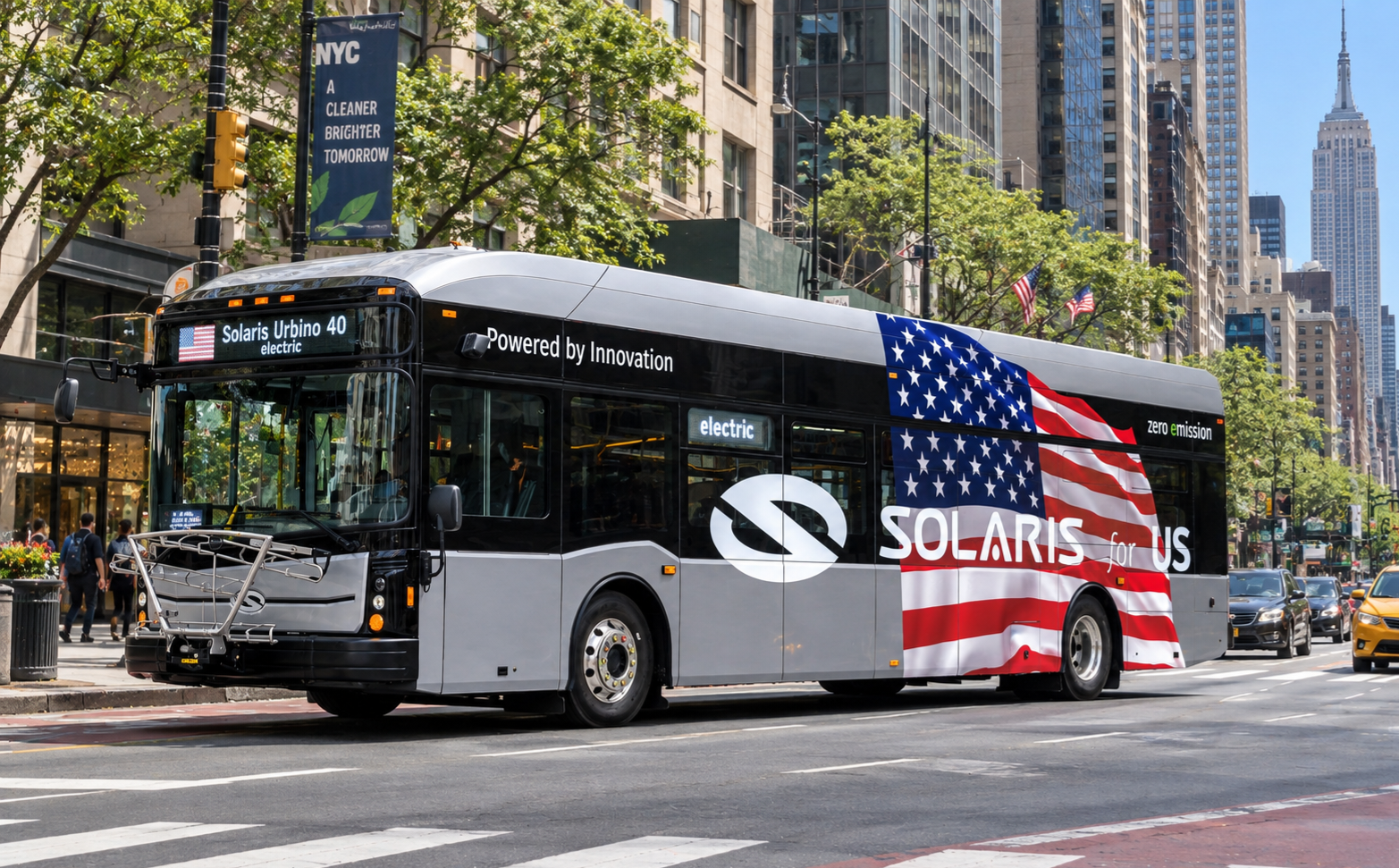
Solaris joins the race for the US bus market: Elmira plant is already operational
Solaris’s North American expansion has reached another important milestone: operations at the bus manufacturing facility established at its Spanish parent company CAF’s site in Elmira, New York State, began as early as June. With around 37,000 square metres of production space, the site could become the manufacturing hub for Solaris buses intended for the US market. The first ten battery-electric buses ordered will still be built in Poland, but longer-term plans already envisage US production, with the manufacturer considering not only battery-electric models but also hydrogen fuel-cell buses and trolleybuses.
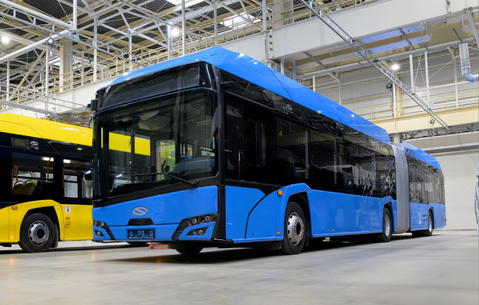
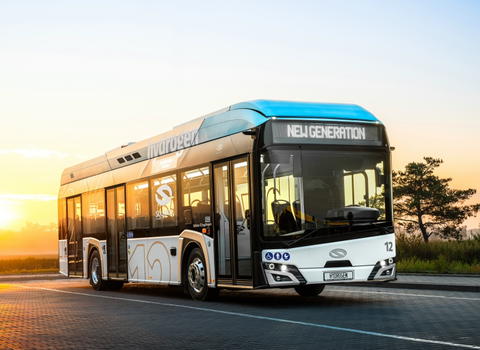
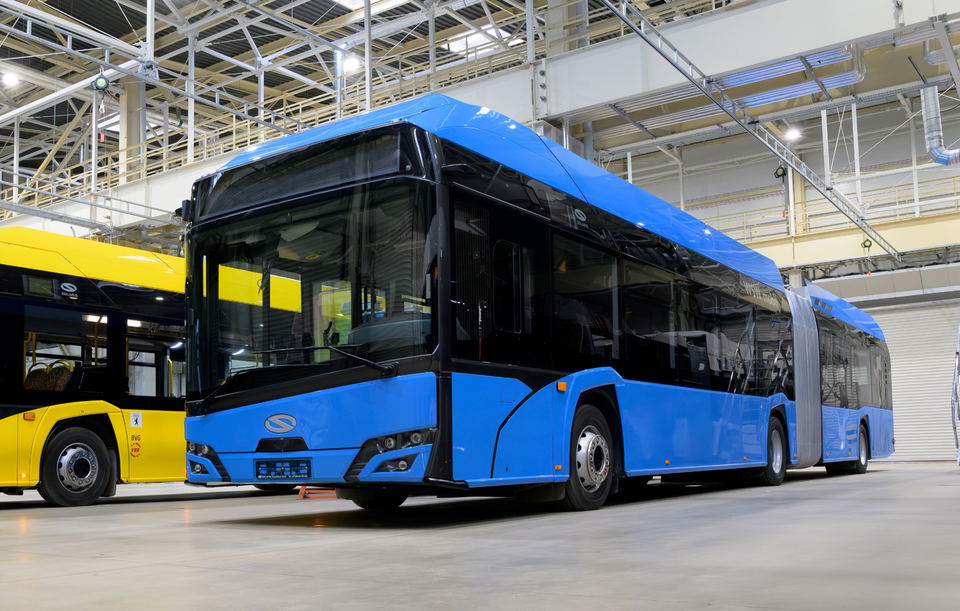
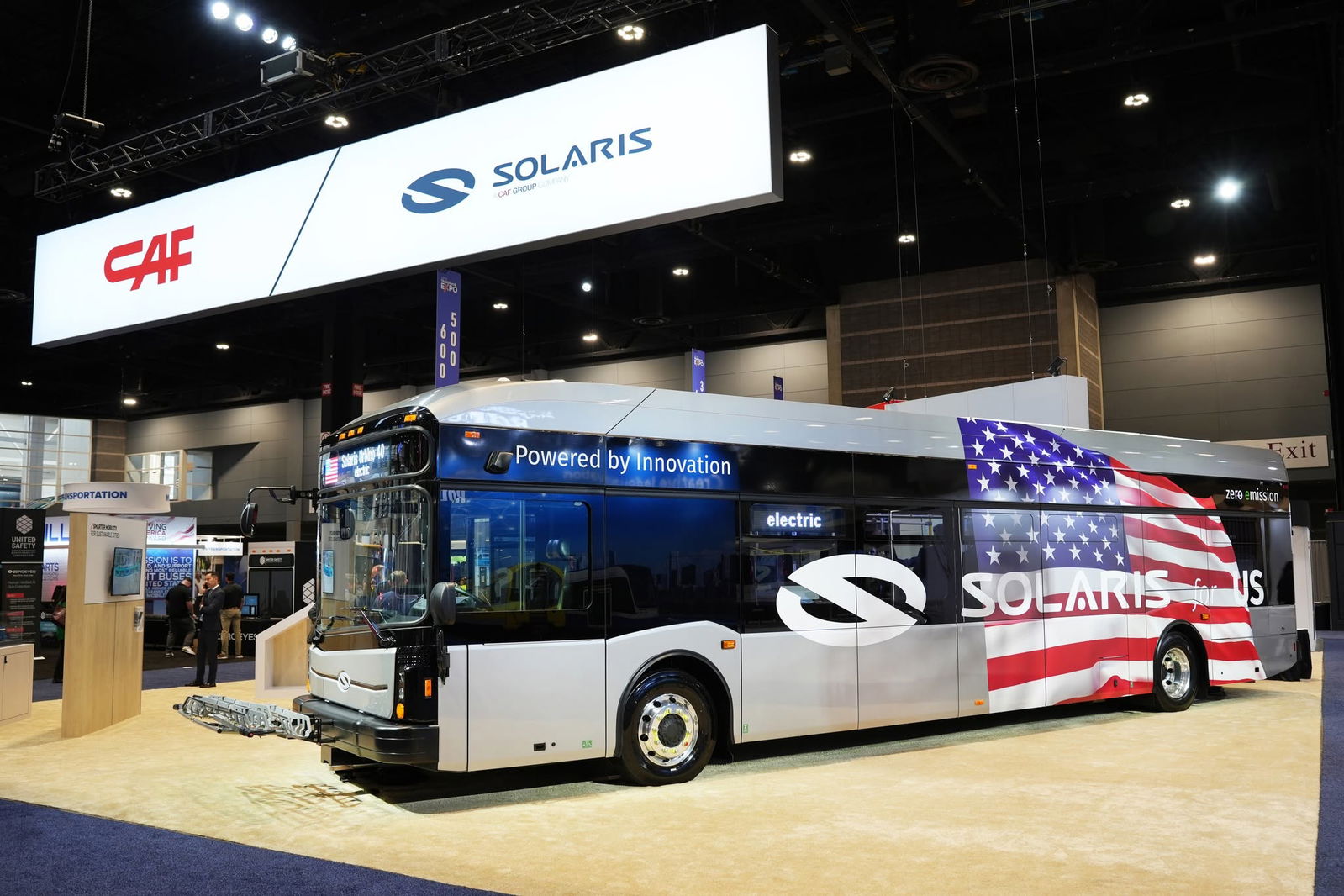
On 5 October, Solaris unveiled its Urbino 40 electric urban battery-electric bus, developed for the North American market, at the APTA TRANSform & EXPO exhibition in Chicago; it will later be followed by a 60-foot articulated version. However, the launch of the two models is only the first step in the Polish manufacturer’s long-term overseas strategy, the implementation of which requires the establishment of local manufacturing capacity and a supplier base. CAF’s existing US industrial infrastructure will play a decisive role in this, enabling Solaris to prepare not only for initial low-volume orders but also for serving larger procurements.
The industrial backbone for the expansion is provided by CAF’s plant in Elmira, New York State, where the Spanish group has been manufacturing and assembling rail vehicles for many years. The facility has recently also been adapted to meet the requirements of bus manufacturing, through the transfer of Solaris production technology and the installation of the necessary equipment. According to information from Agata Stańda, Solaris’s CEO, the new bus manufacturing unit began operations in June 2026. In the meantime, the company has also been entered in the US Federal Transit Administration (FTA) vehicle manufacturer registry, another important step towards establishing a lasting presence in the US public transport market.
The Elmira site has around 400,000 square feet, or approximately 37,000 square metres, of production space available. A separate building has been created for buses, equipped, among other things, with painting and washing bays, climatic chambers, and testing equipment required for the inspection and examination of vehicles.
However, the plant’s June start-up does not necessarily mean that series production of Solaris buses has actually begun. The manufacturer has not yet provided clear information on whether the first bus assembled in Elmira has already been completed. It is likely that the facility is currently still preparing production, setting up technological processes and possibly conducting pilot production, while the actual start date of series production remains unknown.
Solaris’s first US customers are the Seattle-area operator King County Metro, and the San Francisco Municipal Transportation Agency (SFMTA). The former ordered two rigid and two articulated buses, while the latter ordered three of each from the new model range, bringing the two procurements to a total of ten buses. The initial batch will still be built at Solaris’s plant in Poland, with delivery of the vehicles destined for Seattle planned by the end of 2026 and those for San Francisco in spring 2027. These relatively low-volume orders are primarily intended to introduce the models in the US and gain local operating experience, but they may also provide an important reference for subsequent larger-volume procurements.
The timing of Solaris’s entry into the US market is far from accidental. The number of manufacturers in the North American urban bus market has declined significantly in recent years: following Proterra’s bankruptcy, the end of Nova Bus’s US production and ENC’s earlier withdrawal, the market for large urban buses is essentially dominated by two major players, New Flyer and Gillig. The restricted supply is further exacerbated by the substantial order backlogs faced by the remaining manufacturers, which have led to long delivery times. According to a report published by the US Government Accountability Office (GAO) in 2025, some transport operators faced waiting times of up to two years when procuring new buses. Solaris’s arrival may therefore also be important for customers, as it could bring additional manufacturing capacity and a procurement alternative to a highly concentrated market. This was also emphasised by King County Metro CEO Michelle Allison when the first contract was announced, describing the agreement with the Polish manufacturer specifically as one possible means of alleviating the shortage of bus manufacturing capacity. The Polish manufacturer has also established a separate company, Solaris North America, headquartered in Washington, to coordinate its activities in the region. According to the company’s president, Fernández, North America also has a prominent role in CAF’s strategy to 2030 as one of the world’s most significant public transport markets.
However, establishing US production is not merely a business consideration but also a fundamental prerequisite for access to the local market. In the United States, transport vehicle procurements supported by federal funding are subject to strict domestic manufacturing requirements laid down by the so-called Buy America regulations. Under the requirements applied by the Federal Transit Administration (FTA), the US content of components and subassemblies installed in buses, calculated on a cost basis, must exceed 70%, while final assembly must also be carried out in the United States. Steel and iron products are additionally subject to particularly stringent origin requirements: the entire manufacturing process for the products concerned, from production of the raw material to final processing, must take place in the United States.
Ikarus had already encountered the difficulties of entering the US market in the 1980s. At the time, bus procurements financed from federal funds required 50% US content, which was why Ikarus 286 buses intended for the North American market received numerous locally manufactured major components, including Cummins diesel engines, Allison automatic transmissions, Rockwell axles, Sheppard steering gears and Westinghouse braking systems. The requirements were tightened further in 1991, when the required US content rose to 60%, meaning that the later Ikarus 400 series and subsequently NABI buses relied on US suppliers to an even greater extent. Since then, however, US manufacturing requirements have become so stringent that local production has now become virtually indispensable for participation in bus procurements financed from federal funds. As a result of the stricter rules, NABI’s former manufacturing model, based on the US assembly of bus bodies manufactured in Hungary, would no longer comply with Buy America requirements in its unchanged form.
The purpose of the regulations is to ensure that investments made using federal public funds support US industry and job creation to the greatest possible extent. Waivers from the requirements may only be granted under specified conditions, for example where no suitable US manufacturer is available, in the public interest, or where the use of US products would increase the project’s overall cost by more than 25%. Solaris’s first ten buses can still be built in Poland because these procurements are not financed from federal funds subject to Buy America provisions.
For Solaris, however, establishing local assembly alone does not guarantee long-term market success. Building a US supplier base, securing local sourcing of the necessary components, and establishing an appropriate service and spare-parts supply network will be equally important. In the case of zero-emission buses, all this is a particularly complex task, as alongside the technical compatibility of batteries, power-electronics systems and charging equipment, maintenance support and staff training also play a decisive role. The Elmira plant may therefore provide the industrial foundation for market entry, but lasting competitiveness will also require the establishment of a comprehensive local supplier and service network.
Solaris’s longer-term objectives also include securing higher-volume US orders. According to information presented at the San Francisco transport operator’s board meeting in August 2025, Solaris was already working at that time to secure a significant order for US-built buses, while also aiming to join state-level cooperative purchasing schemes. The latter allow transport operators to obtain the vehicles they require under framework contracts already concluded, without conducting an independent, full-scale public procurement procedure.
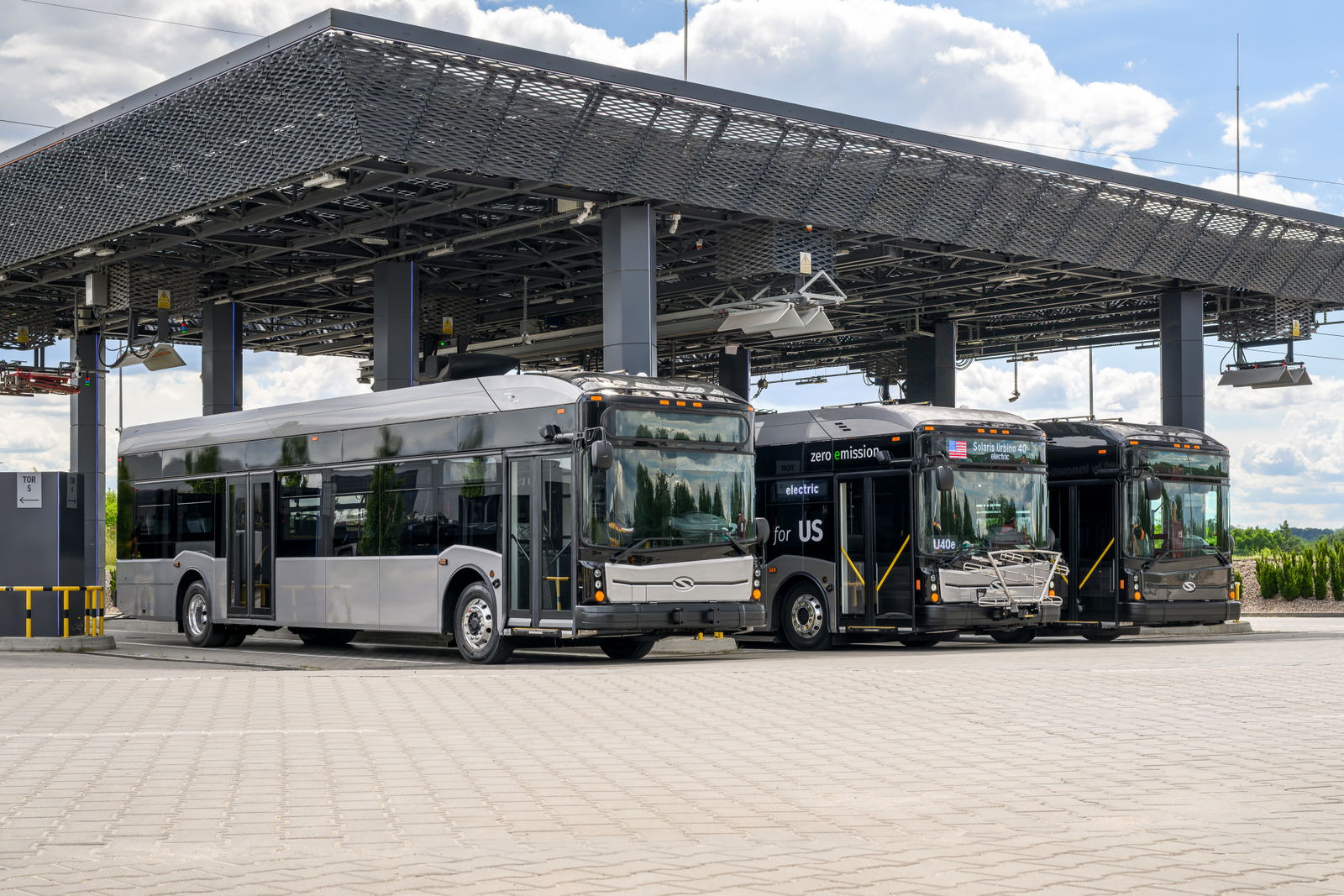
Moreover, the Poles’ North American plans are not limited to battery-electric buses. In the longer term, the company envisages three zero-emission vehicle categories for the local market: battery-electric buses, hydrogen fuel-cell buses and trolleybuses. This is in line with the manufacturer’s European product strategy, in which alternative propulsion systems have played a defining role for years. Solaris already has a North American reference in the trolleybus sector, as the Canadian city of Vancouver’s transport operator, TransLink has placed a substantial order with the Polish manufacturer.
Solaris’s US market-entry programme began in 2023, during the administration led by Joe Biden, when US federal transport policy expressly encouraged the electrification of public transport and the uptake of low- and zero-emission vehicles. The infrastructure investment law adopted in 2021 provided substantial additional funding for modernising bus fleets and developing the energy-supply infrastructure required for electric and hydrogen-powered vehicles. This created a favourable environment for a manufacturer that had already based its North American product offering on zero-emission propulsion systems.
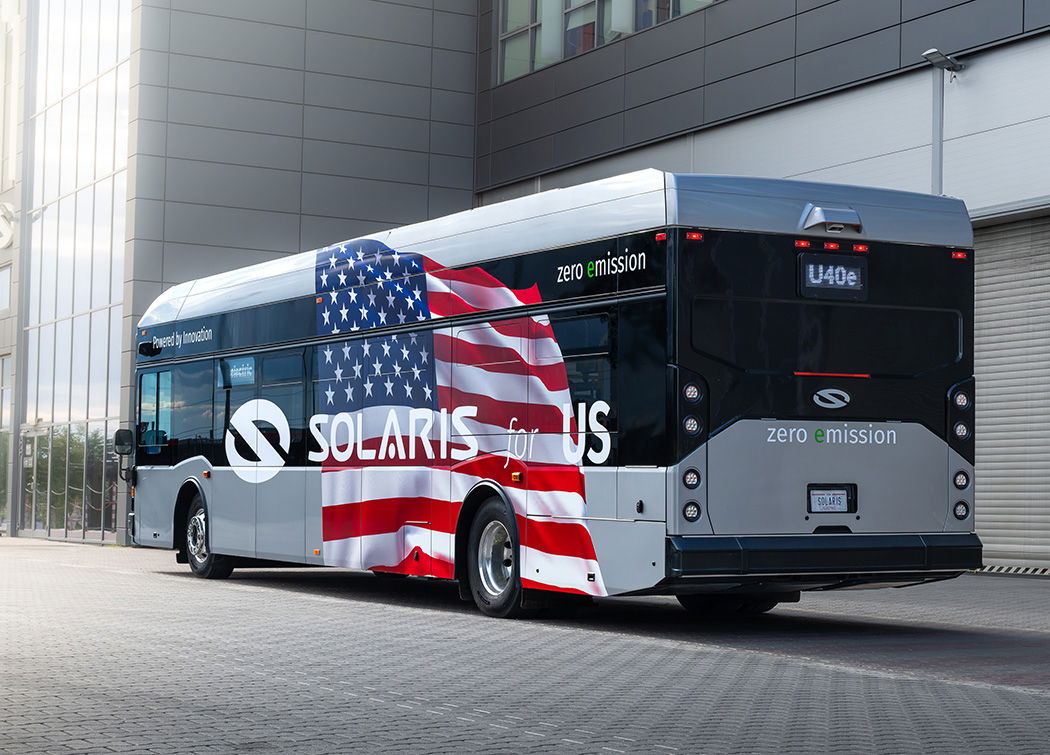
However, the political environment has since changed considerably. Under the Donald Trump administration, which took office in January 2025, energy policy has once again prioritised encouraging the extraction and use of fossil fuels, while several measures supporting electromobility introduced by the previous administration have been reviewed or scaled back. This change in approach may pose a serious challenge for Solaris, as the company’s US strategy is based exclusively on zero-emission buses. The realignment of federal priorities could particularly affect the funding of future procurements and the development of demand for alternative propulsion systems.
Some elements of the previous support system nevertheless remain in operation. These include the Low or No Emission Vehicle Program, which provides federal funding for the procurement of low- and zero-emission buses and the development of associated infrastructure. In summer 2026, the FTA announced a further funding package of approximately $610 million for buses and related facilities, of which around $589 million was set aside for the programme supporting low- and zero-emission vehicles. Funding therefore remains available, but its use is not restricted solely to battery-electric and hydrogen-powered buses, meaning that the technologies offered by Solaris must also compete with other propulsion systems that are likewise eligible for support.
The transport development objectives of individual states and major cities may therefore become particularly important for Solaris’s US expansion. California and Washington State, for example, may continue to represent important markets for zero-emission buses, particularly among operators that have already begun electrifying their fleets. One of the Polish manufacturer’s most important tasks in the coming years will be to secure further orders on the basis of operating experience with the first ten vehicles and, by ramping up production in Elmira, prepare to serve larger-volume procurements.