We tested Daimler Buses’ active safety systems at an ITE Bus & Truck event
The latest safety solutions for Mercedes-Benz and Setra coaches took centre stage at the domestic importer of the aforementioned brands, the Safety Coach 2026 driver-training event organised by ITE Bus & Truck on 6 October, to which, alongside the company’s customers, Magyarbusz [Info] was also invited. The event was hosted by the drivingcamp Hungary driver-training track in Zsámbék, a venue well known in Hungarian bus circles, allowing the organisers to supplement the theoretical presentation with a practical programme.
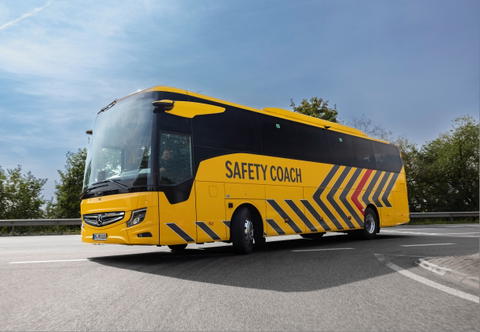
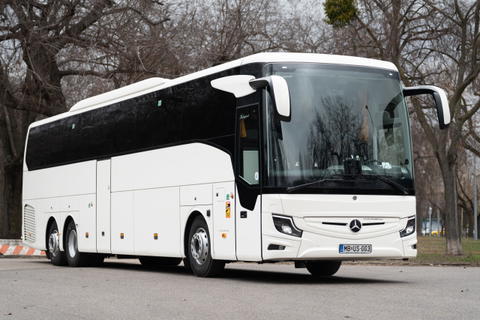
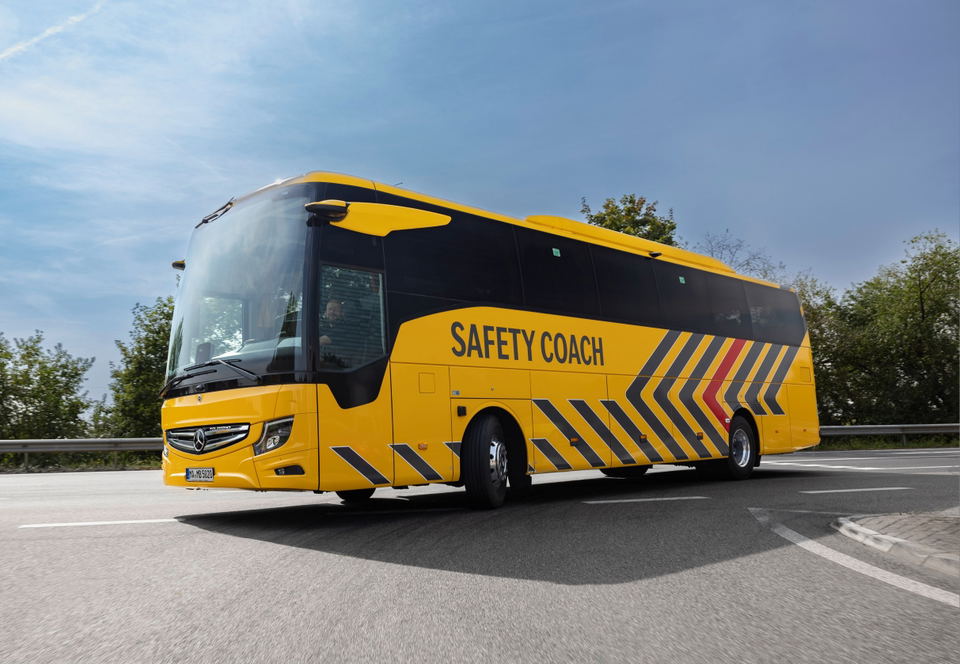
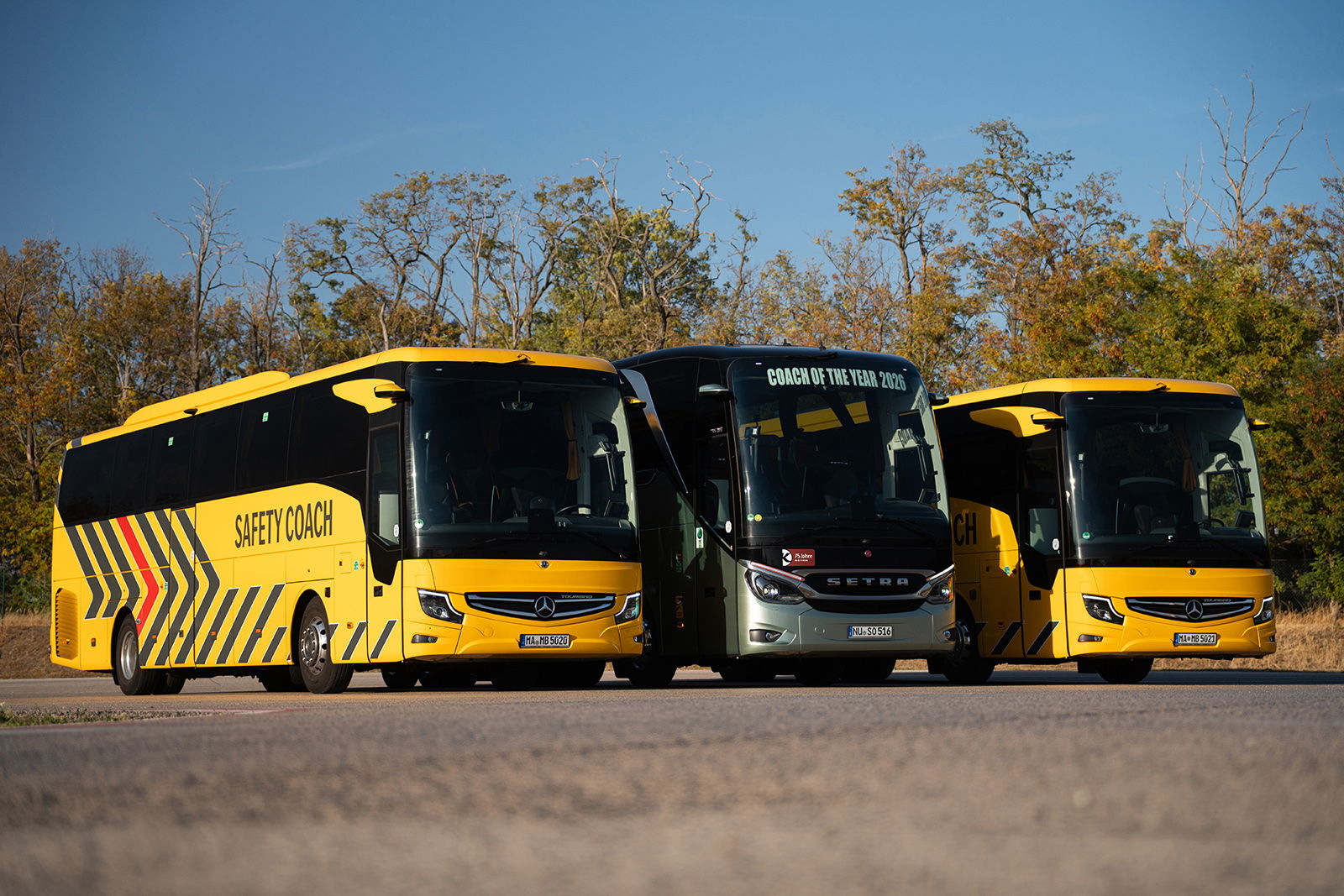
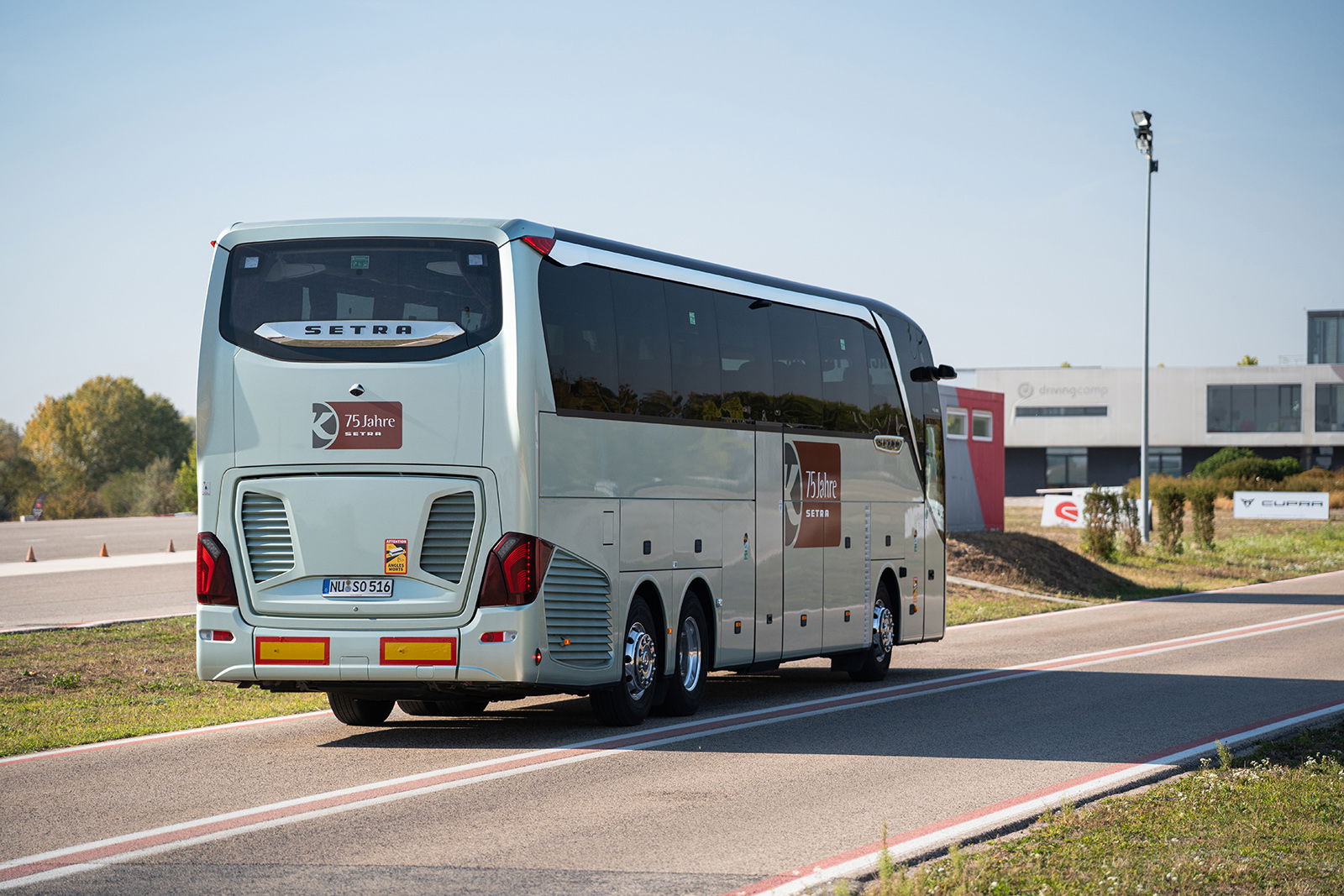
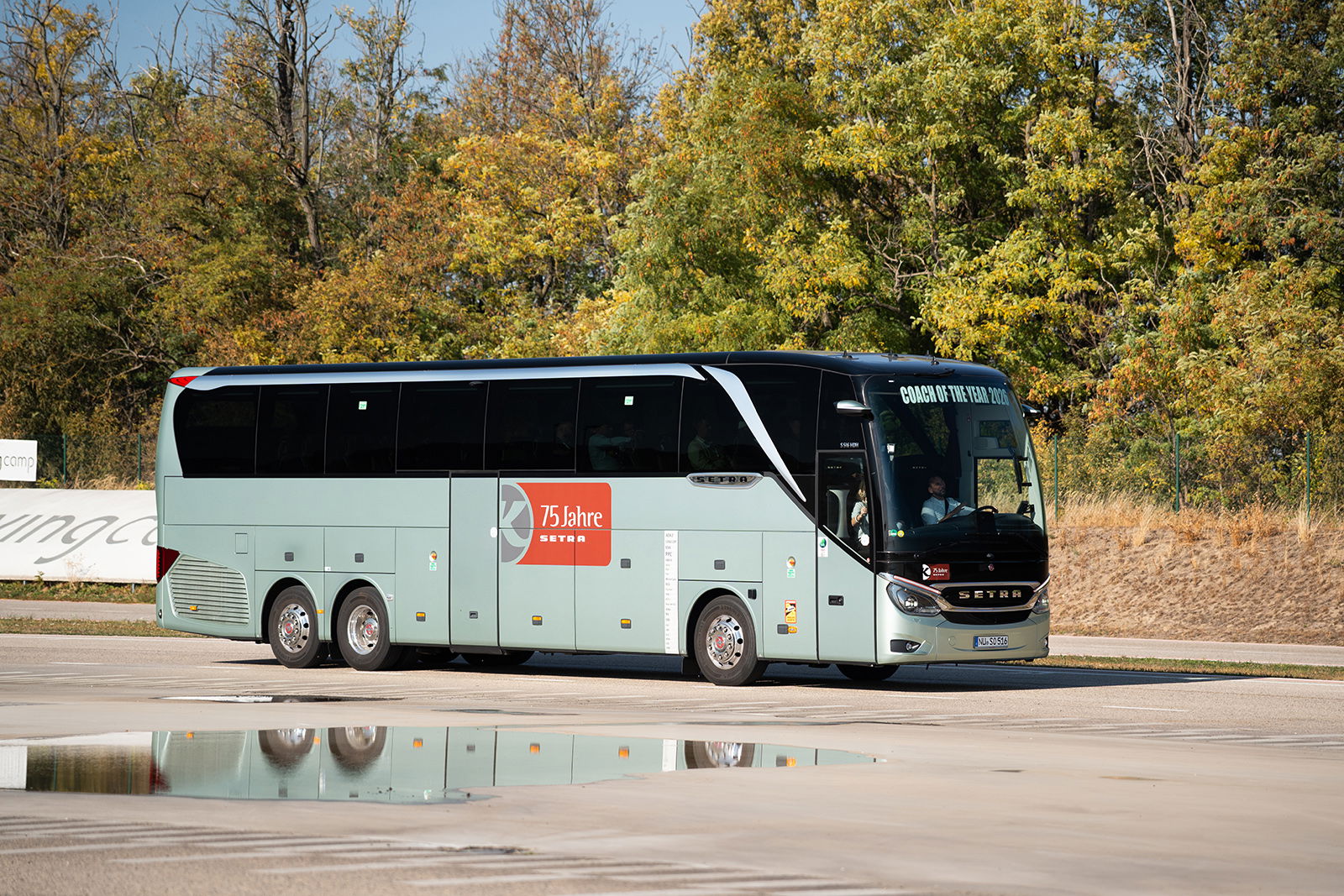
What does it mean in practice when a multi-tonne bus not only warns the driver of a hazardous situation, but also actively intervenes? Where is the line between the driver’s responsibility and the capabilities of modern driver-assistance systems? According to the organisers’ description, these were among the questions explored at ITE Bus & Truck’s event. Although a recently acquired Mercedes-Benz Intouro bus operated by Molteam was also on display in the conference hall at drivingcamp Hungary, the day’s real stars awaited guests on the driver-training track. ITE Bus & Truck brought a total of three test buses to the event: alongside a Setra S 516 HDH luxury touring coach from the TopClass range, two Mercedes-Benz Tourismo RHD Safety Coaches were available to try out on site. The latter vehicles represent the second iteration of the fourth generation (or, by another interpretation, the sixth generation) of Mercedes-Benz’s Safety Coach demonstrator buses, a programme now spanning two decades, and are therefore referred to by the manufacturer as version 4.2; one of them was also recently displayed at the FIAA 2026 exhibition in Madrid. The latest version naturally features more safety and driver-assistance systems than any of its predecessors, but it is important to stress that these are not prototypes, but fully series-production vehicles equipped for demonstration purposes with every safety option currently available for Mercedes-Benz and Setra buses.
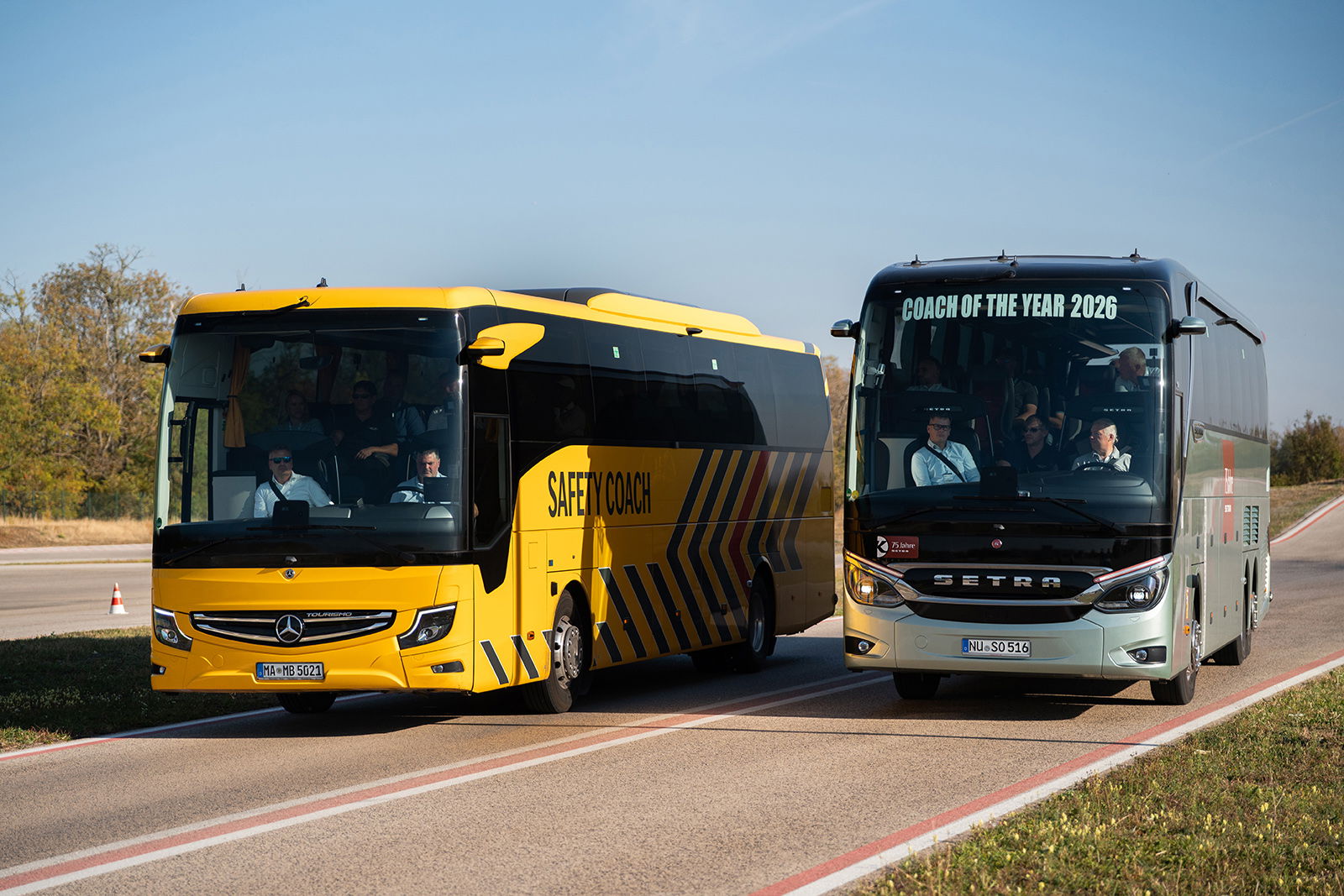
Each bus was accompanied by a German instructor from Daimler Buses’ factory development department, who not only explained and demonstrated the operation of the individual safety systems in practice, but also helped volunteer guest drivers complete the test tasks. At the end of the day, they were also of great help in positioning the buses and taking the group photographs, for which we would like to express our sincere thanks once again!
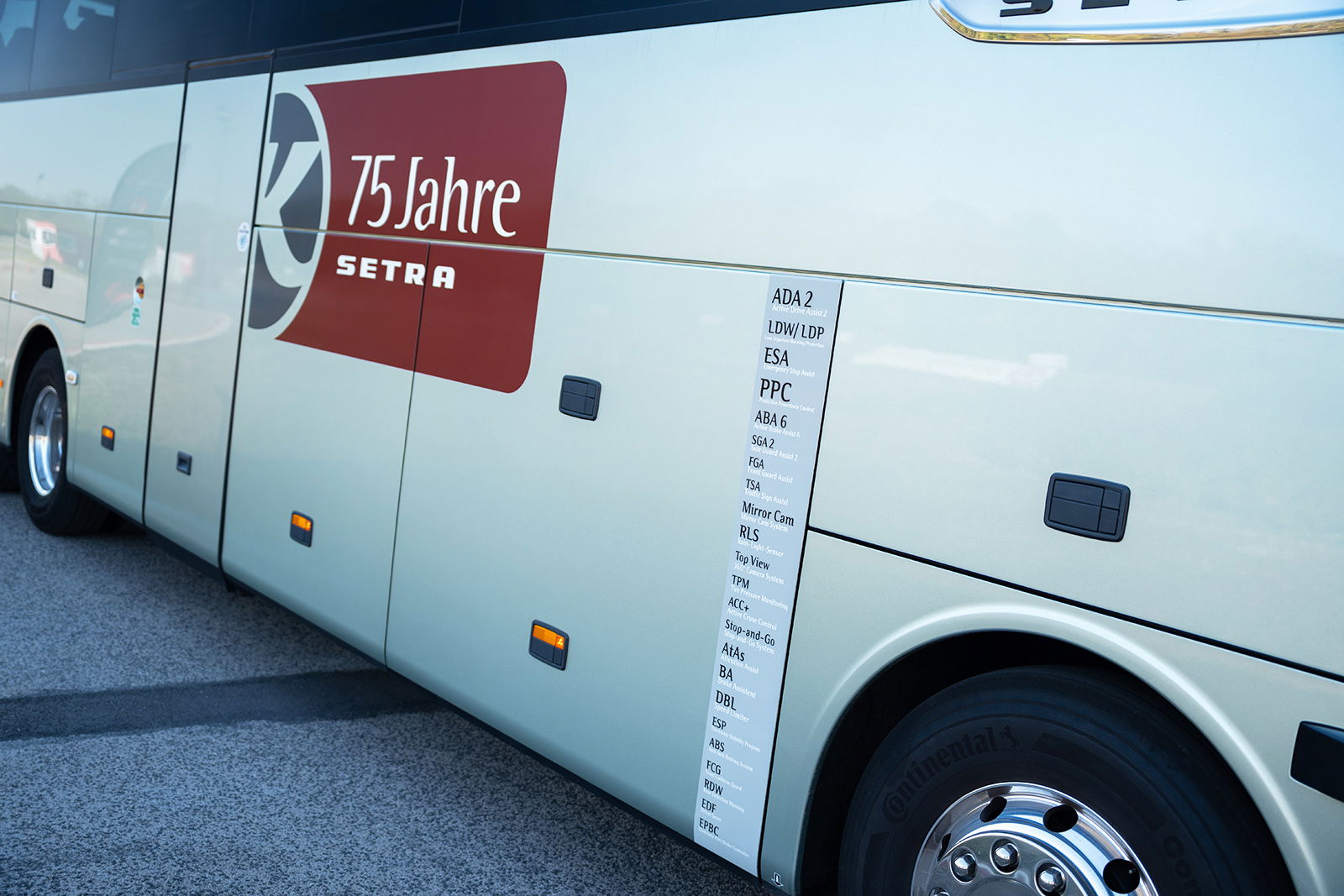
The Setra S 516 HDH also holds the international Coach of the Year 2026 title, awarded, according to the jury’s reasoning, among other things for its comprehensive package of driver-assistance and safety systems. An impressively long list on the side of the demonstrator bus sets out the nearly two dozen active safety systems protecting those on board and other road users – in several areas, these go beyond the requirements of the European Union’s revised General Safety Regulation (GSR II). As even a full day would not have been enough to try and explore all the functions in detail, the programme at Zsámbék offered us only a small taste of how they work.
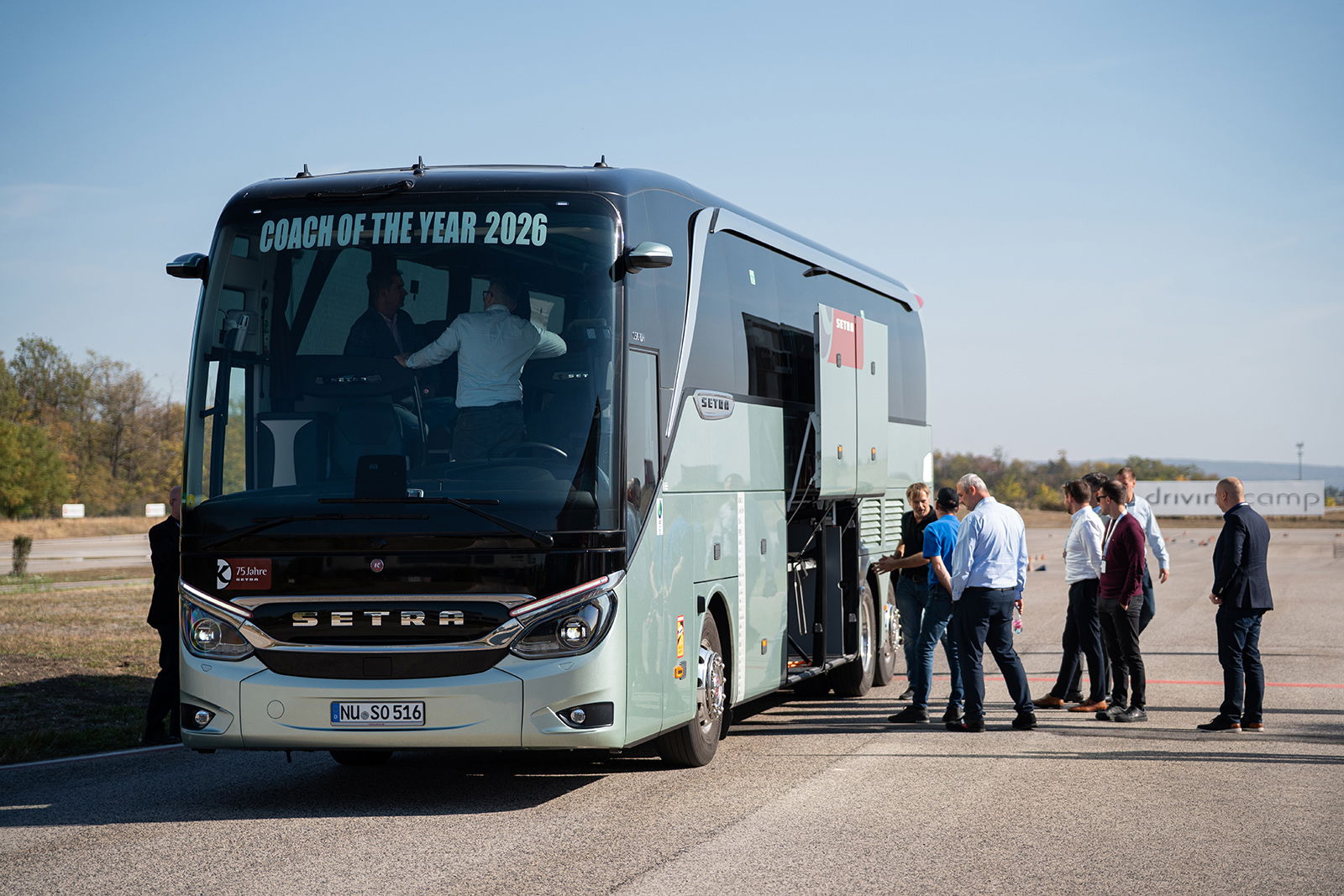
First, we were given a more detailed introduction to the system known in Daimler Group commercial vehicles as Frontguard Assist, an information system for detecting cyclists and pedestrians when moving off, often simply referred to as a moving-off assist system (Moving Off Information System, MOIS). Although the relevant UNECE Regulation No. 159 only requires monitoring of the area extending from 0.8 to 2 metres in front of the vehicle, Daimler Buses models can also detect the area closer to the bus than this, which can be lifesaving if, for example, a small child wanders into the blind spot immediately in front of the bus, which is not visible from the driver’s seat. If an obstacle is detected, the system automatically warns the driver of the potential danger. The area in front of and alongside the bus is monitored on Daimler Buses vehicles (and even on models bodied by other manufacturers on Mercedes-Benz chassis) by a system comprising five radar sensors in total, while a camera sensor is also available as an option.
We also had the opportunity to try in practice the Active Brake Assist 6 (ABA 6) automatic emergency braking assistant developed specifically for coaches. This system monitors traffic across several lanes at once and can also recognise smaller, vulnerable road users, such as pedestrians and cyclists, initiating partial or full automatic emergency braking if necessary. It responds to pedestrians and cyclists at speeds of up to 60 km/h, and to stationary vehicles in front of the bus across the entire speed range.
The operation of ABA 6 is divided into three stages: in the first phase, as an obstacle in front of the bus is detected and approached, the system merely warns the driver, with a visual indication on the instrument panel and an intermittent beeping sound that is clearly audible in the passenger compartment. Practical experience shows that this alone is often sufficient to avert a dangerous situation if the bus driver’s attention has wandered for only a moment, if they are adjusting the radio, or, worse still, using their mobile phone. If the driver does not respond, or if the obstacle comes dangerously close in the meantime, the second stage, known as partial braking, follows. The bus then starts braking independently with less force, but the driver still has the opportunity to intervene by braking harder, accelerating or changing direction. However, if there is still no response, ABA 6 applies full emergency braking with maximum braking force in the third stage. As we learned, the brake pressure applied in such cases is identical to that measured during normal emergency braking, so the bus cannot autonomously brake harder than a human driver could by pressing the brake pedal with full force. The bus warns other road users of a sudden stop caused by emergency braking by rapidly flashing its brake lights and activating its hazard warning lights.
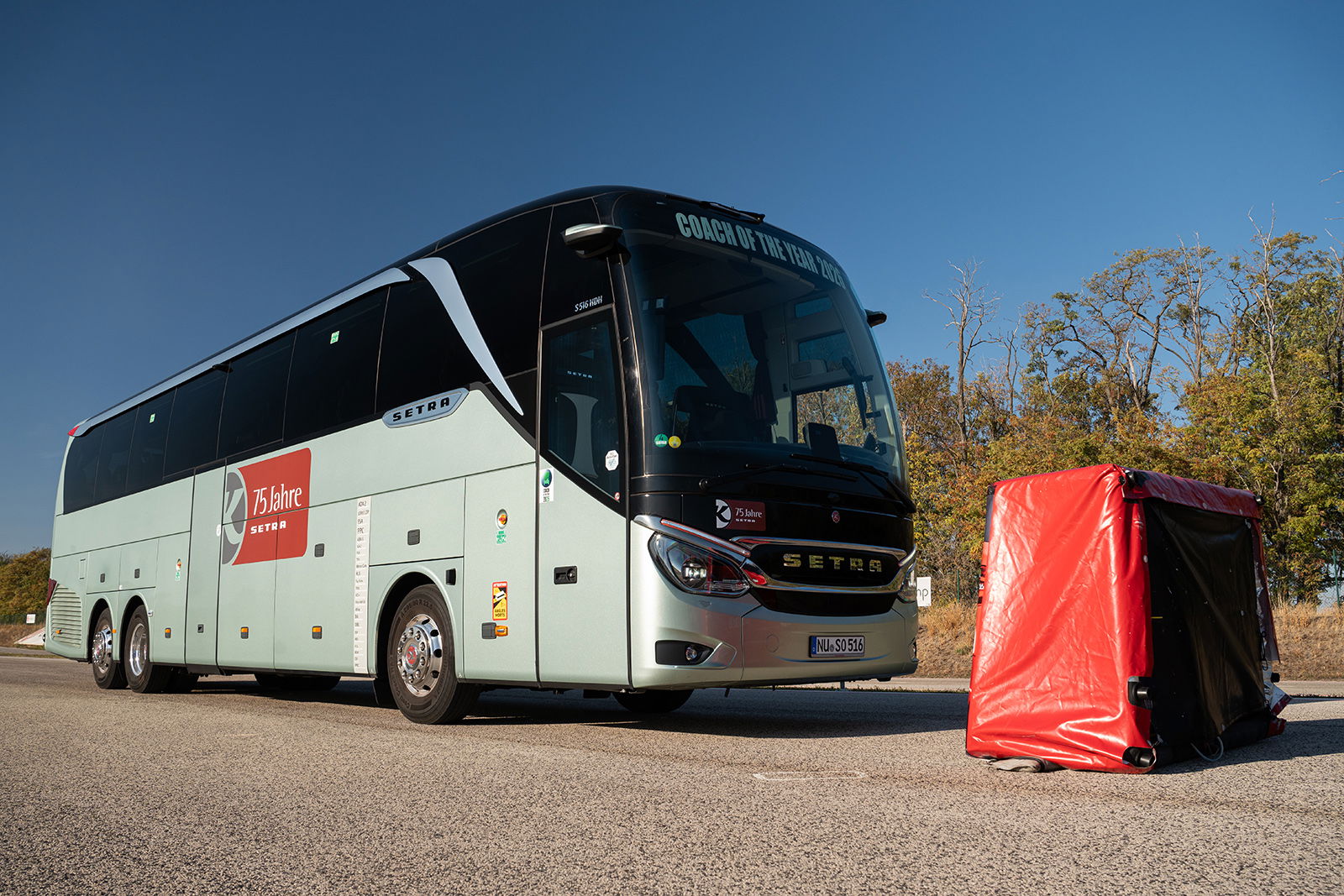
When testing the emergency braking at the Zsámbék driver-training track, we accelerated beforehand to 50–60 km/h, but the system can safely bring the vehicle to a halt even from a cruising speed of 100 km/h; according to the manufacturer, successful emergency braking has even been carried out from 125 km/h on a closed test track. To put this into perspective, during our test, emergency braking from half that speed still caused the bodywork to pitch very sharply, and the seat belts had plenty of work to do (it was not without reason that our instructors checked individually before the manoeuvre that everyone had fastened their seat belt).
During our test in sunny weather on dry road surface, the three-axle bus, weighing up to 26 tonnes at full load, came to a stop just over two metres from the inflatable obstacle. This may even seem like a considerable distance, but as the system applies the same braking force in rainy and snowy road conditions, a safety margin is necessary. Realistically, even then a collision may not be avoidable on slippery, snowy or icy roads, so the primary aim in such circumstances is to minimise the consequences – injuries and material damage – and the system is certainly capable of doing that. In addition to full emergency braking, we also tested partial braking interrupted by an evasive manoeuvre on site.
The other active safety feature whose operation we were able to experience live was the fundamentally well-known electronic stability control system, or Electronic Stability Program, abbreviated to ESP, which we were able to put to the test in one of the Mercedes-Benz Tourismo Safety Coaches. The system continuously compares data indicating the direction intended by the driver – primarily the steering-wheel angle – with the vehicle’s actual movement. When it detects a risk of skidding, it brakes the individual wheels selectively and independently in order to create a corrective torque around the vehicle’s vertical axis, reducing understeer or oversteer and thereby returning the vehicle to its intended path. As our instructor put it, the bus already knows from the steering angle where we want to go, and ESP helps make sure that it does.
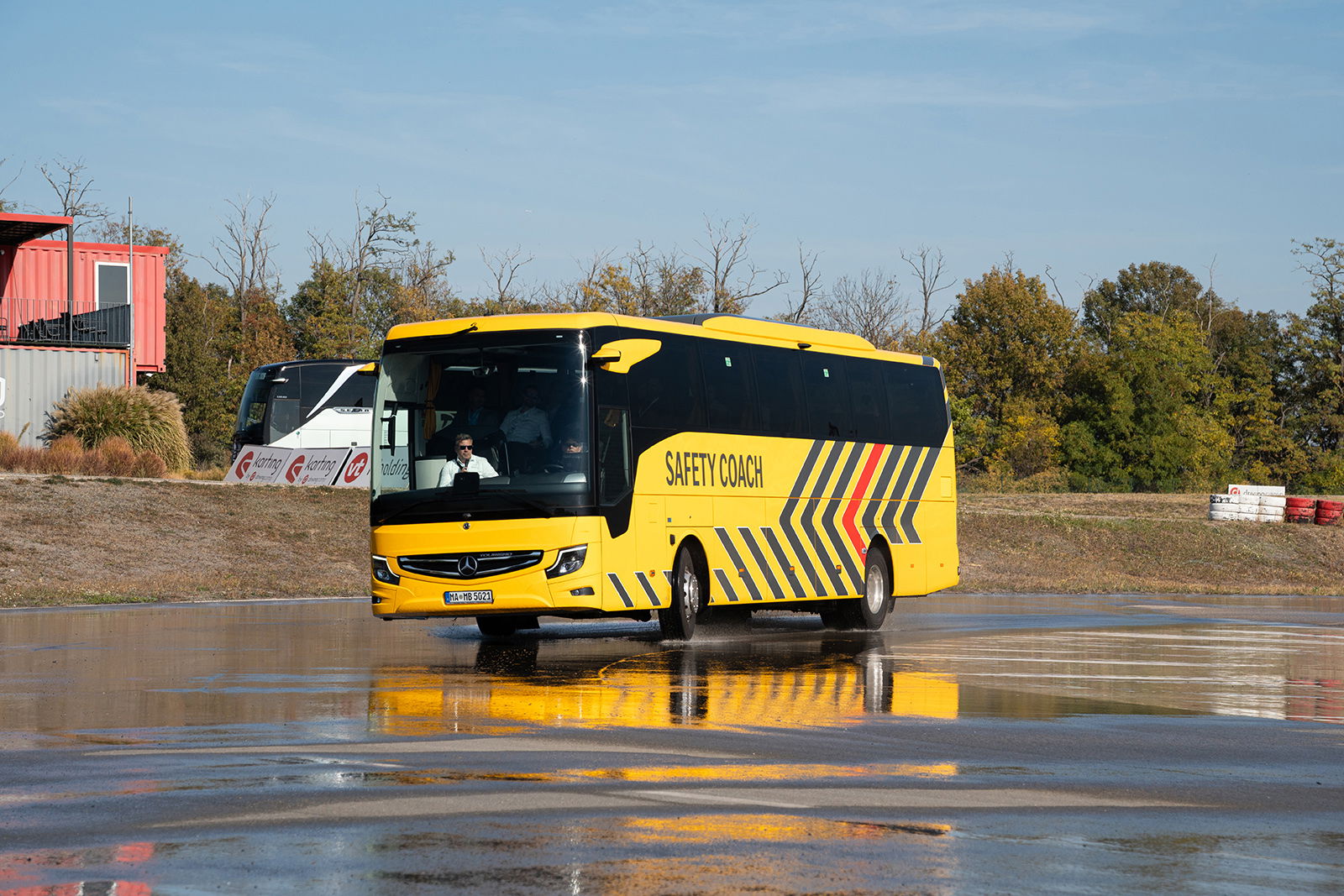
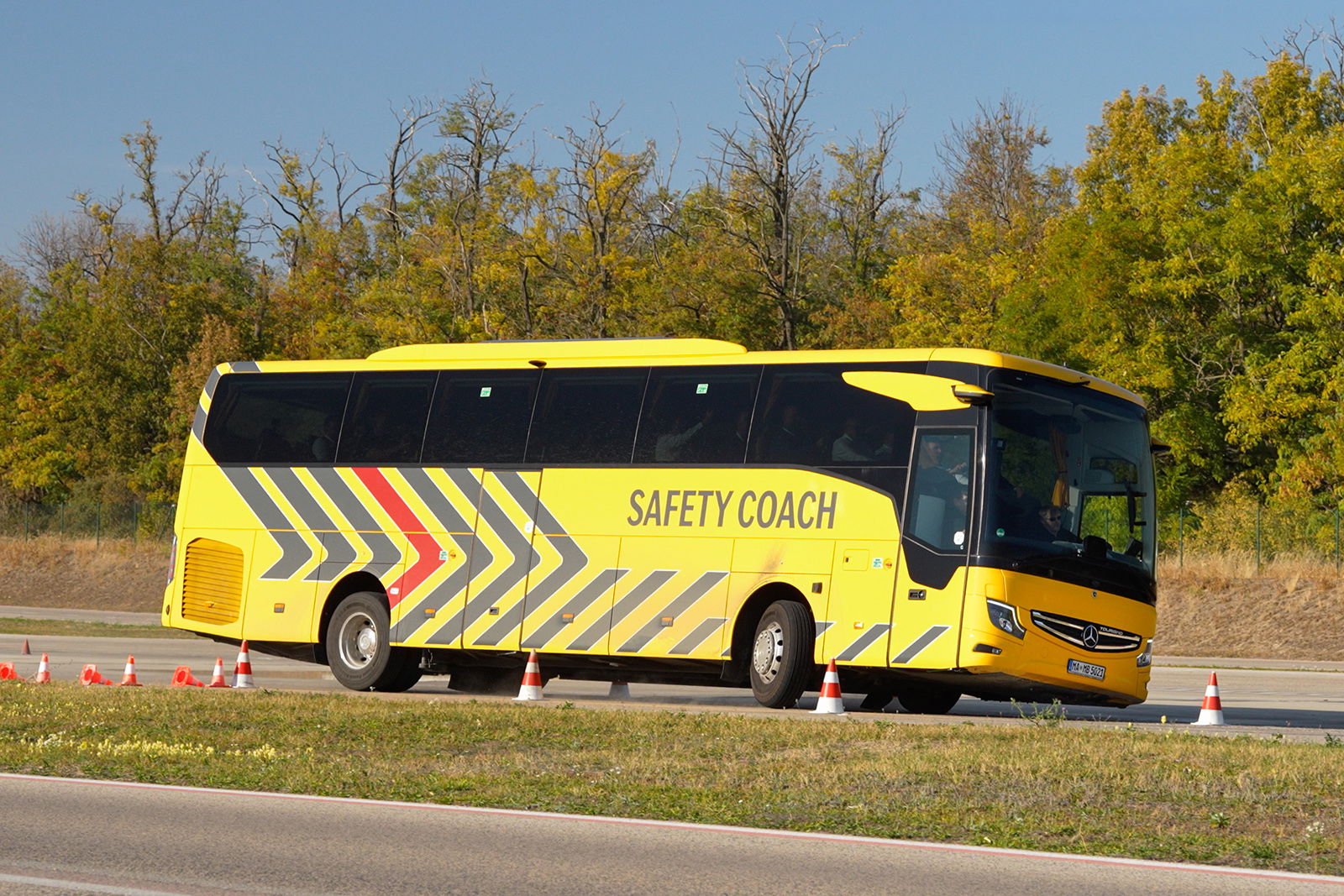
The system’s capabilities were first demonstrated as we drove in circles on the wet section of the test track. During the test, the electronics limited the attainable speed to 26 km/h on the tighter circle and 37 km/h on the wider curve; in the event of a high-speed breakaway, it helped steer the bus back onto the correct line by braking the appropriate wheels. Although this test was spectacular to watch from outside, the best was yet to come in the form of obstacle avoidance with a double lane change, better known as the moose test. In consideration of the guests trying the bus, who were not necessarily professional test drivers, the cones were set up to allow a somewhat wider course than required by the official ISO 3888-2 standard. Nevertheless, the slalom, with the bodywork leaning from side to side, still provided a rollercoaster-like experience, while ESP intervention was indicated by small, occasional automatic braking applications and the bus maintaining a stable direction.
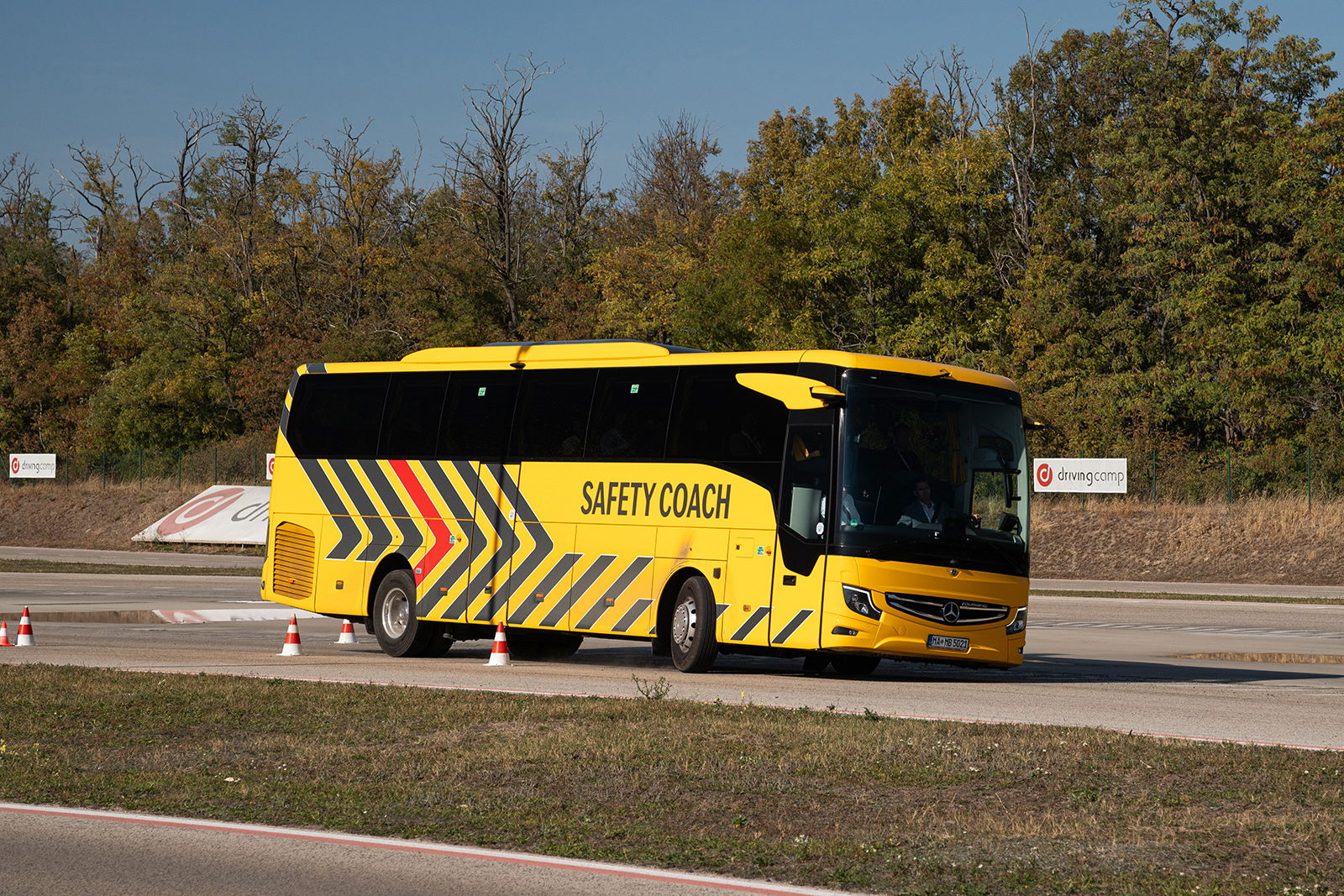
At the end of the day, with our professional instructor alone at the wheel, we also experienced the effect of ESP indirectly, for demonstration purposes: we saw what happens when the system is switched off (this is very much not recommended on public roads). At the end of the slalom, performed with substantially greater lateral body roll, a number of displaced or flattened cones testified to the fact that, as our instructor put it, during sudden high-speed manoeuvres, without ESP even a properly trained bus driver can in all likelihood keep the bus on its wheels, but not on the road.
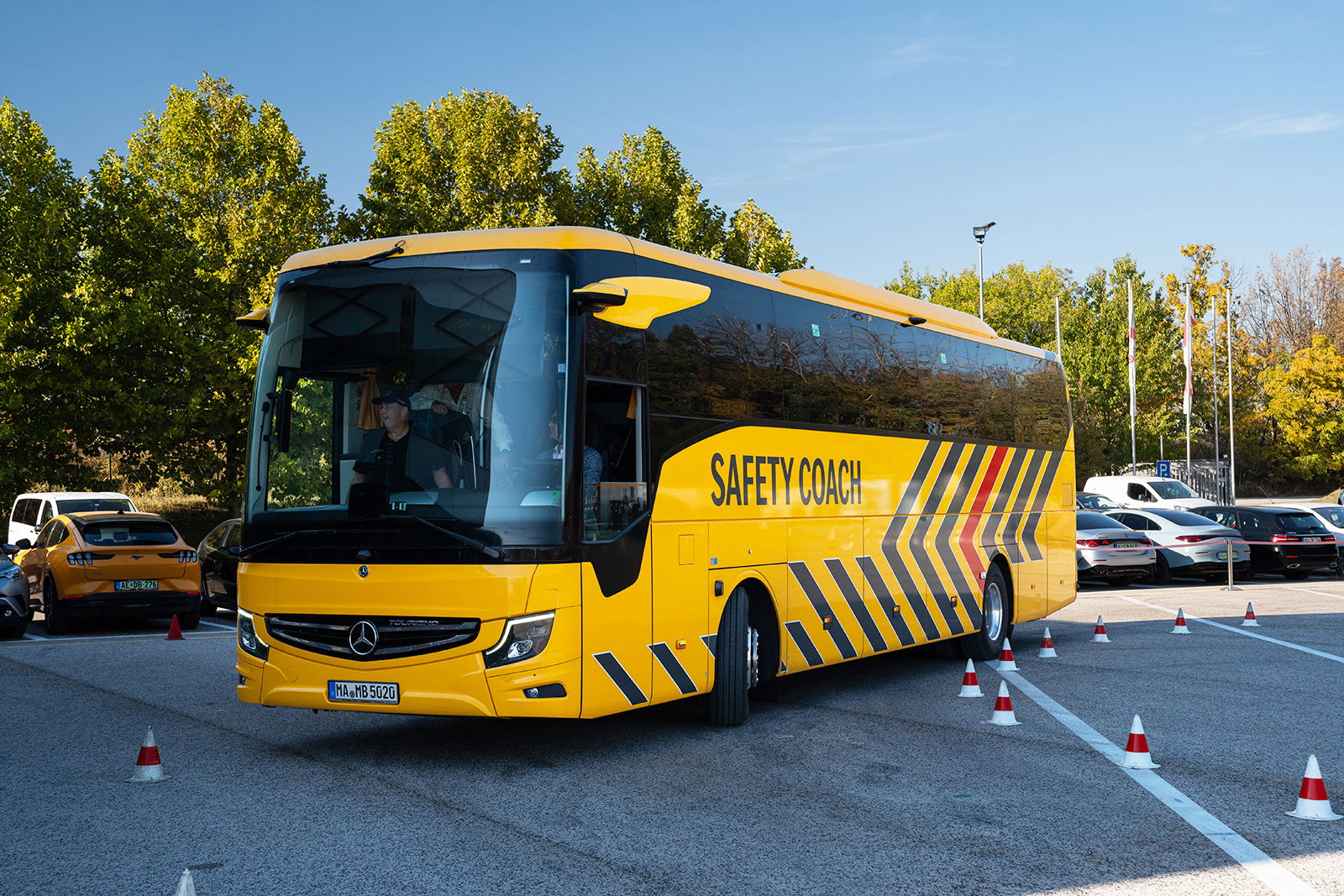
A less spectacular but far more frequently used everyday safety extra is the digital camera system replacing conventional exterior rear-view mirrors. We were able to try it using a row of cones set up in the drivingcamp Hungary car park, again from behind the wheel of a Mercedes-Benz Tourismo Safety Coach. (Interestingly, this test bus also carried ballast simulating the weight of seated passengers.) The system, which also provides a 360° bird’s-eye view of the vehicle’s immediate surroundings, is particularly useful for slow manoeuvring in tight spaces. Another useful feature is that when reversing, the rear-view camera images show the side and rear end of the bodywork with green and red lines, further helping the driver to work safely.
“A great deal can be said about road safety, but it is an entirely different experience to see in a controlled situation what the bus sees, how it warns the driver, and what a modern assistance system is capable of. This is exactly what we wanted to demonstrate with the event: technology does not take control away from the driver, but builds another layer of safety around them.” – summarised the lessons of the day István Horányi, managing director of the host company, ITE Bus & Truck.