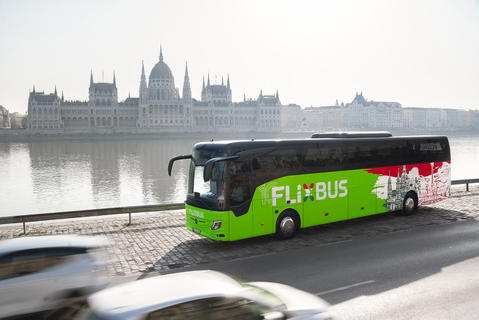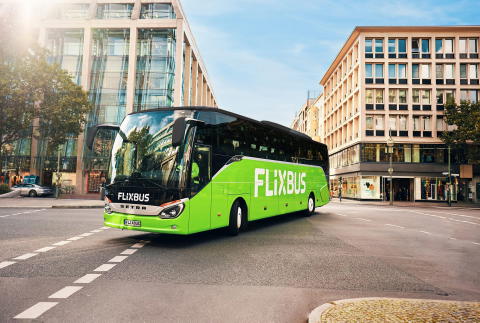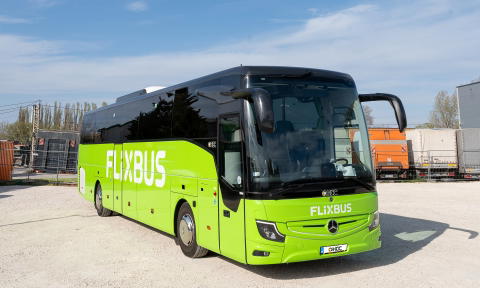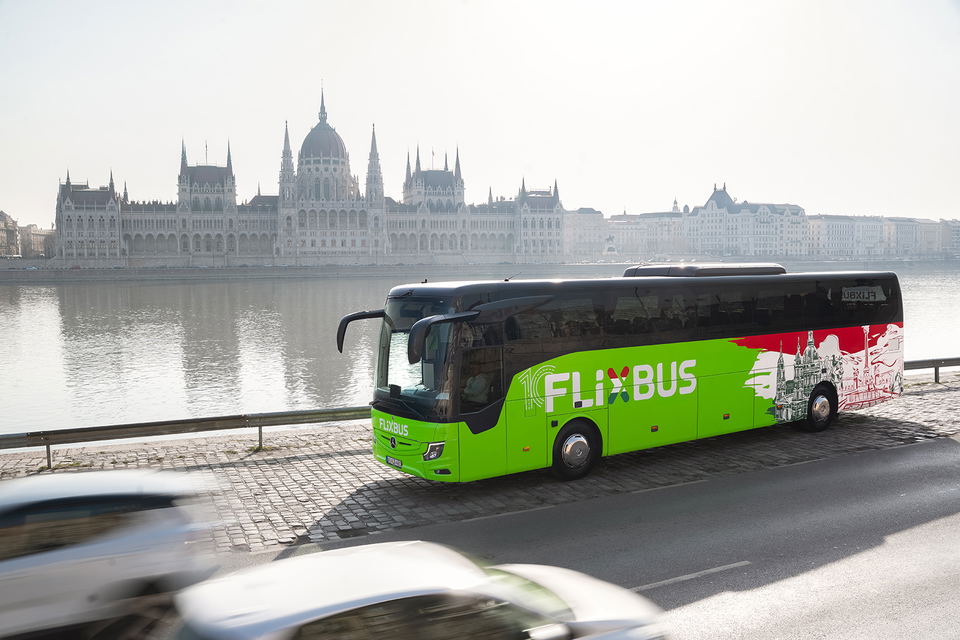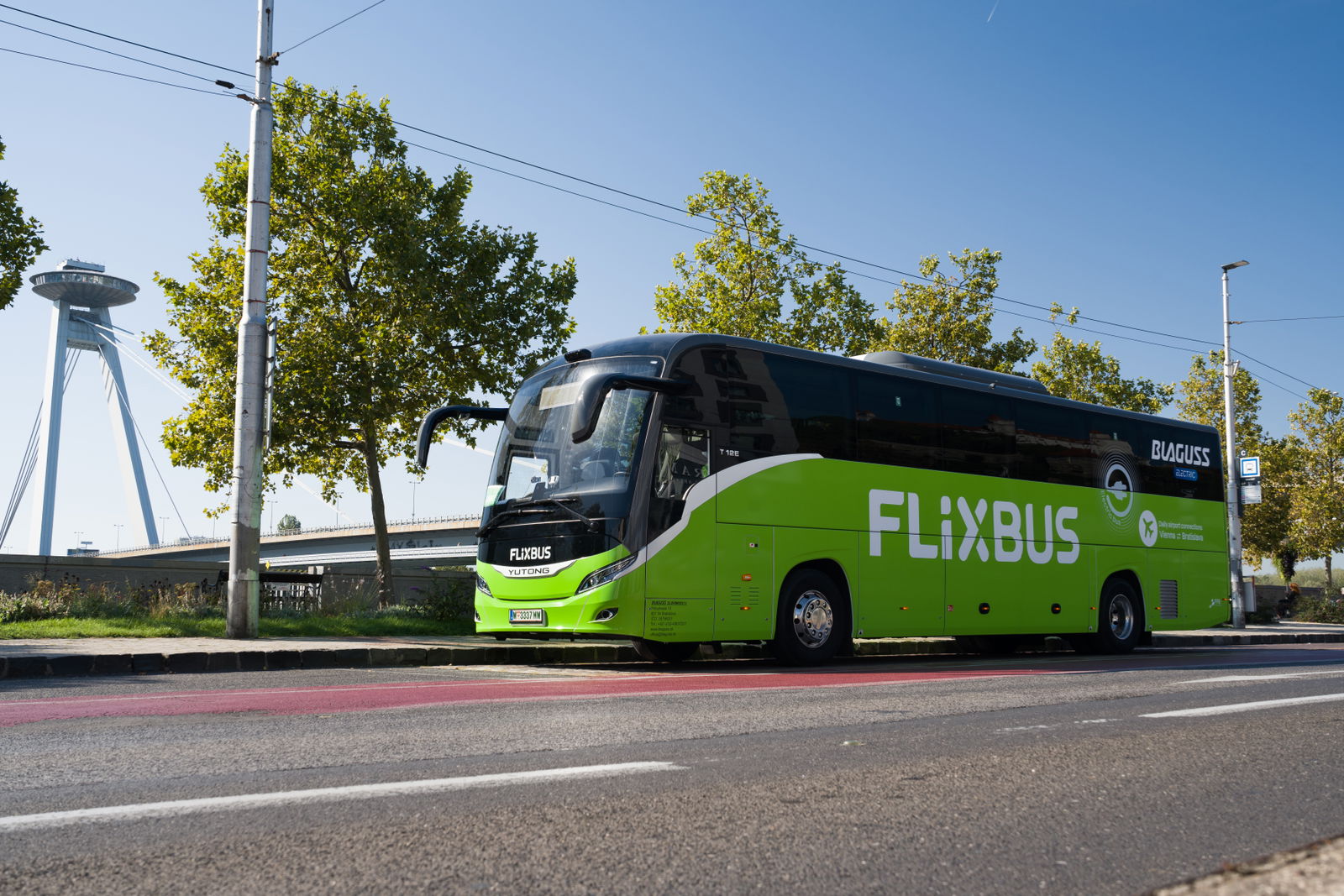
Eight Yutong electric buses enter service on FlixBus’s Vienna–Bratislava route
Eight all-electric Yutong T12E coaches entered service on FlixBus routes between Vienna and Bratislava on 1 October. The route, operated by Blaguss, is now run by electric buses for more than 90% of its service, with dedicated charging infrastructure having been installed in both Vienna and Bratislava to supply them with energy.
The two companies have taken an important step towards establishing electric propulsion in long-distance coach transport: from 1 October, eight Yutong T12E battery-electric buses have been operating regularly between Vienna and Bratislava within the FlixBus network. The services are operated by Blaguss, FlixBus’s long-standing Austrian partner, through its Slovak subsidiary, Blaguss Slovakia.
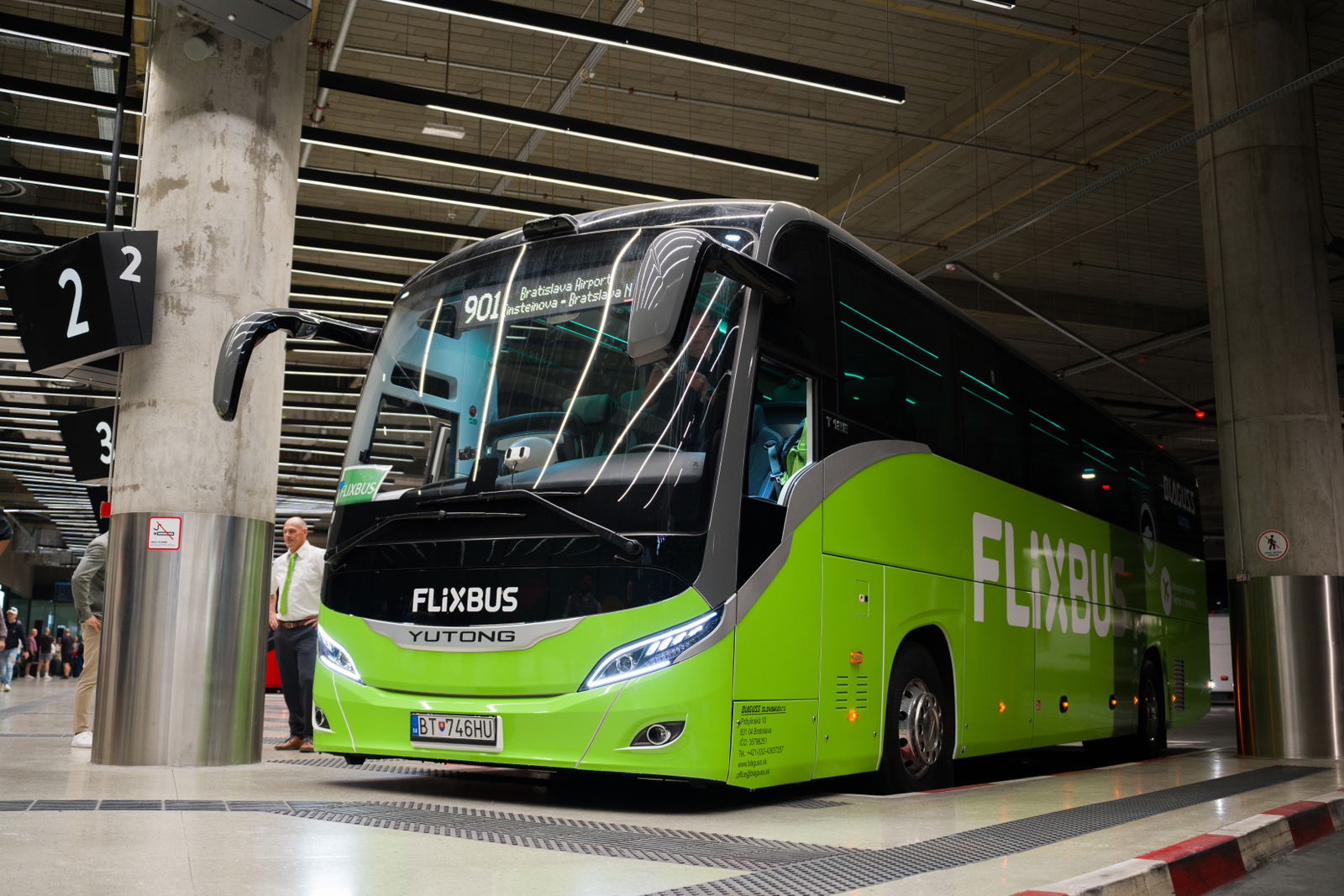
In addition to the two capitals, the services also serve Vienna Schwechat Airport and Bratislava Airport. According to FlixBus, this has created one of Europe’s first cross-border long-distance coach links whose services are operated predominantly by all-electric vehicles.
91% of daily mileage is electric
The connection between Vienna and Bratislava involves a fairly intensive operation, with the timetable comprising a total of 66 services per day. Their combined daily mileage is 6,086 kilometres, of which the electric buses cover 5,568 kilometres. Diesel-powered vehicles continue to operate over the remaining 518 kilometres.
This means that buses with all-electric propulsion now account for around 91% of the total scheduled service output.
This high rate of electrification is also facilitated by the characteristics of the route: Vienna and Bratislava are the two closest capitals on the continent even in a straight line, while they are separated by approximately 80 kilometres by road. The largely flat route across the Danube plain is also favourable for battery-electric buses from an energy-efficiency perspective.
The Yutongs arrive with 466 kWh battery packs
The vehicles introduced on the Vienna–Bratislava route belong to a batch of 12 Yutong T12E vehicles, the procurement of which we previously reported on in detailwe previously reported on in detail. Blaguss selected the vehicles following a test period comparing electric coaches from several manufacturers; range, suitability for long-distance operation and operating costs all played a role in the decision. In spring, the company had already indicated that the buses, which were then primarily used for private-hire and tourism duties, would also enter scheduled long-distance service in the autumn – one of the first concrete implementations of this is the newly launched Vienna–Bratislava operation.
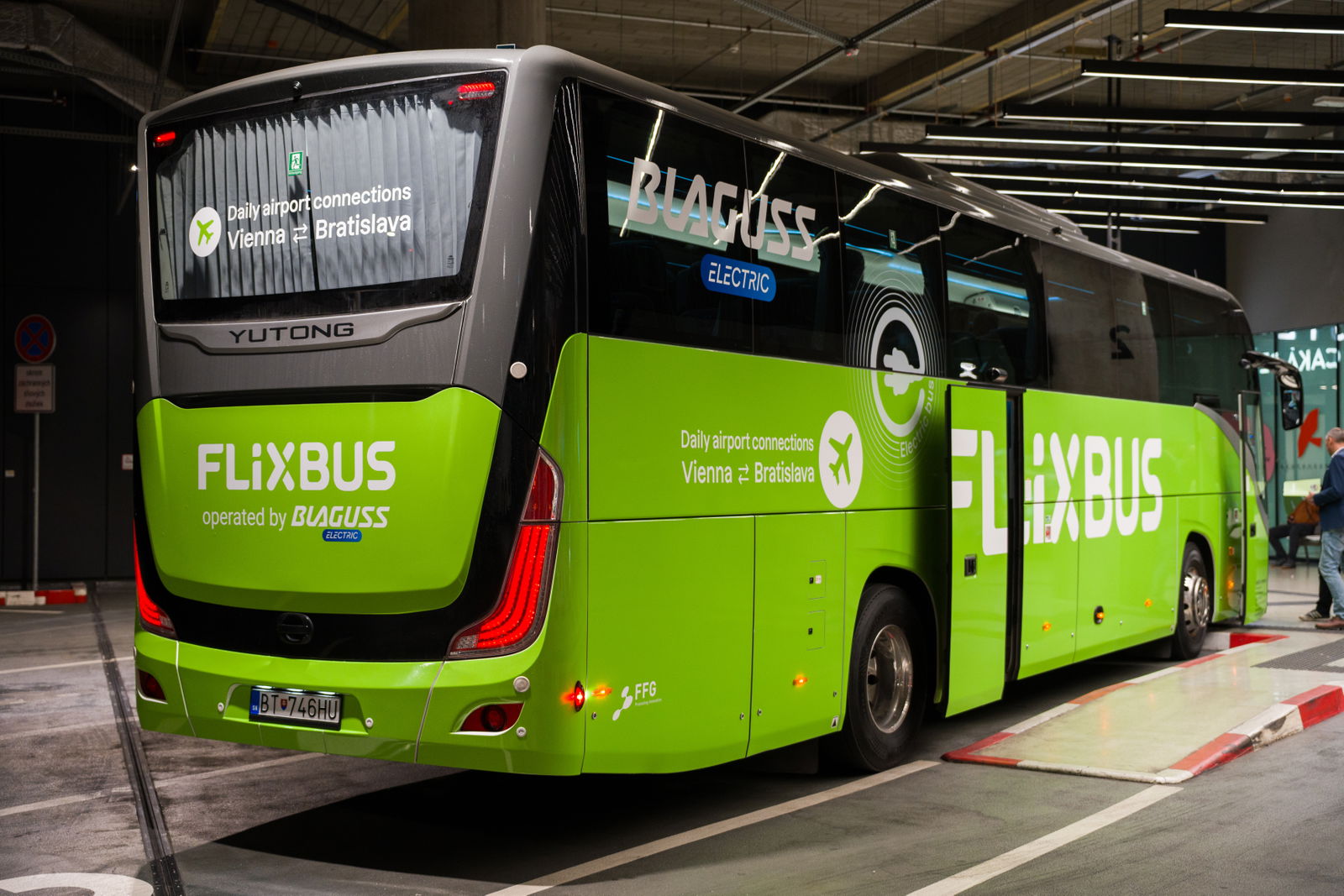
The Yutong T12E, regarded as the new pride of the Blaguss fleet, is 12,245 mm long, 2,550 mm wide and 3,710 mm high, with an unladen weight of approximately 15 tonnes. The vehicles are fitted with a 466 kWh lithium iron phosphate (LFP) battery pack manufactured by CATL, currently the largest energy-storage capacity available for the T12E model. According to Blaguss calculations, this enables a range of around 500 kilometres under favourable operating conditions.
Propulsion is provided by a 230 kW central electric motor, while Blaguss opted for a more spacious 47+1-seat passenger compartment configuration instead of the standard 51-seat version. The lower capacity provides greater seat pitch and therefore a higher level of comfort better suited to longer journeys.
The buses are also charged using solar panels
A special feature of Blaguss’s T12Es is that solar panels have also been installed on the vehicles’ roofs. These do not directly charge the high-voltage traction battery, but primarily cover the energy demand of the 24 V on-board system, thereby indirectly reducing the load on the traction battery. According to previously published data, the rooftop solar system can generate approximately 500–600 kWh of electricity per bus annually.
The necessary charging infrastructure was developed in parallel with the vehicles entering service: the system’s central element is a new fast-charging station in Vienna, while a second site has been established in Bratislava, primarily for overnight charging but also available as an operational backup.
Both locations are equipped with a solar power system and battery energy storage. According to Blaguss, all electricity used to charge the buses is supplied from renewable sources, partly with the help of its own solar systems installed specifically for the project.
According to the company’s calculations, the Setra S 515 HD buses previously operating on the route, equipped with Euro 6-class diesel engines, consumed an average of around 24.8 litres of diesel per 100 kilometres. Using the Austrian environmental authority’s direct-emissions factor of 2.65 kg CO₂/litre, replacing diesel propulsion with electric propulsion saves approximately 66 kg of direct carbon dioxide emissions per 100 kilometres.
The rise of long-distance electric buses
The Vienna–Bratislava service is also of interest because the European expansion of battery-electric buses has so far focused primarily on the urban and suburban segments. Long-distance operations involving high daily mileage, motorway running and tight turnaround times place considerably greater demands on batteries and charging infrastructure.
The eight Yutongs’ combined daily electric mileage of more than 5,500 kilometres can therefore also provide important practical experience of the conditions under which current battery technology and charging infrastructure are suitable for replacing conventional diesel long-distance coaches.
The project is co-financed by the Austrian federal ministry, the European Union and the Austrian Research Promotion Agency, FFG.
The FlixBus–Blaguss partnership is built on a long-standing relationship
The Vienna–Bratislava electric bus project is underpinned by a long-standing collaboration between two companies with different roles. With a history of more than 95 years, Blaguss is a third-generation family business operating primarily in Austria and Eastern Europe. Its activities range from private-hire and contracted bus transport to domestic and international scheduled and transfer services, as well as event transport. The company has also identified the gradual electrification of its fleet as a strategic objective in recent years, served by the purchase of 12 new Yutong T12Es and the development of the associated charging infrastructure.
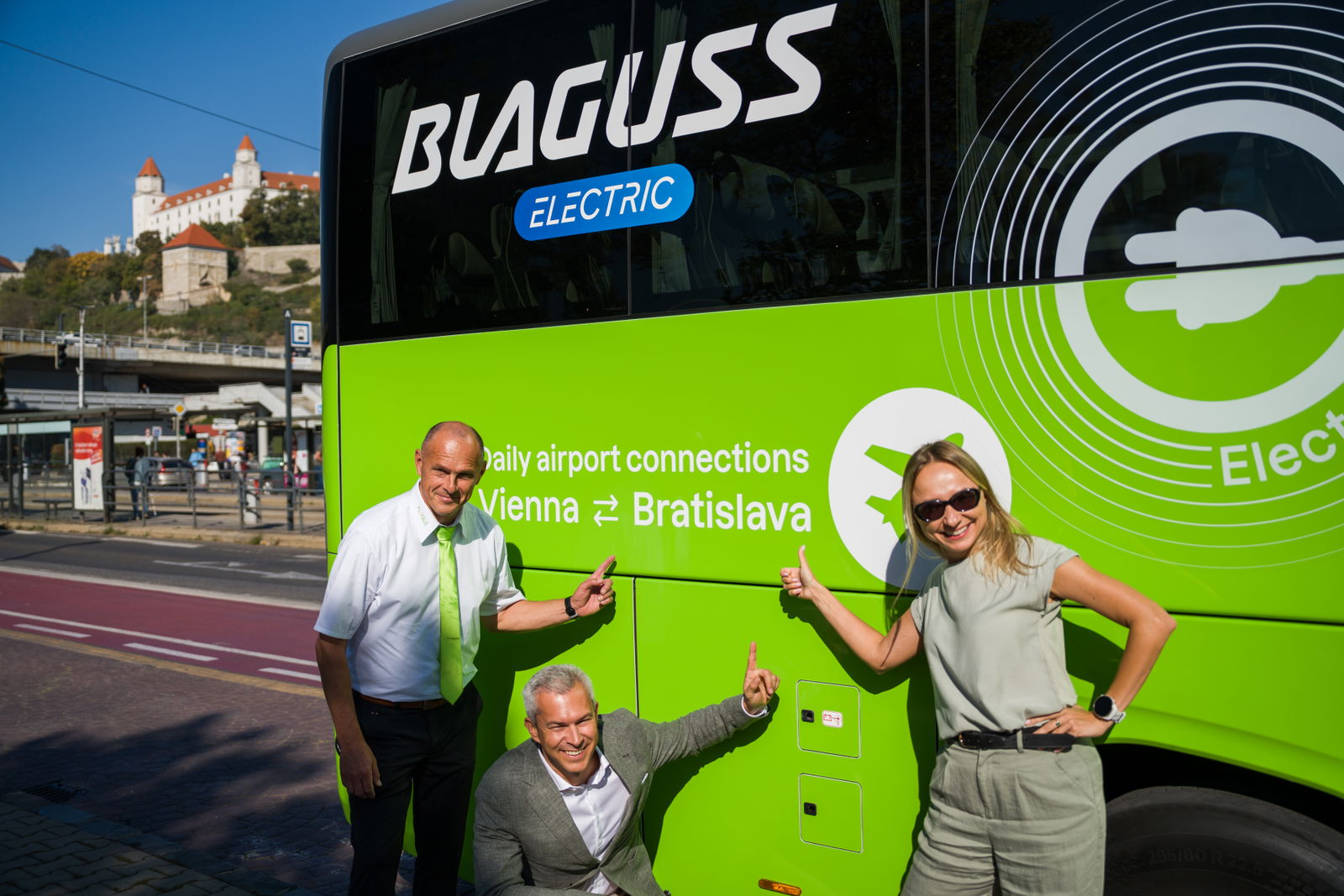
By contrast, Flix, founded in 2013, essentially operates under a so-called asset-light business model: it does not generally operate the daily bus services itself, but works with local transport operators. Flix’s responsibilities include planning the network and timetable offering, pricing, sales and marketing, quality management, and operating the technology platform that supports these activities, while vehicles and day-to-day operational tasks are provided by partners such as Blaguss. The latter has long been one of FlixBus’s operating partners in Central Europe, so the current project does not mark the beginning of a new collaboration. The Vienna–Bratislava route is operated by the company’s Slovak subsidiary, Blaguss Slovakia.
Flix is now present in more than 40 countries across five continents, and its brand portfolio includes FlixBus, FlixTrain, Turkey’s Kamil Koç and North American Greyhound. The Vienna–Bratislava project therefore also provides a good illustration of Flix’s business model: Flix supplies the network and sales support, while vehicle procurement, the development of the necessary infrastructure and the actual transport service are the responsibility of the local operating partner.