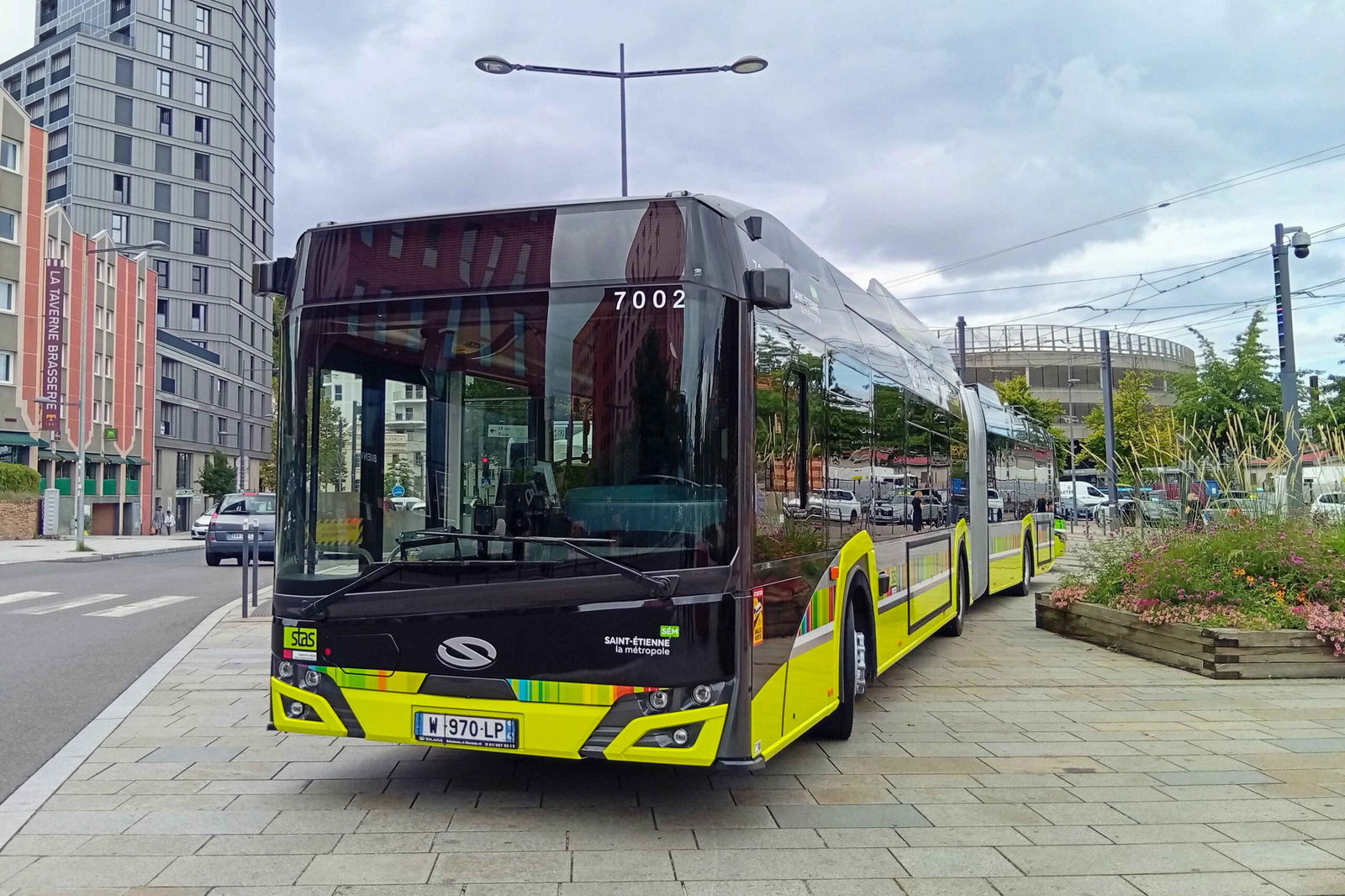
Articulated trolleybuses to return to Saint-Étienne after a quarter of a century
Saint-Étienne’s public transport system will soon be expanded with additional trolleybuses, further strengthening its position as one of France’s four remaining trolleybus systems. In France, trolleybuses currently operate regularly on the streets of Lyon, Limoges, Saint-Étienne and Nancy, with the latter city, following a break of several years, recently returning to this mode of operation. From the beginning of the 2000s, Saint-Étienne’s trolleybus network – like those in many other European cities – underwent a gradual decline: routes were discontinued, sections were dismantled and investment came to a halt for a long period. Over the past decade, however, a turnaround has taken place; the arrival of trolleybuses capable of battery operation IMC trolleybuses has created new technical and operational opportunities, prompting the city authorities to consider not only preserving the existing network but also gradually revitalising and expanding it.
The history of trolleybuses in Saint-Étienne dates back to 1942, when, with the opening of the first routes, the city began gradually using this new mode to replace its tram network. Over the following decades, the network developed dynamically and, by 1968, its route length – calculated in one direction – had approached 35 kilometres. Although trolleybus operation also stalled here during the 1970s, in Saint-Étienne this was reflected not in the closure of routes, but primarily in the absence of new investment. Contrary to international trends, the city nevertheless put several dozen new trolleybuses into service at the time, while the network was extended by several kilometres during the 1980s.
Over the following decade and a half, the system remained relatively stable, with changes to the route network and numbering occurring only in exceptional cases. The turning point came after 1998, when the deliberate closure of trolleybus routes and their replacement by diesel buses began. Some sections were dismantled quickly, while others were left untouched for longer, but by 2010 only a single route remained of the once extensive network: route 3 between Cotonne and Terrenoire, which was renumbered M3 at the end of August 2017.
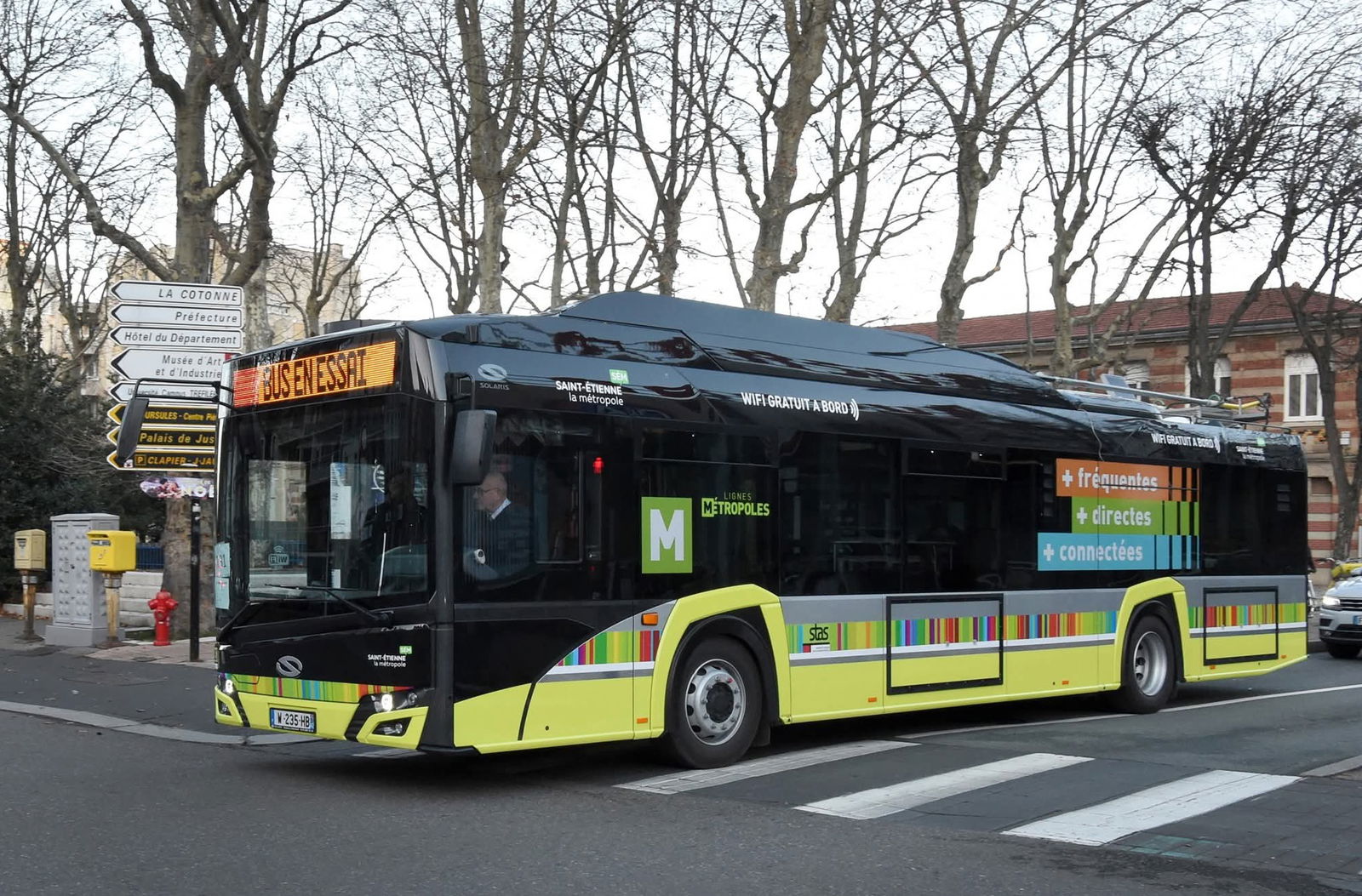
The situation changed fundamentally by the end of the 2010s. Political renewal within the leadership of Saint-Étienne Métropole, together with the market success of trolleybuses also capable of battery-powered operation, opened up new prospects for the system. As a result, a total of 23 Solaris Trollino 12 trolleybuses with Škoda electrical propulsion systems arrived in Saint-Étienne between 2019 and 2021. The first ten vehicles entered service in February 2020, followed by a further seven by the end of the same year, while the final six vehicles arrived in September 2021. The new trolleybuses made it possible not only to strengthen route M3, but also to revive the former route 7, which returned as M7 on the Michon – city centre – Bellevue route. At night, the network operates as S3 and S7. In the Bellevue district, trolleybuses now operate partly on battery power due to the earlier removal of part of the overhead wiring, aided by a new charging section installed at the terminus. Although it would theoretically be possible to reinstall the entire circular overhead line, this has not yet taken place.
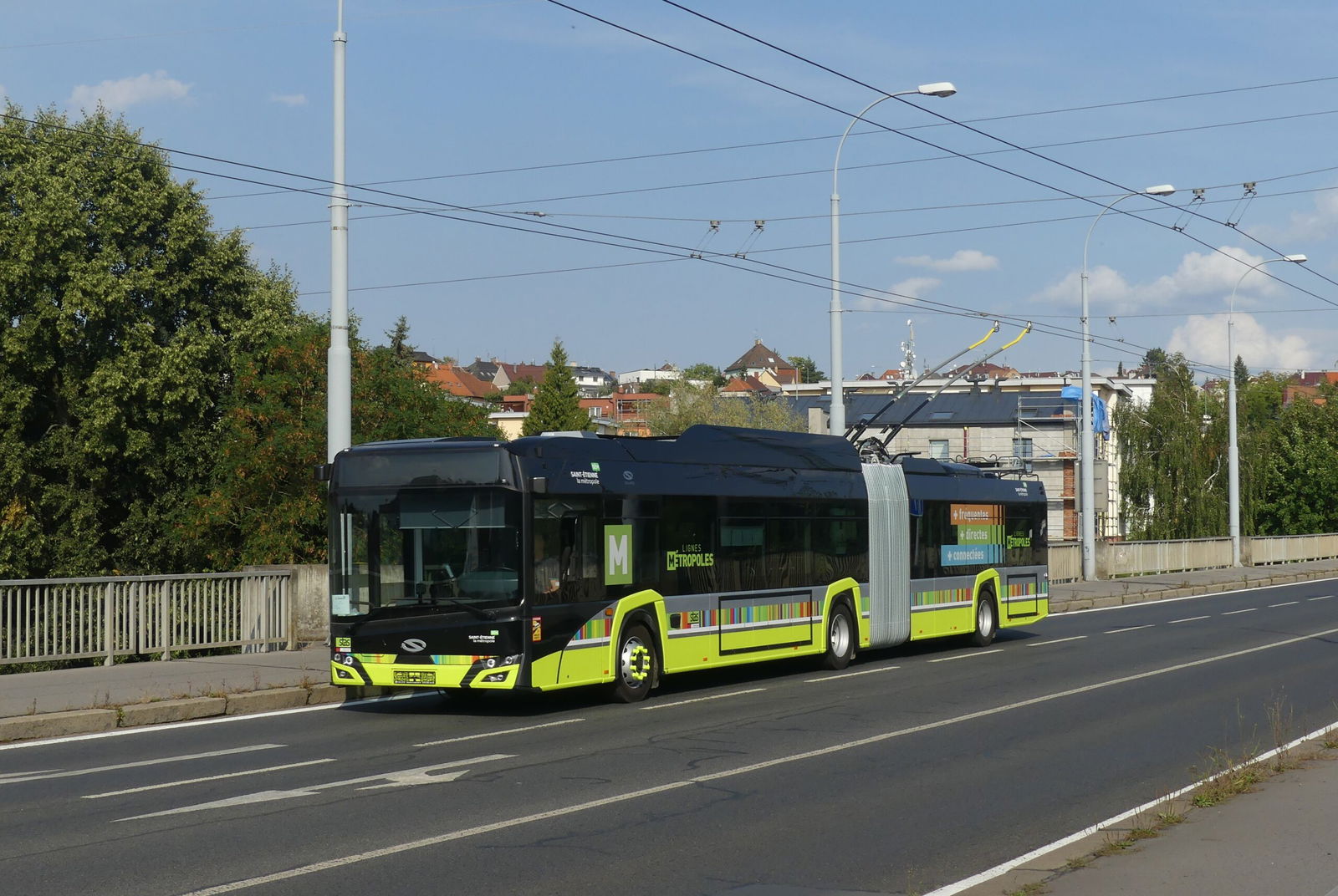
The next major milestone in the history of trolleybus operation in Saint-Étienne is the re-electrification of route M6, where trolleybuses will return after almost a quarter of a century. The ten Renault PER 180H articulated trolleybuses that had previously served this route exclusively were withdrawn from service in the early 2000s and then sold to Tula, Russia. The current M6 route links the Métare university campus with the city centre, but, with a length of only five kilometres and daily ridership of just around 7,000 passengers in 2023, it was increasingly unable to fulfil its role as an urban trunk route. The journey time of around 20 minutes between the two termini was not competitive for many passengers, while a direct connection was lacking between the multimodal hub at Châteaucreux station and the Fauriel district – an axis long missed by residents, university institutions and the area’s major employers alike.
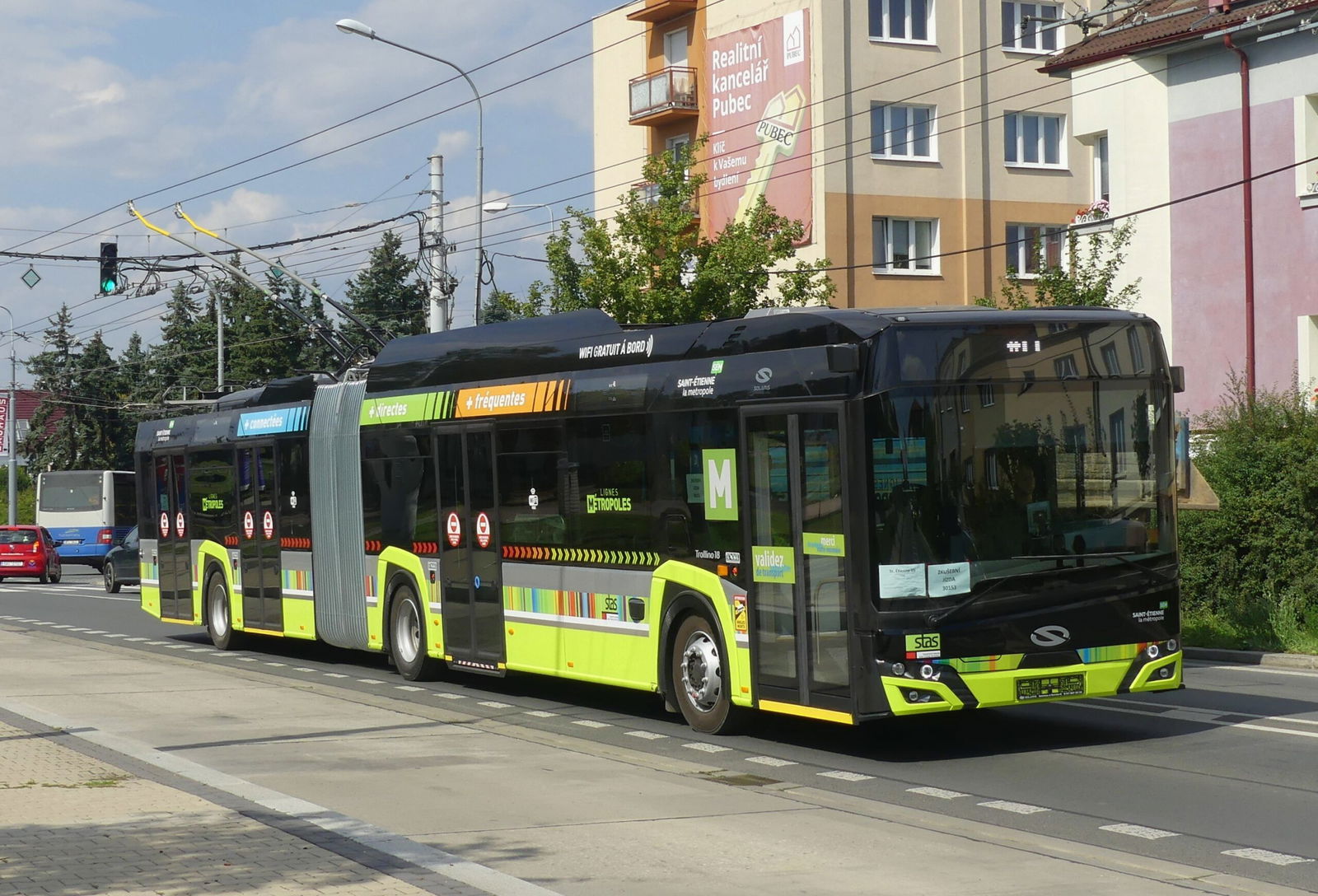
These issues are addressed by the M6+ project, under which the route will be transformed into a high-quality bus rapid transit service (BHNS – Bus à Haut Niveau de Service) operated by articulated trolleybuses. The concept provides for dedicated lanes, traffic-light priority, modern stops, greater operational reliability and shorter journey times, while operations will be based entirely on 100% electric IMC trolleybuses.
The project entails not only a vehicle change, but also a complete rethink of the network. The M6+ route will gradually be extended from IUT Métare via the city centre and Châteaucreux station to the Cité du Design area, and then towards Roch, while trolleybus operation may also be introduced on the M4 Bellevue – Châteaucreux route. The new corridor will link three university campuses, serving around 13,500 students, approximately 35,000 residents and nearly 20,000 jobs, thus bringing a significant part of Saint-Étienne’s social and economic life together along a single high-capacity transport route.
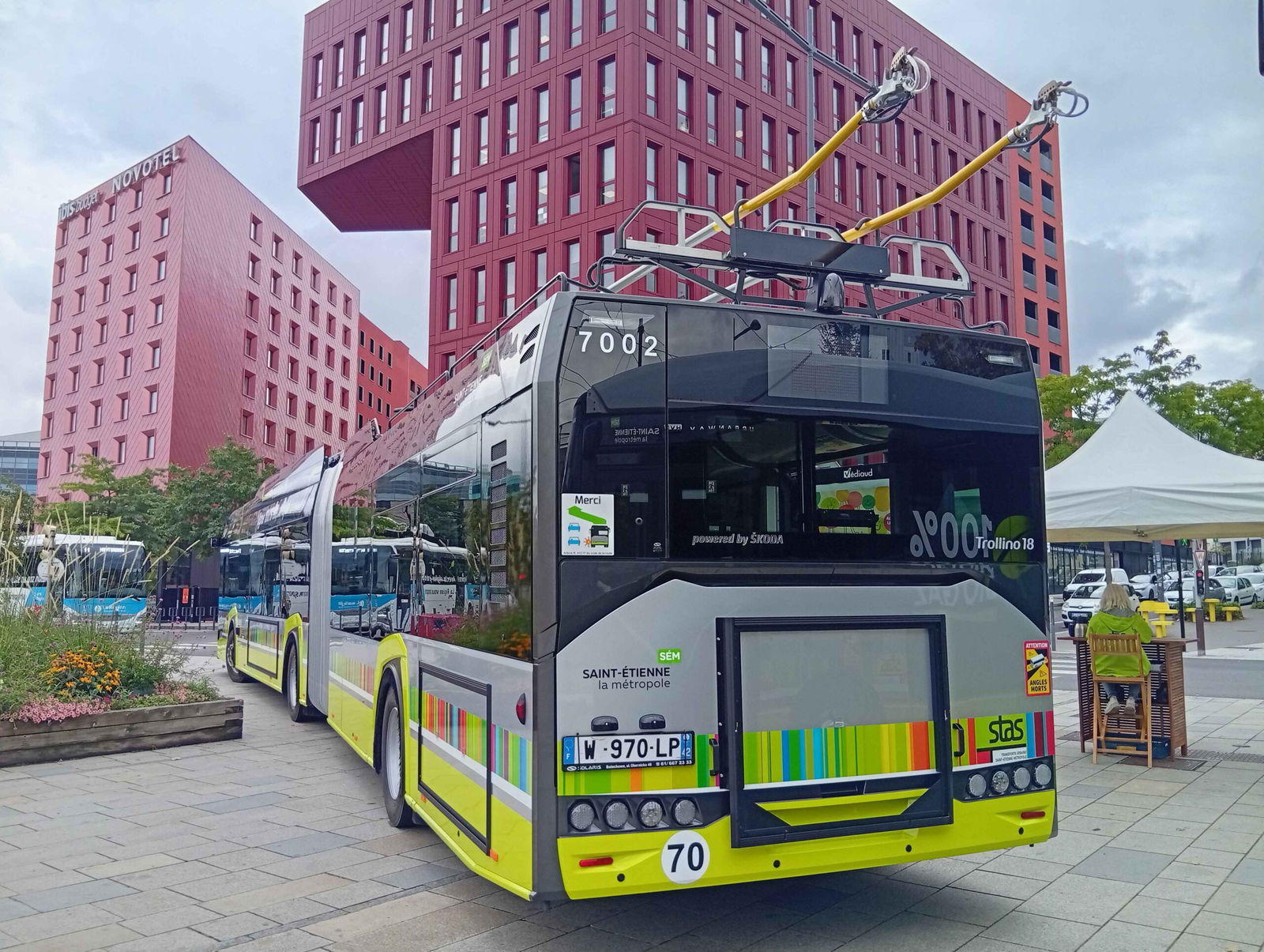
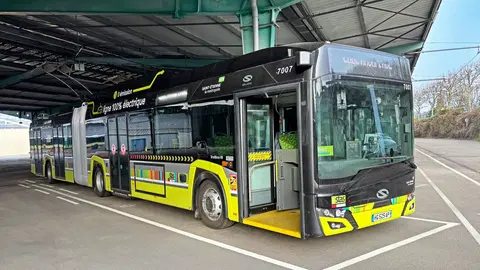
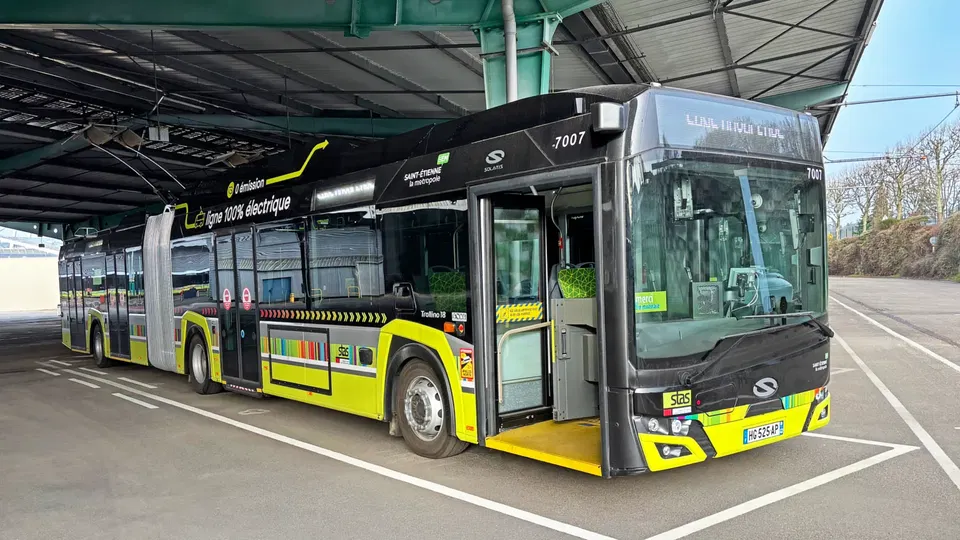
The overhead line infrastructure has undergone a complete reconstruction. The old network along Cours Fauriel was dismantled in 2022, the deteriorated concrete poles were replaced with steel supports at the beginning of 2023, and installation of the new overhead wiring was completed in summer 2023. Implementation is taking place in several stages. The return of trolleybus operation on route M6 will begin in 2026, when eight articulated Solaris Trollino vehicles will enter service in the first phase. A further six vehicles will arrive in a second phase, bringing the total number of articulated trolleybuses serving the M6+ route to fourteen. Construction of the full approximately 8.7-kilometre route between IUT Métare – Châteaucreux – Cité du Design – Roch will be completed by 2028.
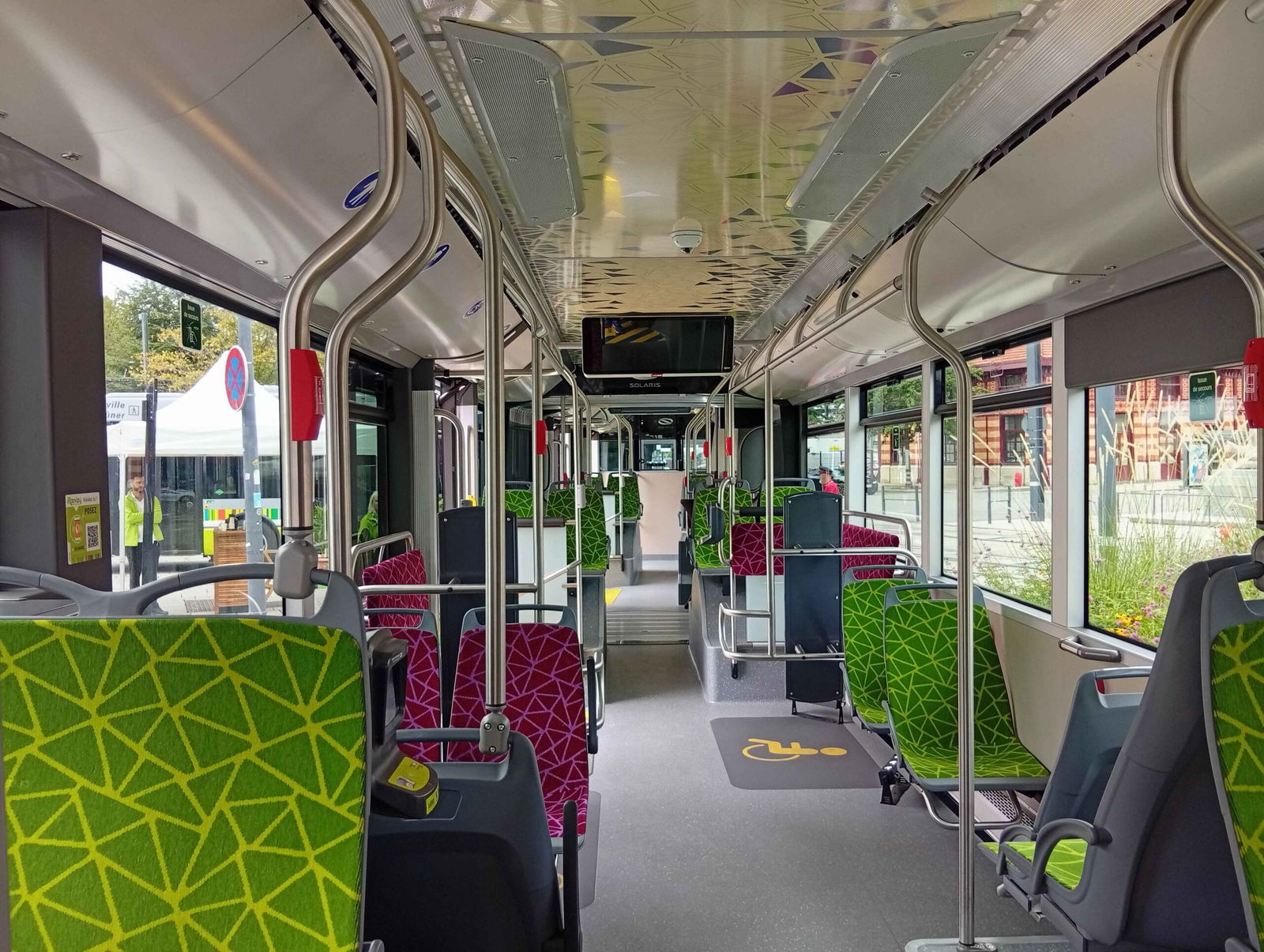
According to calculations by Saint-Étienne Métropole, M6+ will carry 11,500 passengers a day. The route will operate with a journey time of 28 minutes, headways of 8–10 minutes, 24–25 stops and a planned commercial speed of 18 km/h. The total cost of the investment is €28 million, including both vehicle procurement and infrastructure development. The relaunch of trolleybus operation on Saint-Étienne’s M6/M6+ route will therefore be ensured by eight articulated Solaris Trollino 18 vehicles entering service gradually in the first phase. The 18-metre vehicles, each valued at €1 million, are also capable of battery-powered operation and will bring articulated trolleybuses back to the urban network after more than twenty years. Each vehicle can carry 114 passengers, including seating for 32.
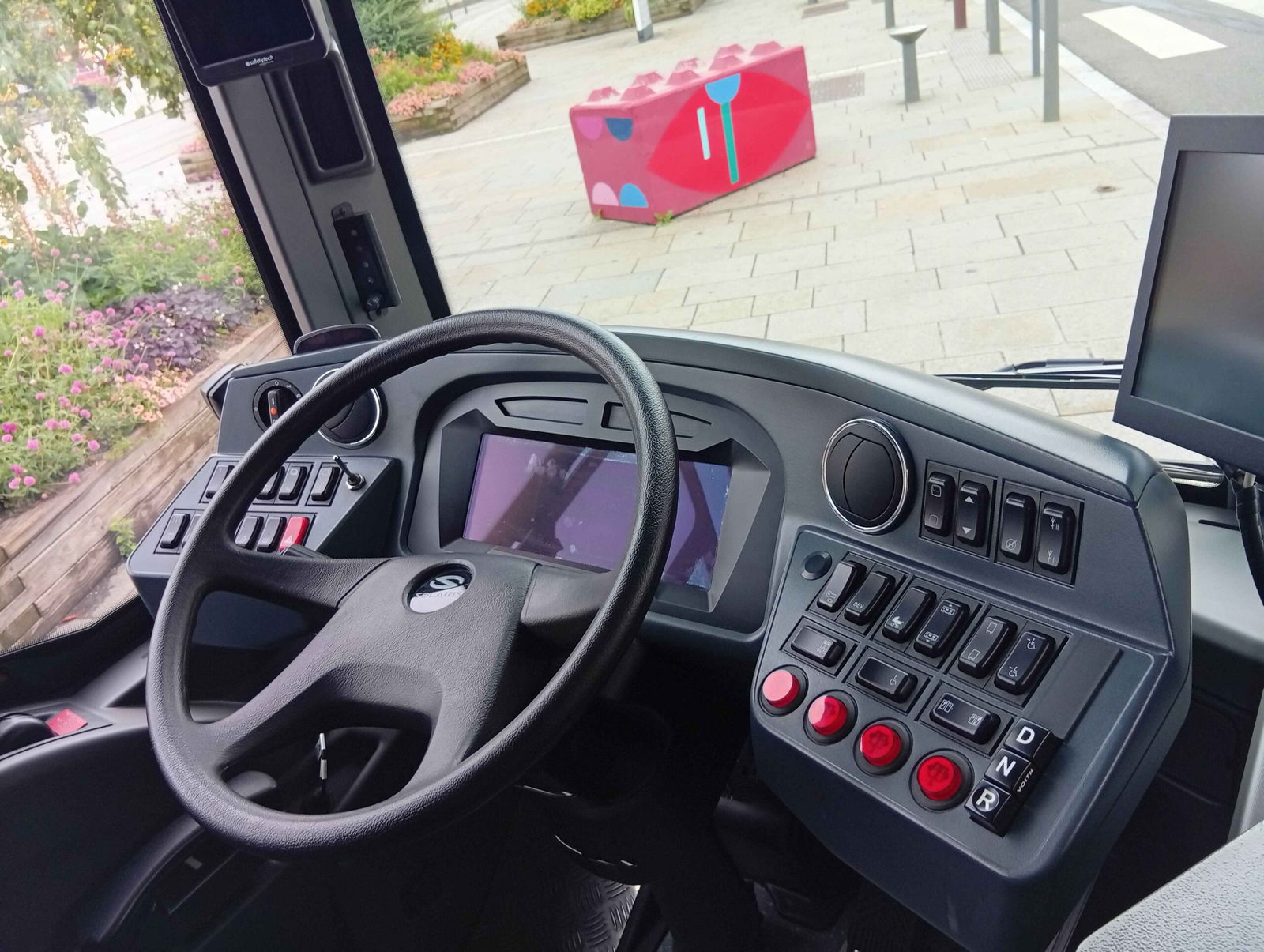
The propulsion system is based on Škoda BlueDrive electrical equipment, with an LTO battery pack and a traction motor rated at 250 kW. The vehicles’ on-board systems comply with the applicable European safety requirements: blind-spot monitoring functions, obstacle-detection-based driver-assistance solutions and a digital camera system replacing mirrors support drivers’ work and the safety of urban traffic.
Cover image: Le CR de Saint Etienne