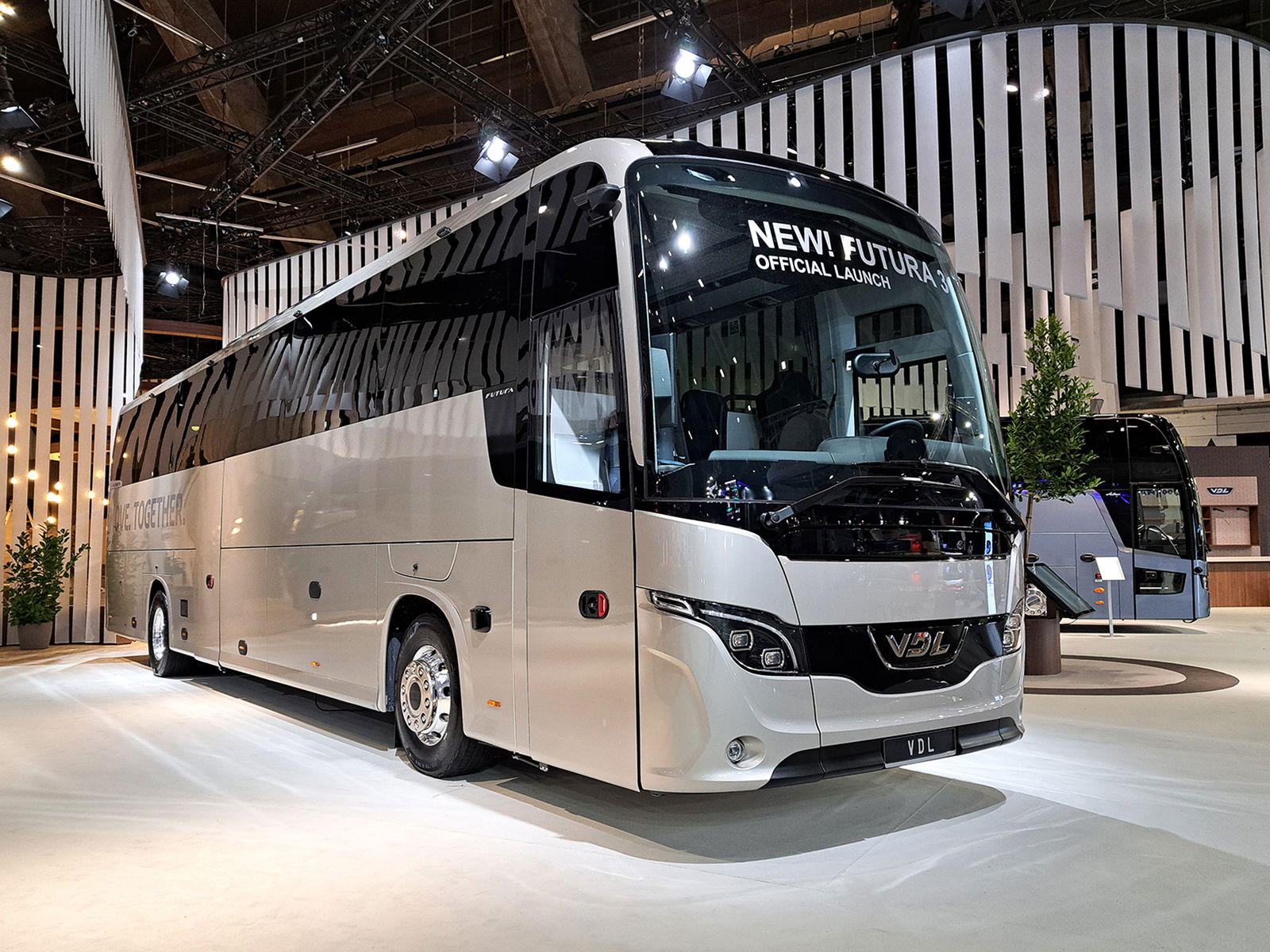
Busworld Europe 2025: the VDL Futura enters its third generation
From today, the bus industry will be focused on Brussels for a week, as Busworld Europe 2025, the sector’s largest international gathering, gets under way. On the press day of 3 October, only specialist journalists will be able to see the participating vehicles, but a day later this year’s edition of the world’s largest bus exhibition will open its doors to the general public. There will be no shortage of world premieres this time either, one of the most important being the debut of the long-awaited new generation of the VDL Futura. In one respect – timing – the Dutch bus manufacturer has beaten everyone else to it, as we were able to learn the details of the new Futura 3 at a press conference on the evening of 2 October, well before the exhibition’s official opening.
The latest generation of the Futura model family, a distinctive feature of the European coach scene with a history spanning more than four decades, is the third in numerical terms – at least if only the generations sold under the VDL brand name are counted: the model originally appeared as part of Bova’s range in 1982, before coming under the umbrella of its current rights holder following VDL’s acquisition of the company. The arrival of the new version had been known for some time, but until now the Dutch manufacturer had only released camouflaged prototypes and images showing tantalising details. The official launch was originally planned for 2024, but good work takes time, after all, and reports suggest that they did not cut corners on testing, so the delay is forgivable – especially as, following the acquisition of Van Hool last year, the group’s coach range could hardly be described as either limited or outdated.
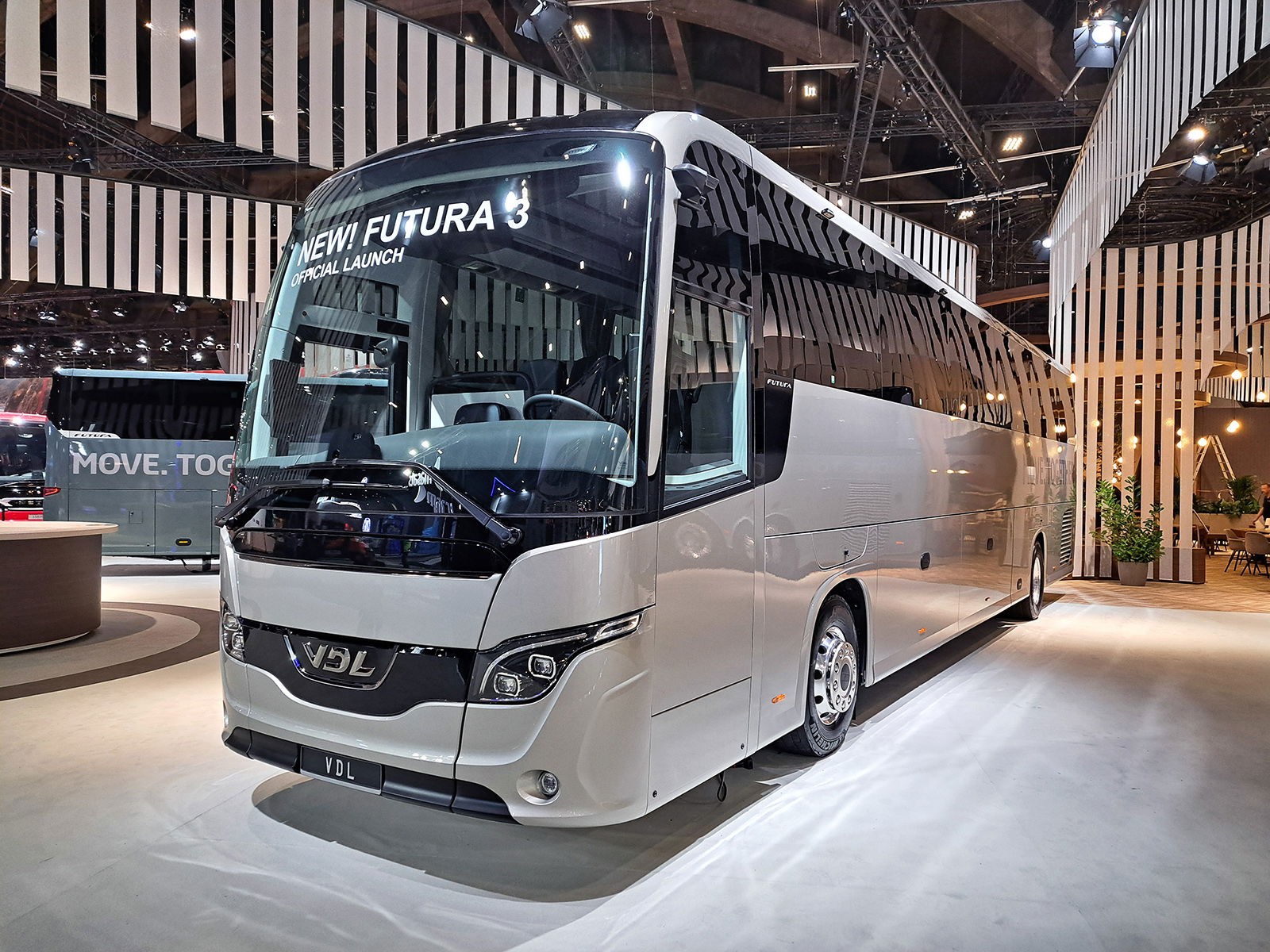
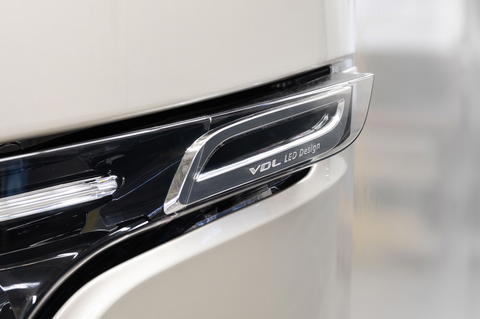
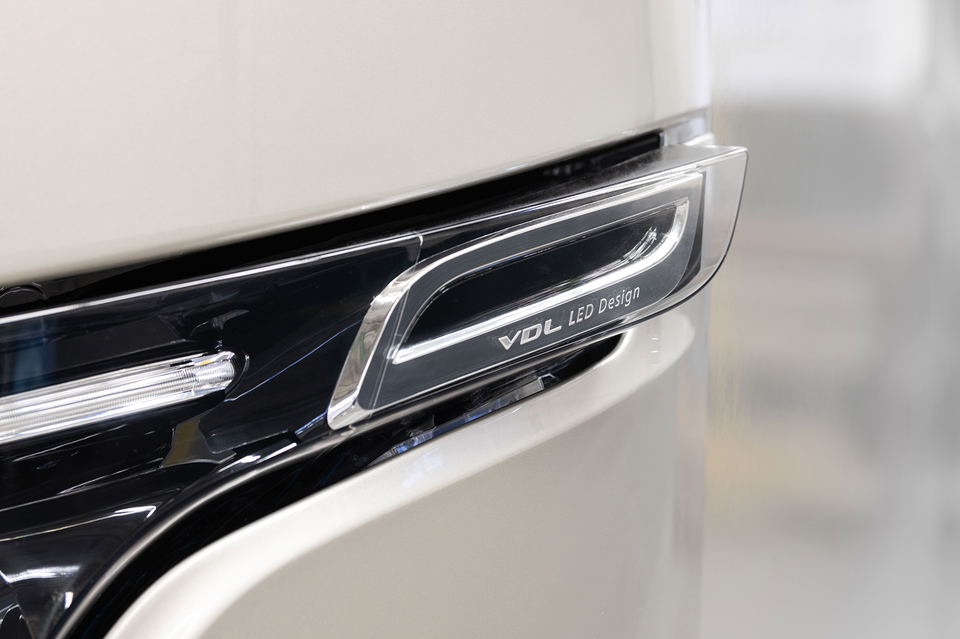
The most distinctive styling feature of the Futura range is its protruding, rounded nose, which has become increasingly restrained with each successive generation, yet remains recognisable in traces even on the latest generation presented now. The gloss-black strip that visually widens the front panel not only serves as an imitation grille, but also incorporates the badge and conceals the radar sensor for the active safety functions. Around the plastic corner elements, the designers have used sculptural surfaces to lend greater dynamism to the otherwise restrained styling, while the distinctive headlamps adorned with a slim LED strip clearly continue the design language introduced on the Citea family. The rear panel is similar not only in styling, as the complex light units are in fact identical to those used on members of the Citea range, reinforcing the brand identity while reducing development and production costs. A large ventilation grille extends between the lamps, its black finish echoing the design of the front end, while the pronounced vertical, sharper lines at the body corners serve an aerodynamic purpose, as has now become customary on modern coaches.
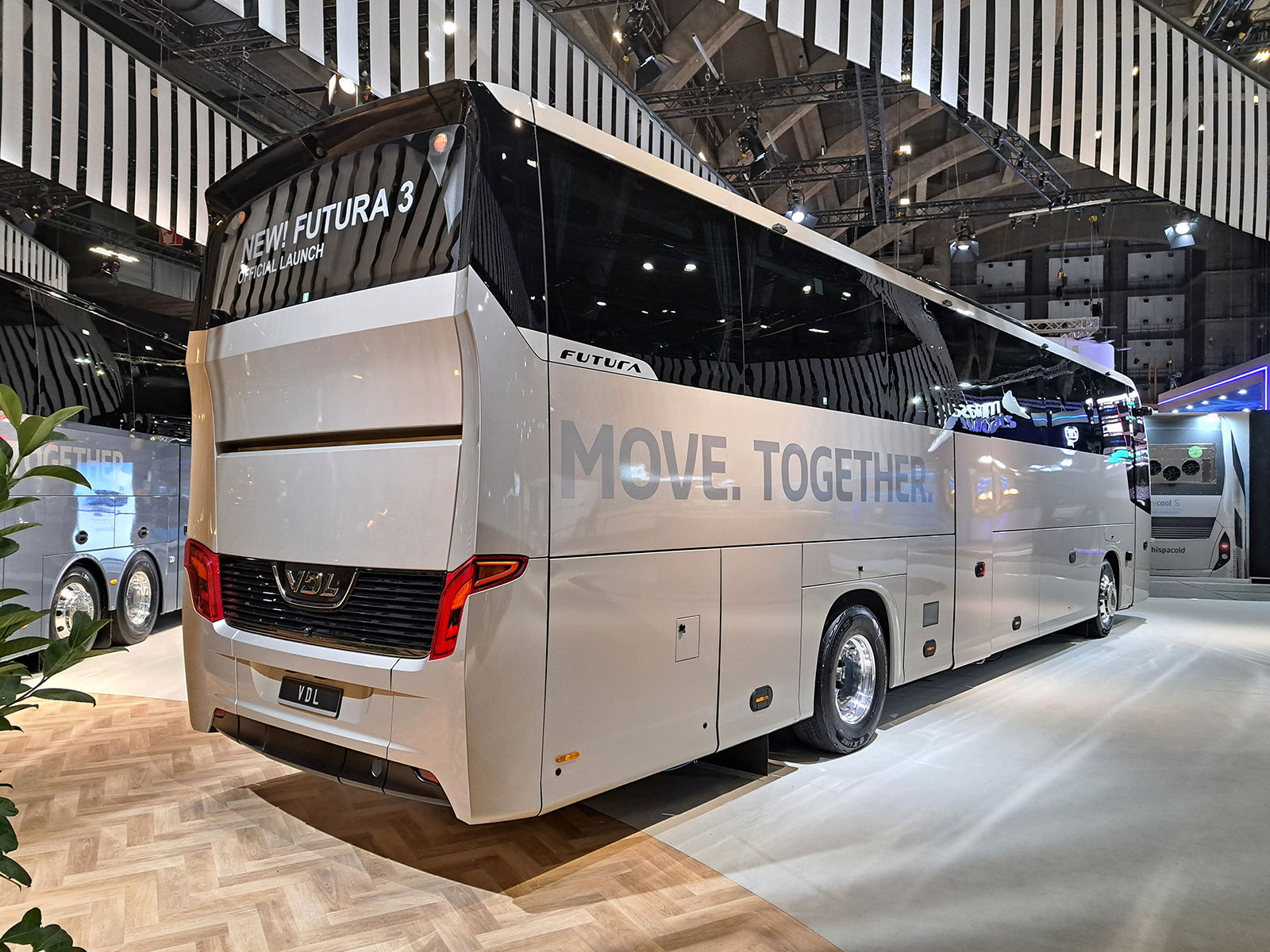
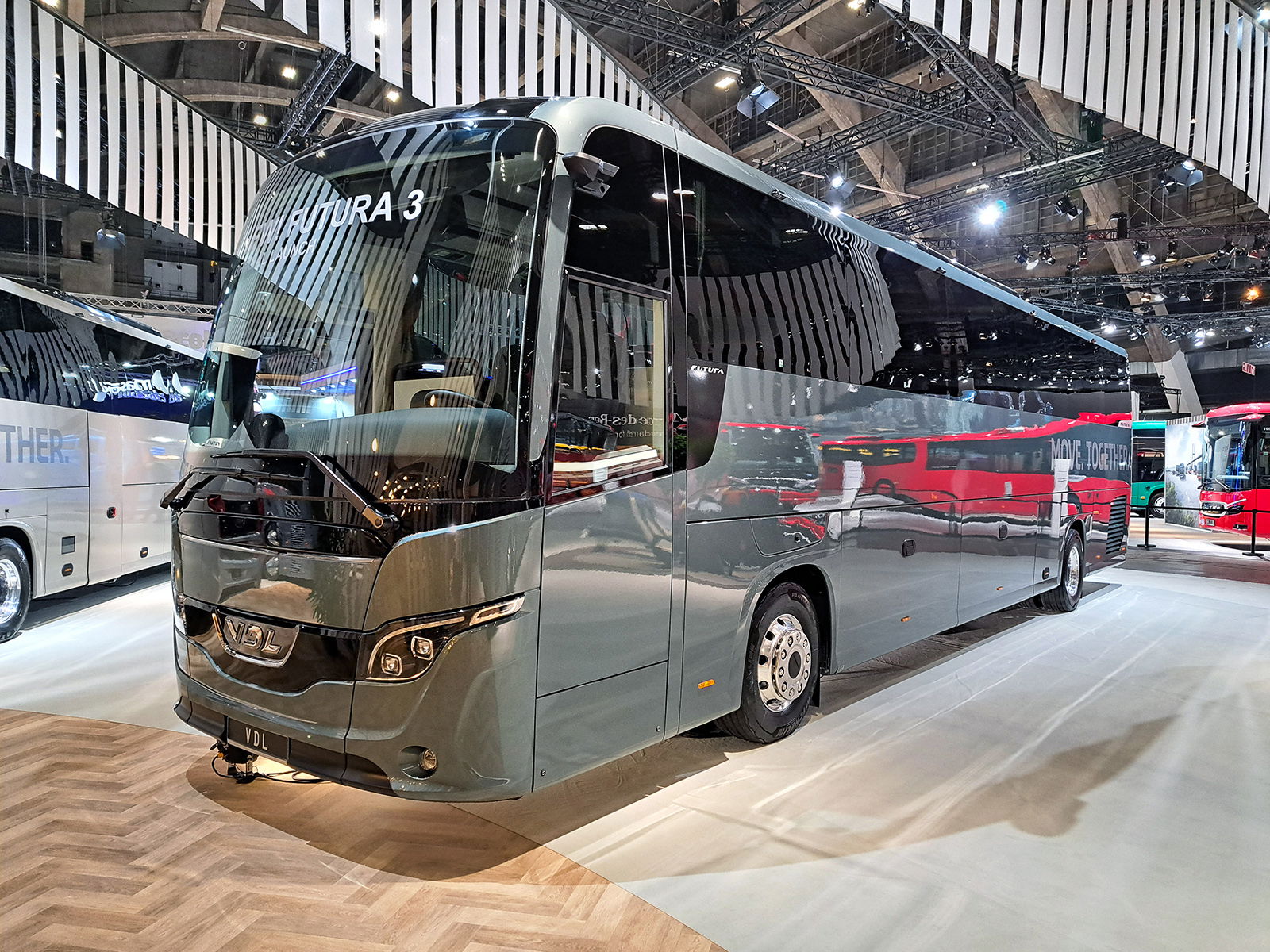
The first variant of the new model family to enter the market will be the two-axle Futura FHD-129, measuring 12,885 mm long, 2,550 mm wide and 3,703 mm high, and VDL has brought two examples to the exhibition. The display vehicles are fitted with 49 and 53 VDL Class 300 long-distance passenger seats respectively, sold under the Dutch manufacturer’s own brand name, while luggage capacity is 11.5 m3 as standard. Among the comfort improvements, VDL highlighted the more ergonomic, optimised driver’s workplace, passenger-compartment ambient lighting, carefully selected materials and a more efficient Eberspächer air-conditioning system.
According to the manufacturer, considerable emphasis has also been placed on more economical operation. As a result of weight reduction and aerodynamic improvements, fuel consumption may be up to 15% lower than that of its predecessor, according to VDL, making a significant contribution to reducing operating costs and enabling more sustainable operation. Judging by the bus’s proportions, the body structure itself is similar to that of the previous model, from which it has presumably inherited much. Naturally, the driver’s work is assisted by a range of advanced driver assistance systems compliant with the latest European regulations (Advanced Driver Assistance Systems, ADAS). The driveline has been carried over from the previous generation without major changes: the new Futura is likewise powered by a six-cylinder DAF MX-11 diesel engine meeting the Euro 6 emissions standard, producing 449 hp (330 kW) and 2,350 Nm of peak torque, paired with a 12-speed ZF TraXon 2 automated transmission. The larger DAF MX-13 engine is also expected to be available for the bus at extra cost.
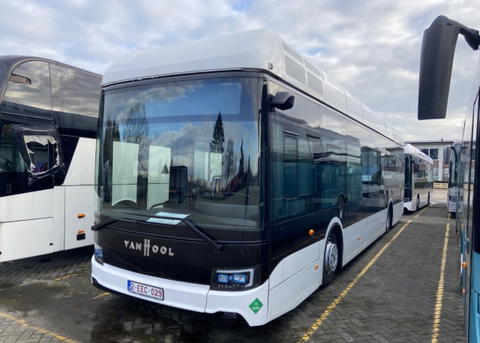
In addition to the long-distance model making its world premiere, visitors can also view a low-entry, 13.5-metre-long Citea CLE-135 electric bus on site. The display vehicle, with a 1-2-0 door configuration and a total of 47+1 Kiel Ligero 1000 HF passenger seats with raised backrests, is equipped with a traction battery pack with a total capacity of 368 kWh, partly integrated into the underframe (a pack of up to 647 kWh can optionally be installed), which supplies a ZF CeTrax central electric motor. Charging is via two CCS Combo 2 standard plug-in sockets, but VDL also offers pantograph fast charging on request for the innovative model, which features composite side panels and a sandwich-structure roof.
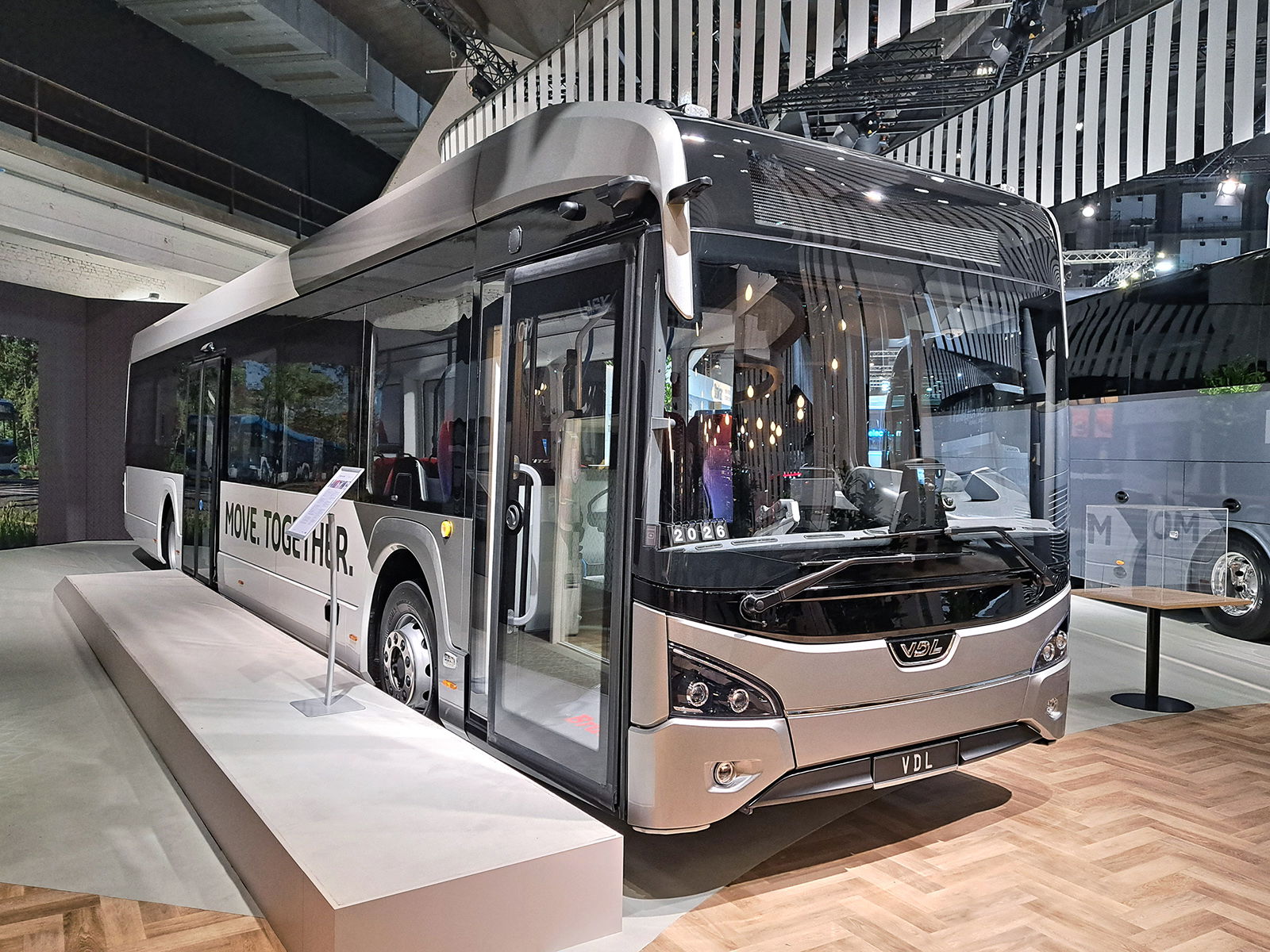
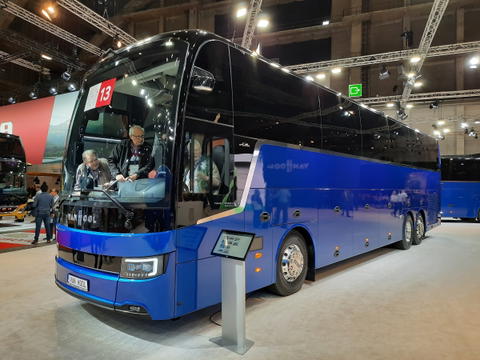
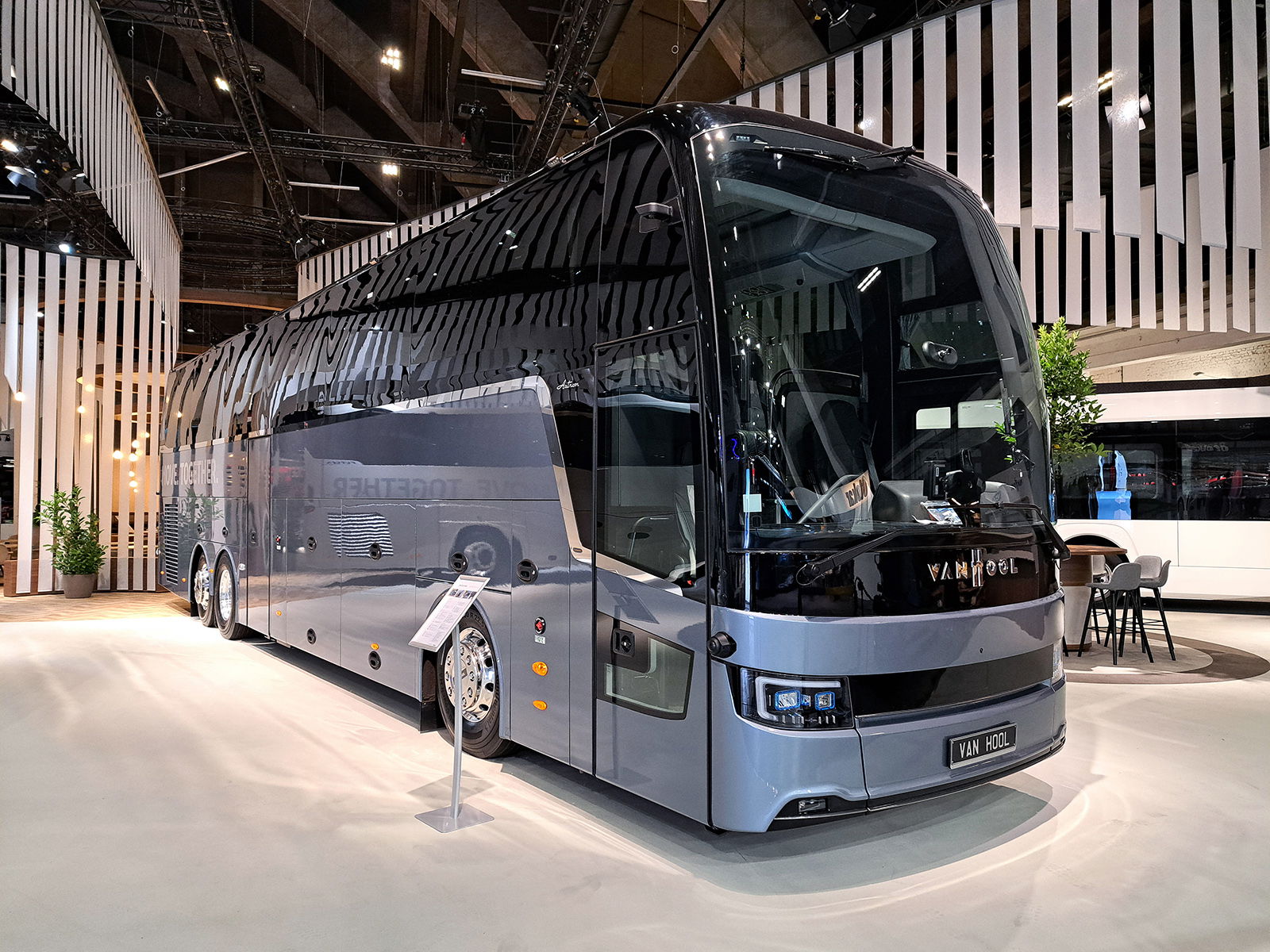
This year, Van Hool buses – from the company that went bankrupt in April last year – are appearing alongside VDL products on a joint stand, as the two brands together form the newly established VDL Bus Group, which is also officially making its debut to the general public and customers at the Brussels showcase. From the long-established Belgian bus manufacturer’s considerably reduced range, two models have arrived to represent the marque, at least among the vehicles on display in the exhibition hall, as a further two buses represent the brand in the outdoor area, although even this line-up is only a shadow of what was previously customary. The drive towards standardisation is probably behind the replacement of Van Hool’s model designation system, used for decades, with designations aligned with VDL’s system: the 13,440 mm-long and 3,795 mm-high, three-axle T17 Astron coach, representing the pinnacle of the single-deck range, is now listed as the Astron TSD-134, although apart from this there are no material changes – either mechanical or in terms of equipment – compared with previously.
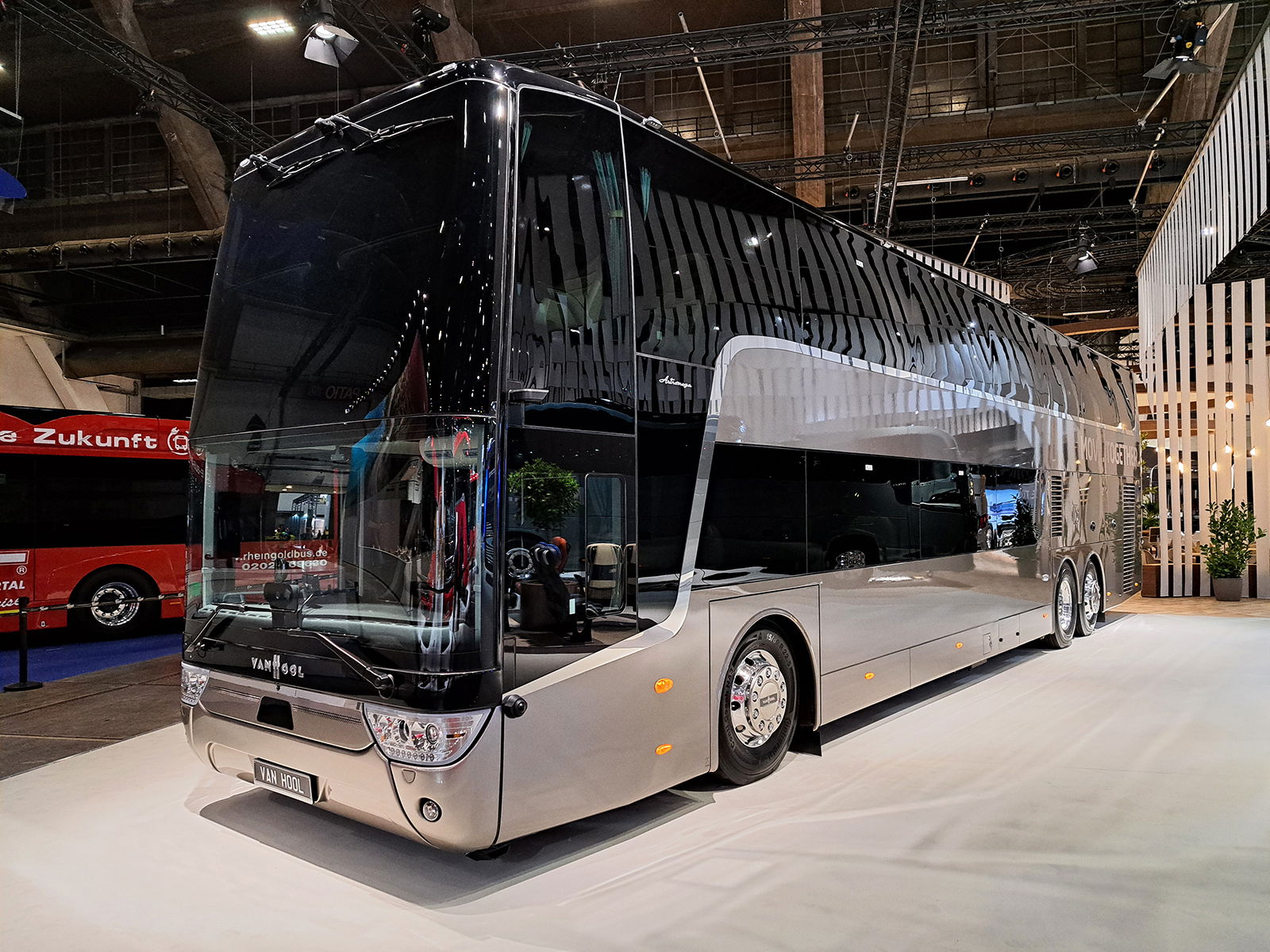
Also on display at the exhibition is the TDX27 Astromega double-deck coach, which has a strong following and a stable customer base, and also plays a significant role in Van Hool’s sales overseas. This model, too, has received a new name following the merger, with the 14,105 mm-long flagship version exhibited in Brussels now officially appearing at the event under the designation Astromega TDD-141.
A further two Van Hool buses await visitors in the aforementioned outdoor section: one example each of the single-deck Acron THD-143 and the ‘one-and-a-half-deck’ model now marketed as the Altano TOD-146 have also arrived.
Our other articles on the Busworld Europe 2025 exhibition in Brussels are available by clicking here !