Prevost unveils its revamped flagship model
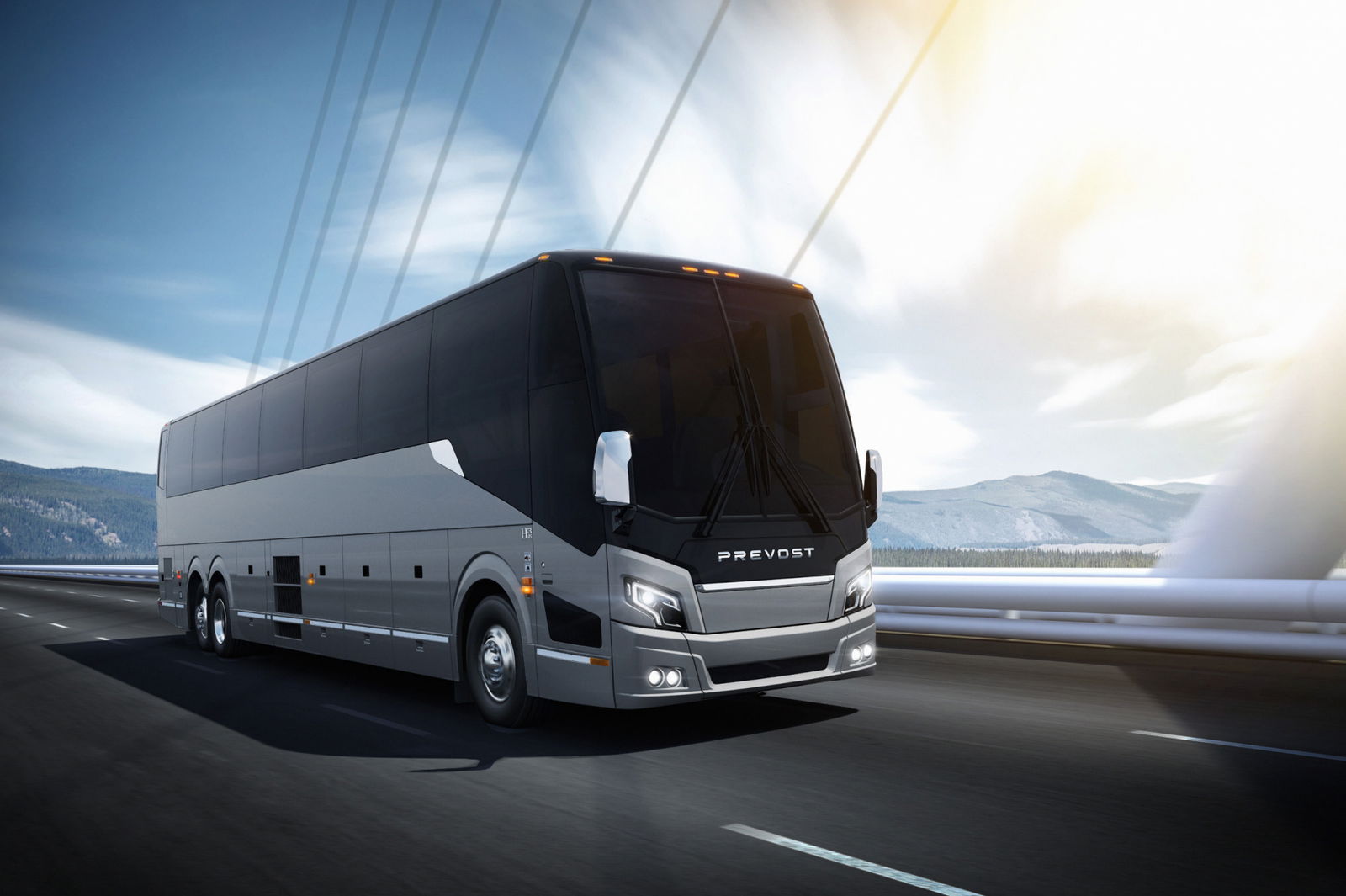
Canadian coach and luxury motorhome specialist Prevost pulled out all the stops for UMA EXPO 2023, held in Orlando, Florida, from 11 to 14 January. The long-established company, which operates as a subsidiary of Volvo Buses, used the event to unveil the rethought flagship of its range, the H3-45.
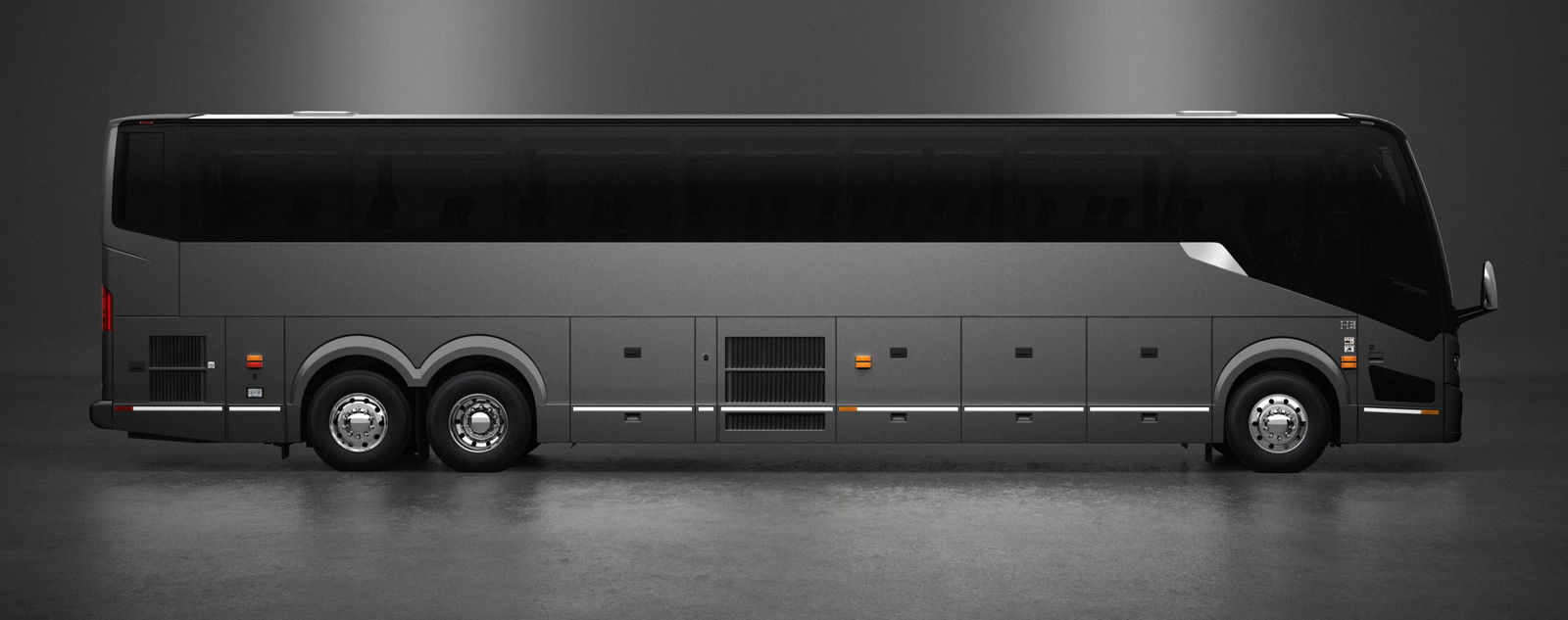
Prevost’s new flagship model features a monocoque construction with a stainless-steel frame structure. Like its predecessor, the model has a distinctive, angular design with a commanding presence, along with the usual characteristics of North American coaches – including a conspicuously long wheelbase of nearly eight metres and a short front overhang, a 1-0-0 door layout, large energy-absorbing bumpers, a split windscreen (and no rear window), as well as details such as amber clearance lights and bottom-mounted exterior mirrors. Naturally, all exterior and interior light sources use LED technology, while the bespoke front headlamps also feature an elegant LED strip serving as daytime running lights. The designers also placed great emphasis on the body’s aerodynamic design, which, according to Prevost, has reduced wind noise around the driver by almost 50%, while the slimmer window pillars improve the driver’s visibility. The wiper blades now clear an area 70% larger than before.
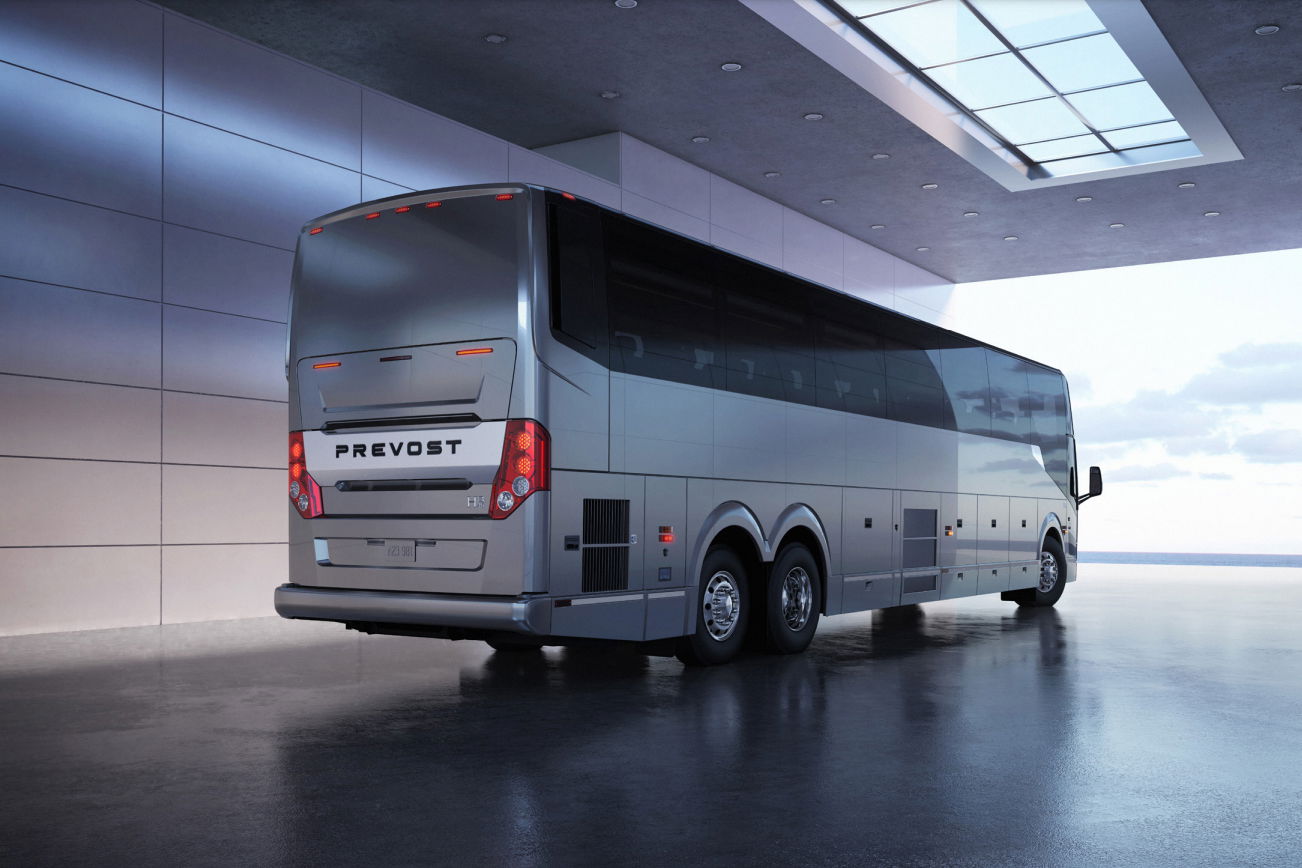
As this is a bus model for the American market, we can immediately prepare to convert between British and metric (SI) units when looking at the dimensions. As suggested by its designation, the H3-45 is available exclusively as a three-axle body variant measuring 45 feet (13.716 metres) in length, typical of large American coaches, with seating for 56 passengers as standard. The new model is 102 inches (2,590 mm) wide and 146.25 inches, or slightly more than 3,714 mm, high – for comparison, remaining within the parent company’s model range, this places it precisely between the Volvo 9700 and 9900 models. The underfloor luggage compartment has a capacity of 460 cubic feet, or nearly 13.03 m³, despite also housing the air-conditioning condenser unit, as is customary in North America. If the customer specifies a wheelchair lift, this figure falls to 430 cubic feet (12.18 m³). The new overhead luggage racks provide a further 117 cubic feet (3.31 m³) of storage space.
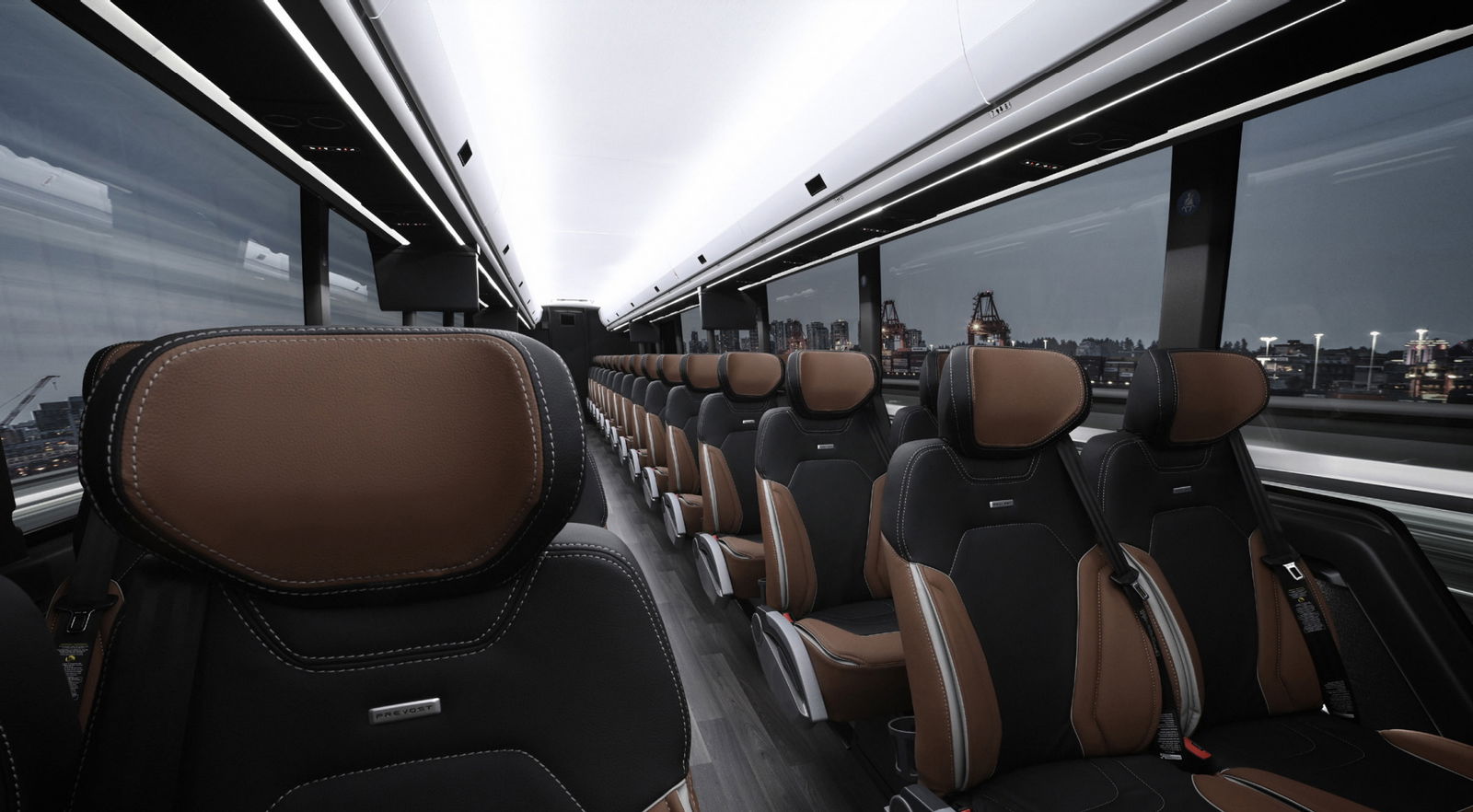
According to the presentation, the passenger compartment, rethought from the ground up, was inspired by passenger cars and aircraft. The steps leading into the passenger compartment are 7% wider than those of the predecessor, the corners have been rounded off, and the window divisions and grab rails have been revised; the brightness of the passenger-compartment lighting has also been significantly improved. In addition to ambient lighting offering six colours, the toilet compartment, Thermopan side glazing, multifunction steering wheel and navigation system are all part of the standard specification. Optional extras include a 360° camera system replacing the exterior mirrors, an auxiliary heater, covered luggage-rack shelves, 15-inch passenger-compartment monitors, WiFi service, 110 V and USB sockets for passengers, and a premium infotainment system. The driver is seated in an ISRI driver’s seat as standard, with a USSC seat available as an option.
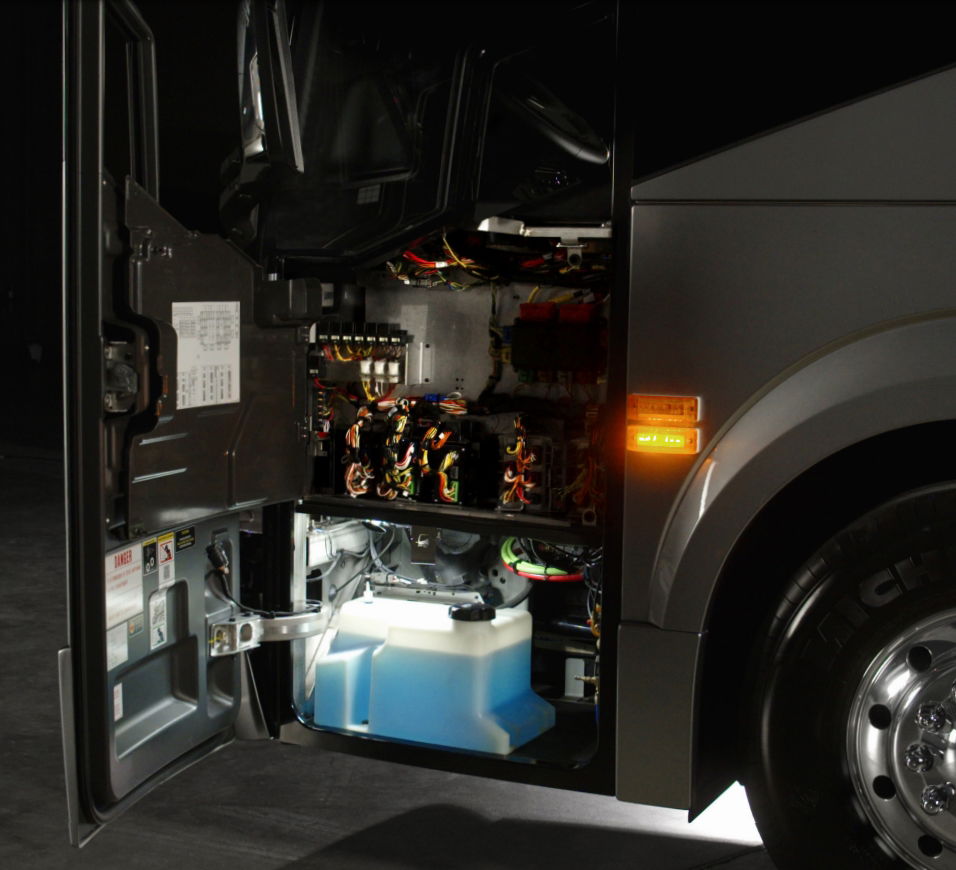
The parent company’s influence is evident in the powertrain: Prevost’s flagship is powered by the updated Volvo D13 engine in 435 hp (320 kW) form, delivering peak torque of 2,300 Nm, paired with an Allison 6+1-speed automatic transmission supplemented by the FuelSense 2.0 software control system, which helps reduce fuel consumption. Combined with the aforementioned aerodynamic improvements, this enables fuel efficiency up to 12% better overall than that of the predecessor, according to the manufacturer. To minimise the number of refuelling stops required on America’s seemingly endless highways, the coach can carry the astonishing amount of 222 gallons (840 litres) of diesel. During development, the designers also improved access to components frequently disturbed during maintenance: the front service hatch is new, for example, while the door covering the electrical connection box beneath the driver’s window has an opening 13% larger than before.
The H3-45 comes as standard with a rigid front axle, although comfort-oriented customers can also specify independent front suspension, in which case the turning-circle radius is reduced from 13.8 to 12.6 metres. Grip is provided as standard by Michelin 315/80 R22.5 tyres, but extra-wide Michelin XDN 455/55 R22.5 tyres replacing the twin tyres can also be specified for the drive axle at extra cost (in this case, 365/70 R22.5 tyres are fitted to the A and C axles). The non-driven third axle can also be specified in a liftable version. The bus has a kerb weight of 24,040 kg (23,678 kg with super-single tyres). Standard safety equipment includes cruise control, tyre-pressure monitoring, ABS and ESP, but the automatic fire-suppression system already mandatory in Hungary is only listed as an option, as is the hydraulic retarder available for the Allison transmission.
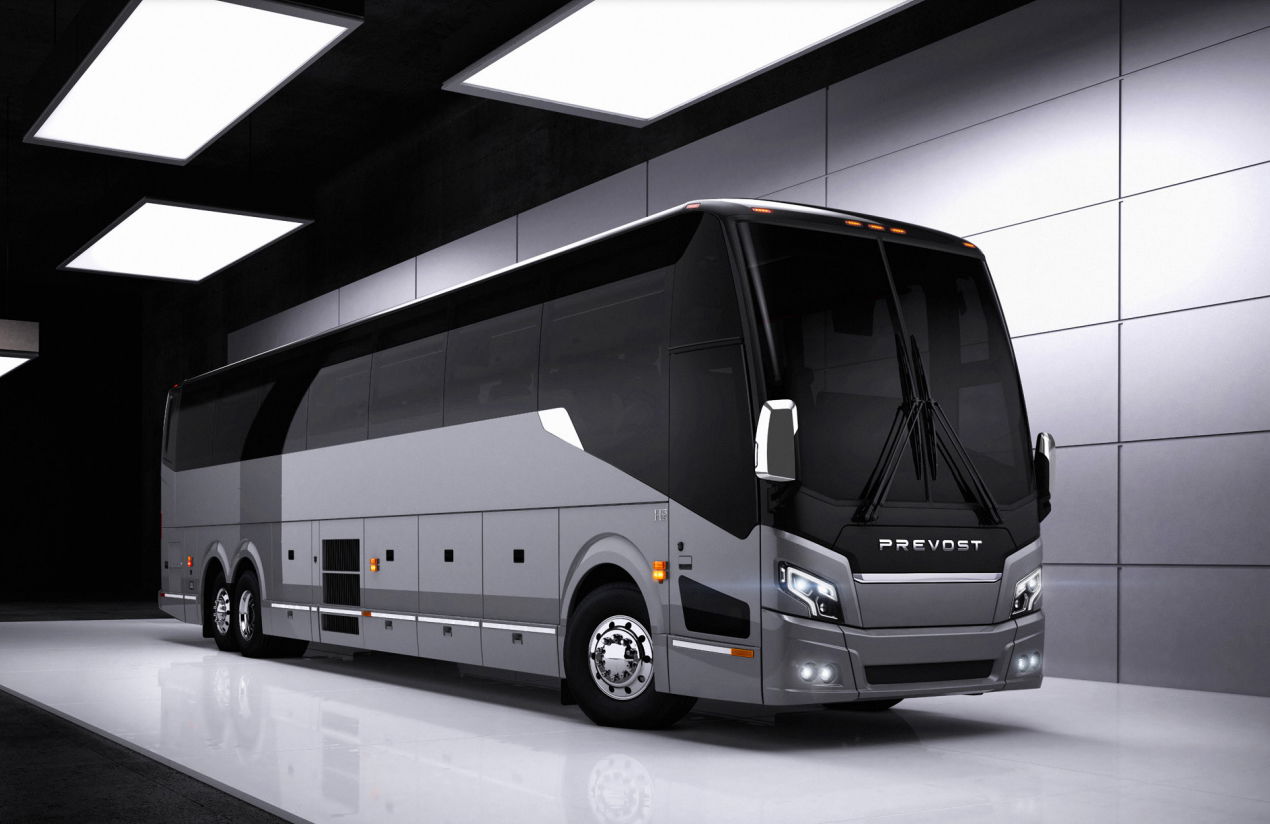
Following its world premiere, the demonstrator coach displayed at this year’s UMA EXPO will embark on a multi-month demonstration tour. Until mid-April, Prevost’s new pride and joy will also appear at a number of North American exhibitions and industry events – including the inaugural Busworld North America exhibition taking place from 4 to 7 February – in chronological order, in Tampa, Detroit, West Palm Beach, Las Vegas and Toronto.
Photos: Prevost Car