Inside a BRT system – a visit to Istanbul’s Metrobüs network
As promised, we report on our visit to the operational centre of Istanbul’s BRT system, Metrobüs, which we were able to take part in between 26 and 28 May as part of an accompanying programme for the trade press, courtesy of the organisers of the Busworld Turkey 2022 trade fair, at the invitation of the network’s operator, the İstanbul Tramvay ve Elektrik Tünel (İETT) transport company.
We Hungarians can only know dedicated-lane Bus Rapid Transit systems, or BRT for short, which replace heavily used tram and, above all, metro lines with buses, as distinctive transport solutions found in the major cities of faraway countries – let us set aside for now the articulated buses enhanced with optional design packages that manufacturers call BRT-specific. This is precisely why we were particularly pleased to learn that, as media partners of the Busworld Turkey 2022 fair, we would be able to look behind the scenes of Istanbul’s Metrobüs network and, while there, naturally also travel on the line. The visit took place on the morning of the exhibition’s second day. Metrobüs management at İETT gave the international group of journalists a very warm welcome at the depot in the Edirnekapı district, which has served as the BRT system’s control centre and primary bus garage since 2013. In a brief introductory presentation, our hosts outlined the history and key facts of Europe’s busiest BRT network and the world’s first intercontinental one.
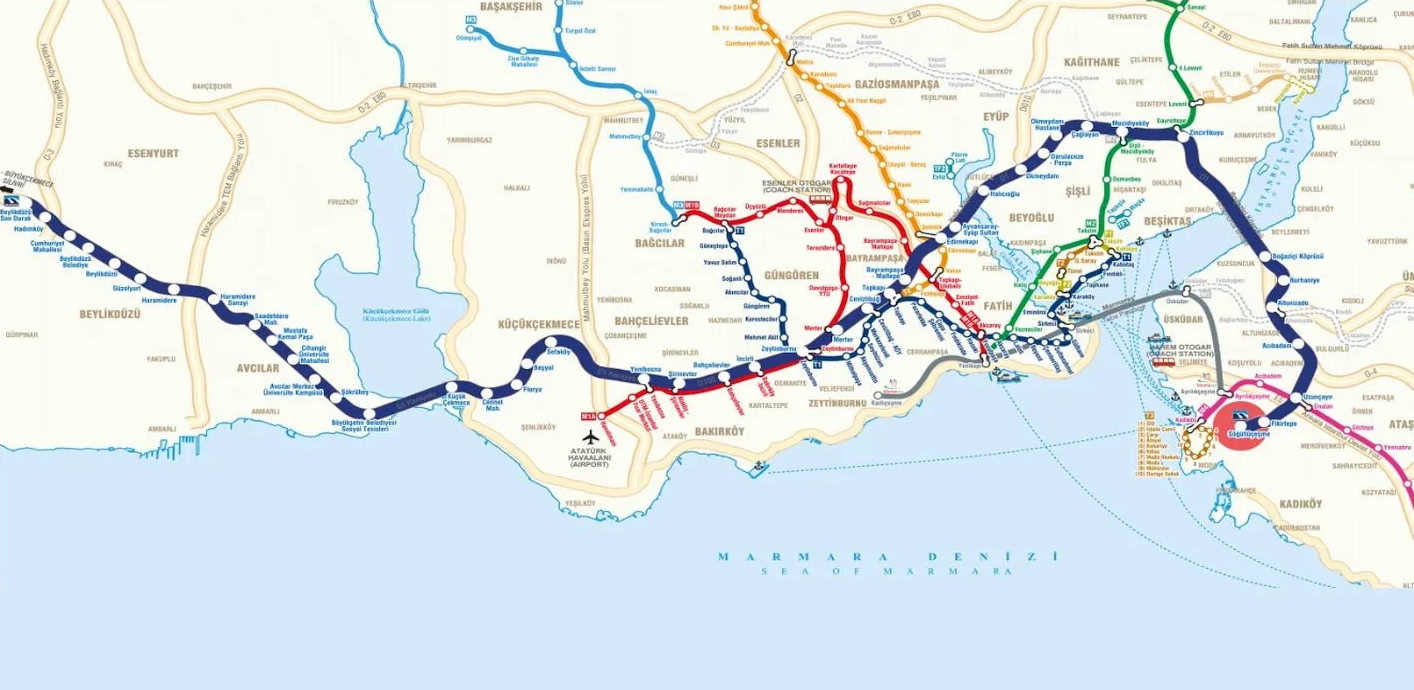
In the first decade of the millennium, Istanbul expected the construction of the BRT system to reduce traffic density and create a fast, convenient east–west transport link, all at a considerably lower cost than building a conventional metro. The Metrobüs, running along the D.100 trunk road that crosses the country – in other words, the local route 34 family – now serves almost one million passengers a day, making it today, jointly with Curitiba in Brazil, the world’s second busiest BRT route family after the network in Bogotá, Colombia, which is used by an average of 1.98 million people every day. The current line, approximately 52 kilometres long, was built up gradually over the years, consuming just over 259 million dollars, or HUF 61.7 billion at the average exchange rate at the time (for comparison, Budapest’s M4 metro, also built during this period, cost HUF 452 billion). The first, 18.2-kilometre section with 15 stations (Avcılar-Topkapı) was completed by September 2007 in just 77 days. The second (Topkapı-Zincirlikuyu) opened exactly one year later, extending the line northeastwards by a further 11.8 kilometres and 11 stations. The third phase (Zincirlikuyu-Söğütlüçeşme), 11.5 kilometres long and adding another eight stations, was inaugurated in February 2009, taking the Metrobüs system across the Bosporus to the Asian side of the city and to its current eastern terminus. The fourth and most recent section to date (Avcılar-Beylikdüzü) entered service somewhat later, in 2012, extending the line westwards for the first time by 9.7 kilometres and 11 stations. In the long term, İETT plans to establish three further BRT lines: according to preliminary studies, the future route 2 would carry almost 1.14 million passengers daily, route 3 just over 54,000, and route 4 as many as 1.46 million.
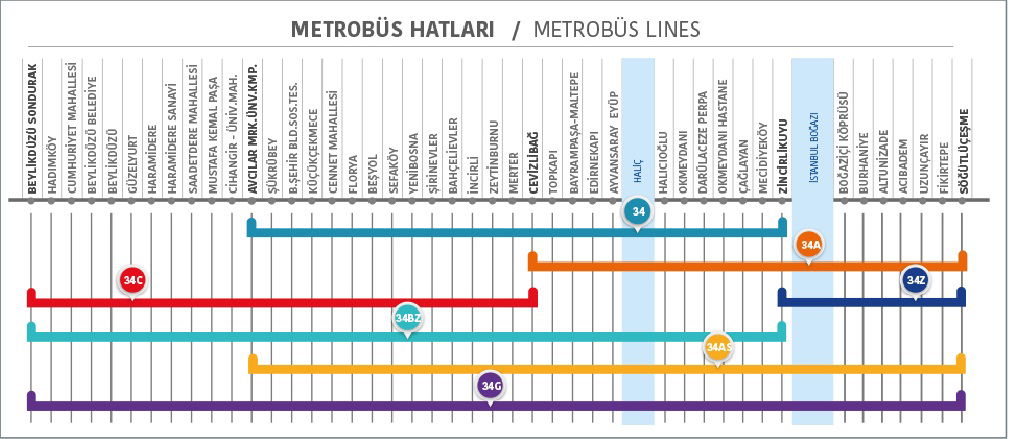
At present, BRT buses run on just one exceptionally long route in Istanbul, although not every service operates along its full length; including short workings, the system therefore comprises a total of seven different routes. Combined, the buses cover more than 260,000 kilometres per day on these routes, amounting to just over 7,400 round trips. The vehicles operate along the line at a predetermined speed of precisely 38 km/h – the second fastest in the world, incidentally: only Rio de Janeiro’s BRT network in Brazil surpasses the Metrobüs in this respect, with a prescribed speed of 40 km/h. At the busiest stops, buses follow one another at intervals well below one minute, 24 hours a day – any greater service frequency would be pointless, as it would require vehicle speeds to be reduced.
The bus lanes running down the middle of the generally dual five-lane trunk road are now separated from other traffic by fencing in most places, effectively keeping private motorists, who initially occasionally dared to encroach onto the BRT track, out. As buses have only one lane in each direction, a vehicle rendered immobile by a technical fault can cause serious disruption across the entire line. The stops have central platforms, while the vehicles – unlike common practice on many other BRT networks worldwide – have passenger doors only on the right-hand side in the direction of travel, with the exception of one type. Consequently, left-hand running applies on the Metrobüs line instead of the right-hand traffic otherwise used on Turkish roads.
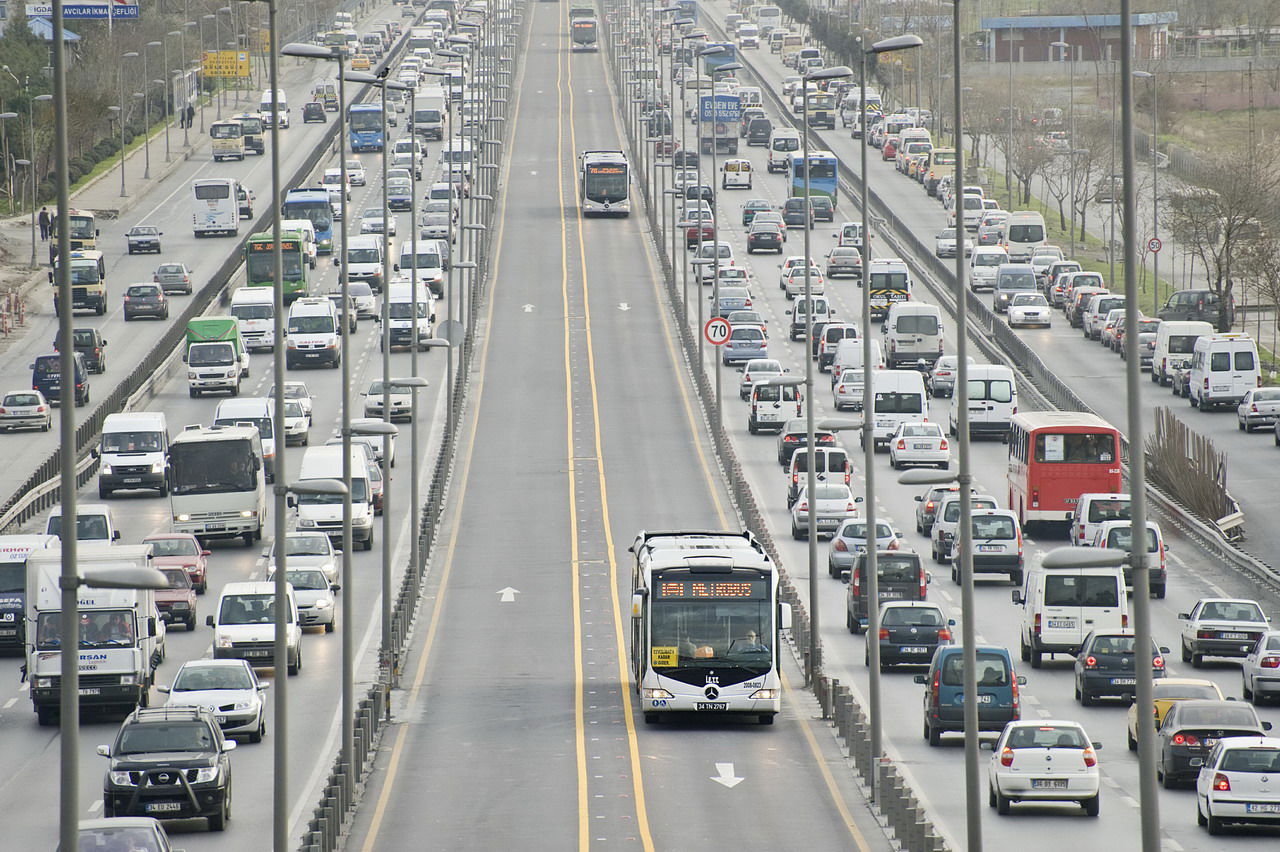
Over the years, the system has lived up to expectations, rapidly becoming popular among passengers thanks to the radical reduction in journey times. The Metrobüs has won several international industry awards over the years, while helping to reduce car traffic and greenhouse gas emissions. Annual ridership began at 7.8 million in 2007 and, following continuous growth, reached its peak to date in 2019, the year before the coronavirus pandemic: 297 million people used the Metrobüs over the course of that year alone. The outbreak of the pandemic then brought a sharp decline – annual ridership fell to 168 million in 2020 – and the previous level has not yet been regained, with 206 million passengers travelling on BRT buses last year. During the busiest periods of the day – between 7 and 8 in the morning and from 17 to 19 in the early evening – as many as 100,000 passengers per hour pass through the network.
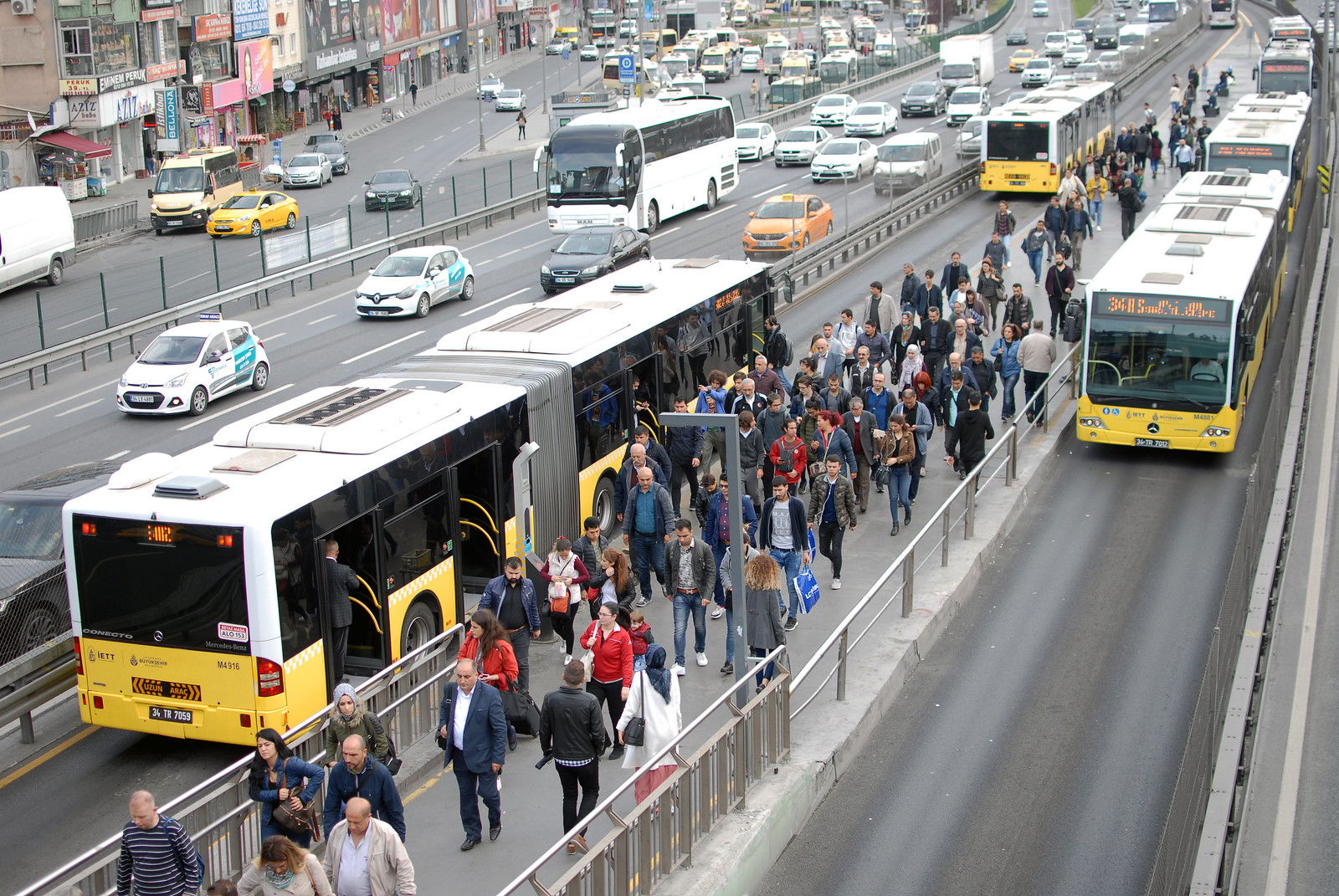
A total of 1,394 drivers are currently employed by the Metrobüs division, which operates as a separate entity within the transport company. They are selected, experienced and trained drivers: newcomers cannot be assigned to BRT lines. In the long term, however, it pays to work here, as senior employees can earn three times the average Turkish bus driver’s wage, although this entails working six days a week, eight hours a day. As for the vehicles, a bus generally operates for almost 16 hours a day, though individual vehicles may remain continuously in service for as long as 24 hours, naturally with drivers working in shifts.
The system’s operating cost per kilometre amounts to 6 million dollars annually, the fifth highest in the world. Only around 40% of this is covered by ticket sales revenue, so ongoing financial support from the city is required to sustain the operation.
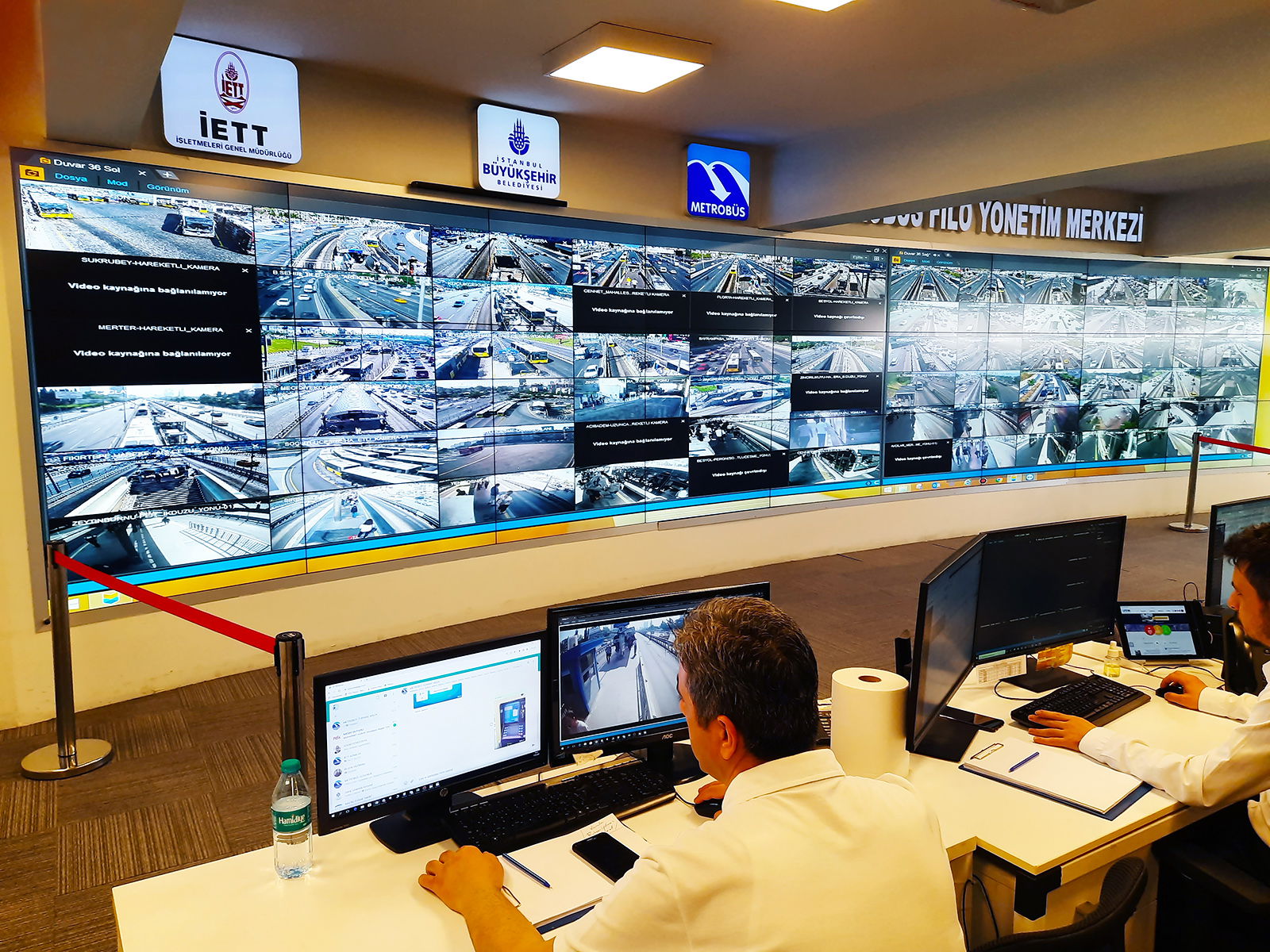
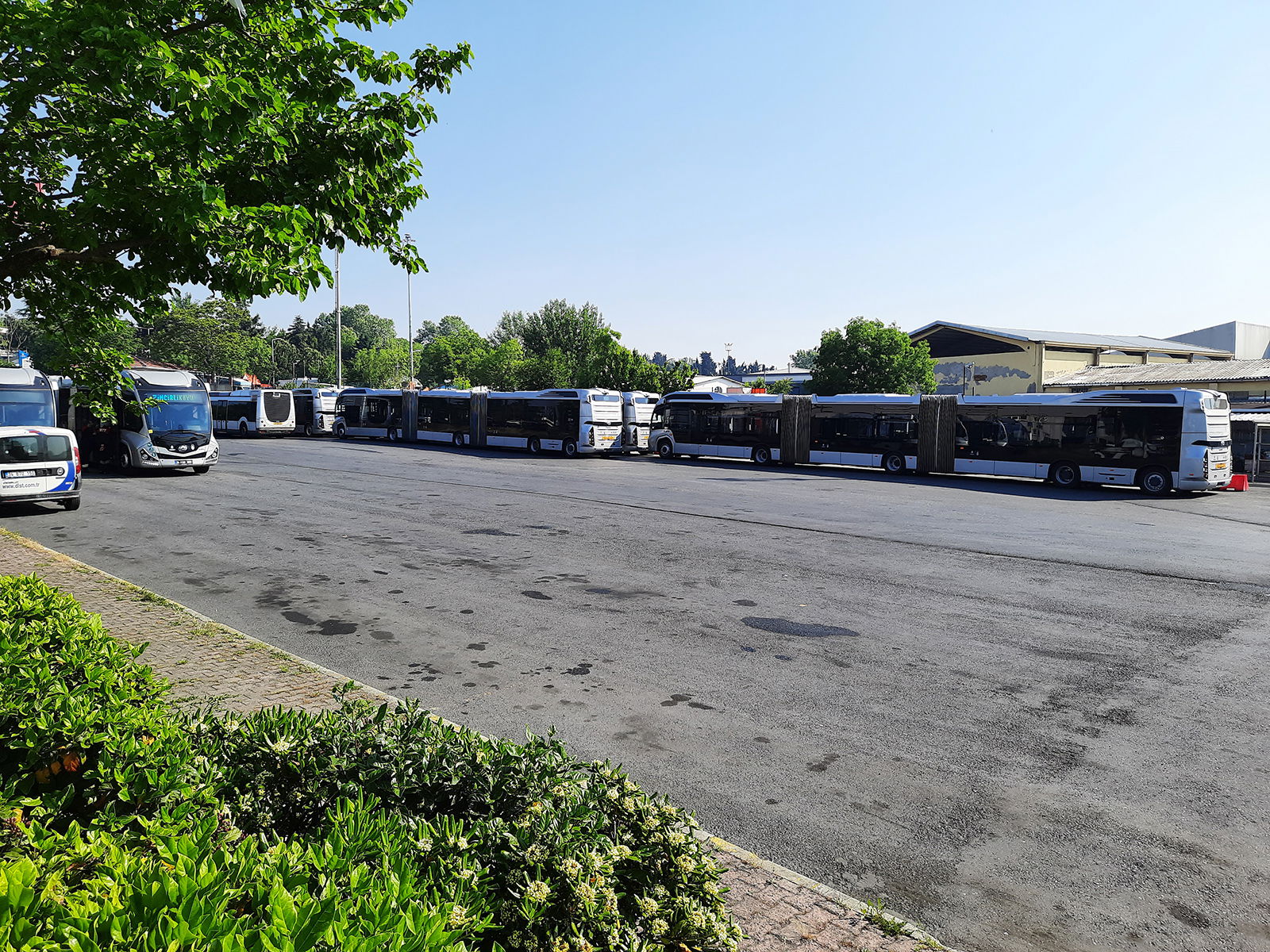
Following the overview, we were also able to visit the network’s control centre in the depot’s main building, where traffic supervisors, dispatchers and security staff – with total staffing approaching 300 – carry out their work. In the control room, feeds from the more than 400 security cameras installed at stations can all be displayed on a single giant screen, much as on a genuine metro system. This was followed by a short tour of the depot, where we could also familiarise ourselves with the vehicles serving the line.
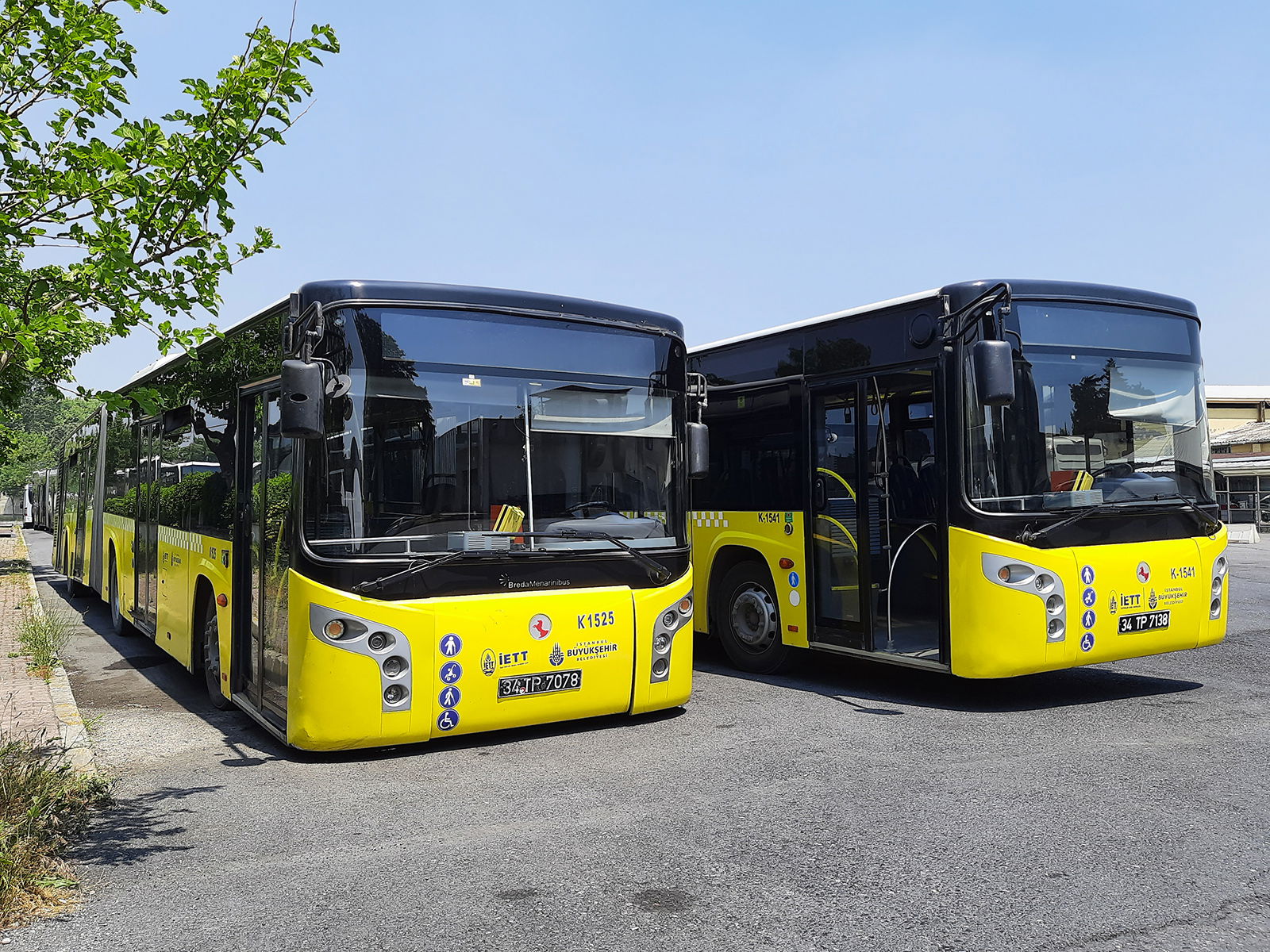
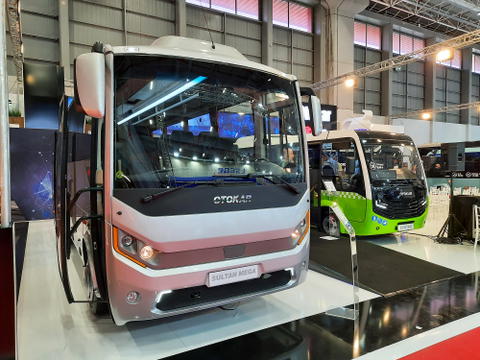
The fleet’s average age has risen considerably in recent years (it currently comfortably exceeds 10 years), so fleet renewal is on the agenda, with the trend clearly pointing towards the use of types with greater passenger capacity. Products made by domestic manufacturers openly receive preference in procurement, as the transport company receives 15% state support when purchasing them – it is no coincidence that in recent years Otokar, too, found it worthwhile to invest in developing a type intended specifically for Istanbul’s BRT network. The shift to electric buses, which in many parts of Europe is also being pushed by politicians, is not yet on the agenda in Turkey – primarily because of topographical conditions and the difficulties of developing the necessary charging infrastructure. Despite the segregated track, the introduction of autonomous vehicles also remains a distant prospect for now, although İETT is already experimenting with a six-seat autonomous minibus in an area closed to traffic.
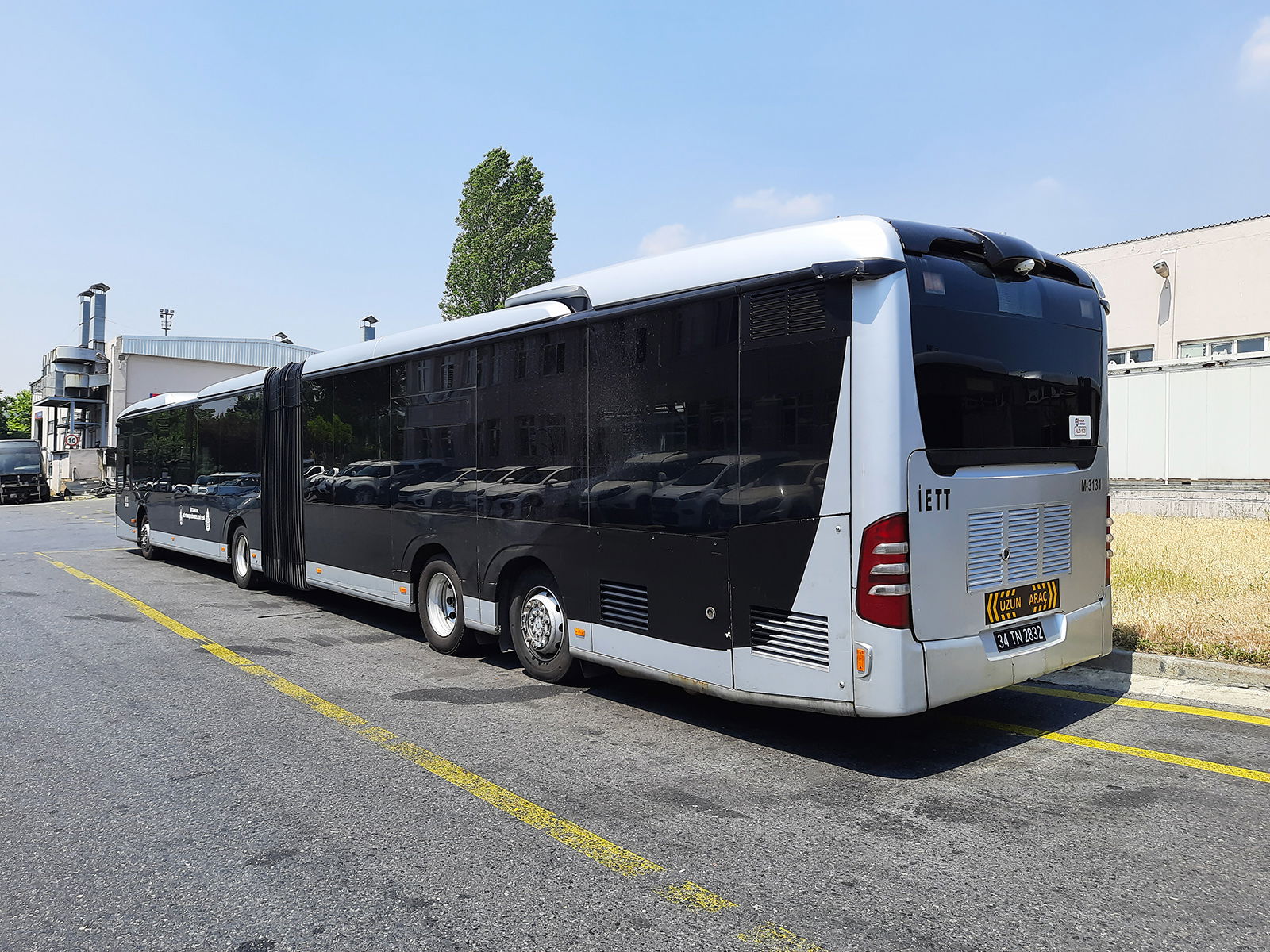
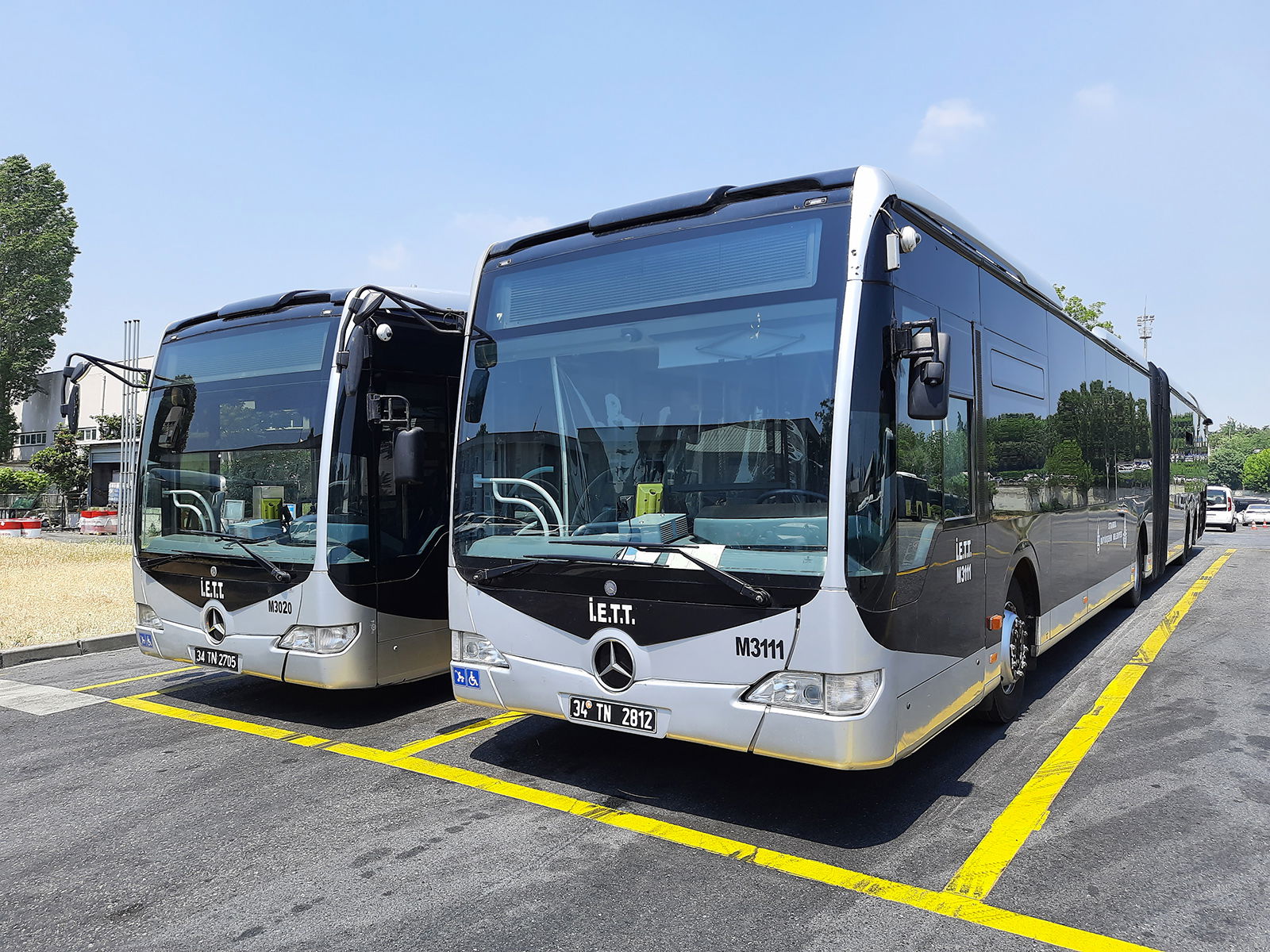
The Metrobüs fleet currently consists of a total of 741 buses, of which no more than 590 are in service simultaneously. The vehicle fleet is relatively heterogeneous, currently comprising five different types. The backbone of the fleet is still formed by heavily worn second-generation Mercedes-Benz Conecto G articulated buses, although their withdrawal has already begun, partly because of their age and condition and partly because their capacity of 166 passengers is now considered inadequate by local standards. Nevertheless, 389 examples remain in service. The larger, 19.5-metre-long, four-axle Mercedes-Benz CapaCity articulated buses, with a capacity of 192 passengers, will also enter their fifteenth year this year; according to İETT management, they have about five years left in Metrobüs service. At present, however, they are the second most widespread make in Istanbul’s BRT system, with a fleet of 249. These types are fitted with Euro 4 and Euro 5 diesel engines, respectively.
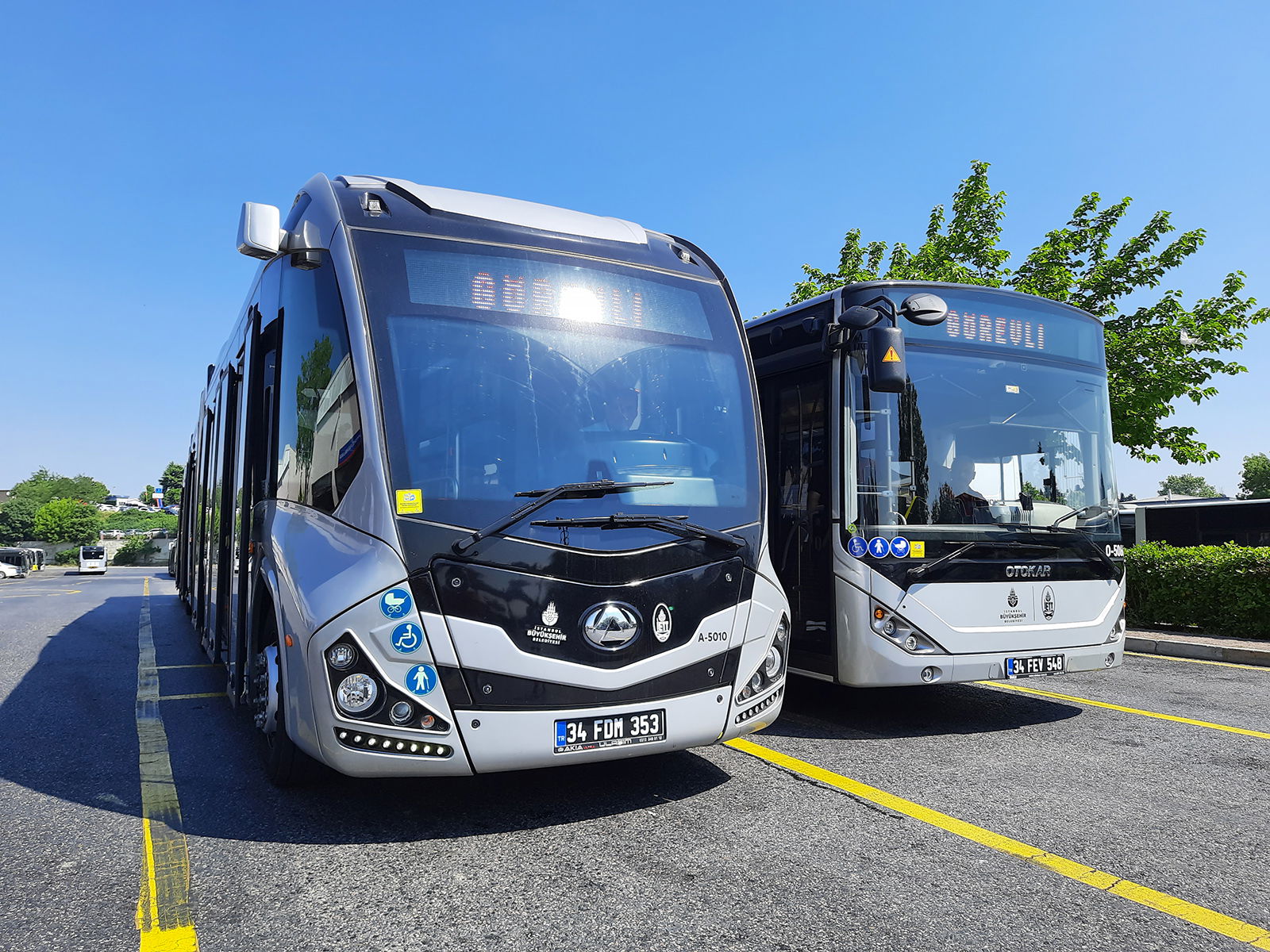
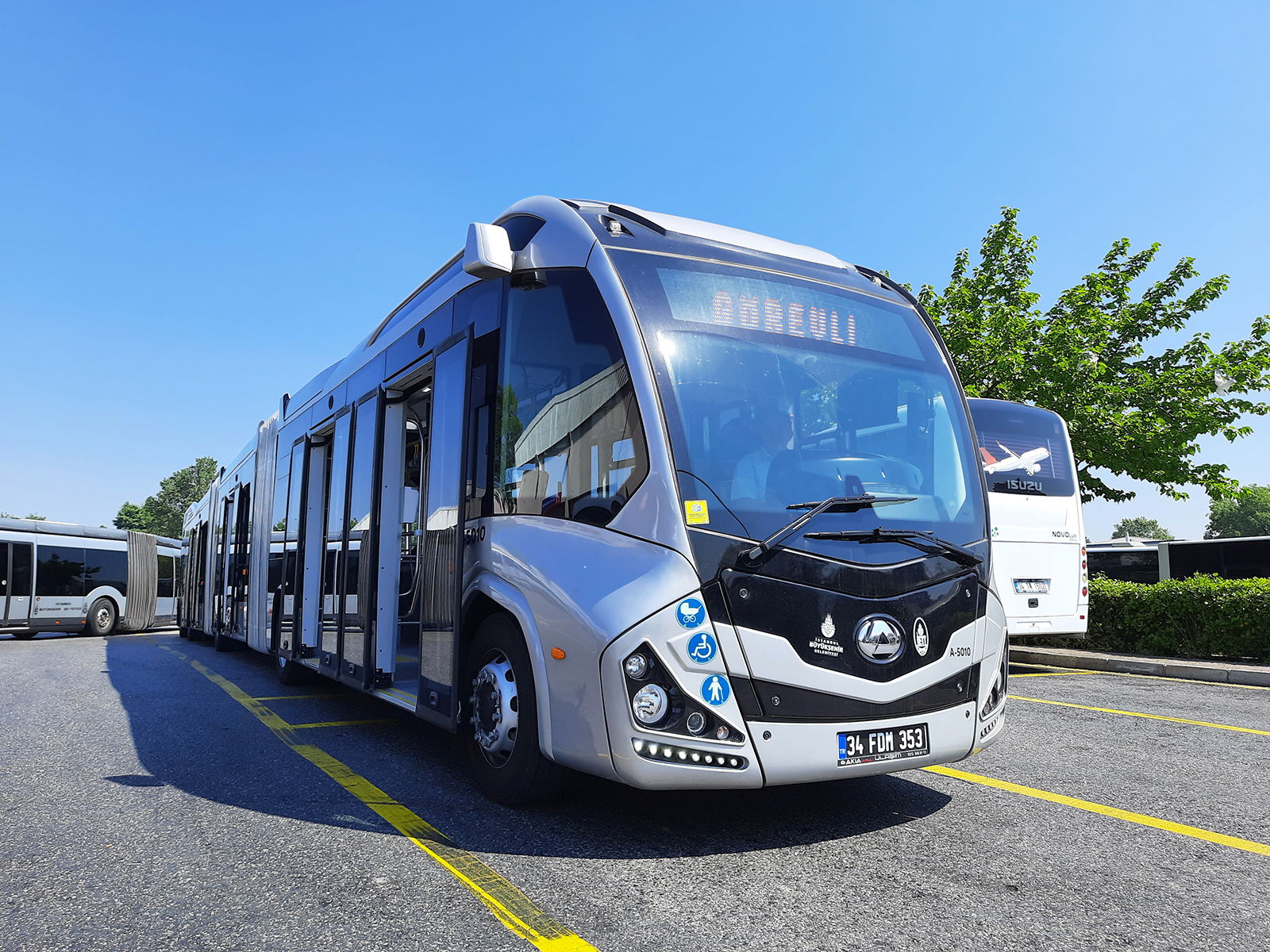
Two bi-articulated types operate on the Metrobüs network. Of these, the APTS Phileas acquired in 2007–2008, with a Euro 4-rated diesel-electric hybrid drivetrain, is both the older and the longer one: the 26-metre vehicles accommodate 220 people. İETT originally purchased 50 examples of this Dutch type, which proved highly problematic and was not without controversy; 33 are currently still operational. A total of 10 examples of the equally striking but more modern Turkish-built AKIA Ultra LF 25 Metrobus currently serve Istanbul’s passengers. Among other features, these buses have external rear-view cameras and Euro 6-rated Mercedes-Benz OM 470 diesel engines, and can carry up to 280 passengers at once; the fleet is scheduled to grow to 60 vehicles later this year. These 25-metre, five-axle vehicles are the fleet’s flagships, and one provided our special service, on which our hosts took us across the Bosporus to Asia. As with the Phileas, their metro-like character is reinforced by the driver’s cab, separated from the passenger compartment across the full width of the vehicle. Local drivers particularly appreciate this layout for the greater sense of security it provides, as enraged and threatening passengers are unfortunately not uncommon in Istanbul either.
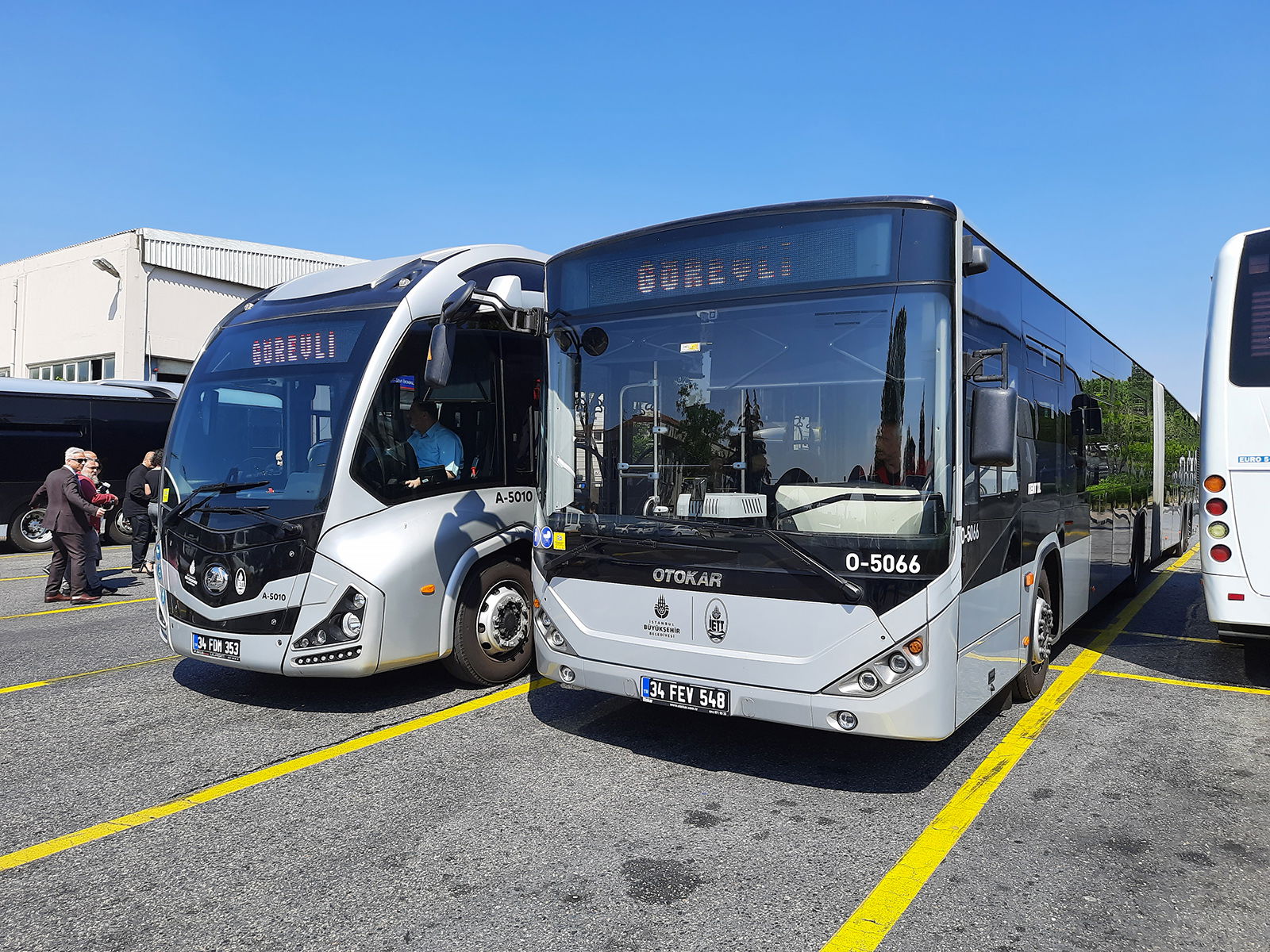
Among the youngest members of the fleet are the 20,995 mm-long, four-axle Otokar Kent XL extra-long articulated buses, fitted with 367 hp (270 kW) Paccar (DAF) MX-11 diesel engines meeting the Euro 6 emissions standard (this power unit is known in Hungary from the Modulo M168 D type), which officially accommodate 220 passengers. Since April this year, 60 examples have entered service from the total batch of 100 ordered in September last year. The type’s primary task is to replace the ageing Conecto G articulated buses.
To conclude the programme, we took a substantial round trip aboard the aforementioned bi-articulated AKIA, from the Edirnekapı garage to the Söğütlüçeşme terminus on the Asian side and back. Journey time on the longest, 52-kilometre route (Beylikdüzü-Söğütlüçeşme) is otherwise 83 minutes, but even without stops it took well over an hour to return to the depot, located one-third of the way along the full route. The highlight of the journey was naturally crossing the Bosporus Strait, which marks the boundary between Europe and Asia – a once-in-a-lifetime experience for every foreign visitor. We would once again like to thank the organisers of Busworld Turkey 2022 for the opportunity, and İETT Metrobüs management for their kind hospitality and for the stylish, memorable sightseeing tour.
Photographs not otherwise credited were taken by the author.